Best Official Portals and Hospitals for UAE Medical Jobs
A practical UAE guide for doctors, nurses and allied health professionals on official job portals, hospital career pages, licensing preparation and application readiness.
Key takeaways
- Official portals reduce the risk of fake UAE healthcare job offers.
- Licensing preparation should begin before applying for clinical roles.
- DHA, DoH and MOHAP requirements differ depending on emirate and profession.
- Strong documentation improves hiring and licensing readiness.
- Salary expectations vary by role, specialty, employer and experience.
Understanding the UAE healthcare job market
Healthcare hiring in the UAE is spread across government health systems, semi-government networks, private hospitals, specialty clinics, diagnostic centers and medical groups.
In practice, most applicants focus first on Dubai and Abu Dhabi because these emirates have the largest concentration of hospitals and specialist facilities. However, Sharjah, Ajman, Ras Al Khaimah, Fujairah and Umm Al Quwain also create opportunities, especially through federal healthcare services and private medical centers.
For a healthcare applicant, the UAE job search usually has two parallel tracks. The first is employment: finding the right hospital, clinic or recruiter. The second is licensing: proving that education, experience and professional credentials meet the relevant authority requirements.
A strong UAE healthcare application is not only a CV; it is a licensing-ready file. — The Consulting Journal Editorial Desk
Why healthcare professionals choose the UAE
Healthcare professionals are attracted to the UAE for several practical reasons. The country has modern hospitals, multicultural teams, strong private healthcare demand and specialist medical services across several emirates.
Many candidates also consider the absence of UAE personal income tax on salary as an important financial factor. Still, applicants should look beyond headline salary figures. Housing allowance, insurance, annual leave, flight benefits, schooling support, shift patterns and on-call duties can make a major difference to the real value of an offer.
For senior clinicians, the UAE can also offer exposure to high-standard hospital systems, international accreditation environments and diverse patient populations. For nurses and allied health professionals, the attraction is often a combination of career stability, structured hospital departments and regional experience.
Types of UAE medical jobs available
UAE medical jobs are available across several categories, although demand changes by employer, specialty and location.
Doctor opportunities
Doctors may find openings for general practitioners, specialists and consultants. Common areas include internal medicine, emergency medicine, pediatrics, radiology, anesthesiology, obstetrics and gynecology, surgery, dermatology and family medicine.
Specialist and consultant roles usually require careful licensing review. Applicants should check whether their qualifications, internship, board certification and post-qualification experience match the professional title they are applying for.
Nursing careers
Nursing remains one of the most visible healthcare recruitment categories in the UAE. Hospitals often need registered nurses for intensive care, emergency departments, operating rooms, pediatrics, oncology, maternity, outpatient clinics and long-term care settings.
A nurse applying from outside the UAE should prepare employment letters, nursing registration evidence, academic documents and a clear CV showing department experience, bed capacity exposure, patient care responsibilities and any specialist certifications.
Allied health roles
Allied health professionals are also important to the UAE healthcare system. These roles can include pharmacists, physiotherapists, occupational therapists, radiographers, laboratory technologists, respiratory therapists, dietitians, speech therapists and dental professionals.
Applicants in allied health roles should not assume that the process is easier than for doctors or nurses. Licensing documentation, professional scope, exam requirements and experience evidence still matter.
Official government healthcare portals
Official portals should be the starting point for serious applicants. They reduce exposure to fake job offers and help candidates understand how major healthcare systems advertise vacancies.
Dubai Health careers
Dubai Health directs applicants to explore available job opportunities through the Dubai Careers website. This makes it a key official route for healthcare professionals interested in Dubai-based public healthcare roles.
Applicants should keep their CV concise, highlight clinical scope clearly and avoid applying for every role without checking eligibility. For Dubai roles, licensing readiness through the Dubai Health Authority pathway is often part of the wider employment planning.
SEHA careers
SEHA describes itself as a major healthcare network in Abu Dhabi and provides a dedicated careers portal for medical and administrative opportunities.
Candidates applying to SEHA should pay close attention to specialty, location and experience requirements. Abu Dhabi roles may require alignment with Department of Health – Abu Dhabi requirements, depending on the role and hiring process.
Emirates Health Services careers
Emirates Health Services provides an electronic recruitment system where applicants can search and apply for vacancies, follow submitted applications, communicate with recruiters and track interview-related steps.
EHS can be relevant for candidates considering opportunities across federal healthcare facilities, including roles outside Dubai and Abu Dhabi.
Licensing requirements before applying
Many healthcare professionals start applying before understanding licensing. This can delay the process, especially when documents are incomplete or experience letters do not meet expected standards.
DHA registration confirms that a professional fulfills requirements for the applied category, title and specialty and can be included in the Dubai Medical Registry. DHA also notes that registration is valid for one year and should be activated by a healthcare facility into a license before the professional starts practicing.
For Abu Dhabi, the Department of Health refers to Professional Qualification Requirements that assess education, experience and licensure requirements for safe practice in the UAE.
MOHAP also provides licensing and re-licensing services for health professionals such as doctors, nurses and technicians through medical facilities.
DataFlow and credential verification
Primary Source Verification is a major part of healthcare licensing in the UAE. DataFlow identifies itself as a trusted PSV partner for several UAE healthcare authorities, including DHA, DOH and MOHAP.
In practical terms, applicants should prepare for verification of degrees, professional licenses, experience letters, good standing certificates and other credentials. Any inconsistency in names, dates, job titles or issuing institutions can create delays.
Top hospitals and healthcare groups to monitor
Healthcare professionals often monitor career pages for large hospital groups and networks. These may include Dubai Health, SEHA, Cleveland Clinic Abu Dhabi, Mediclinic Middle East, Burjeel Holdings, NMC Healthcare and other established private healthcare operators.
Applicants should treat hospital career pages as primary sources and be cautious when contacted through unofficial email addresses or messaging apps. SEHA specifically warns that its identity and the identity of its facilities may be misused in fake recruitment campaigns and false job offers.
Step-by-step application process
A structured approach usually works better than random applications.
- Identify the emirate and licensing authority relevant to your target role.
- Review the professional title you are eligible for before applying.
- Prepare a UAE-style healthcare CV with clear clinical experience.
- Gather education certificates, licenses, employment letters and passport documents.
- Start credential verification planning early where required.
- Apply through official government portals, hospital websites or trusted recruiters.
- Prepare for interviews with clinical scenarios, patient safety examples and communication-based questions.
- Review the employment contract carefully before accepting.
Example 1:
A registered nurse from India wants to apply for ICU roles in Dubai. She has strong experience but her employment letters only mention “staff nurse” without ICU responsibilities. Before applying widely, she requests revised letters showing department, dates, bed capacity, duties and reporting structure. This improves both recruiter review and licensing readiness.
Example 2:
A specialist physician from Egypt is interested in Abu Dhabi hospitals. His CV is strong, but his professional license and good standing certificate are close to expiry. He updates these documents before submitting applications, reducing the chance of delays during verification and onboarding.
Salary expectations in UAE medical jobs
Salary expectations vary widely. A consultant physician, specialist doctor, registered nurse, pharmacist and physiotherapist will not be assessed in the same way. Employer type, specialty, years of experience, licensing status, location, shift pattern and benefits package all influence the offer.
Applicants should avoid relying only on online salary averages. Instead, compare the full offer, including housing, transport, medical insurance, annual flight allowance, leave entitlement, education allowance where applicable, probation terms and notice period.
Common mistakes business owners make
Although this article is written mainly for healthcare applicants, employers and clinic owners also make mistakes when hiring medical staff in the UAE.
Common issues include:
- Hiring candidates before checking licensing eligibility.
- Depending on unofficial recruiters without proper documentation.
- Issuing vague offer letters that do not match the licensed role.
- Delaying DataFlow or credential verification planning.
- Not aligning job titles with the professional scope approved by the relevant authority.
- Underestimating onboarding time for overseas candidates.
For healthcare professionals, the equivalent mistake is applying quickly without checking whether the role, authority, licensing pathway and documents are aligned.
Documents and preparation checklist
Healthcare applicants should usually prepare:
- Updated CV with clear clinical experience.
- Passport copy.
- Degree and diploma certificates.
- Academic transcripts where available.
- Professional license or registration certificate.
- Good standing certificate.
- Employment experience letters.
- Internship or residency completion evidence, where relevant.
- Specialist board or fellowship certificates, where applicable.
- Continuing professional development records.
- Passport-size photograph.
- Previous DataFlow report, if already completed.
Keep documents scanned clearly. File names should be simple, professional and easy to identify. A recruiter or licensing coordinator should not have to guess which document is which.
Final advisory note
UAE medical jobs can offer strong opportunities, but successful applicants usually prepare more carefully than unsuccessful ones. They use official portals, understand licensing early, avoid suspicious recruitment channels and submit documents that support their professional title.
The best approach is not to apply everywhere. It is to apply where your experience, licensing eligibility and documents match the employer’s requirements.
This article is for informational purposes and does not constitute legal, tax, accounting, or financial advice.
Questions and answers
Which official portals should I use for UAE medical jobs?
Start with Dubai Health careers, SEHA careers and Emirates Health Services careers, depending on the emirate and type of role. You should also check hospital career pages directly and avoid offers sent from unofficial email addresses.
Do I need a UAE medical license before applying for jobs?
Not always, but you should understand your licensing eligibility before applying. Some employers may consider candidates who are eligible for registration or licensing, but you cannot practice until the required license is properly activated.
What is DataFlow verification for UAE healthcare jobs?
DataFlow is a Primary Source Verification process used to check professional credentials directly with issuing bodies. It may cover education, employment, licenses, good standing certificates and other documents depending on the authority and profession.
Are UAE healthcare salaries tax-free?
The UAE does not typically impose personal income tax on employment salary. However, applicants should review the full compensation package, including housing, insurance, flights, leave, shifts and any deductions.
How can I avoid fake UAE healthcare job offers?
Apply through official portals, hospital websites and verified recruiters. Be cautious if someone asks for unusual upfront payments, uses a free email address, avoids official contracts or pressures you to act quickly.
More in Medical Career
View all Medical Career →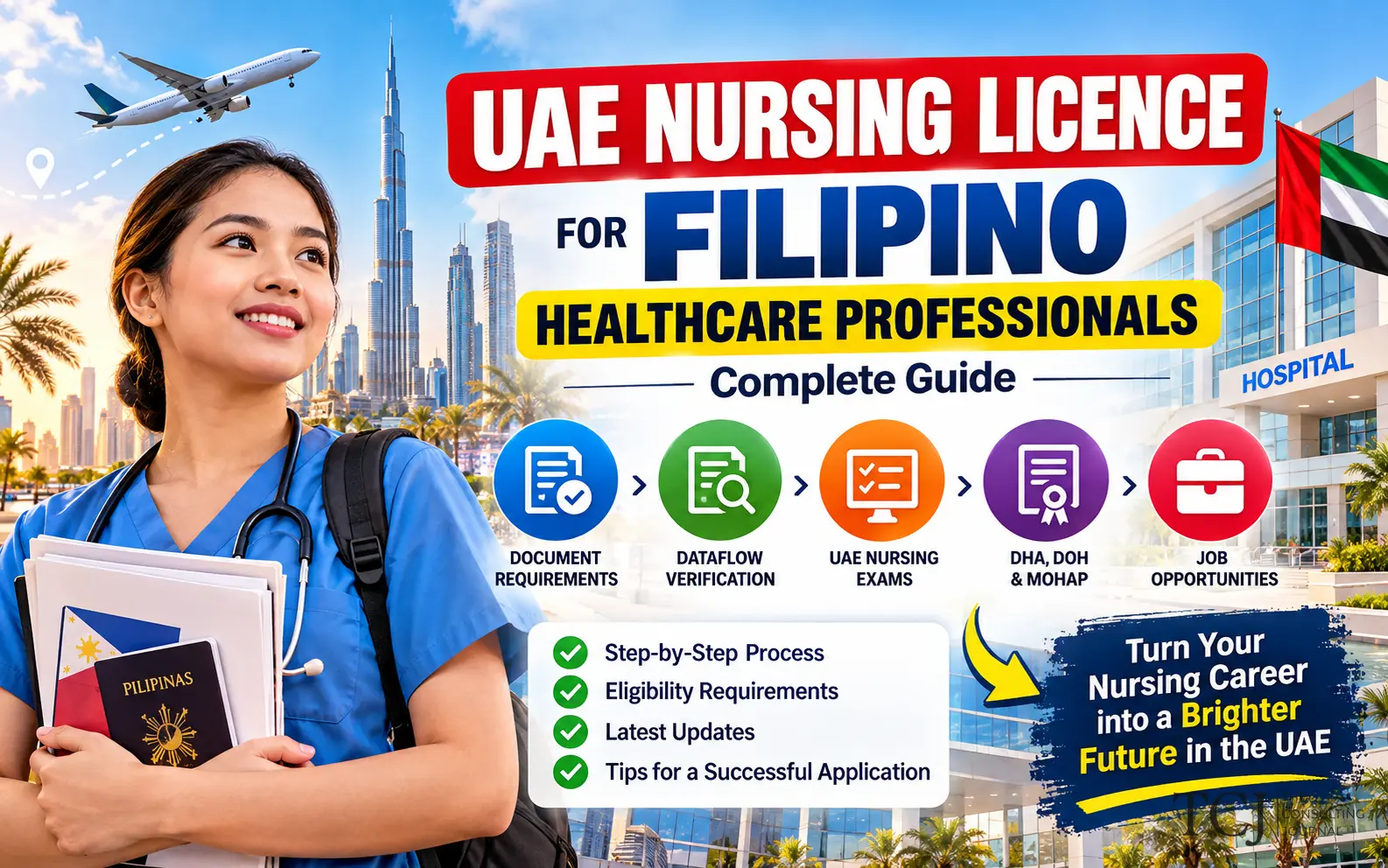
UAE Nursing Licence for Filipino Healthcare Professionals: Requirements and Application Process
Planning to work as a nurse in the UAE? Learn how Filipino healthcare professionals can navigate DHA, DOH and MOHAP licensing, DataFlow verification, nursing assessments, documents and employer licence activation.
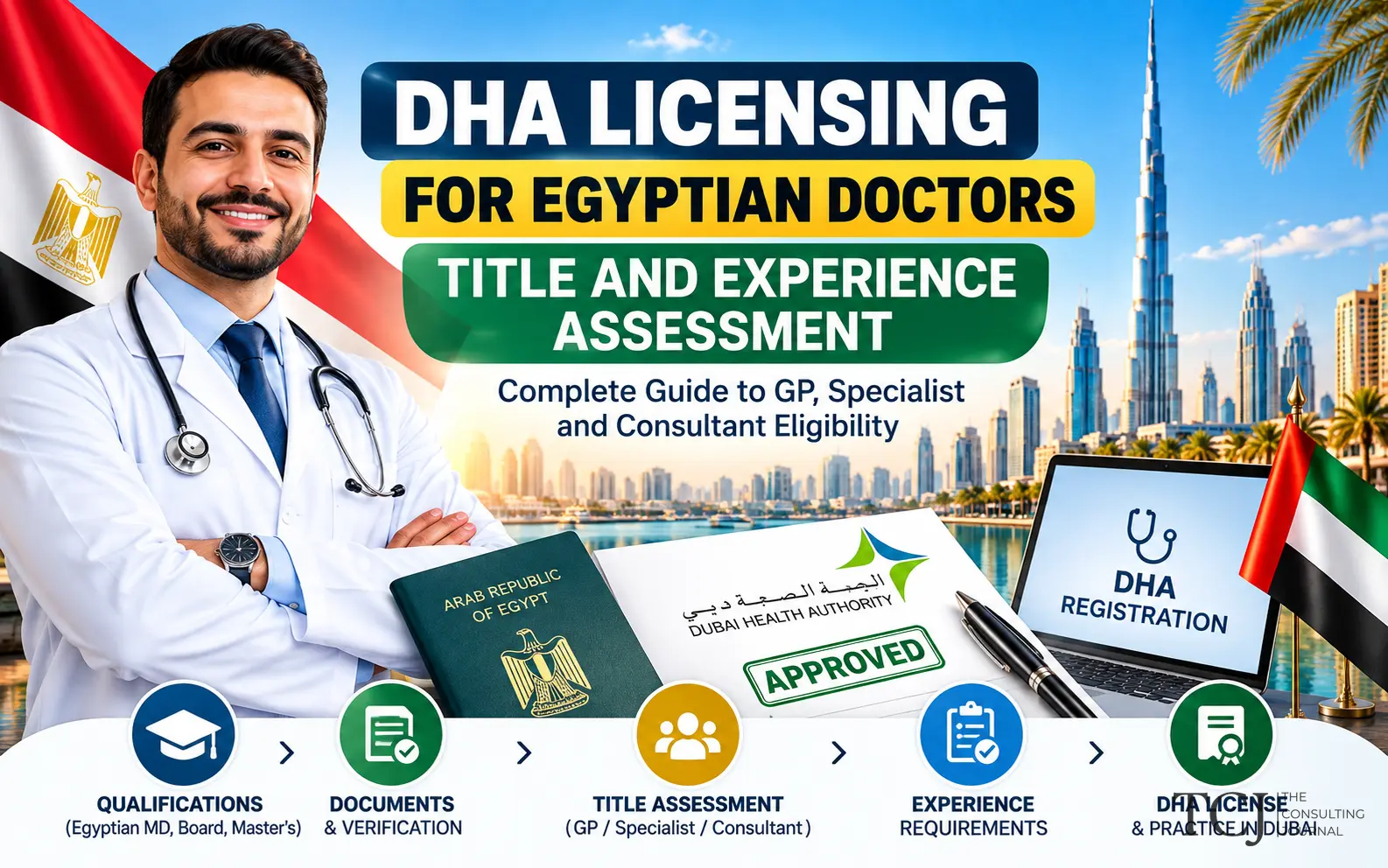
DHA Licensing for Egyptian Doctors: Titles, Tiers and Experience
Egyptian doctors applying for DHA licensing in Dubai need to understand how their MD, Egyptian Board Fellowship, Clinical Master’s and post-qualification experience affect eligibility for GP, Specialist and Consultant titles.
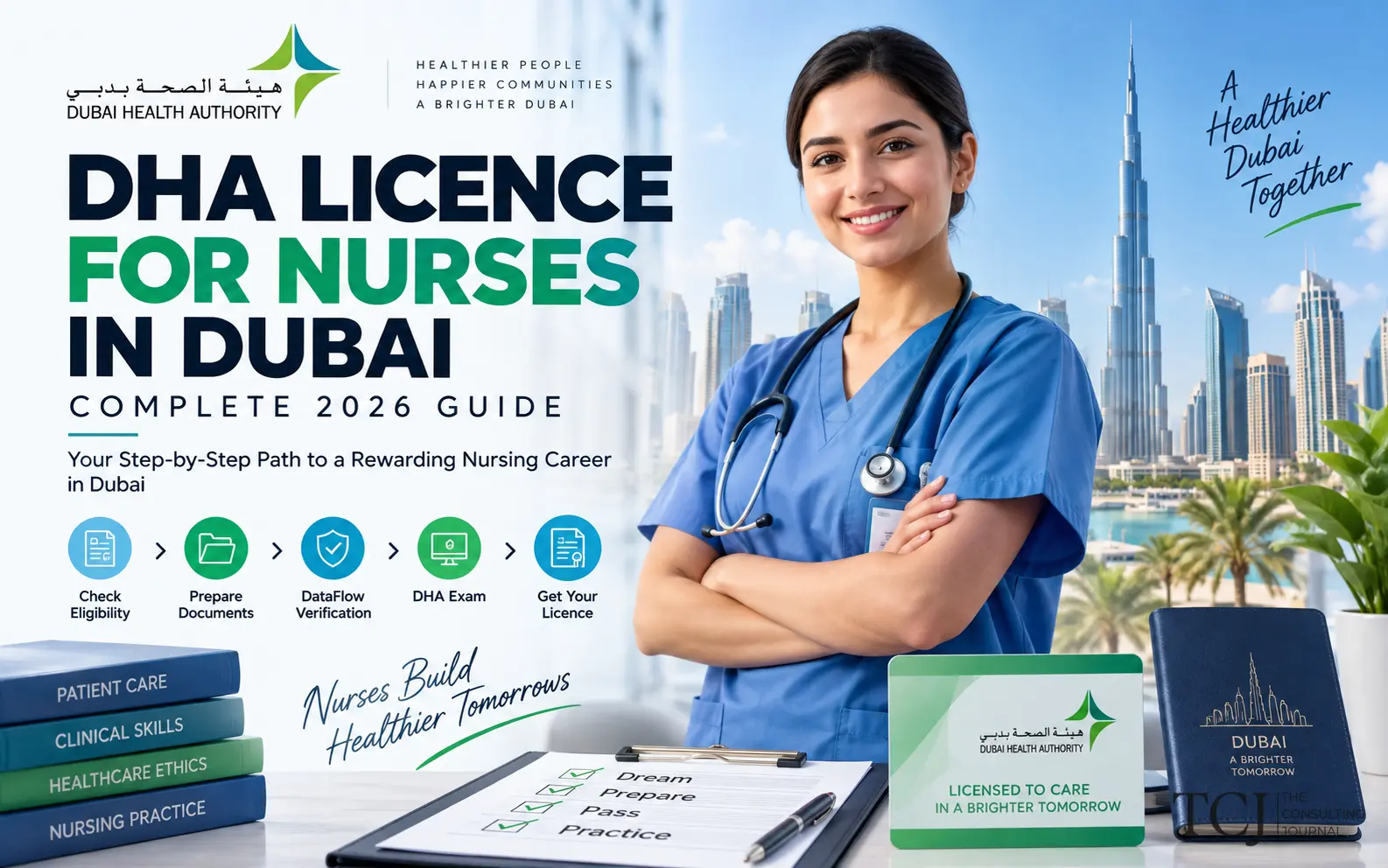
DHA Licence for Nurses in Dubai: Eligibility, DataFlow, Exam and Application Process
A practical 2026 guide to DHA licensing for nurses in Dubai, covering Registered Nurse and Assistant Nurse eligibility, DataFlow verification, assessments, registration, documents and employer-led licence activation.