Best Places to Live in Dubai for Nursing and Healthcare Workers
A practical 2026 guide for nursing and healthcare workers choosing where to live in Dubai, with neighbourhood comparisons, commute advice, rent checks, and relocation preparation tips.
Key takeaways
- The best Dubai area depends on workplace location, shift timing, rent budget, and transport access.
- Oud Metha and Dubai Healthcare City are practical for healthcare workers prioritising short commutes.
- Al Barsha, JVC, Bur Dubai, Silicon Oasis, and Mirdif each suit different budgets and lifestyles.
- Healthcare workers should use current rent checks rather than relying on old market assumptions.
- New arrivals should calculate deposits, utilities, agency fees, furniture, and transport before renting.
- KPM Global Services UAE can assist with financial planning, Accounting, Tax readiness, and business advisory support.
What are the best places to live in Dubai for nursing and healthcare workers?
The best places to live in Dubai for nursing and healthcare workers are typically Oud Metha, Dubai Healthcare City, Al Barsha, Bur Dubai, Dubai Silicon Oasis, Mirdif, and Jumeirah Village Circle. The right choice depends on hospital location, shift timings, transport access, rent budget, family needs, and whether the employer provides accommodation or an allowance.
Dubai is a practical city for healthcare professionals because employment is spread across government hospitals, private hospitals, specialist clinics, medical centres, and free zone healthcare clusters. For many nurses and allied health professionals, the home decision is not only about lifestyle. It affects rest between shifts, monthly savings, punctuality, and family stability.
Before choosing an apartment, healthcare workers should confirm their actual work location, shift pattern, transportation plan, and employer benefits. A home that looks affordable on rent may become expensive if it adds long taxi rides after night shifts.
Dubai’s official transport services include route planning, nol card services, Metro, bus, taxi, and public transport timetable support through the Roads and Transport Authority. This matters for healthcare workers who may not drive immediately after relocating.
Why does location matter more for healthcare workers in Dubai?
Healthcare work often involves long shifts, early starts, late finishes, and rotating duty rosters. Living close to the workplace can reduce daily stress and improve recovery time. In practice, a slightly higher rent near the hospital may be more sensible than cheaper accommodation that requires costly or unreliable commuting.
A nurse working 12-hour shifts should look at the total cost of living, not rent alone. This includes transport, utilities, food delivery during busy weeks, parking, and the cost of fatigue. A 25-minute commute can feel manageable. A 75-minute commute after a night shift can become a serious quality-of-life issue.
For newly relocating healthcare professionals, the first rental decision should usually be conservative. It is often better to choose a flexible, well-connected area for the first year, then move once work patterns, income, and Dubai routines are clearer.
For healthcare workers, the best Dubai neighbourhood is rarely the cheapest one on paper; it is the area that protects rest, commute reliability, and monthly cash flow. — Consultant observation, KPM Global Services UAE
Which Dubai areas work best for nurses and healthcare professionals?
The following areas are commonly considered by healthcare workers because they offer a mix of hospital access, transport links, family amenities, and rental options. Availability and pricing change, so tenants should check current market data before signing.
1. Oud Metha
Oud Metha is one of the most practical areas for healthcare workers connected to central Dubai. It is close to many clinics, hospitals, schools, supermarkets, and older residential buildings with established community facilities.
It is especially useful for nurses and medical staff who want shorter commutes to healthcare facilities around Dubai Healthcare City, Bur Dubai, and surrounding central districts. Many residents choose Oud Metha because daily life is straightforward: groceries, public transport, pharmacies, and casual dining are all nearby.
Oud Metha may not feel as new as some master-planned communities, but that can also be part of its advantage. It is functional, central, and suitable for professionals who prioritise commute over luxury.
2. Dubai Healthcare City
Dubai Healthcare City is the most obvious choice for healthcare workers employed in or near the medical free zone. DHCC describes itself as a free zone established in 2002 that brings together core healthcare services, clinical facilities, hospitals, consultancies, retail, and hospitality businesses under the Dubai Healthcare City Authority ecosystem.
The main benefit is proximity. For professionals working within DHCC, living nearby can remove much of the daily commute. This is valuable for staff with demanding shifts, on-call responsibilities, or limited rest windows.
The trade-off is cost. Residential options around DHCC can be more expensive than outer communities. Healthcare workers should compare rent against transport savings, time saved, and employer accommodation allowance.
3. Al Barsha
Al Barsha is a strong option for nurses and healthcare professionals who want a balance of access, amenities, and family convenience. It offers apartments, villas, schools, supermarkets, malls, clinics, and good connectivity to different parts of Dubai.
Al Barsha can suit healthcare workers employed in private hospitals and clinics across New Dubai, Sheikh Zayed Road, Umm Suqeim, and nearby communities. It is also practical for families because daily services are easy to access.
The area can vary by sub-community. Before renting, healthcare workers should check the exact building location, walking distance to public transport, parking availability, and likely traffic during shift change times.
4. Bur Dubai
Bur Dubai remains one of Dubai’s most established residential districts. It can suit healthcare workers who want central access, older but often more spacious apartments, and strong connections to clinics, hospitals, government services, and public transport.
The area is useful for professionals who prefer a busy urban environment. There are supermarkets, pharmacies, restaurants, tailoring shops, document service centres, and community facilities. This can be helpful for newly arrived workers still setting up life in the UAE.
However, tenants should inspect buildings carefully. Older properties can vary in maintenance quality, parking, lift condition, and noise levels. A lower rent should not replace proper due diligence.
5. Dubai Silicon Oasis
Dubai Silicon Oasis can work well for healthcare professionals who prefer quieter residential surroundings and relatively modern apartments. It is often considered by families and professionals who want more space than central Dubai may offer.
The main decision factor is commute. Silicon Oasis is not ideal for every hospital location. It can be practical for healthcare workers employed in nearby areas or those with a car. It may be less convenient for staff relying fully on Metro access.
For families, the community feel, schools, nurseries, supermarkets, and quieter pace may be attractive. For single professionals working late shifts in central Dubai, commute planning becomes more important.
6. Mirdif
Mirdif is a strong family-oriented option. It offers villas, apartments, parks, shopping centres, schools, and a more suburban living environment. Healthcare workers relocating with spouses and children may find it more comfortable than denser central neighbourhoods.
The area is generally better for those who drive. While public transport exists, commute times can vary depending on the hospital location and shift timing. For families with school runs, parking needs, and weekend routines, Mirdif can be a sensible long-term choice.
Healthcare professionals should compare the larger living space against travel time and transport cost. A comfortable home is valuable, but not if the daily commute becomes difficult.
7. Jumeirah Village Circle
Jumeirah Village Circle, commonly called JVC, is popular with professionals who want newer apartments, gyms, pools, cafés, and a community layout at a relatively accessible price point compared with premium districts.
JVC can suit healthcare workers employed across New Dubai, Al Barsha, Dubai Marina, Jumeirah, and some Sheikh Zayed Road locations. It is also popular with couples and small families who want modern buildings without moving too far from the city’s main employment zones.
The key issue is transport. Some parts of JVC are easier with a car or ride-hailing. Before signing, tenants should check peak-hour routes, parking, building management, and whether the commute remains reasonable after late shifts.
How should healthcare workers check rent before signing a lease?
Healthcare workers should check rent using current listings, building-level comparisons, and the official Dubai Land Department Rental Index. The DLD Rental Index service allows users to calculate rental increase and average rent by entering the required area and property details.
Rent in Dubai can move quickly, especially in popular residential districts. A colleague’s rent from last year may no longer reflect the current market. The better approach is to compare three things: current advertised rents, recent building-level examples, and official rental guidance.
Before committing, ask these questions:
- Is the rent aligned with similar units in the same building or nearby buildings?
- How many cheques are required?
- Are chiller, maintenance, parking, and utilities included or separate?
- What is the security deposit?
- Is the agency fee clearly stated?
- Is the tenancy contract registered through Ejari?
- What happens if the employer changes the work location?
A low advertised rent can become less attractive once deposits, commission, moving costs, furniture, utilities, and daily transport are added.
What should nurses consider before choosing accommodation in Dubai?
Nurses and healthcare workers should consider licensing status, employer location, shift pattern, income stability, commute options, and family needs before choosing accommodation. DHA registration confirms that a professional fulfils requirements for the applied position, and a healthcare facility must activate it into a licence before practice begins.
For new arrivals, it is sensible to avoid a long tenancy commitment until the job location and duty pattern are confirmed. Some healthcare groups operate across multiple branches. A role may begin in one facility and later require shifts in another.
Healthcare workers should also understand the difference between employer-provided accommodation, housing allowance, and self-funded rent. Each option has financial implications. Accommodation may reduce stress in the first year, while an allowance may provide flexibility if managed carefully.
Example 1: A nurse working near Dubai Healthcare City
Example 1: A registered nurse from the Philippines accepts a role at a private clinic near Dubai Healthcare City. At first, she considers a lower-rent apartment in an outer community. After calculating late-night taxi costs and rest time after shifts, she chooses a smaller studio near Oud Metha.
Her monthly rent is higher, but her transport cost is lower and her commute is predictable. She also has access to supermarkets, pharmacies, and public transport. For the first year, this decision protects her routine while she adjusts to Dubai.
Example 2: A healthcare technician relocating with family
Example 2: A radiology technician relocates to Dubai with his spouse and one child. His workplace is accessible by car, and school access is a priority. Instead of choosing a central apartment, the family compares Mirdif and Dubai Silicon Oasis.
They choose Mirdif because the home layout, school commute, and family amenities work better. The technician accepts a longer work commute because the family’s daily routine is more stable. This is a different decision from a single nurse working rotating shifts.
Common mistakes healthcare workers make when renting in Dubai
Many healthcare workers make housing decisions too quickly after receiving an offer letter. The pressure to settle is understandable, but a rushed tenancy can create avoidable financial and personal stress.
Common mistakes include:
- Choosing the cheapest rent without calculating transport.
- Renting before confirming the exact work location.
- Ignoring night-shift travel options.
- Assuming employer transport is always available.
- Signing a lease without checking maintenance history.
- Forgetting deposits, agency fees, utilities, and furniture costs.
- Choosing a community without nearby supermarkets or pharmacies.
- Not checking whether parking is included.
- Renting far from children’s schools.
- Comparing communities without visiting during commute hours.
Healthcare professionals should treat housing as a financial decision, not only a lifestyle choice. The right home supports punctuality, rest, budgeting, and long-term career stability.
Documents and preparation checklist
Before renting in Dubai, healthcare workers should prepare documents and confirm the financial details of the tenancy. Requirements can vary by landlord, agency, employer, and property type.
Useful preparation checklist:
- Passport copy.
- UAE residence visa or visa status update.
- Emirates ID or application details.
- Employment contract or salary certificate.
- Cheque book or approved payment method.
- Security deposit funds.
- Agency fee budget.
- Ejari registration plan.
- DEWA setup budget.
- Internet connection plan.
- Parking confirmation.
- Employer accommodation or allowance details.
- Confirmed hospital or clinic location.
- Shift pattern, where available.
- Commute test during likely duty hours.
- Building inspection photos and notes.
Healthcare workers who are new to Dubai should also keep emergency savings. First-month costs can be higher than expected because rent, deposits, utilities, transport, furnishings, and food expenses often arrive at the same time.
How KPM Global Services UAE can assist
KPM Global Services UAE can support healthcare professionals, clinic owners, and healthcare entrepreneurs with practical financial, accounting, and business advisory support in Dubai and the wider UAE. For individual professionals, this may include budgeting support, financial planning conversations, and understanding how employment income, savings, and documentation should be organised.
For healthcare businesses, KPM Global Services UAE can assist with Accounting, Tax readiness, bookkeeping, cash flow planning, payroll coordination, management reporting, and business setup considerations depending on the activity and licensing route. Healthcare-related businesses should also consider authority requirements, professional licensing, banking readiness, and record-keeping from the beginning.
KPM does not guarantee approvals, rent outcomes, licensing outcomes, or tax positions. The value is in helping clients prepare properly, avoid weak documentation, and make clearer financial decisions.
Final advisory note
Choosing where to live in Dubai is a personal decision, but healthcare workers should make it with a practical framework. Start with the workplace, then review commute, rent, transport, rest, and family needs. A good neighbourhood is one that supports both professional reliability and personal wellbeing.
Oud Metha and Dubai Healthcare City are strong for proximity. Al Barsha and JVC offer balanced access and amenities. Bur Dubai can provide central value. Silicon Oasis and Mirdif may suit those seeking quieter or family-focused living.
This article is for informational purposes and does not constitute legal, tax, accounting, or financial advice.
Questions and answers
Which area is best for nurses working near Dubai Healthcare City?
Dubai Healthcare City and Oud Metha are usually the most convenient options. They can reduce commute time and provide access to clinics, hospitals, supermarkets, and public transport. The best choice depends on rent budget and the exact facility location.
Is Al Barsha a good place for healthcare workers in Dubai?
Yes, Al Barsha can be a good choice for healthcare workers who want a balance of amenities, connectivity, and residential options. It suits singles, couples, and families, especially when the workplace is in New Dubai or along major road links.
Should nurses in Dubai choose cheaper rent farther from work?
Not always. Cheaper rent can become expensive if it adds daily taxis, long commutes, or fatigue after shifts. Healthcare workers should compare total monthly cost, including transport and time.
What should healthcare workers check before signing a Dubai tenancy contract?
They should check rent level, payment terms, deposit, agency fee, parking, maintenance, utilities, Ejari registration, and commute time. It is also sensible to confirm the exact work location before committing to a long lease.
Can KPM Global Services UAE help healthcare professionals with financial planning?
KPM Global Services UAE can support healthcare professionals and healthcare businesses with budgeting, Accounting, Tax readiness, bookkeeping, and financial advisory support. The guidance depends on the client’s employment, business activity, and UAE documentation needs.
More in Medical Career
View all Medical Career →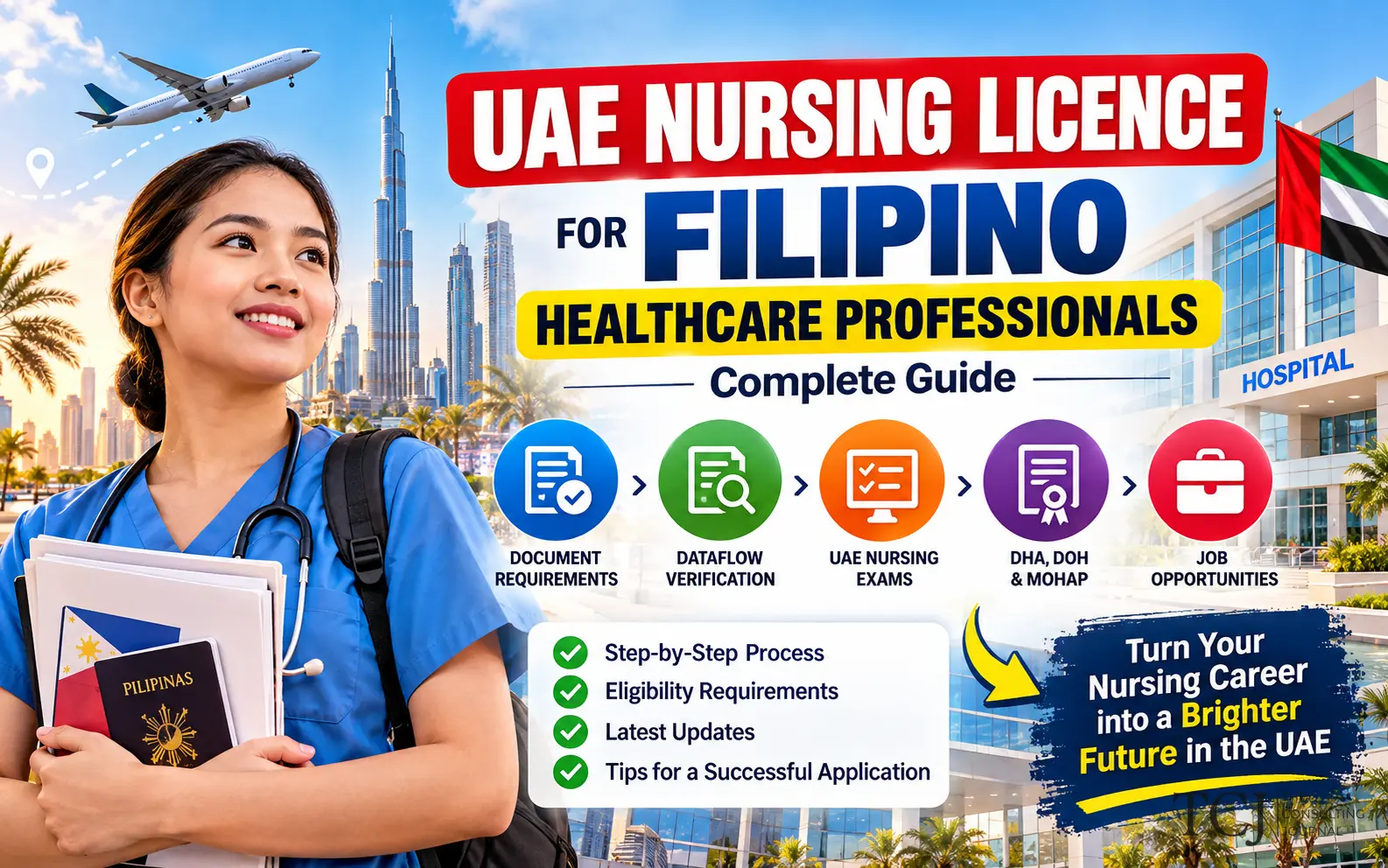
UAE Nursing Licence for Filipino Healthcare Professionals: Requirements and Application Process
Planning to work as a nurse in the UAE? Learn how Filipino healthcare professionals can navigate DHA, DOH and MOHAP licensing, DataFlow verification, nursing assessments, documents and employer licence activation.
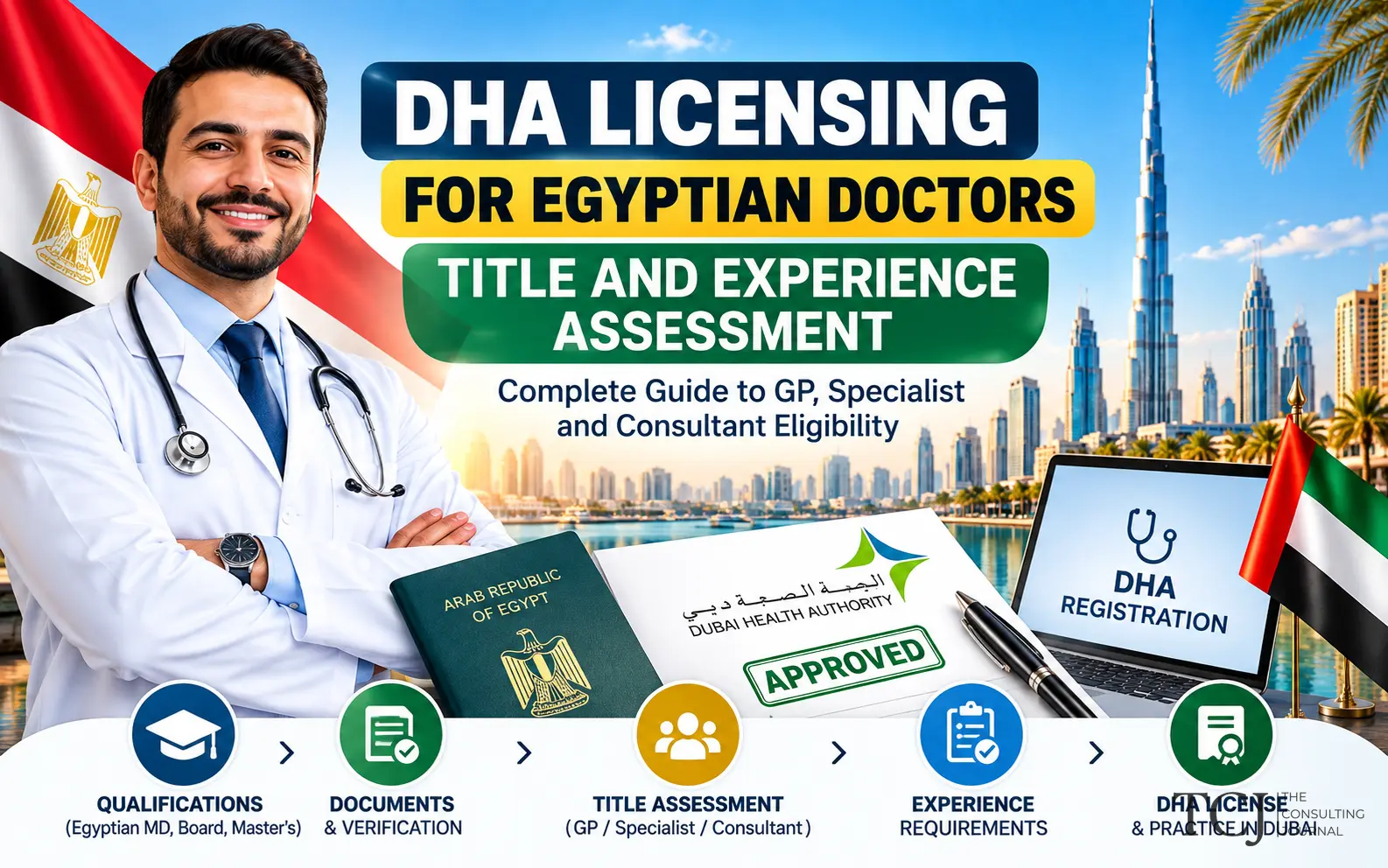
DHA Licensing for Egyptian Doctors: Titles, Tiers and Experience
Egyptian doctors applying for DHA licensing in Dubai need to understand how their MD, Egyptian Board Fellowship, Clinical Master’s and post-qualification experience affect eligibility for GP, Specialist and Consultant titles.

DHA Licence for Nurses in Dubai: Eligibility, DataFlow, Exam and Application Process
A practical 2026 guide to DHA licensing for nurses in Dubai, covering Registered Nurse and Assistant Nurse eligibility, DataFlow verification, assessments, registration, documents and employer-led licence activation.