Circular-Economy Business Ideas for the UAE Market
Circular-economy opportunities in the UAE include reusable packaging, food-waste technology, refurbishment, repair, construction recovery and resource-reuse services.
Key takeaways
- Circular businesses create value by keeping products, materials and equipment in productive use for longer.
- UAE opportunities extend beyond recycling into reuse, repair, refurbishment, rental, recovery and technology.
- Dubai's 2026 single-use plastic restrictions strengthen the commercial case for selected reusable alternatives.
- B2B models can benefit from recurring contracts, predictable material volumes and concentrated collection routes.
- Founders should validate licensing, logistics, customer demand and unit economics before investing in infrastructure.
What is a circular-economy business?
A circular-economy business aims to preserve the value of products, equipment and materials for longer. Instead of relying only on the traditional buy-use-dispose model, it may generate revenue through reuse, repair, refurbishment, rental, resale, recovery or recycling. The strongest models usually solve a financial or operational problem alongside an environmental one.
For a UAE entrepreneur, this means a circular business does not have to be a recycling facility.
A company can participate by maintaining commercial equipment, refurbishing office furniture, reducing food waste through software, operating reusable packaging systems, recovering construction materials or finding buyers for industrial by-products.
A circular model becomes commercially meaningful when preserving a resource also preserves enough economic value to pay for collection, processing and delivery. — Consulting Journal editorial observation
Why is the UAE a relevant market for circular businesses?
The UAE combines national circular-economy policy with practical changes affecting how businesses procure, use and dispose of materials. This creates opportunities for service providers that can help companies reduce waste without adding unnecessary operational complexity.
Dubai provides a clear example. The final phase of its restrictions on specified single-use plastic products took effect on 1 January 2026 and covers products including plastic cutlery, cups, plates, lids and tableware. Dubai Municipality has linked the measure to circular-economy principles and more sustainable consumption.
Food loss is another area of national focus. The UAE's ne'ma initiative targets a 50% reduction in food loss and waste by 2030.
For founders, these signals matter most when they translate into a paying customer problem. Regulation or policy may create interest, but commercial success still depends on demand, pricing, operational execution and compliance.
Which circular-economy business ideas could work in the UAE?
Several models are worth evaluating, ranging from relatively asset-light advisory and technology businesses to operations requiring vehicles, storage, cleaning facilities or specialised processing. The right opportunity depends on the founder's experience, target emirate, customer segment, licensing requirements and access to materials.
1. Reusable packaging services
Rather than simply selling reusable containers, a business could operate the entire reuse system for restaurants, corporate cafeterias, universities, hotels or events.
The service may include container supply, collection, washing, inspection, inventory management and redistribution.
This removes one of the biggest barriers for the customer: operational responsibility.
Dubai's restrictions on selected single-use plastics make reusable alternatives particularly relevant for affected businesses, although companies should confirm which requirements apply to their products and activities.
The main commercial challenge is return economics. Lost containers, inefficient collection routes and low reuse rates can quickly undermine margins.
2. Food-waste measurement technology
Hotels, restaurants, catering companies and institutional kitchens may spend money purchasing and preparing food that is never consumed.
A technology provider could combine weighing equipment, inventory information and analytics to identify recurring sources of waste.
The commercial pitch should focus on controllable costs rather than sustainability reporting alone.
For example, identifying that a hotel routinely overproduces a particular buffet item may help management adjust purchasing and preparation levels. The ne'ma target of halving food loss and waste by 2030 also reinforces the national relevance of measurement and prevention solutions.
3. Surplus-food redistribution platforms
A surplus-food platform could connect businesses holding suitable excess food with consumers, charities or other organisations capable of using it, subject to food-safety and other applicable requirements.
Potential suppliers may include bakeries, supermarkets, cafés, hotels, caterers and food manufacturers.
A new entrant would need differentiation. Useful features might include inventory integration, scheduled collections, cold-chain coordination, B2B redistribution or reporting for large hospitality groups.
4. Electronics refurbishment and corporate IT recovery
Businesses frequently replace laptops, phones, displays and other IT equipment even when some devices retain useful life.
A specialist provider could offer collection, secure data handling, testing, repair, grading and resale.
Corporate contracts may be especially attractive because they can provide predictable device volumes.
The service should be built around trust. Data security, condition grading, warranties, traceability and appropriate handling of equipment that cannot be reused are all important considerations.
5. Construction-material recovery
Renovation, fit-out and demolition projects can contain materials with residual commercial value before they become mixed waste.
A specialist company could identify, remove, grade and resell suitable doors, lighting, metal components, partitions, flooring, fixtures or other materials.
Pre-demolition material audits are another potential service.
Dubai's 2026 waste-management implementing bylaw provides for minimum percentages of recycled materials to be determined for relevant projects and activities, taking factors such as availability, quality, technical specifications, logistics and project type into account.
Businesses should distinguish between this regulatory framework and any specific percentage obligation, which depends on applicable decisions and requirements.
6. Office and hospitality furniture refurbishment
Hotel renovations and office relocations can generate significant volumes of usable furniture.
A circular furniture operator could collect, clean, repair, reupholster and resell suitable desks, chairs, cabinets, tables and selected hotel furnishings.
An alternative model is furniture-as-a-service, where the supplier retains ownership, maintains the assets and redeploys them when a customer's contract ends.
This can create recurring revenue while extending asset life.
Example 1:
A fictional Dubai office-refurbishment company notices that clients routinely replace high-quality task chairs during fit-outs. Instead of treating them as unwanted assets, the company establishes a separate refurbishment operation. Chairs are collected during existing project visits, repaired in batches and offered to SMEs seeking lower-cost office furniture.
7. Used cooking oil collection
Used cooking oil is a potentially valuable feedstock rather than simply a disposal problem.
A business could provide compliant collection services to restaurants, hotels, central kitchens and food manufacturers before supplying the material to authorised processors.
The UAE National Policy on Biofuels specifically includes recycling used cooking oils into biofuels among its programmes and initiatives.
Collection density is particularly important. A route serving many small customers across a wide area may cost more to operate than a concentrated portfolio of hotels or commercial kitchens.
8. Textile recovery and commercial reuse
Hotels, retailers, event companies and employers can generate recurring streams of uniforms, linens and other textiles.
A service provider could sort these materials according to their next practical use: direct reuse, repair, resale, upcycling or appropriate material recovery.
B2B contracts may offer greater predictability than relying only on consumer donations.
A hotel group, for example, may value a managed programme that includes scheduled collection, sorting, documentation and identified reuse channels.
9. Reusable event equipment
Conferences, exhibitions, weddings and corporate events often require products for only a short period.
A rental operator could provide reusable service ware, display systems, signage structures, transport containers or modular event equipment.
The model works because customers obtain temporary access rather than permanent ownership.
A strong operator sells convenience as much as sustainability: delivery, collection, cleaning, storage and inventory management are handled by one provider.
10. Circular packaging advisory services
Not every opportunity requires physical infrastructure.
Consultants can help manufacturers, retailers, food businesses and importers evaluate packaging use, materials, supplier options and reuse opportunities.
Services might include packaging audits, supplier reviews, reduction programmes and reusable-system feasibility studies.
This can be an attractive model for professionals with manufacturing, procurement, packaging or sustainability experience because initial capital requirements may be lower than those of collection and processing businesses.
11. Industrial by-product marketplaces
Factories and commercial operators may produce materials that another business could potentially use as an input.
A digital platform could help connect suppliers and buyers while addressing the information problems that make such transactions difficult.
Useful functionality may include material specifications, quantities, quality records, transport coordination and traceability.
The defensible part of the business is not the listing page. It is the ability to create reliable transactions between companies that need confidence about what they are buying and receiving.
12. Repair-as-a-service
Extending equipment life can be one of the most straightforward circular business models.
A provider might specialise in commercial appliances, IT equipment, office furniture or selected hospitality equipment and charge customers through maintenance contracts.
Recurring service agreements can provide more predictable revenue than relying entirely on emergency repair calls.
The customer proposition is also easy to understand: keep equipment operating for longer where repair is practical and economical.
Example 2:
A fictional Abu Dhabi facilities company begins offering SMEs a maintenance subscription for office equipment and furniture. Instead of waiting until equipment fails, technicians conduct scheduled inspections and repair minor problems early. The service reduces unnecessary replacements while creating recurring monthly revenue for the provider.
How should founders choose the right opportunity?
Start with the commercial problem, not the sustainability label. A promising circular model should have a repeatable supply of recoverable products or materials, a clear customer, manageable logistics and enough retained value to support a profitable operation.
Ask:
- Who currently owns or discards the resource?
- How frequently does the material become available?
- Is its quantity predictable?
- Who will pay for the recovered product or service?
- What does collection cost?
- Does the material require sorting, cleaning, testing or specialised storage?
- What licences or approvals may apply?
- Can one geographic cluster provide enough volume?
- Can the model generate recurring revenue?
Before building expensive infrastructure, founders should consider testing one customer segment or one geographic area.
What mistakes do circular-economy founders commonly make?
A good environmental idea can still be a weak business. Common mistakes include:
- collecting a material before identifying a dependable buyer;
- underestimating transport and labour costs;
- launching across too large a geographic area;
- assuming customers will pay a premium simply because a service is sustainable;
- purchasing processing equipment before validating supply volumes;
- overlooking contamination, damage or product-loss rates;
- treating regulation as proof of guaranteed demand;
- failing to verify licensing, environmental or municipal requirements;
- focusing on recycling when reuse or repair could retain more economic value.
The strongest operators usually understand both sides of the transaction: where the resource comes from and why someone else is prepared to pay for it.
What should be prepared before starting a circular business in the UAE?
Before committing significant capital, founders should prepare a practical feasibility file covering both commercial and regulatory issues.
Consider gathering:
- proposed business activity and licence scope;
- target emirate or free zone;
- customer interviews or letters of interest;
- estimated monthly material volumes;
- potential supplier agreements;
- buyer or offtake information;
- collection and transport plan;
- storage requirements;
- sorting, cleaning or processing procedures;
- equipment quotations;
- staffing assumptions;
- insurance requirements;
- municipal or environmental approval requirements, where applicable;
- three-year revenue and cost assumptions;
- working-capital requirements;
- waste, loss and contamination assumptions;
- pricing and gross-margin calculations.
The objective is to determine whether the circular process preserves enough value to support the cost of operating it.
How can KPM Global Services UAE assist?
KPM Global Services UAE can support entrepreneurs and existing businesses evaluating circular-economy opportunities from a commercial, Financial, Accounting and business-setup perspective.
Depending on the activity, support may include:
- business feasibility and financial modelling;
- UAE company formation and activity assessment;
- mainland or free zone structuring considerations;
- Accounting and bookkeeping setup;
- cash-flow forecasting and budgeting;
- VAT and Corporate Tax readiness;
- management reporting;
- documentation and internal process design;
- commercial planning for new service lines.
Where an activity involves waste handling, environmental approvals, food, manufacturing, transport or other regulated operations, businesses should also confirm the relevant technical and authority requirements with the appropriate UAE regulators and specialist advisers.
This article is for informational purposes and does not constitute legal, tax, accounting, or financial advice.
Questions and answers
Q: What are the best circular-economy business ideas in the UAE?
A: Potential opportunities include reusable packaging, food-waste technology, electronics refurbishment, construction-material recovery, furniture refurbishment, used cooking oil collection, textile recovery, reusable event equipment and repair services. The right model depends on demand, licensing, material volumes and the founder's operational experience.
Q: Does a circular-economy business need to operate a recycling facility?
A: No. Businesses can participate through reuse, repair, refurbishment, rental, software, resale, consulting and waste-prevention services. Some of these models can be tested with substantially less infrastructure than a recycling or processing facility.
Q: Why are reusable products relevant for businesses in Dubai?
A: Dubai's final phase of restrictions on specified single-use plastic products took effect on 1 January 2026 and includes products such as plastic cutlery, cups, plates and lids. Businesses should verify the exact requirements affecting their products before changing procurement or operations.
Q: Is food-waste reduction a business opportunity in the UAE?
A: Yes, particularly where a service can demonstrate measurable operational savings for hotels, restaurants, retailers or commercial kitchens. The UAE's ne'ma initiative targets a 50% reduction in food loss and waste by 2030, reinforcing the relevance of prevention and measurement solutions.
Q: How should an entrepreneur test a circular business idea before investing?
A: Start with a limited pilot involving one customer group, material stream or geographic cluster. Measure supply volumes, collection costs, processing costs, customer willingness to pay, losses and gross margin before committing to expensive infrastructure or wider expansion.
More in Ideas
View all Ideas →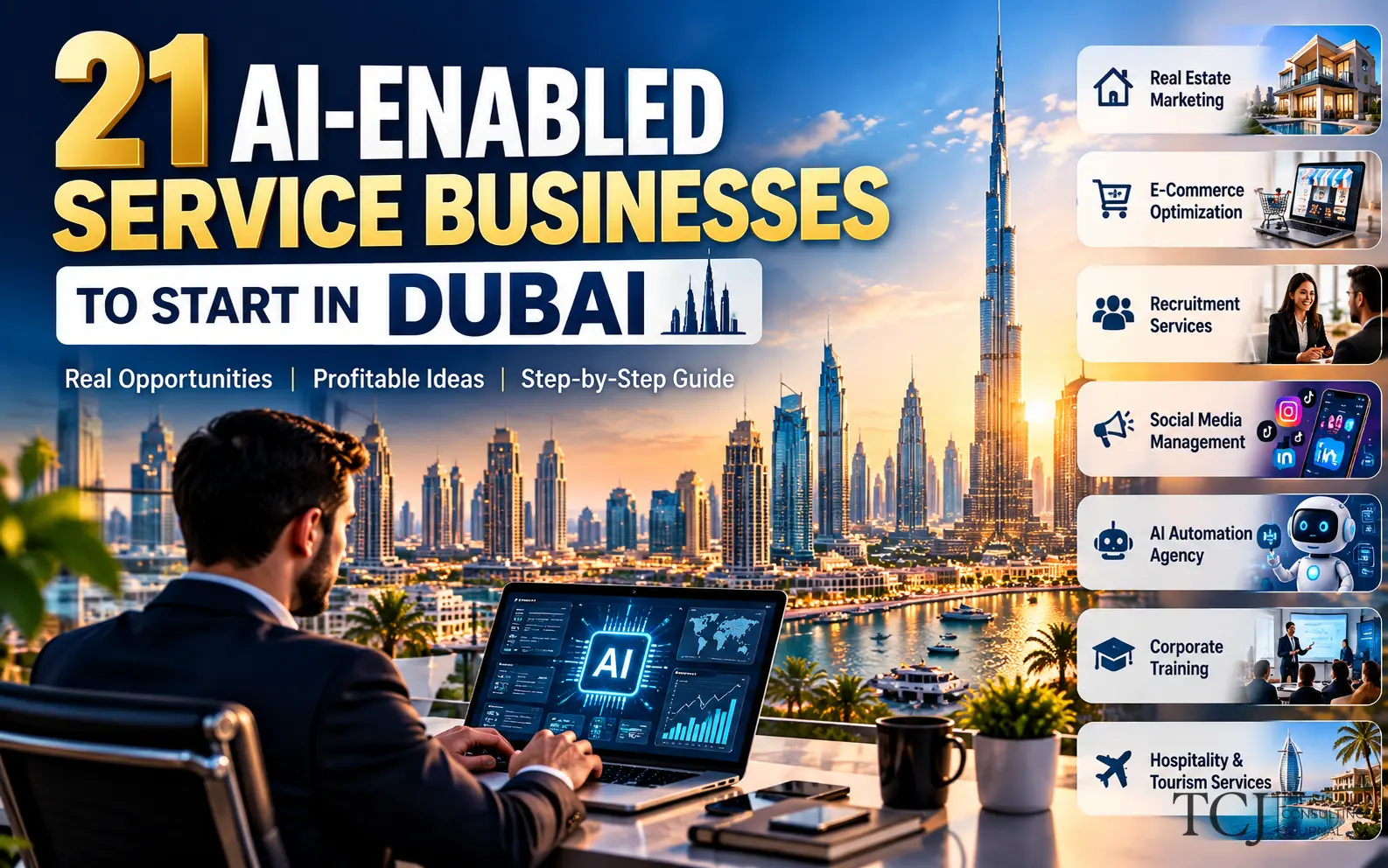
21 AI-Enabled Service Businesses to Start in Dubai
AI is creating practical service-business opportunities in Dubai. Here are 21 models entrepreneurs can build around automation, marketing, operations, research, training, finance workflows and other business needs.
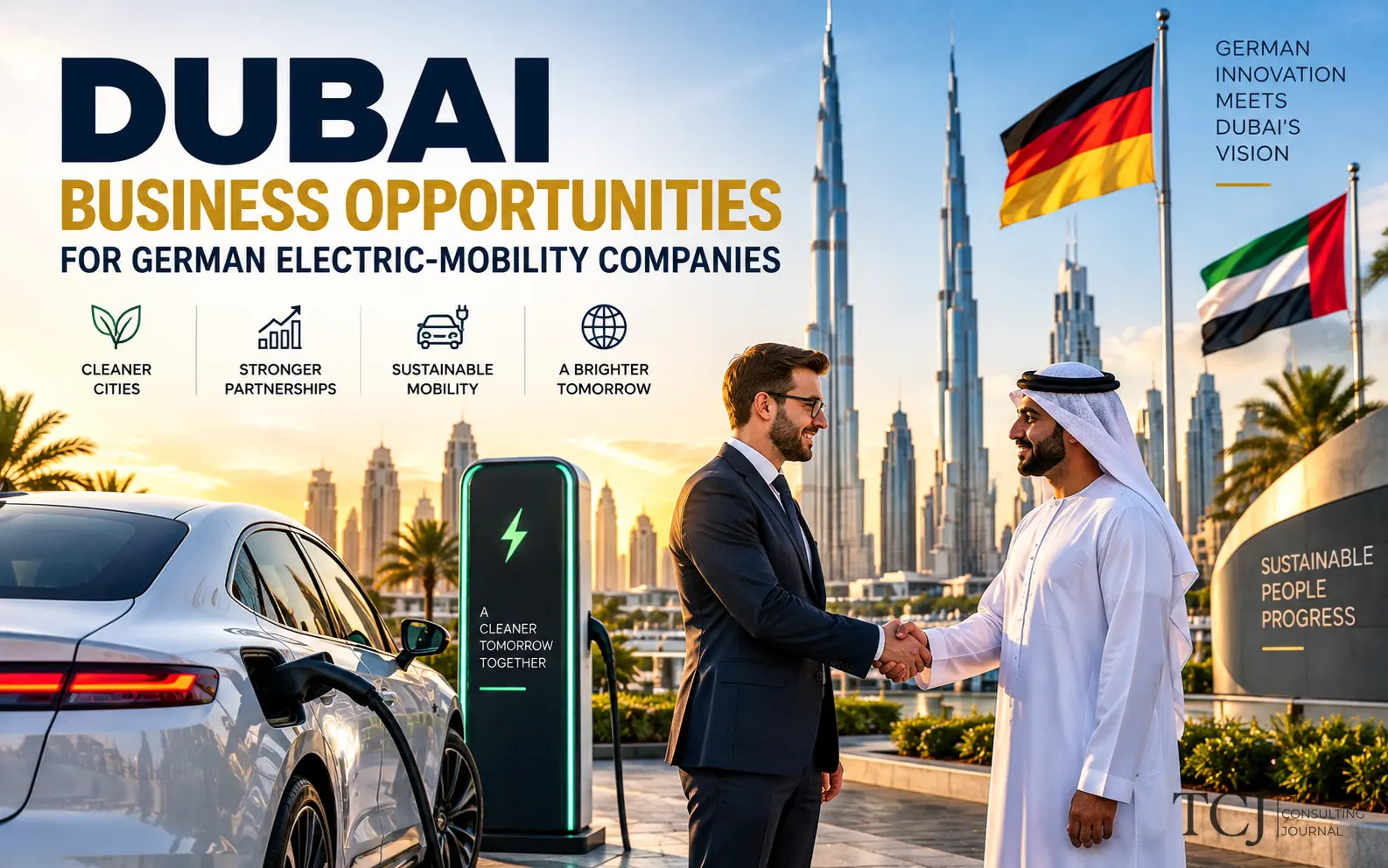
Dubai Business Opportunities for German E-Mobility Companies
Dubai’s growing EV ecosystem is creating opportunities for German companies across charging infrastructure, fleet electrification, software, batteries, engineering, smart mobility, and technical services.
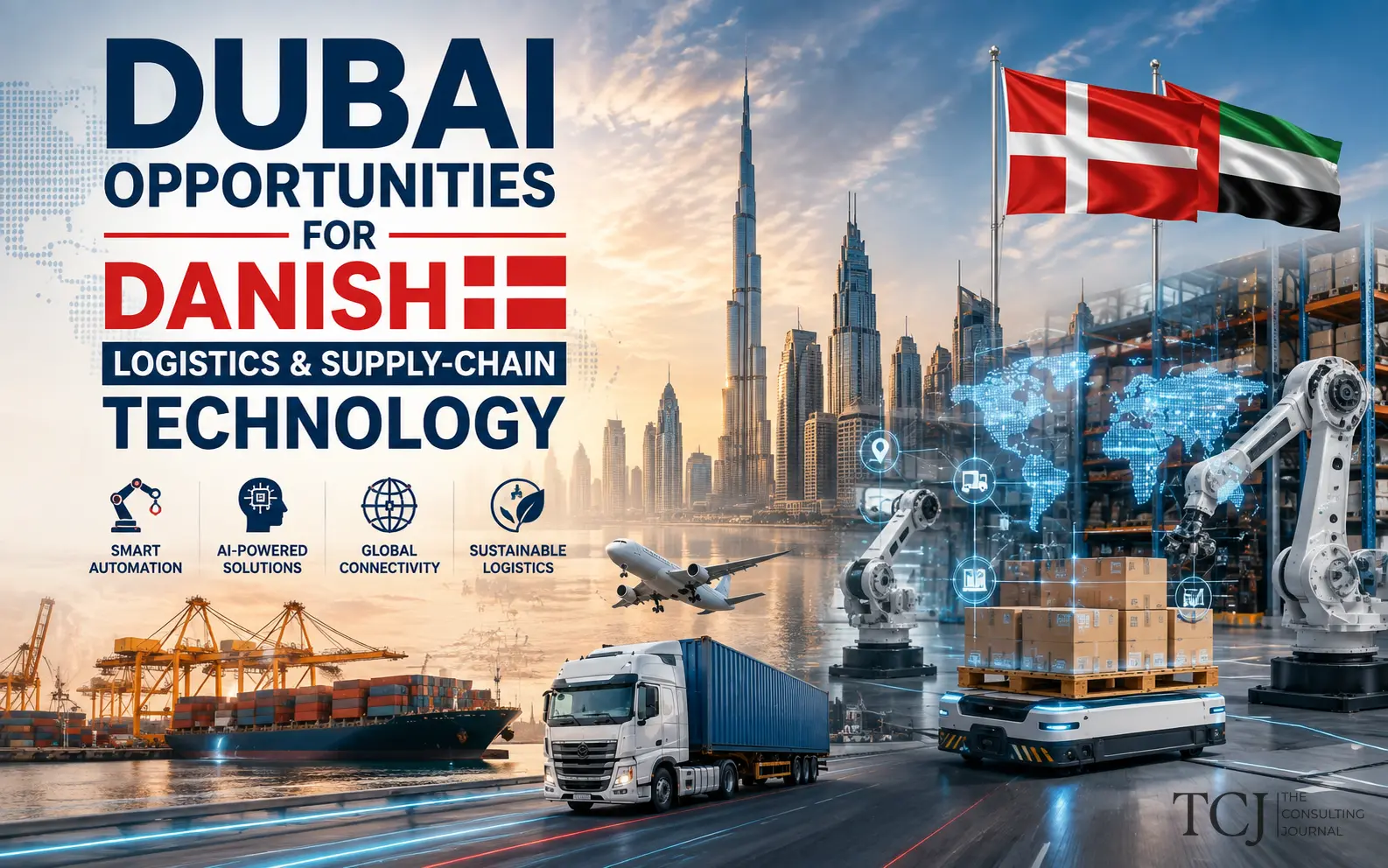
Dubai Opportunities for Danish Logistics and Supply-Chain Technology
Dubai offers Danish logistics and supply-chain technology companies opportunities across automation, AI, ports, air cargo, green logistics and trade technology. Strong entrants will pair proven technology with local partnerships, measurable ROI and regional scalability.