Dubai D33 Agenda: Practical Business Opportunities for SMEs and Founders
Dubai’s D33 Agenda is reshaping opportunities for SMEs, startups and investors. Here is where founders should focus, what to prepare, and where risks sit.
Dubai D33 Agenda: what business owners should really pay attention to
Dubai’s Economic Agenda D33 has become one of the most important reference points for business owners assessing whether to launch, expand, or restructure in Dubai. The official agenda was launched in January 2023 with the aim of doubling Dubai’s economy over the decade to 2033, supported by 100 transformative projects and total economic targets of AED 32 trillion. It also aims to position Dubai among the world’s top three global cities.
The uploaded draft correctly identified D33 as a major opportunity theme for entrepreneurs and SMEs, but this version has been fully rewritten with a more practical consulting angle and original structure.
For a founder, D33 should not be read as a slogan. It is better treated as a market map. It shows where Dubai wants capital, talent, infrastructure, innovation and private-sector participation to move over the coming years.
That matters because business setup decisions in Dubai are rarely only about getting a licence. The better question is: will the business activity, jurisdiction, banking profile, tax position and operating model still make sense three to five years from now?
The commercial direction behind D33
The headline figures are ambitious. D33 targets foreign trade of AED 25.6 trillion by 2033, AED 650 billion in foreign direct investment over ten years, and an average annual AED 100 billion contribution from digital transformation.
For SMEs, these numbers point to three practical realities.
First, Dubai wants more trade-facing companies. Import, export, re-export, logistics, distribution, product sourcing and regional sales operations are likely to remain central to the city’s business model.
Second, Dubai is pushing hard toward digital transformation. Businesses that help other companies become more automated, data-driven, secure, compliant or digitally visible may find stronger demand than generic service providers.
Third, capital will continue to look for scalable, well-documented companies. A founder who wants investment or banking support will need proper financial records, clear ownership documents, clean contracts and realistic projections.
D33 creates opportunity, but opportunity still rewards companies that are structured, documented and commercially disciplined. — The Consulting Journal
15 business opportunity areas under the Dubai D33 Agenda
The strongest opportunities are not limited to technology startups. Dubai’s growth model needs both high-growth innovation and practical operating businesses that support trade, services and infrastructure.
1. Digital transformation services
Many SMEs in Dubai still run on fragmented systems: spreadsheets for accounts, manual invoicing, separate customer records and limited reporting. Businesses offering ERP implementation, workflow automation, cloud migration, data dashboards or AI-enabled operational tools can serve a real market need.
The opportunity is strongest when the service is specific. “AI consulting” is broad. “AI-assisted inventory forecasting for trading companies” is clearer and easier to sell.
2. FinTech and payment solutions
Dubai’s financial services ecosystem is closely linked with D33’s ambition to strengthen the emirate as a global financial centre. The official D33 launch statement referred to Dubai’s ambition to rank among the top four global financial centres.
Practical opportunities include SME payment reconciliation, invoice financing support tools, expense management, cross-border payment solutions, compliance technology and reporting systems for finance teams.
3. E-commerce and direct-to-consumer brands
E-commerce is still attractive, but the easy phase has passed. A new online seller needs more than a Shopify store and social media ads. The stronger opportunity is in niche products, regional fulfilment, brand-led retail, subscription models and reliable after-sales service.
A Dubai-based e-commerce company may also use the city as a regional hub for GCC, Africa and South Asia demand.
4. Logistics, fulfilment and supply-chain services
D33’s trade ambitions make logistics one of the most practical SME opportunity areas. Dubai Chambers also highlighted D33’s target to add 400 cities to Dubai’s foreign trade map and develop economic corridors with Africa, Latin America and Southeast Asia.
This creates room for specialised freight coordination, fulfilment centres, customs documentation support, cold-chain solutions, last-mile delivery technology and B2B procurement platforms.
5. Sustainability and green business services
Sustainability is becoming part of procurement, real estate, hospitality, manufacturing and investor reporting. SMEs can build services around energy audits, waste reduction, sustainable packaging, ESG documentation support, water-efficiency solutions and carbon reporting preparation.
The key is to avoid vague “green” branding. Business clients usually want measurable cost savings, compliance readiness, or customer-facing credibility.
6. Smart mobility and transport support
Dubai’s mobility ambitions create openings beyond electric vehicles. There is demand for fleet software, route optimisation, charging-related services, driver compliance systems, vehicle maintenance platforms and mobility data tools.
For SMEs, the best approach is often B2B: solve a recurring operational issue for delivery companies, transport providers, schools, hotels or facilities-management firms.
7. Tourism experience businesses
Tourism in Dubai is no longer only about hotels and attractions. It increasingly includes curated experiences, wellness travel, business events, family tourism, medical tourism and premium leisure services.
Founders can explore boutique travel planning, event support, destination management, multilingual guest services, travel technology and niche luxury experiences.
8. PropTech and real estate services
Dubai’s real estate market creates demand for better property management, leasing support, digital viewings, CRM systems, tenant screening, short-term rental operations, investor reporting and maintenance coordination.
A practical PropTech business does not need to disrupt the whole sector. It can improve one painful process for brokers, landlords, developers or property managers.
9. Accounting, tax and compliance support
With UAE corporate tax, VAT, economic substance considerations, transfer pricing documentation for relevant businesses and stronger banking due diligence, SMEs need better financial housekeeping.
A common client-facing observation is that many businesses start thinking about accounting only when a tax filing, audit request or bank review becomes urgent. That is usually too late. D33 may bring growth, but growth without records creates risk.
10. Advanced manufacturing and light industrial services
Dubai’s trade and infrastructure advantages support manufacturing models that are asset-light, specialised or export-focused. Opportunities include packaging, assembly, 3D printing, spare parts, food production, cosmetics, industrial maintenance and automation support.
Founders should assess facility approvals, import requirements, product standards and municipality or authority permissions before committing to a lease.
11. Healthcare and wellness ventures
Healthcare and wellness businesses remain attractive, but they are regulated and operationally demanding. Opportunities include wellness clinics, telehealth support services, corporate wellness programmes, rehabilitation support, health-tech platforms and specialised fitness concepts.
Licensing, medical approvals, data privacy and insurance relationships should be reviewed early.
12. Education, training and upskilling
D33’s focus on advanced technology and human capability creates demand for practical skills. Training companies can serve finance teams, entrepreneurs, sales staff, hospitality workers, logistics teams and technology professionals.
The market is strongest for training that improves employability or business performance, not generic motivation sessions.
13. B2B advisory and outsourced operations
As new investors enter Dubai, many will need outsourced finance, HR, payroll, compliance administration, market-entry research and government-services coordination.
The opportunity is not only in advising new companies. Established SMEs also need help cleaning up processes before expansion, banking reviews, investor discussions or corporate tax filings.
14. Regional headquarters and representative offices
Dubai remains attractive for founders who want a base between Asia, Africa, Europe and the wider Middle East. The official Invest in Dubai platform describes D33 as a plan to double the economy by 2033 and make Dubai one of the top three cities for living, investing and working.
This supports opportunities for regional sales offices, family business holding structures, procurement hubs, consulting firms and specialised distribution companies.
15. Business banking and documentation readiness services
Banking has improved in some areas, but account opening and ongoing compliance still depend heavily on documentation quality. Dubai’s Unified Licence initiative reportedly cut average business bank account opening time from 65 days to five by improving verified business data access.
That does not remove the need for proper KYC files, contracts, invoices, source-of-funds explanations and ownership clarity. It simply makes prepared businesses easier to process.
Mainland or free zone: choosing the right structure
One of the biggest mistakes founders make is choosing a jurisdiction before they understand their revenue model.
A mainland company may suit businesses that need to trade directly in the UAE market, work with local clients, open retail premises, or operate with broader onshore flexibility. The official Invest in Dubai platform notes that most mainland activities now allow 100% foreign ownership, although some activities may still require an Emirati partner depending on the business type.
A free zone company may suit international trading, consulting, digital services, holding activity, e-commerce, media, technology or sector-specific ecosystems. Invest in Dubai states that free zone companies can be fully owned by foreign investors without a local partner.
The better structure depends on activity, customer location, visa needs, office requirements, tax profile, banking expectations and future expansion plans.
Example 1:
A founder plans to launch an AI-enabled inventory tool for small trading companies in Deira and Jebel Ali. A generic software licence may be easy to obtain, but the commercial plan needs more work. The founder should identify whether clients are mainland traders, free zone distributors, or regional importers because each group has different invoicing, payment, onboarding and integration needs.
From a consulting perspective, the licence is only one part of the setup. The stronger preparation includes a working demo, pricing model, data-protection approach, customer contracts, accounting process and a clear explanation for the bank on how revenue will be generated.
Example 2:
An SME already operating in Dubai wants to expand into sustainable packaging for restaurants and hotels. D33’s sustainability and trade direction may support the opportunity, but the business should not rush into inventory purchases. It should first check supplier reliability, product certifications, municipality requirements where applicable, storage costs, customs treatment, VAT invoices and working-capital needs.
In practice, many product businesses fail not because demand is absent, but because cash is trapped in stock, receivables and poorly planned import cycles.
Common mistakes business owners make
Many founders read D33 as a guarantee that every new business in Dubai will grow. That is not how the market works. Dubai rewards preparation, but it is also competitive, cost-sensitive and documentation-heavy.
Common mistakes include:
- Choosing a licence activity before confirming the actual service or product model
- Selecting a free zone only because the initial package looks cheaper
- Ignoring VAT, corporate tax and bookkeeping until the first filing period
- Opening a company without a banking-ready business plan
- Underestimating payroll, office, visa, insurance and renewal costs
- Copying a business idea without checking local demand
- Signing supplier or client contracts without clear payment terms
- Treating compliance as an annual task instead of a monthly discipline
The businesses that perform better usually make slower decisions at the setup stage and faster decisions once operations begin.
Documents and preparation checklist
Before launching or expanding under a D33-linked opportunity, business owners should prepare:
- Passport copies and UAE visa or entry status details for shareholders
- Proposed trade names and final business activities
- Shareholding structure and ultimate beneficial ownership details
- Initial business plan with revenue model and target customers
- Office, warehouse, flexi-desk or facility requirement
- Supplier agreements, client pipeline or letters of intent where available
- Accounting system and chart of accounts
- VAT and corporate tax assessment, where applicable
- Banking KYC file, including source of funds and expected transaction flows
- Employment, payroll and visa planning
- Import, product, municipality or sector approvals where required
- Website, company profile and basic sales materials
This checklist is not just administrative. It helps the founder explain the business clearly to authorities, banks, investors, suppliers and future clients.
Tax, accounting and compliance considerations
D33 may attract more founders and investors, but growth also brings scrutiny. A business that scales without proper accounting can quickly face problems with VAT filings, corporate tax records, bank reviews, shareholder reporting and cash-flow visibility.
For UAE SMEs, accounting should be designed from day one around management decisions, not only annual compliance. Owners need to know which customers are profitable, which products are slow-moving, which costs are rising and whether tax obligations are being accrued correctly.
This article is for informational purposes and does not constitute legal, tax, accounting, or financial advice.
Final advisory view
The Dubai D33 Agenda creates a useful direction of travel for founders, SMEs and investors. The strongest opportunities are likely to sit where Dubai’s strategic priorities meet practical business pain points: trade, logistics, digital transformation, financial services, sustainability, real estate services, healthcare, education and operational compliance.
The main lesson for business owners is simple. Do not chase D33 as a headline. Translate it into a business model, a licence structure, a banking file, a tax plan, a monthly accounting process and a realistic market-entry strategy.
Dubai remains one of the region’s most attractive business hubs, but it is not a shortcut market. It rewards founders who understand both opportunity and execution.
Questions and answers
What is the Dubai D33 Agenda?
The Dubai D33 Agenda is Dubai’s economic roadmap to 2033. It aims to double the size of Dubai’s economy, strengthen global trade, attract investment and support innovation-led sectors.
Which businesses can benefit most from Dubai D33?
SMEs in digital transformation, logistics, e-commerce, FinTech, sustainability, tourism, PropTech, accounting, healthcare and education may find strong opportunities. The best fit depends on the founder’s activity, target market, funding and operating structure.
Should I choose a mainland or free zone company for a D33-related business?
It depends on how the business will earn revenue. Mainland may suit UAE-facing commercial activity, while free zones may suit international trade, consulting, technology, holding and sector-specific models.
Does D33 make Dubai business setup easier?
D33 supports a more business-friendly and digitally enabled environment, but founders still need correct licensing, banking documents, accounting records and compliance planning. A strong setup process remains essential.
What should SMEs prepare before launching in Dubai?
SMEs should prepare a clear business plan, ownership details, activity selection, banking KYC documents, accounting system, tax assessment and customer or supplier documentation. These steps reduce delays and improve credibility with banks, authorities and partners.
More in Investment
View all Investment →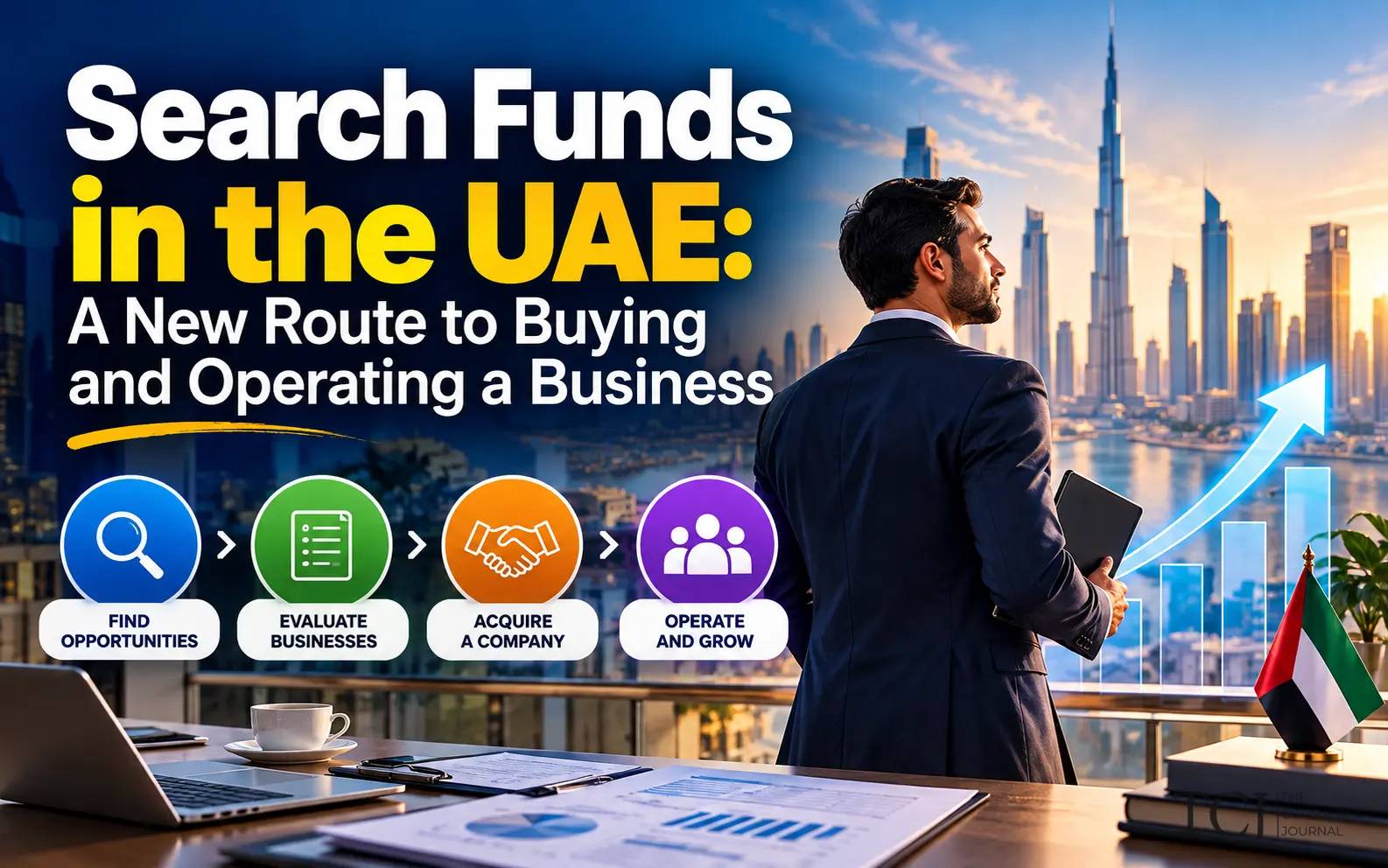
Search Funds in the UAE: A Practical Guide to Buying and Operating a Business
Search funds in the UAE offer entrepreneurs an alternative to starting a company. Explore how the model works, acquisition financing, business valuation, due diligence, legal requirements, and risks.
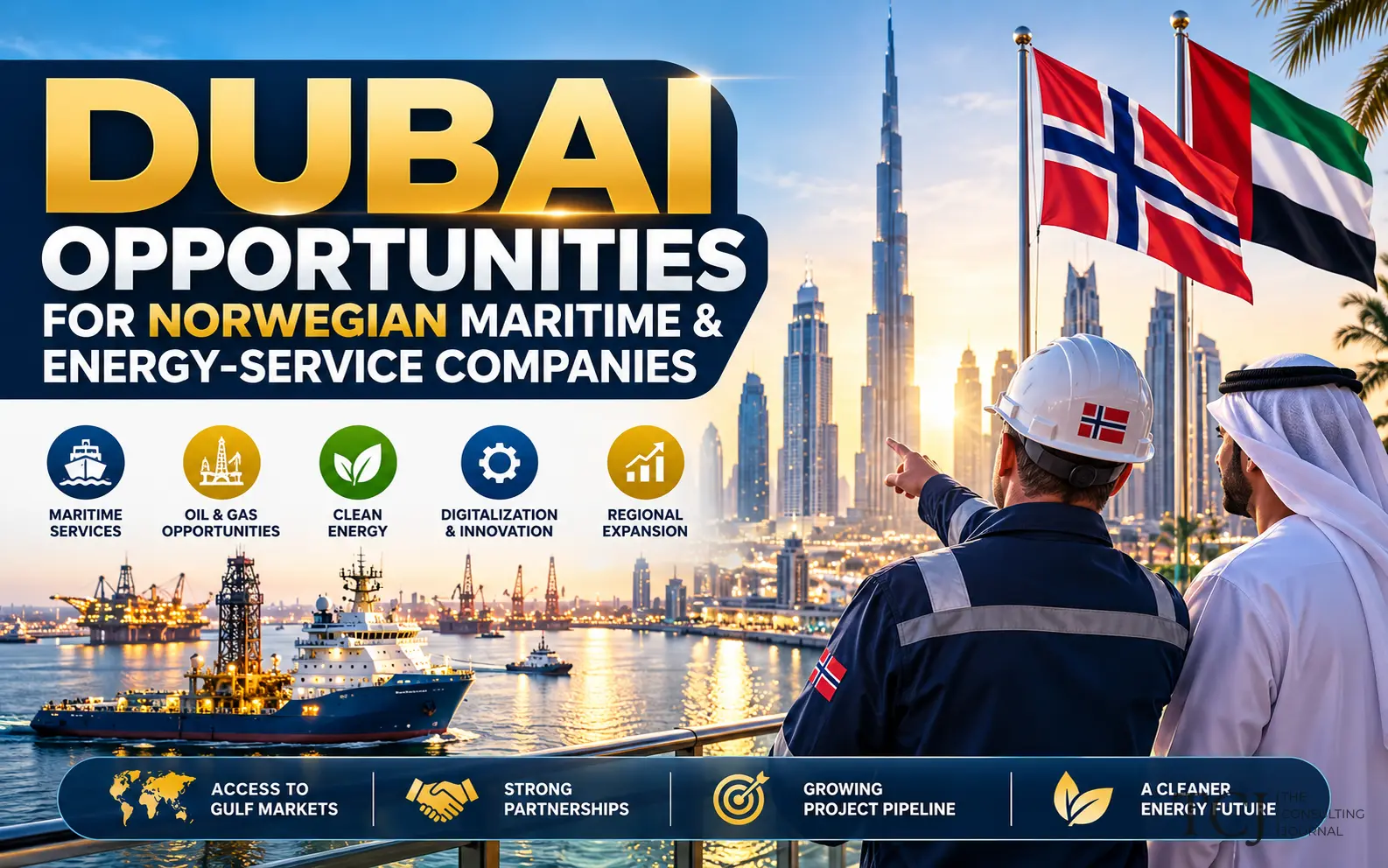
Dubai Opportunities for Norwegian Maritime and Energy-Service Companies
Dubai offers Norwegian maritime and energy-service companies opportunities in vessel services, offshore energy, electrification, digital technology and Gulf market expansion.
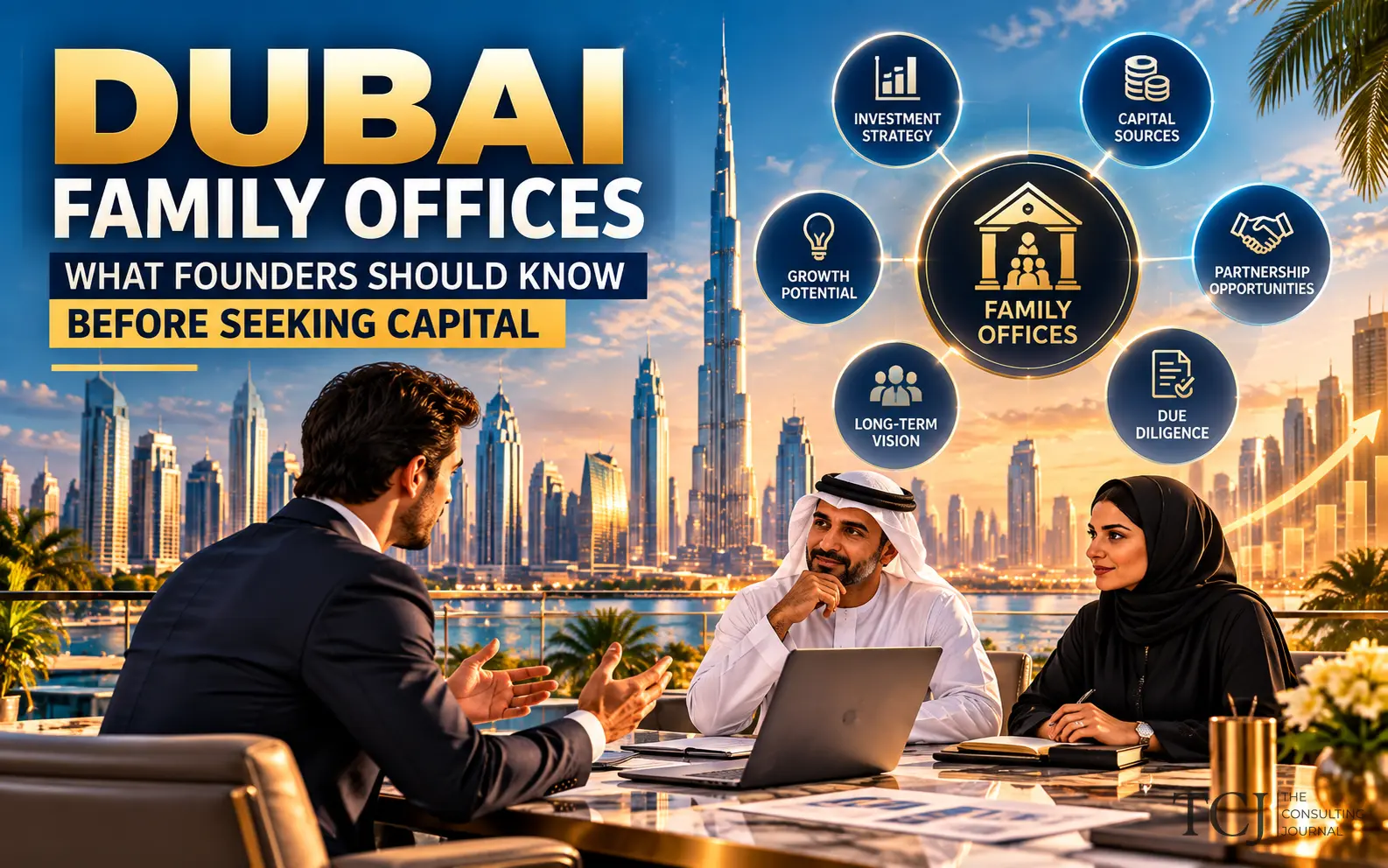
Dubai Family Offices: What Founders Should Understand Before Seeking Capital
A practical guide to approaching Dubai family offices, qualifying investor fit, preparing financial records, checking counterparties and evaluating funding terms.