High-Demand Doctor Specialties in the UAE: 11 Career Paths Shaping Healthcare
A practical guide for doctors assessing high-demand UAE medical specialties, licensing readiness, career planning, and long-term healthcare opportunities.
Key takeaways
- Specialist demand in the UAE is shaped by population health needs, private hospital expansion, preventive care and medical tourism.
- Doctors should assess licensing readiness before comparing salaries or applying for UAE clinical roles.
- Radiology, cardiology, emergency medicine, pediatrics and endocrinology remain closely linked to long-term healthcare needs.
- Cosmetic, women’s health, mental health and sports medicine services continue to create private-sector opportunities.
- Career planning should consider authority requirements, employer type, subspecialty depth and clinical documentation.
Why UAE Healthcare Is Attracting Specialist Doctors
The UAE healthcare sector has moved beyond basic capacity building. Hospitals, specialty clinics and integrated medical centres now compete on clinical quality, patient experience, technology and specialist depth. For doctors, this creates opportunity, but also a more selective market.
The strongest candidates are usually those who understand three things before applying: where patient demand is growing, how UAE licensing works, and how their specialty fits the private or government healthcare model. The original article brief focused on 11 in-demand fields, including emergency medicine, pediatrics, radiology, cardiology, oncology, dermatology, orthopedics, psychiatry, endocrinology, obstetrics and gynecology, and anesthesiology.
MoHAP’s National Health and Nutrition Survey 2024-2025 also reinforces why preventive care, maternal and child health, chronic disease management and non-communicable disease planning remain central to UAE healthcare priorities.
What Is Driving Demand for Medical Specialists in the UAE?
Specialist demand in the UAE is not driven by one factor. It comes from several overlapping pressures.
Dubai and Abu Dhabi continue to attract residents, investors, business owners, international families and medical tourists. The UAE Government also notes that medical tourism portals such as Dubai Health Experience allow international patients to access and book healthcare services, which supports demand for specialists in cosmetic care, orthopedics, dental care, ophthalmology, wellness and advanced treatment areas.
At the same time, the clinical profile of the population is changing. Lifestyle-related conditions, diabetes, obesity, cardiovascular risks, fertility needs, mental health awareness and aging-related concerns all increase the need for focused medical expertise. Dubai’s reported diabetes prevalence moved from 13.7% in 2019 to 12.9% in 2024, but the condition remains a major public health focus, particularly for endocrinology, cardiology and preventive medicine.
11 High-Demand Doctor Specialties in the UAE
1. Emergency Medicine
Emergency medicine remains a practical priority because UAE hospitals require reliable 24/7 coverage, rapid triage, trauma response and coordination with intensive care, surgery and diagnostics.
Doctors with strong emergency department exposure, trauma experience and good documentation discipline are often better positioned than candidates who only highlight years of service. In practice, UAE employers look closely at decision-making under pressure, communication with multilingual patients and readiness to work within structured hospital protocols.
2. Pediatrics
Pediatrics continues to matter because the UAE has a large family population and a strong focus on preventive child healthcare. Pediatricians are needed across hospitals, family clinics, vaccination programmes, urgent care settings and developmental health services.
A pediatrician entering the UAE market should prepare evidence of pediatric experience, board certification where applicable, procedure logs if relevant and clear references. Communication skills matter here. Parents in Dubai, Abu Dhabi and Sharjah often expect detailed explanations, careful follow-up and strong coordination with schools or allied health providers.
3. Radiology
Radiology is one of the most strategically important specialties because modern hospitals depend on imaging for diagnosis, treatment planning and emergency decisions.
Demand is particularly strong where radiologists can support MRI, CT, ultrasound, women’s imaging, musculoskeletal imaging or interventional radiology. AI is changing workflows, but in the UAE market it is more likely to reward radiologists who can combine clinical interpretation with technology adoption rather than replace senior diagnostic judgement.
4. Cardiology
Cardiology remains a high-demand specialty because cardiovascular risk is closely tied to diabetes, obesity, sedentary work patterns, stress and aging populations.
Hospitals value cardiologists who can support preventive cardiology, cardiac imaging, interventional procedures, heart failure care and long-term chronic disease management. For doctors considering Dubai, cardiology can be attractive, but competition is also strong. Subspecialty depth and recognised qualifications can make a major difference.
The strongest UAE healthcare careers are usually built at the intersection of patient need, licensing readiness and long-term service demand. — The Consulting Journal
5. Oncology
Oncology demand is supported by earlier diagnosis, cancer screening, precision medicine, multidisciplinary care and the expansion of specialist centres.
Doctors in medical oncology, radiation oncology, surgical oncology and hematology-oncology may find opportunities where hospitals are building integrated cancer programmes. Employers usually value candidates who are comfortable working with tumour boards, treatment protocols, patient counselling and complex documentation.
6. Dermatology
Dermatology is especially visible in Dubai because it sits between clinical medicine and aesthetic services. Demand comes from acne, eczema, psoriasis, hair loss, skin cancer screening, laser procedures, injectables and cosmetic dermatology.
The private sector can be attractive, but it is also brand-sensitive. Dermatologists need more than technical skill. They need patient trust, ethical consultation habits and realistic communication around outcomes.
7. Orthopedics
Orthopedics benefits from the UAE’s active lifestyle, sports culture, trauma cases, aging patients and demand for joint, spine and sports injury care.
Subspecialties such as sports medicine, joint replacement, spine surgery, pediatric orthopedics and hand surgery may offer stronger positioning than general orthopedic experience alone. Procedure logs, outcome records and hospital references are especially important for surgical candidates.
8. Psychiatry
Psychiatry is gaining relevance as awareness around mental health, workplace stress, adolescent wellbeing and addiction support improves.
The UAE market still requires careful cultural understanding. Psychiatrists need to work sensitively with families, employers, schools and multidisciplinary teams. Doctors with experience in anxiety, depression, child and adolescent psychiatry, addiction medicine or workplace mental health may find growing demand.
9. Endocrinology
Endocrinology is closely linked to diabetes, thyroid disease, obesity, metabolic health and hormonal disorders. Given the UAE’s ongoing diabetes prevention and screening focus, this specialty has clear long-term relevance.
Endocrinologists who can work with dietitians, cardiologists, ophthalmologists, nephrologists and primary care teams often add more value than those working in isolation. Integrated chronic care is becoming more important than single-visit treatment.
10. Obstetrics and Gynecology
OB-GYN remains central to women’s health services in the UAE. Demand comes from antenatal care, fertility support, gynecological surgery, menopause care, preventive screening and maternal health services.
Doctors with strong clinical judgement, surgical competence, patient communication and experience in diverse patient populations are well placed. Fertility and minimally invasive gynecological surgery can also strengthen career positioning.
11. Anesthesiology
Anesthesiology is sometimes overlooked by doctors researching “visible” specialties, but hospitals cannot scale surgery without anesthesiologists.
Demand is linked to operating theatre capacity, day surgery, pain management, critical care and specialist surgical programmes. Candidates with ICU exposure, pediatric anesthesia, cardiac anesthesia or pain medicine experience may have an advantage depending on the employer.
Example 1:
A radiologist from South Asia with seven years of MRI and CT experience wants to move to Dubai. On paper, the profile looks strong. In practice, the candidate’s success will depend on verified qualifications, good standing certificates, experience documentation, licensing pathway, subspecialty fit and whether Dubai employers need that exact imaging profile.
Example 2:
A pediatrician working in a busy private hospital wants to shift into the UAE market. The doctor has strong clinical experience but weak documentation. Before applying, the candidate should organise certificates, employment letters, case exposure, continuing medical education records and references. Good preparation can prevent delays during licensing or employer review.
Licensing Readiness Matters Before Salary Negotiation
Doctors should not treat UAE licensing as a final administrative step. It is part of career planning.
The UAE’s Unified Healthcare Professionals Qualification Requirements are used by authorities including MOHAP, DOH, DHA and SHA to assess education, experience and licensure requirements for safe practice.
For Dubai, DHA registration confirms that a professional fulfils requirements for the applied category, title and specialty, and the registration must be activated by a healthcare facility into a licence before the doctor starts practicing.
For Abu Dhabi, DOH lists professional services such as managing a healthcare professional licence and registering a new licence through its official service channels.
For MOHAP-regulated routes, requirements typically include professional evaluation, third-party document verification such as DataFlow, accepted practice history and other supporting conditions depending on the case.
Common Mistakes Business Owners and Doctors Make
Healthcare investors, clinic founders and doctors often make similar mistakes when assessing UAE specialist demand.
- Looking only at salary surveys without checking licensing eligibility.
- Assuming Dubai, Abu Dhabi and the northern emirates follow one identical process.
- Hiring based on specialty title without checking subspecialty depth.
- Underestimating the importance of DataFlow, good standing certificates and experience letters.
- Treating cosmetic demand as easy revenue without considering regulation, patient safety and reputation risk.
- Ignoring multilingual patient communication and cultural sensitivity.
- Applying too broadly instead of matching the doctor’s profile to the right facility type.
Practical Checklist for Doctors Preparing for the UAE Market
Before applying for UAE doctor roles, prepare the following:
- Valid passport and updated professional CV.
- Medical degree, specialty qualification and board certification where applicable.
- Good standing certificate from the relevant medical council.
- Experience certificates matching authority requirements.
- Logbook for surgical or procedural specialties where required.
- Evidence of current licence or registration in the country of practice.
- DataFlow or primary source verification documents, where applicable.
- Continuing medical education records.
- Malpractice insurance details if requested.
- Clear list of procedures, subspecialty skills and hospital exposure.
Final Advisory View
High-demand doctor specialties in the UAE should be assessed with care. A specialty may look attractive because salaries are high, but the better question is whether the doctor’s experience, documentation, licensing eligibility and subspecialty profile match real employer needs.
Emergency medicine, pediatrics, radiology, cardiology, oncology, dermatology, orthopedics, psychiatry, endocrinology, obstetrics and gynecology, and anesthesiology all have credible demand drivers. The strongest career outcomes usually come from preparation rather than rushed applications.
For doctors, the practical next step is to review licensing eligibility first, then compare employer type, emirate, facility reputation and specialty fit. For healthcare investors and clinic operators, demand planning should be tied to patient demographics, regulatory requirements, insurance acceptance, clinical governance and long-term staffing stability.
This article is for informational purposes and does not constitute legal, tax, accounting, or financial advice.
Questions and answers
What are the most high-demand doctor specialties in the UAE?
Emergency medicine, radiology, cardiology, pediatrics, dermatology, endocrinology, oncology, orthopedics, psychiatry, obstetrics and gynecology, and anesthesiology are among the strongest areas. Demand varies by emirate, employer type, subspecialty and licensing readiness.
Is Dubai the best emirate for specialist doctors?
Dubai offers strong private-sector opportunities, especially in dermatology, radiology, cardiology, pediatrics and medical tourism-related services. Abu Dhabi and other emirates may also offer strong roles, particularly in hospitals, government-linked systems and specialist centres.
Can international doctors work in the UAE?
Yes, international doctors can work in the UAE after meeting the relevant licensing, qualification, experience and verification requirements. The applicable authority depends on where the doctor intends to practise, such as DHA for Dubai, DOH for Abu Dhabi or MOHAP for several other emirates.
Which specialty is best for doctors in Dubai?
There is no single best specialty for every doctor. Dermatology, radiology, cardiology, orthopedics and obstetrics and gynecology can be attractive in Dubai, but the right choice depends on the doctor’s training, lifestyle goals, subspecialty and licensing eligibility.
What should doctors prepare before applying for UAE roles?
Doctors should prepare verified qualifications, good standing certificates, experience letters, an updated CV, logbooks for procedural specialties and evidence of current registration. Reviewing licensing requirements before applying can prevent delays and mismatched job applications.
More in Medical Career
View all Medical Career →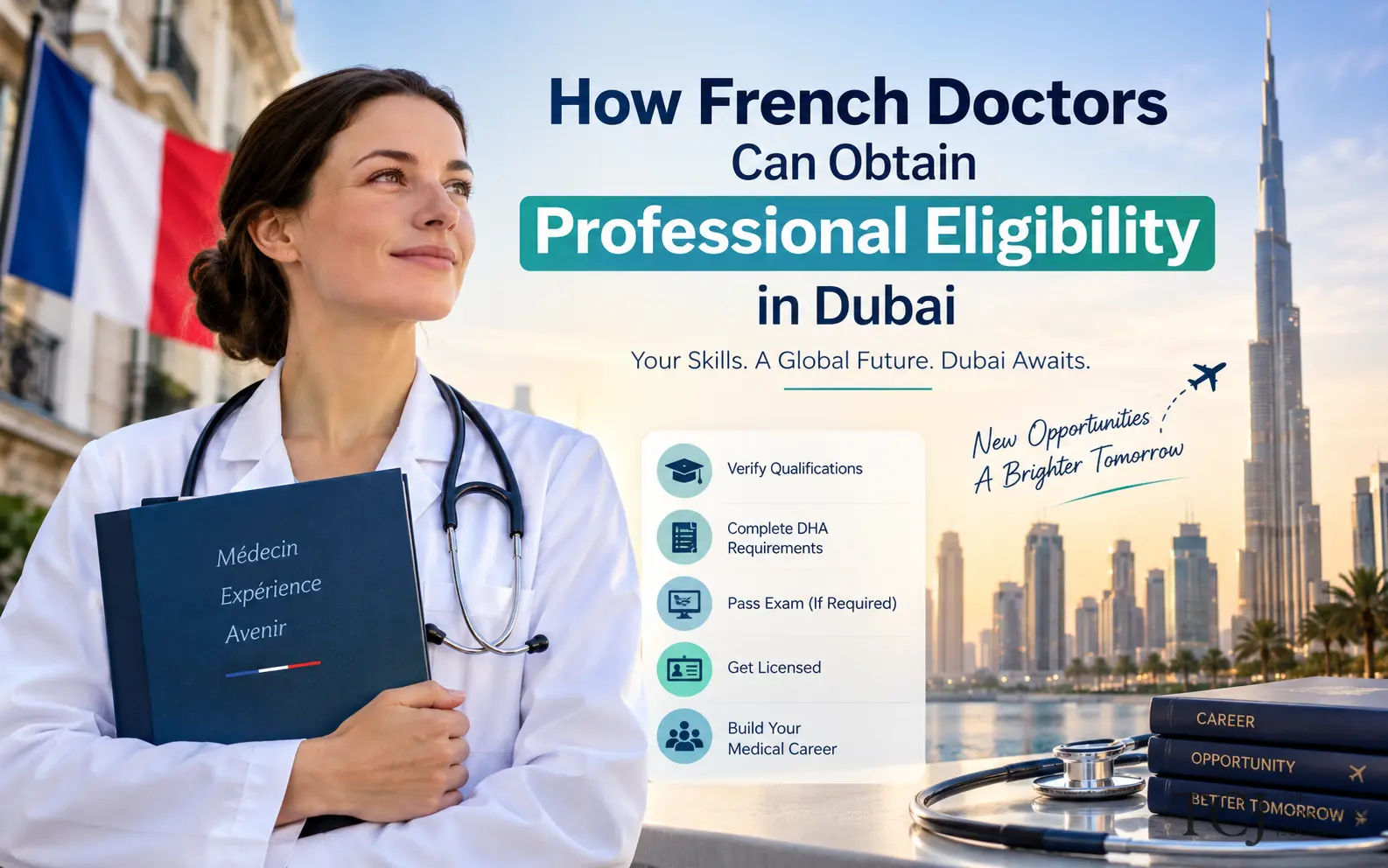
How French Doctors Can Obtain DHA Eligibility and a Medical License in Dubai
French doctors planning to practise in Dubai must match their qualifications and experience to DHA requirements, complete credential verification and obtain an activated professional license before beginning clinical work.
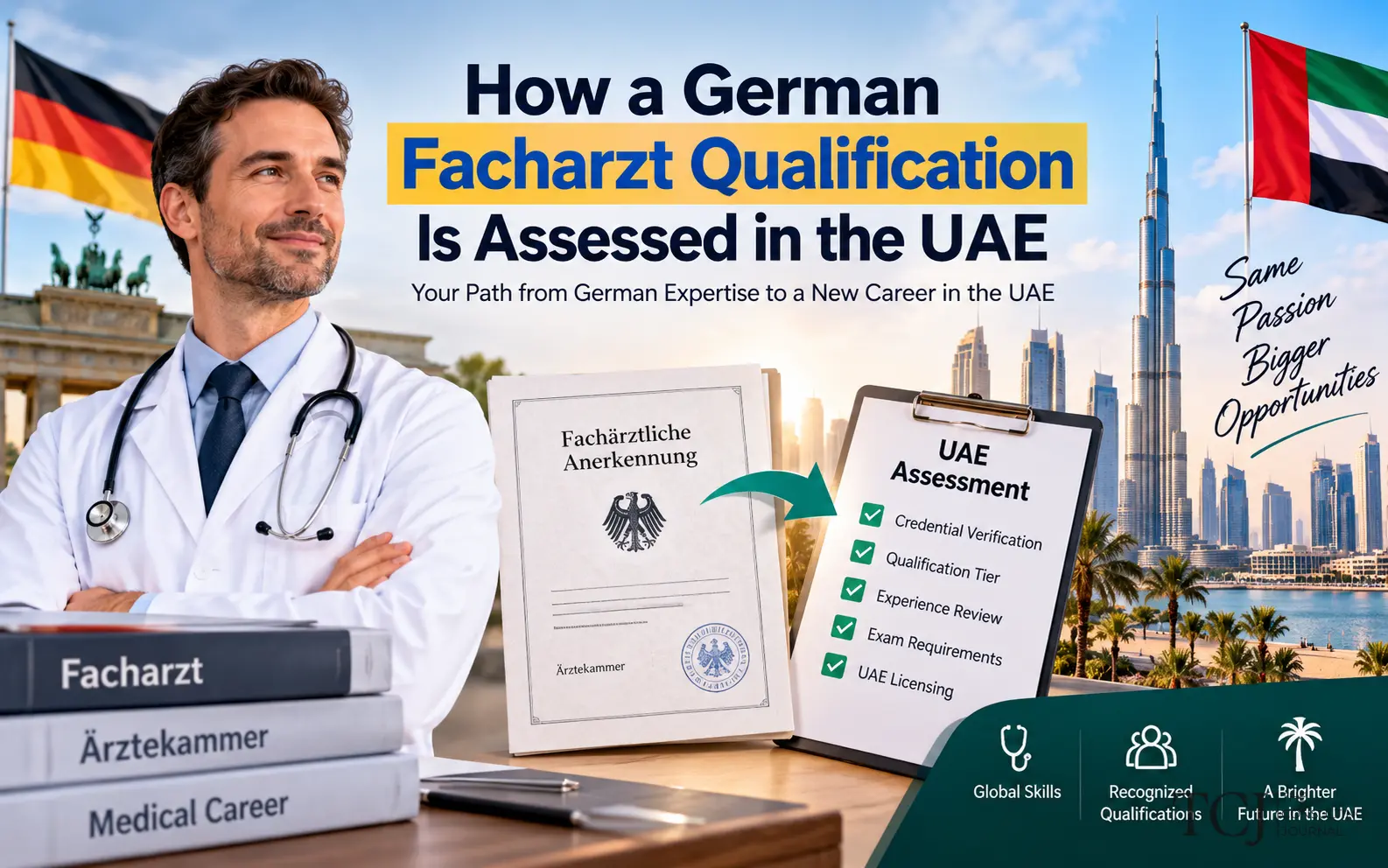
How German Facharzt Qualifications Are Assessed in the UAE
German Facharzt qualifications are recognised under the UAE healthcare licensing framework, but Oberarzt status, qualification tier, experience, verification and the professional title requested can materially affect the assessment.
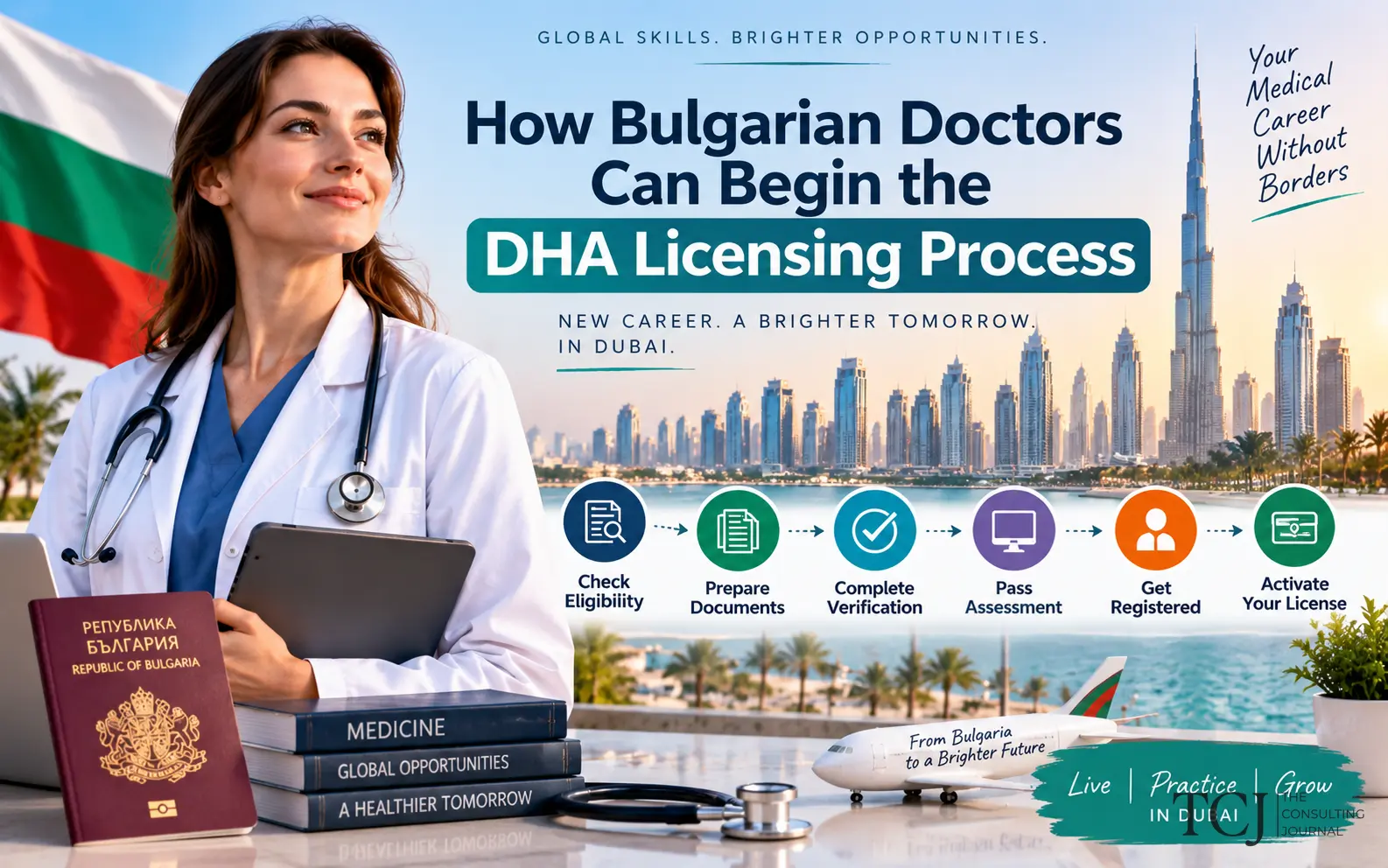
DHA Licensing for Bulgarian Doctors: Dubai Step-by-Step Guide
Bulgarian doctors considering a move to Dubai should understand the difference between DHA eligibility, DataFlow verification, assessment, registration and final professional license activation.