How Blockchain Can Reduce Business Fraud in UAE Companies
Blockchain can help UAE businesses reduce fraud by creating shared records, stronger audit trails, verified approvals, and clearer vendor accountability.
Key takeaways
- Blockchain can reduce fraud by creating shared, time-stamped, and difficult-to-alter business records.
- UAE companies should begin with one fraud-prone workflow, such as invoice approval, supplier verification, or asset tracking.
- Smart contracts can improve consistency, but they should only automate clear and well-reviewed business rules.
- Blockchain does not replace Accounting controls, audits, VAT records, corporate tax documentation, or management oversight.
- Privacy, access control, data quality, and system integration should be reviewed before any blockchain rollout.
How can blockchain reduce business fraud for UAE companies?
Blockchain can reduce business fraud by creating shared, time-stamped, and difficult-to-alter records. For UAE companies, this can support stronger invoice checks, vendor verification, asset tracking, approval trails, and audit readiness. The value is not only technical. It comes from better accountability across finance, operations, suppliers, and management.
The uploaded source article provided the starting topic and outline direction for this Sanity-ready rewrite. IBM defines blockchain as a shared, immutable digital ledger used to record transactions and track assets across a business network. That “single source of truth” is useful where companies need trusted records between departments, suppliers, auditors, banks, and regulators.
For a UAE SME, this matters because many fraud risks are not dramatic cybercrimes. They are often practical control failures: duplicate supplier payments, weak invoice matching, manual approval gaps, missing delivery evidence, unverified vendors, or unclear ownership of stock and assets.
Why does business fraud remain a practical risk?
Business fraud remains a risk because many companies still depend on manual documents, isolated systems, and trust-based approvals. Fraud can happen when one person can create, approve, change, and reconcile records without proper review. Blockchain helps by making records more visible and harder to quietly amend.
The Association of Certified Fraud Examiners’ 2024 Report to the Nations reviewed 2,402 occupational fraud cases across 143 countries and territories, showing that fraud is a global operational problem, not only a large-company issue.
In the UAE, growing companies often move quickly. A mainland trading company may add new suppliers every month. A Dubai free zone consultancy may invoice clients across several jurisdictions. A logistics business may depend on delivery documents from several parties. When controls do not grow at the same pace as the business, fraud risk increases.
Common fraud areas include:
- Fake or inflated invoices
- Duplicate supplier payments
- Unapproved discounts or credit notes
- False expense claims
- Payroll irregularities
- Inventory substitution
- Counterfeit goods in supply chains
- Unauthorised changes to accounting records
- Misuse of digital credentials
What does blockchain change in accounting and controls?
Blockchain changes the control environment by reducing dependence on one editable database. It can create a shared transaction history where approved users see the same record. This can strengthen Accounting, Financial, and Tax documentation when the business also maintains proper bookkeeping and approval policies.
Blockchain does not replace accounting software, ERP systems, VAT records, corporate tax documentation, or statutory books. In practice, it works best as a supporting layer for transactions where multiple parties need to trust the same evidence.
For example, a blockchain record may show:
- When a purchase order was approved
- Which supplier was verified
- When goods were dispatched
- Who confirmed delivery
- Whether the invoice matched agreed terms
- When payment approval was completed
This creates a stronger audit trail than email approvals scattered across inboxes.
A good blockchain project should not start with technology; it should start with the fraud risk, the control gap, and the evidence the business needs to trust. — Consultant observation, KPM Global Services UAE
How can blockchain prevent invoice and payment fraud?
Blockchain can reduce invoice and payment fraud by linking supplier identity, purchase orders, delivery proof, invoice details, and payment approvals into one verified workflow. This makes it harder for a fake invoice or altered payment instruction to pass through unnoticed.
In many UAE businesses, invoice fraud happens because finance teams receive documents from different channels. A supplier may email an invoice. A manager may approve through WhatsApp or email. Delivery proof may sit with operations. Payment details may be updated manually.
A permissioned blockchain workflow can require each step to be verified before payment proceeds. Smart contracts can also enforce agreed conditions, such as payment only after delivery confirmation and invoice matching.
This is especially useful for companies with repeated supplier transactions, project-based billing, or multi-location approvals.
Example 1:
A fictional Dubai-based interior fit-out company handles multiple subcontractors for commercial projects. Previously, supplier invoices were approved by project managers through email, while delivery records were held separately by site supervisors. After introducing a permissioned ledger for purchase approvals and delivery confirmation, the finance team can match approved supplier identity, site receipt, and invoice amount before releasing payment.
The fraud risk is not eliminated, but the opportunity for duplicate billing and informal approval is reduced.
How does blockchain support supply chain trust?
Blockchain supports supply chain trust by improving traceability. It can record product movement from origin to delivery, helping companies verify suppliers, batches, certificates, and ownership changes. This is useful for sectors where counterfeit products, substitutions, or unclear documentation can damage customer trust.
Deloitte notes that blockchain can improve supply chain transparency and traceability while also reducing administrative costs. This is relevant for UAE businesses involved in food trading, electronics, pharmaceuticals, spare parts, luxury goods, construction materials, and logistics.
For example, a UAE distributor importing branded components may use blockchain records to confirm shipment origin, customs documentation, warehouse receipt, and customer delivery. If a dispute arises, the business has a clearer evidence trail.
Blockchain can help answer practical questions:
- Did the goods come from an approved supplier?
- Was the batch number changed?
- Who handled the shipment?
- Was the delivery accepted?
- Were certificates uploaded before sale?
- Did the customer receive the correct product?
Example 2:
A fictional Sharjah-based food importer supplies restaurants in Dubai and Abu Dhabi. The company faces recurring disputes over expiry dates and delivery conditions. By recording supplier batch data, temperature logs, warehouse receipt, and delivery acceptance on a shared ledger, it gives its internal team and key customers a clearer trace of product handling.
This does not replace quality control, but it improves accountability.
Can smart contracts improve compliance?
Smart contracts can improve compliance by automatically applying business rules when defined conditions are met. They can reduce manual discretion in routine approvals, but they must be carefully reviewed before use. Poorly written rules can create operational, legal, or Financial reporting issues.
A smart contract might release a payment only when three conditions are satisfied: delivery confirmation, invoice approval, and budget availability. Another smart contract may block a vendor payment if required documents have expired.
Useful smart contract applications include:
- Supplier onboarding checks
- Payment approval rules
- Contract milestone verification
- Budget threshold controls
- Asset transfer records
- Compliance document reminders
For Tax and Accounting teams, the benefit is better consistency. The business can show why a transaction occurred, who approved it, and which evidence supported it.
Still, companies should not automate unclear processes. A weak manual process becomes a weak digital process. The first step is to document the policy, approval matrix, and exception handling.
What are the limits of blockchain in fraud prevention?
Blockchain has limits because it cannot guarantee that the original data entered is true. If a false delivery note, fake supplier certificate, or incorrect invoice is approved at the source, blockchain may preserve that bad data. Businesses still need verification, segregation of duties, and management review.
This is the “garbage in, garbage out” problem. Blockchain can protect the integrity of a record after entry, but it cannot replace commercial judgement.
Other practical limitations include:
- Implementation cost
- Integration with ERP and accounting systems
- Staff training requirements
- Privacy and data protection concerns
- Vendor dependency
- Poorly designed smart contracts
- Lack of clear ownership between departments
UAE businesses should also consider data protection when blockchain involves personal data, employee records, customer information, or identity verification. The UAE’s official portal describes the Personal Data Protection Law as the first federal law focused on personal data protection, and businesses should assess privacy obligations before storing or sharing sensitive data in any new technology system.
What common mistakes do business owners make?
Many business owners treat blockchain as a technology purchase rather than a control project. The result is often a costly system that does not solve the real fraud risk.
Common mistakes include:
- Starting with blockchain before mapping the fraud problem
- Using public ledgers for sensitive business data without privacy review
- Failing to define who can approve, amend, or view records
- Automating weak approval policies
- Ignoring accounting, VAT, and corporate tax documentation needs
- Not training finance and operations teams
- Assuming blockchain removes the need for audits
- Forgetting vendor due diligence
- Not reviewing smart contracts before launch
The better approach is controlled and practical. Start with one use case, measure the result, and expand only when the process works.
What documents should a UAE company prepare before adoption?
A UAE company should prepare its process documents before adopting blockchain. This helps the business decide whether blockchain is suitable, what data should be recorded, who should access it, and how it will support audit, Accounting, Financial reporting, and compliance requirements.
Preparation checklist:
- Current fraud risk register
- Supplier onboarding policy
- Approval matrix
- Delegation of authority
- Invoice and payment workflow
- Purchase order process
- Delivery confirmation process
- ERP or accounting software structure
- User access list
- Data protection assessment
- Contract templates
- Internal audit findings
- VAT and corporate tax recordkeeping requirements
- Management reporting needs
- Vendor technology proposal
- Smart contract review notes
For smaller businesses, the first project should be narrow. Vendor verification, duplicate payment controls, asset tracking, or delivery confirmation are often more realistic than a full enterprise blockchain rollout.
How can KPM Global Services UAE assist?
KPM Global Services UAE can assist businesses in Dubai and across the UAE by reviewing fraud-prone workflows, Accounting records, approval controls, supplier processes, and documentation readiness before technology is selected. The advisory focus should be practical: identify the control gap first, then decide whether blockchain, ERP controls, access restrictions, or audit procedures are the right solution.
Support may include:
- Fraud risk review
- Finance process mapping
- Supplier and invoice control assessment
- Accounting system review
- Documentation readiness checks
- Internal control design
- VAT and corporate tax record alignment
- Management reporting improvements
- Technology implementation coordination
- Policy and procedure development
This is especially useful for SMEs that have grown quickly and now need stronger controls without slowing down daily operations.
Final advisory conclusion
Blockchain can reduce business fraud when it gives the company better evidence, stronger accountability, and fewer opportunities for quiet record manipulation. It is most useful where several parties need to trust the same transaction history, such as suppliers, logistics teams, finance departments, auditors, and management.
For UAE companies, the best starting point is not a large blockchain programme. It is a focused review of where fraud could occur today. Once that risk is clear, the business can decide whether blockchain is suitable or whether simpler controls should come first.
This article is for informational purposes and does not constitute legal, tax, accounting, or financial advice.
Questions and answers
Can blockchain stop all types of business fraud?
No. Blockchain can reduce certain fraud risks, especially record manipulation, duplicate payments, and weak audit trails. Businesses still need internal controls, employee training, management review, and proper Accounting records.
Is blockchain useful for UAE SMEs?
Yes, but only when the use case is clear. UAE SMEs should usually start with one practical area, such as supplier verification, invoice matching, delivery confirmation, or asset tracking.
How does blockchain help with fake invoices?
Blockchain can link supplier identity, purchase orders, delivery evidence, invoice approval, and payment records. This makes it harder for a fake or duplicate invoice to move through the process without being detected.
Should a company use public or permissioned blockchain?
Permissioned blockchain is typically more suitable for business records because access can be limited to approved users. Public blockchains may create privacy and confidentiality concerns, depending on the data involved.
Does blockchain replace audits and accounting software?
No. Blockchain supports stronger evidence and transaction history, but it does not replace audits, bookkeeping, ERP systems, VAT compliance, corporate tax records, or Financial reporting controls.
More in Crypto
View all Crypto →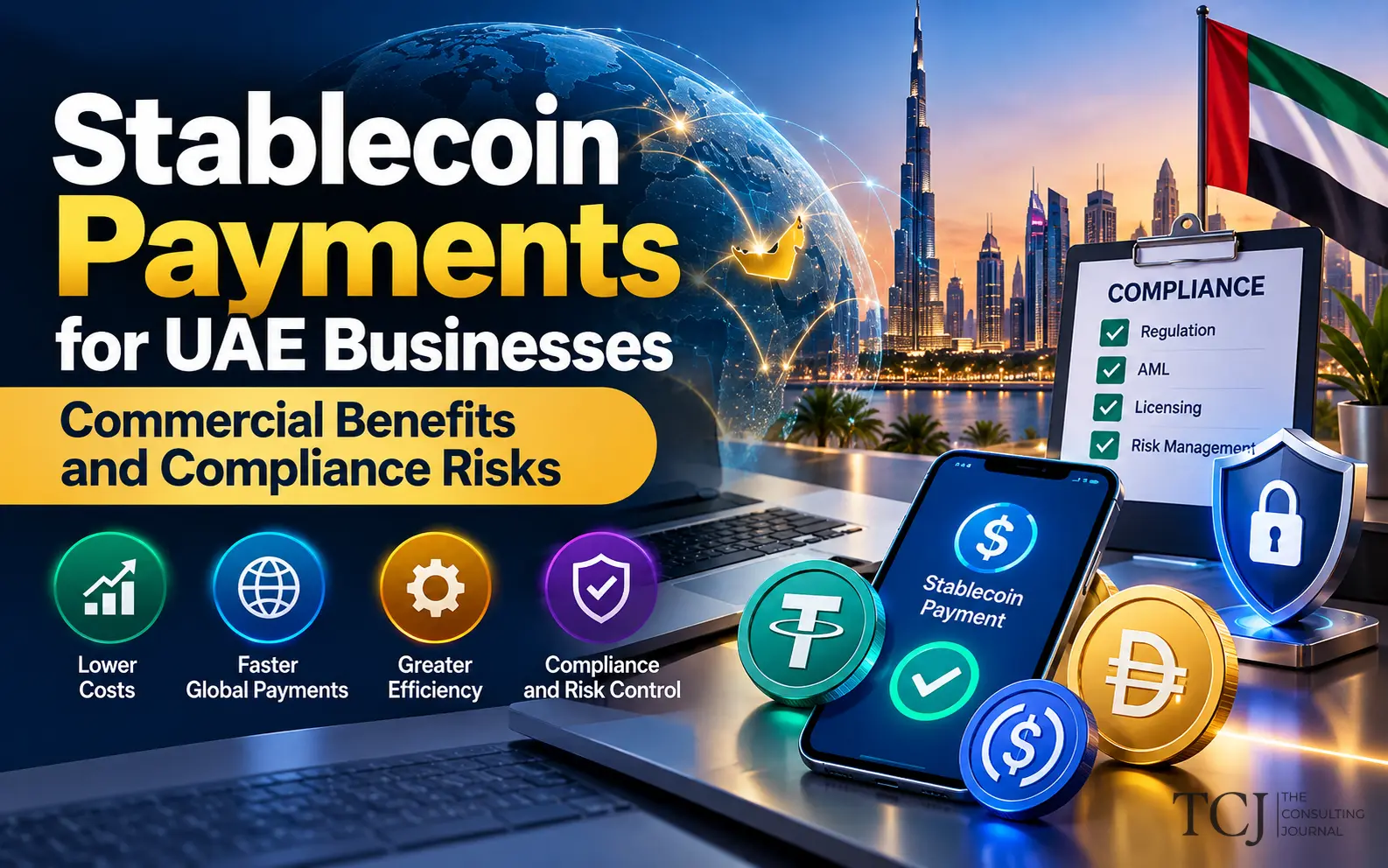
Stablecoin Payments for UAE Businesses: Benefits, Regulations and Risks
Stablecoin payments offer UAE businesses new possibilities for cross-border settlements and financial operations. Explore commercial benefits, CBUAE regulations, compliance risks, and practical steps before adoption.
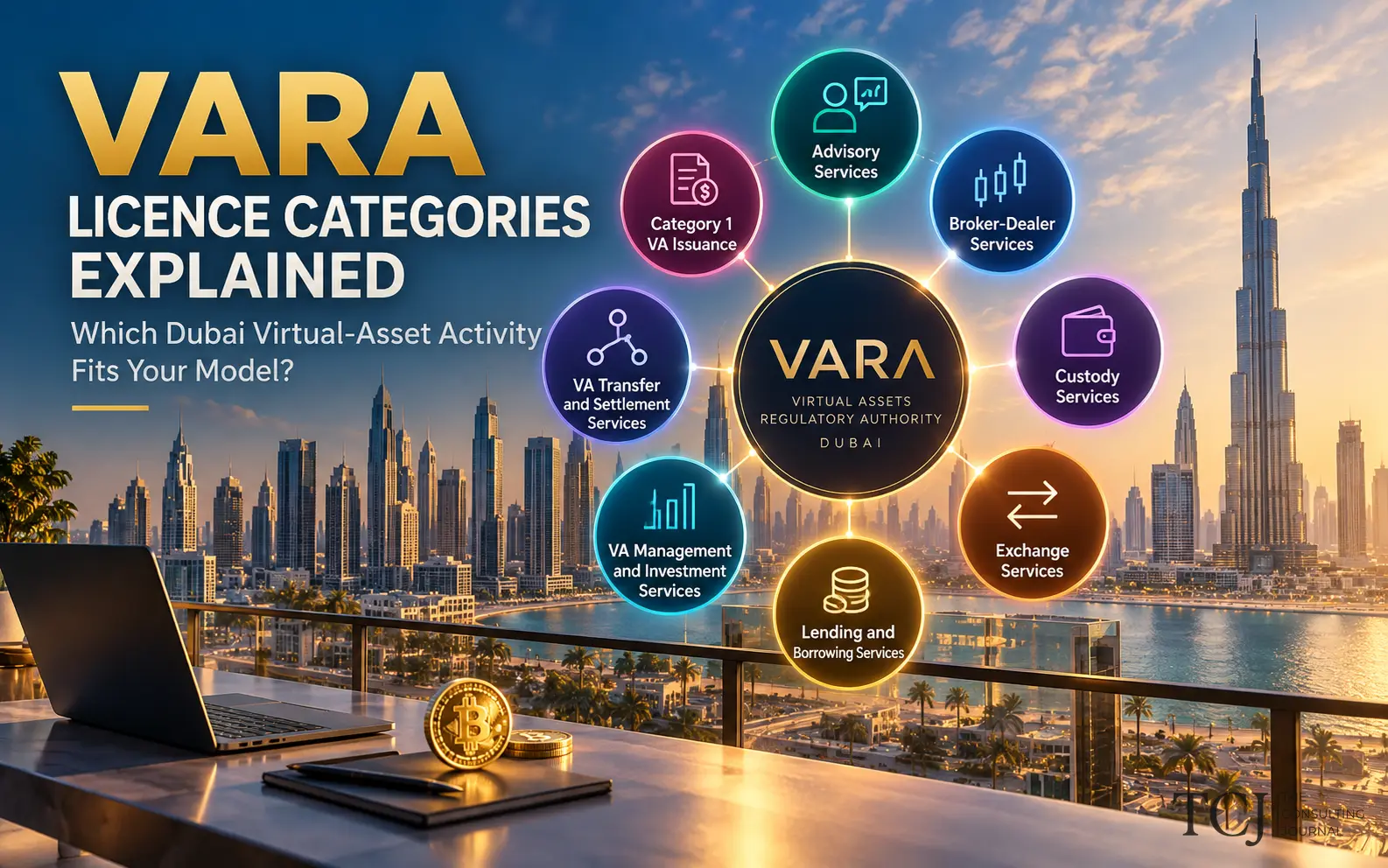
VARA Licence Categories Explained: Which Dubai Virtual-Asset Activity Fits Your Model?
Dubai’s virtual-asset framework is activity based, meaning there is no single generic crypto licence. This guide explains the eight VARA licence categories, how different business models may fall within them, and what founders should assess before launching a virtual-asset business in Dubai.

When Does a Spanish Digital-Asset Business Need a VARA Licence in Dubai?
Spanish crypto and digital-asset firms expanding to Dubai need to assess activities, entity location, marketing and licensing separately. This guide explains when VARA may apply, how MiCA fits, and what businesses should prepare before launch.