How to Choose an Accountant in Ajman: 12 Practical Checks
Hiring an accountant in Ajman is not only about bookkeeping. Business owners should assess UAE tax knowledge, reporting discipline, software skills, communication, pricing, and industry experience before appointing an accounting partner.
Key takeaways
- Choose an accountant who understands Ajman licensing, UAE VAT, Corporate Tax, and accounting records.
- Do not appoint an accountant based only on low monthly fees.
- Ask for monthly reports, filing calendars, software access, and clear service scope before signing.
- Industry experience matters because retail, construction, e-commerce, and services have different accounting risks.
- KPM Global Services UAE can support bookkeeping, tax readiness, reporting, and CFO-style financial oversight.
How to Choose an Accountant in Ajman: 12 Practical Checks
Hiring an accountant in Ajman should not be treated as a last-minute admin task. The right accountant helps a business keep clean records, understand cash flow, meet UAE Tax obligations, prepare for banking reviews, and make better Financial decisions.
The wrong accountant may still record invoices, but leave gaps in VAT files, Corporate Tax readiness, payroll records, supplier reconciliations, or management reporting. These gaps often appear when the business applies for finance, faces an audit, changes ownership, or prepares for expansion into Dubai or another UAE emirate.
What should you look for when hiring an accountant in Ajman?
Look for an accountant who combines technical Accounting knowledge, UAE Tax awareness, industry experience, reliable communication, software competence, and clear pricing. In practice, Ajman businesses should also check whether the accountant understands mainland and free zone operations, VAT thresholds, Corporate Tax filing timelines, recordkeeping expectations, payroll documentation, and monthly management reporting.
This article gives business owners a practical checklist before appointing an accountant or Accounting firm in Ajman.
Why does the right accountant matter for an Ajman business?
A good accountant gives you more than tidy books. They help you understand what your numbers mean, what needs attention, and what records must be ready before deadlines arrive. This matters because UAE businesses now operate in a more formal Tax and compliance environment than many owners were used to a few years ago.
For example, UAE VAT registration is mandatory for resident businesses when taxable supplies and imports exceed AED 375,000 over the previous 12 months or are expected to exceed that amount within the next 30 days. Voluntary registration may apply from AED 187,500.
Corporate Tax has also changed the role of Accounting. The UAE Ministry of Finance states that Corporate Tax applies to financial years beginning on or after 1 June 2023, and taxable persons are generally required to file a Corporate Tax return within nine months from the end of the relevant tax period.
For an Ajman SME, this means Accounting cannot be limited to year-end entries. Records, reconciliations, invoices, expense support, bank statements, and tax positions should be maintained throughout the year.
Strong accounting is not only about recording what happened; it is about giving business owners enough clarity to decide what should happen next. — Consultant observation, KPM Global Services UAE
What qualifications should an accountant have?
A suitable accountant should have formal education in Accounting, finance, commerce, or business, supported by practical UAE experience. Certifications such as ACCA, CPA, CMA, CA, or equivalent qualifications are useful, but they should be assessed together with hands-on knowledge of UAE VAT, Corporate Tax, payroll, reporting, and audit preparation.
Business owners sometimes focus only on certificates. Qualifications matter, but they are not enough on their own. Ask how the accountant handles monthly closing, missing documents, VAT reconciliations, intercompany balances, owner withdrawals, and expense classifications.
For smaller businesses, the best accountant is often someone who can explain numbers clearly. If you cannot understand your monthly report, the report is not doing its job.
Does local Ajman and UAE experience matter?
Yes. Local experience matters because Ajman businesses may operate through mainland licences, free zone entities, branches, warehouses, retail outlets, e-commerce channels, or professional service structures. Each setup can affect invoicing, recordkeeping, payroll, banking, and Tax documentation.
An accountant with UAE experience should understand how trade licences, lease documents, bank accounts, customs records, import documentation, and authority registrations connect to the accounting file.
For example, an Ajman trading company selling to customers in Dubai, Sharjah, and other emirates needs more than sales entries. It needs proper tax invoices, supplier matching, stock records, bank reconciliations, and customer ageing reports.
Example 1:
A fictional Ajman-based building materials trader appointed a low-cost bookkeeper who entered sales invoices but did not reconcile supplier statements or track landed costs. When the owner reviewed margins, the numbers looked profitable, but cash was tight. A more experienced accountant later found that freight, customs charges, discounts, and damaged stock were not being properly allocated.
Example 2:
A fictional consulting firm in Ajman Free Zone expanded into Dubai clients and began crossing revenue thresholds faster than expected. The owner assumed VAT registration could wait until year-end. A UAE-aware accountant reviewed turnover, checked the rolling 12-month position, and advised the business to assess registration before delays became a compliance issue.
How important is UAE VAT and Corporate Tax knowledge?
It is essential. An accountant in Ajman should understand VAT registration, VAT return preparation, input tax support, tax invoice requirements, Corporate Tax registration, tax period planning, deductible expense logic, and record retention. They do not need to act as a tax lawyer, but they must know when a matter needs deeper Tax advice.
The FTA states that VAT registration applications must be submitted within 30 days of becoming required to register, and late registration penalties may apply if the deadline is missed.
For Corporate Tax, the FTA has reminded taxable persons to retain records and documents supporting tax returns. It has also stated that Corporate Tax records should generally be retained for at least seven years following the end of the relevant tax period.
Ask the accountant how they monitor deadlines. A reliable answer should mention a compliance calendar, client document reminders, review checkpoints, and evidence files.
What monthly reports should your accountant provide?
At minimum, an accountant should provide a profit and loss statement, balance sheet, bank reconciliation summary, receivables ageing, payables ageing, VAT position where applicable, and a short management note. Growing SMEs may also need cash flow forecasts, budget comparisons, inventory reports, payroll summaries, and project profitability.
A monthly report should answer practical questions:
- Are sales increasing but collections slowing?
- Which customers are overdue?
- Are supplier balances accurate?
- Are owner withdrawals clearly recorded?
- Is VAT payable being planned in advance?
- Are margins improving or weakening?
- Are expenses supported by valid documents?
Many Ajman owners only see accounting reports when the year is over. That is too late for decision-making. A useful accountant closes the month regularly and flags issues while they can still be corrected.
Should the accountant understand accounting software?
Yes. Modern Accounting should use reliable software, not scattered spreadsheets. The right accountant should be comfortable with cloud systems or structured desktop systems, depending on the business size, activity, and control needs.
Common tools include Zoho Books, QuickBooks, Xero, Tally, Sage, and ERP modules for larger businesses. The software itself is not the main issue. What matters is setup quality.
Check whether the accountant can configure:
- Chart of accounts
- VAT categories
- Customer and supplier ledgers
- Inventory or service items
- User permissions
- Bank feeds or imports
- Document attachments
- Monthly closing reports
Poor software setup creates long-term problems. A wrong VAT code, duplicated customer, or messy chart of accounts can distort reports for months.
How should you evaluate communication and responsiveness?
Choose an accountant who communicates before problems become urgent. They should explain Accounting and Tax matters in plain language, respond within agreed timelines, and give clear document requests. Slow communication can lead to missed filings, delayed invoices, unpaid suppliers, and poor cash planning.
Before appointing an accountant, ask:
- Who will be my day-to-day contact?
- How often will we review reports?
- What is the normal response time?
- Will I receive deadline reminders?
- How will urgent Tax or banking queries be handled?
A good accountant should not make the owner chase every update. At the same time, business owners must also provide documents on time. Accounting works best when both sides follow a rhythm.
How transparent should pricing be?
Pricing should be clear enough that the business owner understands what is included, what is excluded, and what triggers additional fees. A low headline fee can become expensive if VAT filing, payroll, management reports, software setup, audit support, or Corporate Tax assistance are excluded.
Ask for a written scope covering:
- Bookkeeping frequency
- Number of monthly transactions
- VAT return support
- Corporate Tax support
- Payroll processing
- Management reports
- Software subscription responsibility
- Catch-up accounting fees
- On-site visit charges
- Audit coordination
- Advisory hours
Avoid comparing accountants only by monthly fee. Compare service depth, review quality, experience, reporting usefulness, and accountability.
What industry experience should you ask about?
Industry experience matters because Accounting risks differ by activity. A restaurant, clinic, construction contractor, e-commerce seller, logistics company, and consultancy do not have the same documents, margins, controls, or Tax issues.
For example:
- Retail businesses need inventory, POS, cash, and card reconciliation.
- Construction businesses need project costing, retention, advances, and subcontractor tracking.
- E-commerce businesses need platform settlements, payment gateway fees, returns, and cross-border documentation.
- Professional services firms need revenue recognition, payroll, owner drawings, and client receivables.
- Importers need customs documents, landed cost allocation, and supplier currency tracking.
Depending on the activity, ask whether the accountant has handled similar clients in Ajman, Dubai, Sharjah, or other UAE markets.
What questions should you ask before hiring an accountant?
Use these questions before signing an engagement:
- Which UAE industries do you usually support?
- Do you handle both bookkeeping and management reporting?
- How do you track VAT and Corporate Tax deadlines?
- What monthly reports will I receive?
- Which Accounting software do you recommend for my business?
- How do you handle missing invoices and unsupported expenses?
- Who reviews the work before reports are sent?
- Do you help prepare audit files?
- What is included in your monthly fee?
- Can you support bank, investor, or CFO-style reporting?
- How do you protect client data?
- What do you need from me every month?
The answers will quickly show whether the accountant is a basic data-entry provider or a serious Financial partner.
Common mistakes business owners make
Many UAE business owners appoint accountants too quickly because they want to reduce costs or clear a backlog. That can create avoidable risk.
Common mistakes include:
- Choosing the cheapest provider without checking quality
- Waiting until year-end to clean up records
- Mixing personal and business expenses
- Not reconciling bank accounts every month
- Ignoring VAT registration thresholds
- Treating Corporate Tax as a once-a-year issue
- Not keeping supplier invoices and contracts
- Not reviewing receivables ageing
- Giving software access without user controls
- Assuming free zone status removes all compliance obligations
- Not updating FTA records after licence or address changes
Registered taxpayers must notify the FTA of certain changes to tax records within 20 business days, including changes to trade name, address, business activity, licence renewal or amendment, and authorised signatory details.
Documents and preparation checklist
Before you meet a prospective accountant, prepare a clean information pack. This helps the accountant quote accurately and identify immediate risks.
- Trade licence
- Memorandum of association or incorporation documents
- VAT certificate, if registered
- Corporate Tax registration details, if available
- Emirates ID and passport copies for owners or authorised signatories
- Bank statements for all business accounts
- Sales invoices
- Purchase invoices
- Supplier statements
- Customer ageing report, if available
- Payroll records and WPS files, where applicable
- Lease agreement or tenancy contract
- Loan agreements
- Customs import documents, if applicable
- Existing accounting software access or data export
- Previous VAT returns and tax filings
- Latest financial statements
- Details of related-party transactions, if any
- List of unresolved accounting issues
This checklist also helps the accountant understand whether the business needs monthly bookkeeping, catch-up accounting, tax review, audit preparation, or wider CFO support.
How KPM Global Services UAE can assist
KPM Global Services UAE can assist Ajman and UAE businesses with practical Accounting, Tax, and Financial reporting support. The focus should be on clean records, timely compliance, useful reporting, and owner-friendly explanations.
Support may include:
- Bookkeeping and monthly accounting
- VAT review and filing support
- Corporate Tax readiness support
- Financial statement preparation
- Management reporting
- Payroll and WPS coordination
- Bank reconciliation
- Receivables and payables reporting
- Audit file preparation
- Accounting software setup
- CFO-style advisory for growing SMEs
For businesses operating across Ajman, Dubai, and other UAE emirates, a structured Accounting partner can help standardise reporting and reduce avoidable compliance gaps.
Final advisory note
Hiring an accountant in Ajman is ultimately a control decision. You are trusting someone with your numbers, deadlines, records, and sometimes sensitive banking information. Choose a professional who can explain the work, document the process, and support better decisions.
The best accountant for your business is not always the biggest firm or the cheapest monthly package. It is the one that understands your activity, keeps records current, communicates clearly, and helps you stay ready before a deadline, audit, bank review, or growth decision arrives.
Questions and answers
What should I look for when hiring an accountant in Ajman?
Look for UAE Accounting experience, VAT and Corporate Tax awareness, software skills, monthly reporting discipline, and clear pricing. The accountant should understand your business activity, licence structure, documentation flow, and cash cycle. Ask for a written scope before appointing them.
Is VAT knowledge important when choosing an accountant in Ajman?
Yes, VAT knowledge is essential if your taxable supplies or imports meet UAE registration thresholds. A good accountant should help monitor turnover, prepare VAT returns, organise supporting documents, and keep tax invoices properly filed. They should also know when specialist Tax advice is needed.
Can an accountant help with UAE Corporate Tax?
Yes, an accountant can support Corporate Tax readiness by maintaining clean books, preparing financial statements, identifying required records, and coordinating filing information. Depending on the complexity of the business, a tax adviser may also be needed for technical positions, elections, or group matters.
Should I choose the cheapest accountant?
Not automatically. A low monthly fee may exclude VAT filing, Corporate Tax support, reporting, payroll, catch-up work, or audit preparation. Compare the full scope, reporting quality, review process, and UAE experience before deciding.
How often should my accountant report to me?
Most active SMEs should receive monthly reports. These should typically include profit and loss, balance sheet, bank reconciliation, receivables, payables, VAT position where applicable, and a short management note. Quarterly or annual reporting may be too late for useful decision-making.
More in Finance
View all Finance →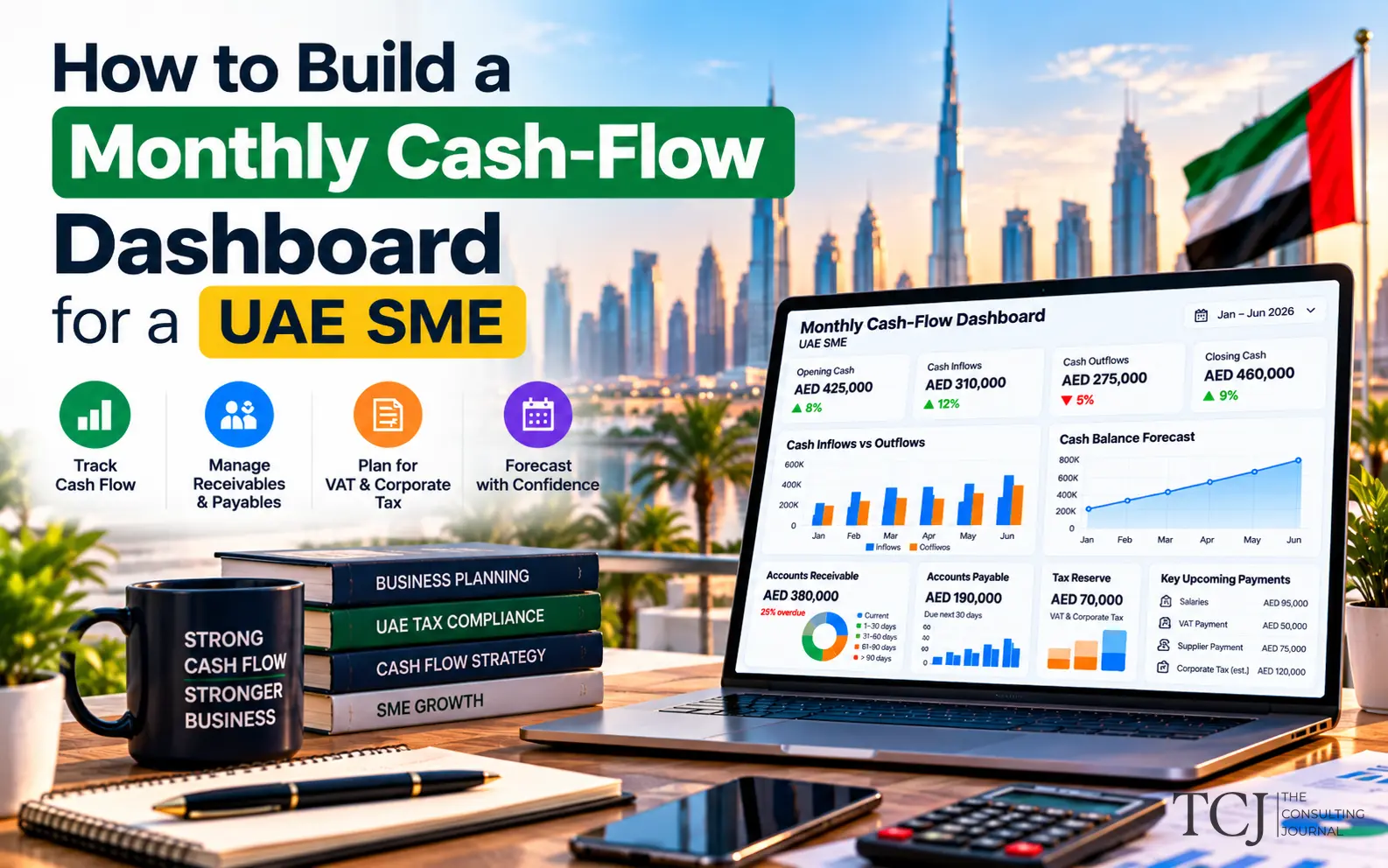
How to Build a Monthly Cash-Flow Dashboard for a UAE SME
A practical guide for UAE SME owners and finance teams on building a monthly cash-flow dashboard that tracks liquidity, collections, payments, tax obligations, forecasts, and working capital.

How UAE Companies Can Build a Faster, More Reliable Month-End Close
A practical UAE finance guide to shortening the month-end close through better reconciliations, cut-off controls, automation, tax readiness, data quality, and clear accountability.
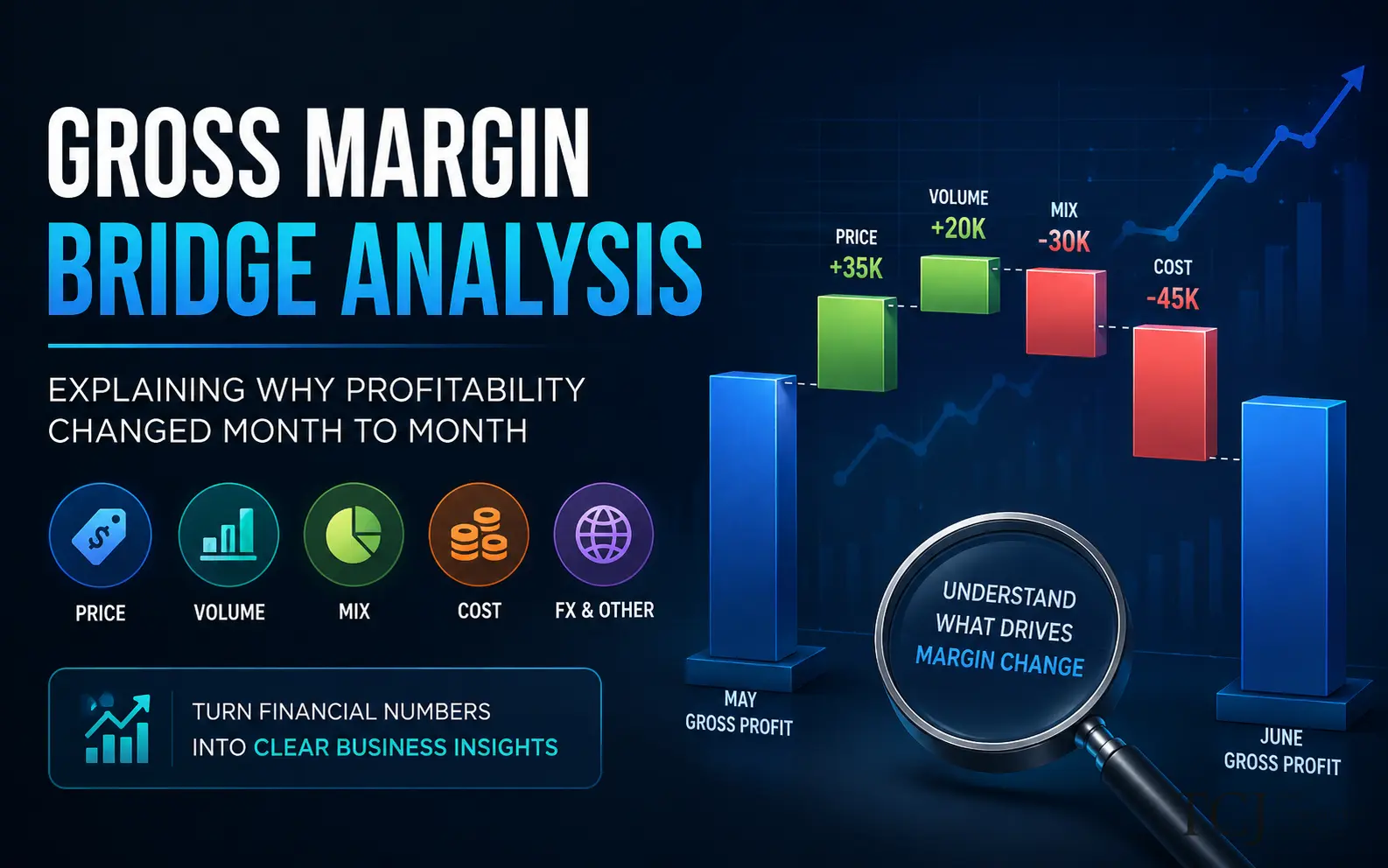
Gross Margin Bridge Analysis: Explaining Why Profitability Changed Month to Month
Gross margin bridge analysis helps finance teams explain monthly profitability changes by separating the impact of price, volume, sales mix, cost, and other operational drivers.