Living in Dubai: What Surprises International Movers Most
A practical UAE consultant’s guide to the real surprises of living in Dubai, from housing and transport to schools, healthcare, culture, work, and relocation planning.
Key takeaways
- Dubai often surprises movers with its organisation, safety, multicultural daily life, and efficient public services.
- Housing, schools, insurance, and transport are usually the biggest practical planning areas.
- Families should review school options, healthcare coverage, commute times, and first-year costs before committing.
- Business owners should align relocation with licensing, banking, Tax, Financial, and Accounting readiness.
- KPM Global Services UAE can support Dubai-based SMEs, founders, and investors with practical compliance and finance planning.
Why does Dubai surprise international movers?
Dubai surprises international movers because the city is often more organised, more international, and more family-oriented than expected. Many arrive expecting only luxury towers and business districts, but daily life also includes efficient public services, diverse neighbourhoods, strong community networks, and clear routines around work, school, transport, and family planning.
The first surprise is usually the pace of getting things done. Many public and private services are digital. Residents quickly learn that visas, Emirates ID, utilities, banking, tenancy documents, school applications, health insurance, and business licensing all need proper sequencing.
The UAE Government Portal explains residence visa routes and notes that visa validity depends on the type and sponsor. Sponsored visas may typically be issued for 1, 2, or 3 years, while some categories may run up to 5 or 10 years. For movers, this means relocation planning should begin before arrival, not after signing a lease or accepting a school place.
Dubai is easy to enjoy, but easier to manage when families and business owners treat relocation as a structured project rather than a rushed move. — Consultant observation, KPM Global Services UAE
What is the real cost of living in Dubai?
The real cost of living in Dubai depends heavily on housing, school fees, lifestyle choices, insurance, commuting, and whether the move is for employment, business ownership, or investment. In practice, two families with similar income can have very different monthly costs depending on rent, neighbourhood, schooling, and transport decisions.
Housing is usually the largest expense. New residents often focus on the headline rent but underestimate deposits, agency fees, moving costs, furniture, utility deposits, chiller charges where applicable, parking, community fees, and commuting time.
A practical first-year budget should separate fixed costs from lifestyle spending. Fixed costs usually include rent, utilities, insurance, school fees, transport, phone and internet, groceries, and domestic help if needed. Lifestyle spending may include dining, beach clubs, weekend trips, memberships, and premium delivery services.
What housing costs surprise newcomers?
Housing surprises newcomers because Dubai offers very different living experiences within the same city. A marina apartment, villa community, older central apartment, family townhouse, or free zone-adjacent residence can each create a different budget and daily routine.
Many movers choose a popular area too quickly, then discover the commute is longer than expected or school access is difficult. Others rent a larger home than needed in year one before understanding where they will actually spend most of their time.
Example 1: A fictional British finance manager moves to Dubai with a spouse and two children. The family first chooses a waterfront apartment because it feels familiar and convenient. After six months, school runs and parking become the main pressure points. They later move to a family community closer to school, reducing daily stress even though rent remains similar.
Is Dubai as safe and organised as people say?
Dubai is widely experienced by residents as a safe and orderly city, especially compared with many large global cities. Families often value the sense of security in residential communities, malls, parks, schools, and public areas. Still, newcomers should avoid becoming careless with documentation, tenancy obligations, cyber fraud, and personal finance.
Safety is one of the most repeated observations among international movers. People often mention walking at night, children using supervised community spaces, and the general predictability of public behaviour. This sense of order can make Dubai attractive for families and professionals who want stability.
However, safety does not remove the need for due diligence. Tenancy contracts should be reviewed carefully. Business owners should check licence activity, office requirements, tax registration obligations, accounting records, and banking readiness before committing to a structure.
How easy is it to get around Dubai?
Getting around Dubai is easier than many newcomers expect, especially for residents living near Metro-connected areas or major business districts. The Dubai Metro covers Red and Green Line routes across main populated areas of the emirate, while taxis, buses, tram services, and ride-hailing options support daily travel.
Car ownership depends on lifestyle. A single professional living near a Metro station may manage comfortably without a car. A family living in a villa community, with children in different activities, may find a car more practical.
The Roads and Transport Authority notes that the nol card is used across Metro, buses, tram, and marine transport modes, and can also be used for some other payments. This matters for newcomers because it reduces friction in the early weeks, especially before buying or leasing a car.
A common mistake is choosing a home based only on rent and not on total mobility cost. A cheaper apartment can become expensive if it adds long taxi rides, school transport, paid parking, or daily commute stress.
What should families know about schools and healthcare?
Families should start school and healthcare planning early because availability, curriculum, fees, insurance coverage, and location can shape the entire relocation decision. Dubai has many private school options and a developed healthcare system, but the best choice depends on the child’s curriculum, commute, budget, and family medical needs.
Dubai’s Knowledge and Human Development Authority provides school information and guidance for parents choosing private schools and curricula in Dubai. This is useful because school selection is not only about reputation. Parents should compare curriculum continuity, inspection reports, commute, fees, sibling admissions, language support, and extracurricular needs.
Healthcare also requires planning. Dubai Health Insurance Corporation is responsible for managing and supervising health insurance in the emirate by applying legislation. For employees, the package offered by the employer may be enough in some cases. For families, founders, dependants, and business owners, insurance should be reviewed more carefully before arrival.
How does Dubai’s multicultural environment affect daily life?
Dubai’s multicultural environment usually helps newcomers settle faster because residents work, study, shop, and socialise with people from many nationalities. English is widely used in business and daily life, but respect for UAE culture, local customs, Ramadan etiquette, public behaviour, and official processes remains essential.
The city’s diversity is practical, not just social. You can find different school curricula, international food, faith communities, business councils, sports groups, language communities, and professional networks. This helps residents build a routine quickly.
At the same time, international movers should not mistake Dubai’s openness for a lack of local expectations. Modest behaviour in public settings, respectful communication, awareness during Ramadan, and careful handling of online comments are part of responsible living in the UAE.
Example 2: A fictional Indian technology founder relocates to Dubai to serve GCC clients. He is surprised by how quickly he meets bankers, tax advisers, logistics providers, and other founders through community events. His larger challenge is not networking; it is organising company documents, accounting records, visa timelines, and personal accommodation at the same time.
What work and business factors should movers consider?
Movers should consider whether they are relocating as employees, investors, freelancers, company owners, or family dependants. Each route can affect visa sponsorship, banking, tax residency considerations, payroll, accounting records, health insurance, and long-term planning. Business owners should not treat personal relocation and company setup as separate decisions.
Dubai attracts professionals because it offers access to regional markets, free zones, mainland business activity, logistics links, financial services, tourism, property, and technology communities. But practical planning matters more than optimism.
Business owners should consider:
- Whether their activity requires mainland, free zone, or professional licensing
- Whether they need a physical office, flexi-desk, warehouse, or regulated approval
- Whether UAE Corporate Tax registration may apply
- Whether VAT registration may become necessary based on taxable supplies
- How accounting records, invoices, contracts, payroll, and banking documents will be maintained
- Whether personal visa plans align with company formation timelines
For CFOs and finance teams, the key relocation issue is control. A Dubai move can be smooth when documentation, banking, tax, and reporting are planned early. It becomes stressful when the business opens accounts, hires staff, signs leases, and issues invoices without a finance structure.
What mistakes do international movers commonly make?
International movers commonly make mistakes when they rush housing, underestimate first-year costs, rely on informal advice, delay school applications, ignore insurance details, or start business activity without proper documentation. Most problems are avoidable when the move is planned around documents, timelines, budget, and compliance.
Common mistakes include:
- Signing a tenancy contract before confirming commute, school access, and visa timing
- Budgeting only for monthly rent and ignoring deposits, setup fees, furnishing, and utilities
- Assuming employer insurance automatically covers all family needs
- Choosing a business licence without checking actual activity requirements
- Delaying Emirates ID, banking, tenancy, or school paperwork
- Using personal bank accounts for early business collections
- Ignoring UAE Tax, VAT, accounting, payroll, and invoicing obligations
- Underestimating summer heat and planning too many outdoor routines
- Depending only on social media advice instead of official sources and professional review
The best approach is to slow down before committing. Dubai rewards preparation. A structured relocation plan can save money, reduce stress, and prevent avoidable compliance issues.
What documents should movers prepare before relocating?
Movers should prepare identity, employment, family, education, medical, tenancy, financial, and business documents before arriving in Dubai. Having clean records helps with visas, Emirates ID, banking, school admissions, insurance, housing, licensing, and tax or accounting setup where relevant.
A practical preparation checklist includes:
- Passport copies with sufficient validity
- Passport-size photographs
- Employment contract or offer letter
- Marriage certificate, if sponsoring a spouse
- Birth certificates for children
- Attested education certificates where required
- School transcripts and transfer certificates
- Vaccination and medical records
- Health insurance details
- Bank statements or income evidence
- Tenancy budget and preferred neighbourhood list
- UAE mobile number plan
- Business plan, shareholder details, and licence activity shortlist if setting up a company
- Accounting software, invoice template, and chart of accounts if operating a business
- Tax registration review for UAE Corporate Tax and VAT where relevant
Families should also prepare a “first 60 days” folder. This should include scanned documents, emergency contacts, school deadlines, insurance numbers, temporary accommodation details, and key payment dates.
How can KPM Global Services UAE assist?
KPM Global Services UAE can assist founders, SMEs, investors, and finance teams that are relocating to Dubai or restructuring their UAE presence. The support is practical and documentation-led, covering business setup coordination, accounting readiness, VAT and Corporate Tax considerations, financial controls, payroll planning, and compliance review.
For individuals relocating only for lifestyle, the focus may be on budgeting and document organisation. For business owners, the focus is broader. Company formation, licence activity, banking, accounting records, Tax obligations, invoicing, and owner withdrawals should be planned together.
KPM Global Services UAE can help clients consider:
- Mainland or free zone setup options depending on activity
- Basic banking-readiness documentation
- Bookkeeping and Accounting setup
- UAE Corporate Tax and VAT registration review
- Financial reporting processes for SMEs
- Payroll and expense control routines
- Owner-friendly compliance calendars
- Practical first-year business administration planning
This article is for informational purposes and does not constitute legal, tax, accounting, or financial advice.
Final advisory view
Living in Dubai is often easier than international movers expect, but not because the move requires no planning. It is easier when documents are ready, costs are understood, housing is chosen carefully, school and healthcare needs are planned early, and business owners take Tax, Financial, and Accounting obligations seriously from the beginning.
Dubai can offer a strong base for families, founders, professionals, and investors. The better question is not only whether Dubai is attractive. It is whether the move has been structured properly for the person, the family, and the business behind it.
Questions and answers
Is Dubai a good place for international families to live?
Yes, Dubai can be a strong base for international families when housing, schooling, healthcare, and transport are planned early. Families usually value the city’s safety, private school options, healthcare access, and organised residential communities.
What is the biggest cost when moving to Dubai?
Housing is typically the biggest cost for most newcomers. School fees, health insurance, furnishing, deposits, transport, and lifestyle spending can also affect the first-year budget significantly.
Do international movers need a car in Dubai?
Not always. Residents living near Metro-connected areas may manage with public transport, taxis, and ride-hailing services, while families in villa communities often find a car more practical.
Can business owners relocate to Dubai and set up a company at the same time?
Yes, but the process should be planned carefully. Business owners should review licence activity, visa needs, banking documents, accounting records, UAE Corporate Tax, VAT, and payroll requirements before starting operations.
How can KPM Global Services UAE help with a Dubai move?
KPM Global Services UAE can support founders, SMEs, investors, and finance teams with business setup coordination, Accounting systems, Tax review, VAT considerations, financial controls, and practical compliance planning in Dubai and the UAE.
More in Immigration
View all Immigration →
UAE Golden Visa for Business Owners: Investment, Tax and Company Evidence
A practical 2026 guide for UAE business owners, founders and shareholders covering Golden Visa investment routes, tax contribution criteria, entrepreneur eligibility, company evidence and application preparation.

UAE Investor Visas and Business Relocation for Italian Entrepreneurs
Italian entrepreneurs considering Dubai or the wider UAE should coordinate company setup, residence visas, Tax, Accounting, banking and Italian tax-residency planning before relocating.
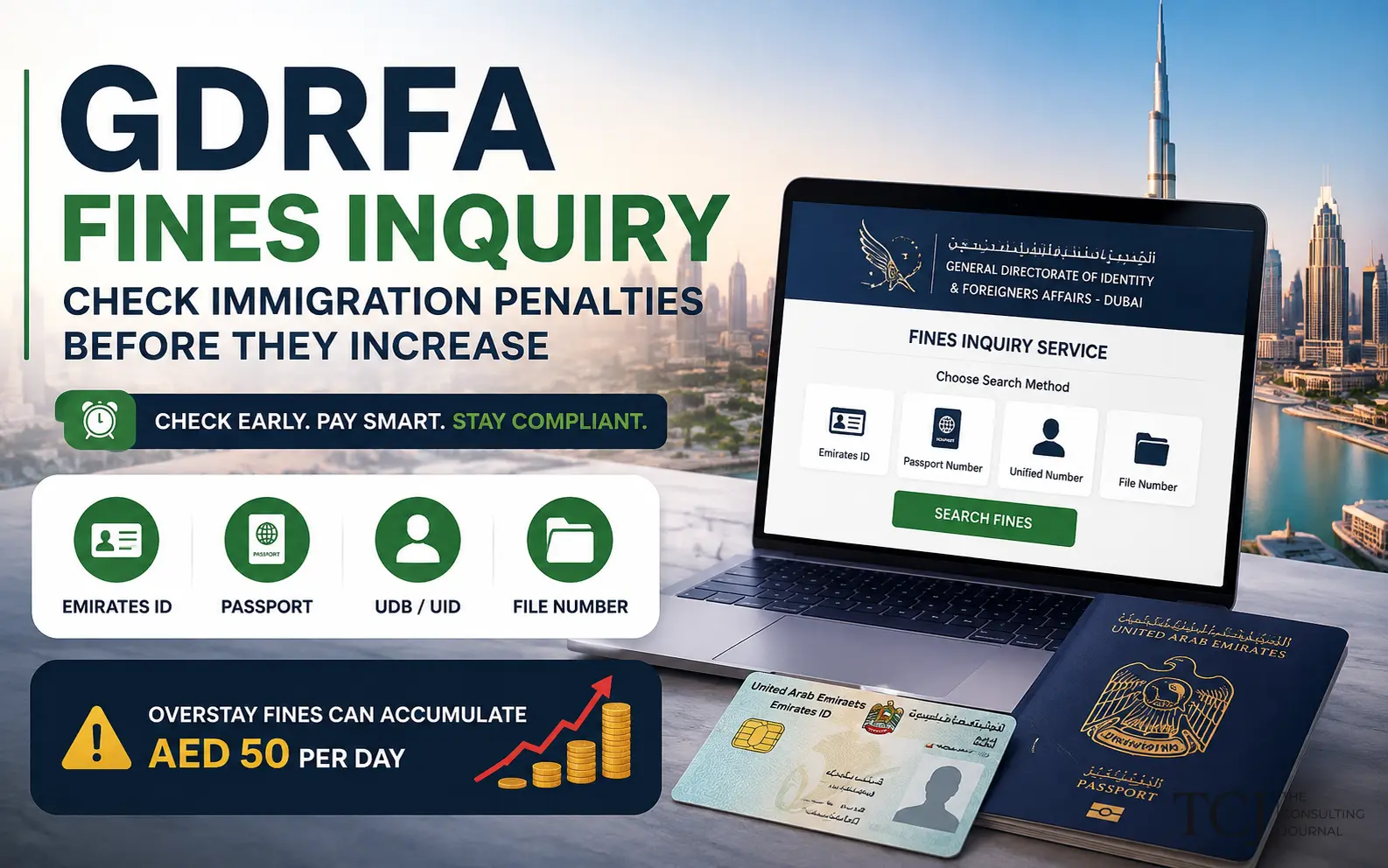
GDRFA Fines Inquiry in Dubai: How to Check Visa Fines Online
A practical guide to checking GDRFA immigration fines in Dubai using Emirates ID, passport, unified number or file number, with guidance on overstay fines and next steps.