How Medical Faculty Can Practise in UAE Healthcare Facilities
UAE medical faculty can now combine academic work with regulated clinical practice, subject to professional licensing, qualification, experience, scope and health authority requirements.
Key takeaways
- UAE medical faculty may combine academic work with clinical practice when applicable professional licensing requirements are satisfied.
- A university faculty appointment does not replace a healthcare professional licence or authorise unrestricted patient care.
- The correct licensing pathway depends on the profession, clinical title, healthcare facility and responsible UAE health authority.
- Teaching hours may count towards CPD when they meet the applicable approved medical education requirements.
- Universities and healthcare facilities should document dual-role arrangements and confirm licensing, scope and scheduling before clinical work starts.
What changed for UAE medical faculty in 2026?
The 2026 policy allows eligible faculty members at medical universities and colleges to obtain professional licences that enable them to practise within healthcare facilities. The change creates a formal route for qualified academics to maintain clinical activity, but it preserves existing qualification, experience, licensing and patient-safety requirements.
The update was developed through coordination involving the Ministry of Health and Prevention, the Ministry of Higher Education and Scientific Research and the Ministry of Human Resources and Emiratisation. Regulatory review found no legal barrier preventing qualified faculty members from practising clinically where the relevant conditions are satisfied.
This matters because academic medicine and clinical medicine do not need to operate as completely separate career tracks. A specialist who teaches future healthcare professionals may, subject to licensing and institutional arrangements, also maintain an appropriate patient-facing role.
The practical change is not that medical academics can bypass licensing; it is that qualified faculty now have a clearer route to combine teaching with properly regulated clinical work. — Consulting Journal editorial observation
Who can use the medical faculty clinical practice pathway?
The policy applies to faculty members at medical universities and colleges, including physicians and other healthcare professionals. Eligibility is therefore determined by both the person’s academic role and the regulated healthcare profession or clinical title they intend to practise.
A professor of medicine seeking to practise as a specialist physician, for example, must satisfy the requirements applicable to that clinical title. A faculty member teaching laboratory sciences, nursing or another regulated health discipline should consider the rules governing that particular profession.
The UAE Professional Qualification Requirements provide a common regulatory basis for assessing healthcare professionals, with emphasis on education, professional experience and licensure requirements.
Example 1: A fictional Dubai medical college employs a consultant-level academic who previously maintained an active clinical career overseas. The college title alone would not allow the professor to begin treating patients at a Dubai hospital. The professional and hospital would first need to confirm the appropriate DHA licensing pathway, title, scope and facility arrangements.
Does a university faculty appointment replace a healthcare licence?
No. A university title and a professional healthcare licence perform different functions. UAE legislation governing the medical profession requires a physician to be licensed by the relevant health authority before practising, while federal legislation covering certain other health professions applies a similar licensing principle.
This distinction should be built into recruitment and onboarding procedures.
A university may confirm that an individual is qualified to teach a particular subject. The health regulator, however, determines whether that person meets the conditions to practise a regulated healthcare profession within its jurisdiction.
Businesses should also distinguish between professional licensing and clinical privileges. Holding a licence does not necessarily mean every procedure or activity can automatically be performed in every healthcare facility. The authorised professional scope, facility licence and any applicable privileging arrangements should be checked before clinical duties begin.
Which UAE health authority should medical faculty apply to?
The appropriate authority depends primarily on where the healthcare facility and intended clinical practice are regulated. Faculty members should identify the jurisdiction before preparing an application because processes, supporting documents, facility involvement and administrative procedures can differ between authorities.
For clinical practice in Dubai, the Dubai Health Authority’s Sheryan system provides the regulatory gateway for registering and licensing healthcare professionals and facilities. DHA states that its Health Regulation Sector oversees healthcare facilities and professionals in Dubai, including free zones.
Professionals intending to work in Abu Dhabi should consider Department of Health requirements. Depending on the location and facility, MoHAP or the relevant emirate-level health authority may apply elsewhere.
The location of the university is not necessarily the only factor. What matters operationally is where the regulated clinical activity will take place and which authority governs that facility.
What requirements should faculty members check before practising?
Faculty members should expect their application to be reviewed against the qualification and licensing standards relevant to the profession and requested title. The UAE PQR framework gives regulators a basis for assessing educational standards, experience and licensing eligibility.
Depending on the profession and jurisdiction, preparation will typically involve checking:
- recognised academic and professional qualifications;
- eligibility for the intended professional title or specialty;
- required clinical experience;
- previous professional registration or licences where applicable;
- professional good-standing documentation;
- primary-source or credential verification requirements;
- professional evaluation or assessment requirements;
- malpractice insurance where applicable;
- the intended scope of clinical work;
- the licence and permitted services of the healthcare facility; and
- any authority-specific application or facility-linking process.
For example, MoHAP’s current licensing process requires a valid professional evaluation and states that documents must be verified through an accepted third-party verification agency. Requirements should still be checked for the individual applicant rather than treated as identical across all UAE jurisdictions.
How can a medical faculty member start clinical practice?
A sensible process is to define the intended clinical role first, identify the competent regulator, test eligibility and prepare evidence before committing to a clinical start date. Universities and healthcare facilities should coordinate early so that academic scheduling, professional licensing and facility requirements are addressed as one operational exercise.
- Define the proposed clinical title and scope. Establish whether the individual intends to work as a general practitioner, specialist, consultant or another regulated healthcare professional. The academic title should not be used as a substitute for the clinical title.
- Confirm where clinical services will be delivered. Identify the hospital, clinic or other licensed healthcare facility and determine which health authority regulates it.
- Review current qualification requirements. Compare the applicant’s qualifications, professional history and experience with the current requirements for the requested title.
- Prepare and verify supporting documents. Gather professional certificates, experience records, registrations, good-standing evidence and other authority-specific documents before submission.
- Complete the relevant licensing process. Follow the competent authority’s procedure and address any role the healthcare facility must perform in activating, linking or maintaining the licence.
- Confirm scope before patient-facing work begins. The professional and facility should ensure that the intended duties fall within both the practitioner’s authorised scope and the facility’s permitted healthcare services.
Can medical faculty teaching hours count toward CPD?
Yes, subject to the applicable medical education rules. The 2026 policy states that teaching hours can count towards Continuing Professional Development requirements in accordance with approved medical education policies. Faculty members should still confirm how eligible teaching activity must be recorded and evidenced for their particular professional licence.
For academics who regularly teach, supervise and contribute to professional education, this can make maintaining a combined academic-clinical role more practical. It should not, however, be assumed that every teaching activity automatically qualifies for CPD credit.
How should universities and healthcare facilities manage dual roles?
Universities and healthcare providers should agree how clinical responsibilities will operate alongside teaching, research and institutional duties. The 2026 policy specifically maintains the principle that professional practice should not conflict with the faculty member’s academic responsibilities.
In practice, the arrangement may need to address:
- scheduled teaching and examination commitments;
- research and academic supervision;
- agreed clinical sessions;
- reporting responsibilities at both organisations;
- professional indemnity or malpractice arrangements;
- confidentiality and patient-data responsibilities;
- leave and absence procedures;
- renewal of professional licences and credentials; and
- responsibility for monitoring clinical privileges and scope.
Example 2: A fictional Abu Dhabi university appoints a senior healthcare academic who also wishes to work two clinical sessions each week at an affiliated facility. Rather than treating the arrangement as informal consulting work, the university and facility document the schedule, confirm licensing eligibility, check professional scope and assign responsibility for maintaining the required records.
This approach reduces the risk of a clinically qualified academic beginning work before the administrative and regulatory position is clear.
What common mistakes should medical faculty and employers avoid?
Several problems can arise when organisations focus on the policy announcement without completing the practical licensing checks.
Common mistakes include:
- assuming a professor or lecturer title creates permission to treat patients;
- relying on an old professional licence without checking its current status or jurisdiction;
- applying for a clinical title that does not match documented experience;
- treating UAE licensing requirements as identical across every emirate;
- overlooking credential or primary-source verification requirements;
- failing to check whether the healthcare facility is licensed for the intended service;
- allowing clinical work to interfere with contracted academic responsibilities;
- assuming all teaching hours automatically qualify for CPD;
- overlooking professional indemnity or malpractice requirements; and
- setting a patient-facing start date before licensing and facility requirements are complete.
Universities considering joint appointments should build these checks into recruitment rather than addressing them after an academic has already relocated or started employment.
What documents should applicants prepare?
Exact requirements depend on the profession, title and authority, but preparing a structured file early can reduce avoidable delays.
A practical preparation checklist may include:
- valid passport and UAE identification documents where applicable;
- recent photograph where required;
- medical or healthcare professional degree certificates;
- postgraduate specialty qualifications;
- internship or clinical training records;
- professional experience certificates;
- current and previous professional licences or registrations;
- certificate of good standing where required;
- evidence needed for primary-source verification;
- professional evaluation or assessment documents;
- malpractice or professional indemnity insurance where applicable;
- employment or facility documentation;
- proposed clinical job title and scope;
- university appointment or employment information; and
- records supporting eligible CPD or teaching activity.
Applicants should use the latest checklist issued by the competent health authority because documentation and procedural requirements can be updated.
How can KPM Global Services UAE assist healthcare organisations?
KPM Global Services UAE can support medical universities, healthcare businesses and investors with the wider corporate and operational work that may sit alongside a healthcare project, particularly where licensing plans affect business setup, accounting records, payroll, commercial documentation, Tax, Financial and Accounting processes.
Depending on the engagement, support may include reviewing business documentation, coordinating company and operational records, assisting with accounting and financial readiness, and helping management teams organise compliance information required across the wider UAE business structure.
Healthcare professional licensing remains a specialised regulated process. Clinical eligibility and authority requirements should therefore be confirmed directly with the competent UAE health regulator and, where appropriate, specialist legal or healthcare regulatory advisers. KPM Global Services UAE should not be treated as a substitute for the authority issuing the professional or facility licence.
What should medical faculty and institutions do next?
The 2026 reform creates a useful opportunity for universities and healthcare facilities to make greater use of experienced academic professionals, but the safest approach is to treat every proposed clinical appointment as a regulated licensing exercise rather than an extension of an academic employment contract.
Faculty members should define the clinical role they want to perform, confirm the relevant health authority and review the latest qualification requirements before accepting patient-facing responsibilities. Universities and healthcare facilities should separately verify scheduling, facility scope, professional credentials and responsibility for licence maintenance.
The strongest arrangements will be those in which academic and clinical roles are documented clearly from the beginning. That gives the faculty member, university and healthcare provider a common understanding of what work is permitted and how regulatory obligations will be maintained.
This article is for informational purposes and does not constitute legal, tax, accounting, or financial advice.
Questions and answers
Q: Can a university professor work as a doctor in a UAE hospital?
A: Yes, potentially, if the professor meets the applicable professional licensing requirements for the intended medical title and jurisdiction. The academic appointment itself does not authorise the person to treat patients.
Q: Does the 2026 UAE policy apply only to doctors?
A: No. The policy refers to faculty members at medical universities and colleges, including physicians and other healthcare professionals. The exact licensing conditions will depend on the profession and clinical role being requested.
Q: Which authority licenses medical faculty who want to practise in Dubai?
A: For healthcare practice regulated in Dubai, professionals should follow the applicable Dubai Health Authority licensing process. DHA’s Sheryan platform is the digital gateway used for healthcare professional and facility registration and licensing in Dubai.
Q: Can teaching hours count towards CPD for medical faculty in the UAE?
A: Yes, the 2026 policy states that teaching hours can count towards Continuing Professional Development requirements in accordance with approved medical education policies. Faculty members should confirm the documentation and recognition rules applying to their licence.
Q: Can medical faculty start treating patients as soon as a university approves the arrangement?
A: Not necessarily. The individual should first have the appropriate professional authorisation, and the intended work must fall within the relevant clinical and facility scope. Universities and healthcare facilities should complete the applicable regulatory checks before patient-facing duties begin.
More in Medical Career
View all Medical Career →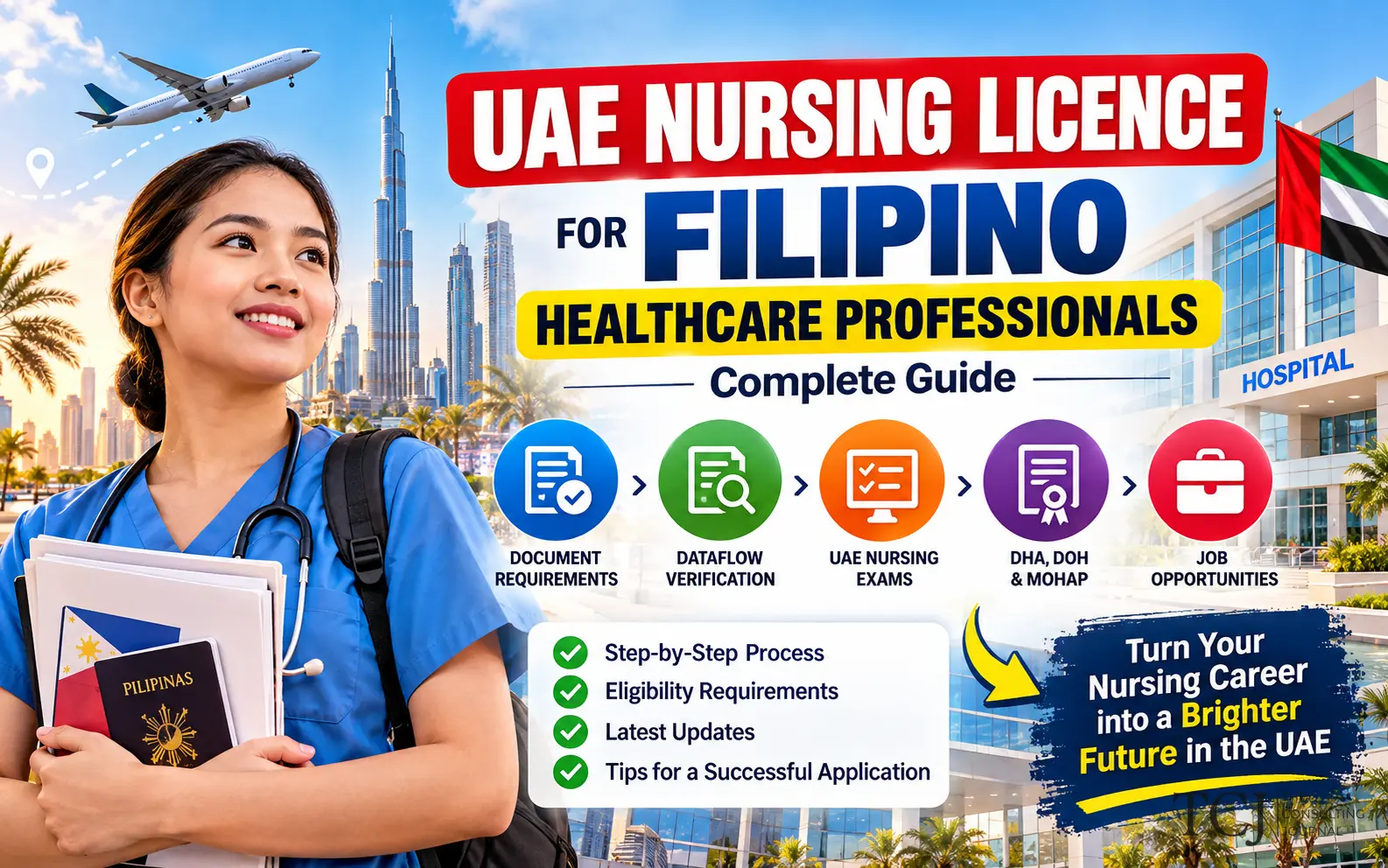
UAE Nursing Licence for Filipino Healthcare Professionals: Requirements and Application Process
Planning to work as a nurse in the UAE? Learn how Filipino healthcare professionals can navigate DHA, DOH and MOHAP licensing, DataFlow verification, nursing assessments, documents and employer licence activation.
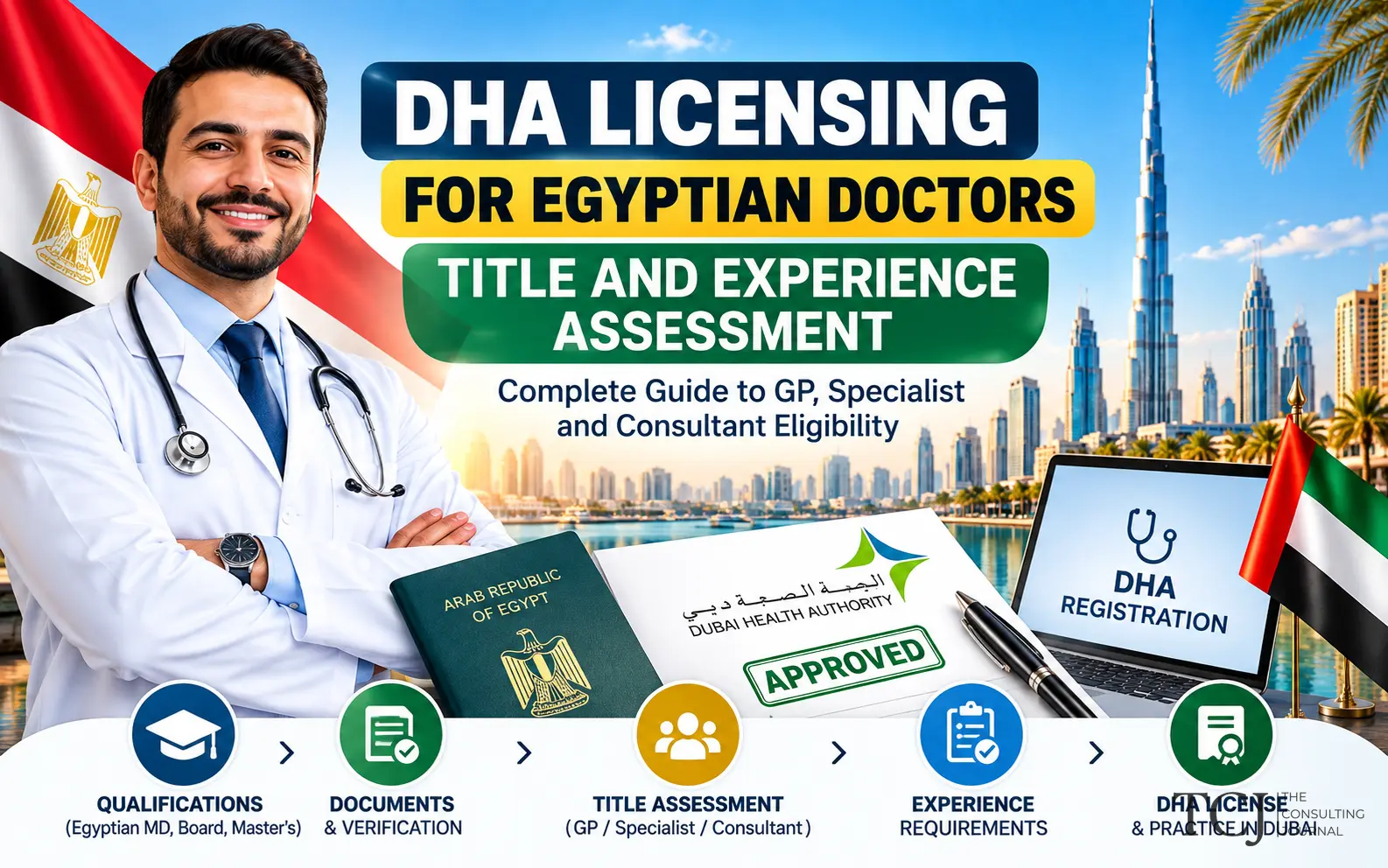
DHA Licensing for Egyptian Doctors: Titles, Tiers and Experience
Egyptian doctors applying for DHA licensing in Dubai need to understand how their MD, Egyptian Board Fellowship, Clinical Master’s and post-qualification experience affect eligibility for GP, Specialist and Consultant titles.

DHA Licence for Nurses in Dubai: Eligibility, DataFlow, Exam and Application Process
A practical 2026 guide to DHA licensing for nurses in Dubai, covering Registered Nurse and Assistant Nurse eligibility, DataFlow verification, assessments, registration, documents and employer-led licence activation.