Meta Ads vs Google Ads: Which Is Better for Your Business?
A practical comparison of Meta Ads and Google Ads for business owners deciding where to invest, how to measure ROI, and when to use both platforms together.
Meta Ads vs Google Ads: The Business Owner’s Real Decision
Most business owners do not struggle because they lack advertising options. They struggle because every platform promises reach, leads, and sales, but the business only has a limited budget.
Meta Ads and Google Ads are often compared as if one must defeat the other. In practice, they solve different problems.
Google Ads is usually stronger when people are already searching for a product, service, or solution. Meta Ads is usually stronger when a business needs to create awareness, educate the market, or re-engage people who have already shown interest.
For a small business, ecommerce brand, consultancy, clinic, training company, or local service provider, the right answer depends on intent, margins, sales cycle, tracking quality, and how ready the business is to convert enquiries into revenue.
What Google Ads Does Well
Google Ads is built around demand that already exists. A user types a search such as “accounting firm near me,” “best CRM for small business,” or “emergency AC repair.” The advertiser competes to appear when that need is active.
Google’s own documentation explains that advertisers choose campaign types based on goals, strategy, and available resources, including campaign options such as Search, Display, Shopping, Video, App, and Performance Max.
This makes Google Ads particularly useful for businesses where customers already know what they need. For example, a mainland company looking for bookkeeping support may search directly. A homeowner with a plumbing issue may search immediately. A business buyer comparing software may search with clear commercial intent.
Google Search campaigns can target people actively looking for specific products and services, while Display, Shopping, and Video campaigns support broader visibility and different sales objectives.
Where Google Ads Usually Fits Best
Google Ads is often a good starting point when:
- Customers already search for the product or service.
- The business has clear landing pages and enquiry forms.
- Leads have meaningful value.
- The company can respond quickly to enquiries.
- Keyword intent is specific enough to separate buyers from casual browsers.
A consulting firm, dental clinic, legal advisory practice, software provider, or local repair company may find Google Ads useful because the searcher is already signalling a problem.
The weakness is cost. High-intent clicks can become expensive. A business can spend quickly if keyword selection, negative keywords, landing pages, and conversion tracking are weak.
What Meta Ads Does Well
Meta Ads reaches people across Meta technologies, including Facebook, Instagram, Messenger, WhatsApp, and the Meta Audience Network. Meta also allows advertisers to select placements such as Feeds, Stories, Reels, and other surfaces depending on the campaign setup.
The main strength of Meta Ads is discovery. People may not be searching for a product, but a strong creative can create interest.
Meta’s ad tools allow targeting based on signals such as demographics, interests, behaviours, custom audiences, and lookalike-style audience expansion. Meta also supports custom audiences built from business data or Meta engagement sources.
This makes Meta Ads useful for visual, lifestyle, educational, and awareness-led businesses.
A fitness coach can introduce a programme before someone searches for one. A fashion brand can show a new collection through Reels. A training provider can promote a webinar to decision-makers who may not yet be actively searching for a course.
Where Meta Ads Usually Fits Best
Meta Ads often works well when:
- The product or service is visually explainable.
- The business needs awareness before conversion.
- The audience can be defined by behaviour, interest, or lookalike signals.
- The business has strong video, image, or testimonial assets.
- Retargeting is part of the plan.
The weakness is intent. A person watching a Reel is not necessarily ready to buy. They may click, browse, and leave. Without retargeting and follow-up, Meta campaigns can generate attention but not enough revenue.
The Core Difference: Intent Versus Discovery
The most practical way to compare the platforms is this:
Google Ads captures demand. Meta Ads creates and nurtures demand.
That one distinction should guide most budget decisions.
A Google user searching “business setup consultant in Dubai” is already problem-aware. A Meta user watching a short video about the mistakes new founders make in company formation may become problem-aware after seeing the ad.
Neither journey is wrong. They are simply different stages of the buyer’s decision process.
Good advertising does not start with the platform. It starts with the customer’s level of intent. — The Consulting Journal
Cost: Why Cheaper Clicks Can Be Misleading
Many businesses compare Meta Ads and Google Ads only by cost per click. This is a mistake.
Meta clicks are often cheaper in many industries because the user is not actively searching. Google Search clicks can be more expensive because the user has clearer intent. But a cheaper click is not automatically a better click.
A business should compare:
- Cost per qualified lead.
- Cost per booked appointment.
- Cost per sale.
- Sales conversion rate.
- Average order value.
- Lifetime customer value.
- Payback period.
For example, a Google Ads campaign may produce fewer clicks but more serious enquiries. A Meta campaign may produce more leads at a lower cost, but the sales team may spend more time filtering them.
The real question is not “Which platform is cheaper?” The better question is “Which platform produces profitable customers?”
Example 1:
A boutique ecommerce brand sells premium home décor. The products are visual, the price point is mid-range, and customers often need inspiration before buying.
Starting only with Google Search may limit reach because customers may not know the exact product name. Meta Ads can introduce the collection through Instagram Reels, Stories, and carousel ads. People who view products but do not purchase can later be retargeted.
In this case, Meta Ads may build demand more effectively. Google Shopping or Performance Max can then support users who start searching after they become familiar with the brand.
Example 2:
A professional services firm wants leads for company accounting and tax support. The buyer is usually problem-aware. They may search for accounting services, VAT filing support, bookkeeping, or corporate tax advisory.
Google Ads may be more effective at the bottom of the funnel because search intent is clearer. Meta Ads can still support credibility by retargeting website visitors with client education posts, webinar invitations, or founder-focused content.
In this case, Google may capture immediate enquiries, while Meta helps build trust before and after the first website visit.
When Businesses Should Use Both Platforms
For many companies, the strongest strategy is not choosing one platform forever. It is assigning each platform a role.
A practical combined funnel may look like this:
- Google Search captures high-intent enquiries.
- Website visitors are added to retargeting audiences where permitted.
- Meta Ads re-engage visitors with educational content, case studies, testimonials, or offers.
- Email, WhatsApp, or CRM follow-up converts warm prospects.
- Campaign results are reviewed by cost per qualified opportunity, not just clicks.
This approach is especially useful for businesses with longer sales cycles. A B2B buyer may not enquire on the first visit. A founder comparing advisors may need several touchpoints. A high-ticket service provider may need to build credibility before a call is booked.
Common Mistakes Business Owners Make
Choosing the platform based only on personal preference
Many owners choose the platform they personally use. That is not a strategy. The right platform depends on where customers spend attention and how they search before buying.
Running ads without conversion tracking
Without tracking, a business may optimise for clicks instead of revenue. Campaigns should measure calls, form submissions, purchases, booked meetings, or other meaningful actions.
Sending all traffic to the homepage
A homepage is rarely the best landing page for paid traffic. A campaign should usually send users to a page built around one offer, one audience, and one next step.
Comparing leads without checking quality
A cheaper lead can still be expensive if it wastes sales time. Businesses should review lead source, qualification rate, close rate, and final revenue.
Stopping campaigns too early
Both platforms need testing. Creative, keywords, audiences, bidding, landing pages, and offers may need adjustment before useful conclusions can be made.
Practical Checklist Before Choosing a Platform
Before committing budget, business owners should prepare the basics:
- Define the campaign objective clearly.
- Confirm whether the audience is actively searching or needs education.
- Check website speed and mobile experience.
- Create dedicated landing pages.
- Set up conversion tracking.
- Prepare ad creatives and copy variations.
- Build a simple lead qualification process.
- Decide how enquiries will be followed up.
- Review margins and acceptable acquisition cost.
- Set a testing budget before scaling.
A business that cannot respond to leads quickly should fix its process before increasing ad spend. Paid advertising exposes operational weaknesses. It does not automatically solve them.
How a Consulting-Led Advertising Review Can Help
A consultant-style review looks beyond the ad dashboard. It connects advertising spend with business reality.
This means reviewing the offer, sales process, landing pages, tracking setup, customer value, follow-up process, and reporting. Many campaigns fail not because the platform is poor, but because the business has not aligned marketing, sales, and operations.
For example, a company may blame Meta Ads for low sales when the real issue is slow WhatsApp response. Another may blame Google Ads for high costs when the landing page does not answer the buyer’s main concerns.
The best advertising decisions are commercial decisions first and platform decisions second.
Final Advisory View
Meta Ads and Google Ads are both powerful, but they are not interchangeable.
Choose Google Ads when customers are already searching and your business is ready to convert high-intent traffic. Choose Meta Ads when you need to create awareness, explain value visually, build audiences, and retarget people over time.
For many growing businesses, the best approach is a controlled test. Start with a clear objective, measure qualified outcomes, and compare results using revenue—not vanity metrics.
This article is for informational purposes and does not constitute legal, tax, accounting, or financial advice.
Questions and answers
Is Meta Ads better than Google Ads for small businesses?
Meta Ads can be useful for small businesses that need awareness, visual promotion, or lower-cost audience testing. Google Ads may be stronger when customers already search for the service. The better choice depends on intent, budget, offer strength, and follow-up process.
Which platform usually gives faster leads?
Google Ads often produces faster enquiries when search demand already exists. Meta Ads may take longer because users are usually discovering the business rather than actively searching. However, strong creative and retargeting can improve Meta results.
Are Meta Ads cheaper than Google Ads?
Meta Ads often has lower click costs in many categories, but lower cost does not always mean better ROI. Businesses should compare cost per qualified lead, sales conversion rate, and customer value. A higher-cost Google lead may still be more profitable.
Should ecommerce businesses use Meta Ads or Google Ads?
Ecommerce brands often benefit from both. Meta Ads can create product discovery through visual content, while Google Shopping, Search, or Performance Max can capture buyers with clearer purchase intent. The right mix depends on product category, margin, and audience behaviour.
Can a business run Meta Ads and Google Ads at the same time?
Yes, and many businesses should. Google can capture active demand, while Meta can support awareness and retargeting. The key is to avoid judging each platform by the same metric when they play different roles in the customer journey.
More in Marketing
View all Marketing →
LinkedIn Lead Generation for UAE Consultants Without Cold-Spam Tactics
UAE consultants can generate better LinkedIn leads without mass messaging. Here is a practical system built around positioning, useful content, targeted networking, warm conversations, referrals, and disciplined follow-up.
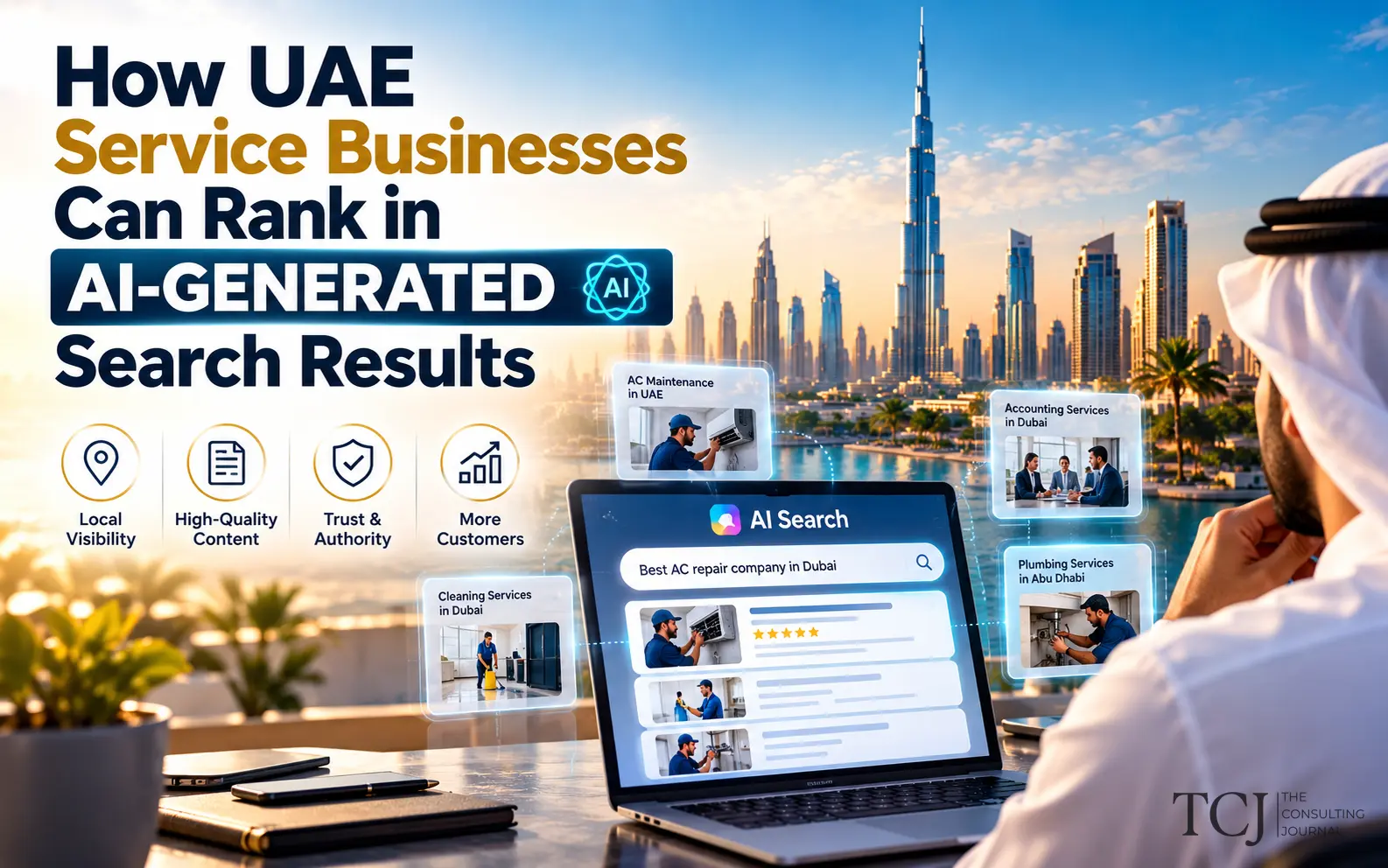
How UAE Service Businesses Can Rank in AI-Generated Search Results
UAE service businesses can improve visibility in AI-generated search by combining strong SEO, accurate local signals, clear service pages, original expertise, technical accessibility, and measurable search performance.

How Sri Lankan Service Companies Can Win Clients in Dubai
A practical Dubai market-entry guide for Sri Lankan service companies covering positioning, prospecting, partnerships, hybrid delivery, compliance planning, and a focused 90-day client-acquisition plan.