Most Affordable Areas in Dubai With Metro Access
A practical Dubai renter’s guide to affordable metro-connected areas, total living costs, commute trade-offs, and rental checks before signing a lease.
Key takeaways
- Metro access can reduce total living costs when rent, parking, fuel, and commute time are reviewed together.
- Al Nahda, Al Qusais, Deira, Bur Dubai, Discovery Gardens, and Al Jaddaf are practical starting points for budget renters.
- Renters should check walking distance, chiller charges, building condition, cheque terms, and renewal risk before signing.
- Business owners and relocating teams should match housing decisions with office location, cash flow, and staff commute needs.
- SMEs and founders should consider staff commute, payroll budgets, and accommodation allowances as part of UAE operating planning.
Which affordable Dubai areas offer the best metro access?
The best affordable metro-connected areas are those with a practical walking route to a station, regular bus links, supermarkets nearby, and reasonable apartment supply. Al Qusais, Al Nahda, Deira, Bur Dubai, Al Karama, Discovery Gardens, and Al Jaddaf are often strong starting points for renters comparing value and connectivity.
The RTA’s metro and tram map confirms that Dubai Metro operates across Red Line and Green Line routes, covering many populated areas of the emirate. Stations listed by RTA include Centrepoint, Al Rigga, Union, BurJuman, ADCB, Financial Centre, Burj Khalifa/Dubai Mall, and Business Bay, among others.
Here is a practical view of the main areas to shortlist:
- Al Nahda: Good for families and sharers who want value, supermarkets, schools, and access to nearby metro stations and feeder routes.
- Al Qusais: Suitable for long-term residents who need affordable apartments and access to Al Qusais, Dubai Airport Free Zone, and Stadium stations.
- Deira: Useful for people working in old Dubai, hospitality, trading, retail, logistics, and airport-linked roles.
- Bur Dubai: A strong choice for residents who want central access, older established buildings, hospitals, schools, and multiple metro options.
- Al Rigga: Practical for single professionals and hospitality workers who want walkable access in a busy urban district.
- Al Karama: Popular with families and professionals who value restaurants, clinics, groceries, and access to ADCB and BurJuman.
- Discovery Gardens: Often considered by commuters working around Jebel Ali, Dubai Marina, DMCC, and Expo-linked districts.
- Al Jaddaf: Better for renters who want newer buildings, access to healthcare zones, and a shorter route toward Downtown Dubai.
- Oud Metha: Useful for healthcare workers, families, and students because of schools, clinics, and central positioning.
- Abu Hail: A quieter option for residents who prefer old Dubai access with a more residential feel.
- Rashidiya: Practical for airport-linked workers and families who value larger units and quieter surroundings.
- Al Furjan: A newer community with metro access, modern buildings, and growing retail facilities.
Why does metro access change the real rental budget?
Metro access changes the rental budget because transport is part of housing cost. A tenant may pay slightly more in rent but spend less on fuel, parking, taxis, and vehicle maintenance. The real comparison should be monthly rent plus commuting cost, not rent alone.
RTA explains that nol card fares are calculated according to Dubai’s seven public transport zones. It also notes that transfers across buses and metro can form part of one journey when the transfer is completed within the required time window.
This matters for everyday budgeting. A resident in a building near the metro may reduce taxi use, avoid paid parking near office districts, and keep commute time more predictable. For employees working in Business Bay, DIFC, Downtown Dubai, Dubai Marina, Jebel Ali, or the airport area, the savings can be meaningful over a year.
Budget living in Dubai is less about finding the cheapest rent and more about understanding the full monthly cost of rent, transport, utilities, time, and convenience. — The Consulting Journal consultant observation
Bayut’s Dubai apartment rental index showed a current apartment rent indicator of AED 120 per square foot in June 2026, with a negative 12-month change in its displayed citywide apartment rent-per-square-foot index. This does not mean every tenant will see lower rent, but it shows why renters should compare live listings carefully by area, building, and unit type.
How should renters compare affordable metro areas in Dubai?
Renters should compare areas using a total-cost method. Check annual rent, walking distance to the station, chiller charges, maintenance quality, grocery access, commute time, parking, school routes, and renewal risk. A cheaper apartment can cost more if the building is poorly maintained or transport links are weak.
A simple rental review should include:
- The actual walking time to the metro, not only the distance shown on a map.
- Whether the route is comfortable in summer.
- The number of cheques required by the landlord.
- Whether the apartment is chiller-free or billed separately.
- The condition of lifts, common areas, parking, and security.
- The age of the building and likely maintenance response time.
- Access to clinics, supermarkets, schools, and daily services.
- The commute during peak hours, not just mid-day travel time.
Bayut’s affordable apartment guidance notes that budget apartments in Dubai can range widely by area and that cheaper rentals are typically found in locations such as International City, Al Nahda, Deira, Al Qusais, and Mirdif. It also highlights location, public transport proximity, and nearby retail as key factors for affordable living.
Property Finder also identifies Al Nahda among Dubai’s affordable rental areas, while noting that Dubai has rental options across different budgets.
Which areas work best for families, professionals, and students?
Families often need space, schools, clinics, parks, and calmer streets. Professionals usually prioritise commute time and station access. Students need budget control and reliable transport. The best area depends on the tenant’s routine, but Al Nahda, Al Qusais, Bur Dubai, Deira, Discovery Gardens, and Oud Metha often deserve comparison.
For families, Al Nahda, Al Qusais, Al Karama, Rashidiya, and Al Furjan are practical shortlisting areas. Families should focus on schools, nurseries, clinics, building safety, and available parking.
For working professionals, Deira, Al Rigga, Bur Dubai, Al Jaddaf, Discovery Gardens, and Al Furjan can work well depending on the office location. Someone working near DIFC may value Bur Dubai or Al Jaddaf differently from someone working in Jebel Ali or Dubai Marina.
For students, Al Qusais, Al Nahda, Oud Metha, Bur Dubai, and Deira can be sensible because they offer transport links, shared accommodation options, and access to education or training centres.
Example 1: A finance executive working near DIFC compares a slightly cheaper apartment in a car-dependent area with a higher-rent apartment near ADCB Metro Station. After adding parking, fuel, and daily travel time, the metro-connected option becomes the more practical Financial decision.
Example 2: A small UAE trading business relocates two staff members to Dubai. Instead of choosing the cheapest staff accommodation, the founder compares Al Qusais and Deira based on metro access, airport proximity, supermarkets, and predictable travel time to client meetings.
What rental ranges should tenants expect?
Rental ranges change quickly in Dubai, so tenants should treat any figure as a starting point rather than a final budget. Building age, furnishing, view, chiller terms, parking, cheque count, and proximity to the metro can move the price significantly.
As a practical guide, many renters searching affordable metro-connected communities may find studios and one-bedroom apartments priced lower than premium districts such as Downtown Dubai, Dubai Marina, and Palm Jumeirah. However, central affordable areas may still command higher rents than outer areas because of demand and convenience.
For budget planning, compare at least three sources:
- Current listings on reputable property portals.
- The building’s recent asking rents.
- The likely cost of transport from that location to work, school, or business districts.
The best value is usually not the lowest listing. It is the property that remains affordable after utilities, commuting, deposits, agent fees, moving costs, and day-to-day convenience are included.
Common mistakes Dubai renters and business owners make
Many renters focus on headline rent and miss the costs around it. This is especially common when founders, SME owners, and new employees move quickly after receiving a UAE residence visa or employment offer.
Common mistakes include:
- Choosing a low rent without checking the summer walking route to the metro.
- Ignoring chiller charges and assuming all utility costs are predictable.
- Signing before testing the commute during peak hours.
- Not checking whether the building has recurring lift, AC, or maintenance issues.
- Comparing furnished and unfurnished apartments without calculating the furniture cost.
- Ignoring renewal risk and likely rent changes after the first year.
- Choosing an area far from the office, then relying on taxis when meetings run late.
- Forgetting deposits, agency fees, Ejari, moving charges, internet setup, and DEWA connection costs.
For business owners, the mistake is often different. They may budget salary but underestimate the cost of staff relocation, commute fatigue, and late arrivals caused by poor area selection. For SMEs, accommodation planning can affect attendance, morale, and monthly cash flow.
Documents and preparation checklist before renting
Before paying a deposit or signing a tenancy contract, prepare your documents and review the unit carefully.
Documents commonly requested may include:
- Passport copy.
- UAE residence visa copy, if available.
- Emirates ID copy, if available.
- Salary certificate, employment letter, or trade licence details where requested.
- Security deposit.
- Agency fee.
- Cheques or approved payment method.
- Ejari registration requirements.
- DEWA setup details.
- Move-in permit where required by the building or community.
Practical checks before signing:
- Visit the building in the evening and during a busy period.
- Walk from the apartment to the metro station.
- Check mobile signal inside the apartment.
- Ask about AC maintenance and chiller billing.
- Confirm parking availability and cost.
- Review pest control, water pressure, and lift condition.
- Confirm whether pets, sharing, or subleasing are allowed.
- Read renewal, notice, and maintenance clauses carefully.
How KPM Global Services UAE can assist
KPM Global Services UAE is not a real estate brokerage. However, for founders, SMEs, investors, and finance teams relocating to Dubai or building UAE operations, housing decisions often connect with wider planning.
KPM Global Services UAE can assist businesses with practical budgeting, business setup coordination, Accounting support, payroll planning, cash-flow review, documentation readiness, and UAE compliance considerations. For a founder relocating staff, this can help align accommodation allowances, office location, commuting patterns, and operating budgets.
This is particularly relevant where a company is comparing mainland and free zone operations, hiring employees, setting up payroll, or preparing internal Financial controls. Good planning does not guarantee lower rent, but it helps decision-makers avoid avoidable cost surprises.
Final advisory view
The most affordable areas in Dubai with metro access are best assessed through total monthly cost. Al Nahda, Al Qusais, Deira, Bur Dubai, Al Karama, Discovery Gardens, Al Jaddaf, Oud Metha, Abu Hail, Rashidiya, Al Rigga, and Al Furjan all have different strengths.
A good decision starts with the daily routine. Where is the office? How often will you travel at peak hours? Are schools or clinics nearby? Can you walk safely and comfortably to the station? Are utility and maintenance costs clear?
For residents, the right home should protect both cash flow and time. For businesses, the right staff-location decision should support attendance, productivity, and predictable monthly planning.
This article is for informational purposes and does not constitute legal, tax, accounting, or financial advice.
Questions and answers
Which is the most affordable area in Dubai with metro access?
Al Qusais and Al Nahda are often strong starting points for affordable metro-connected living. Deira, Bur Dubai, Al Karama, and Discovery Gardens should also be compared depending on workplace location, family needs, and current listings.
Is it worth paying more rent to live near the Dubai Metro?
Yes, it can be worth it when the higher rent is offset by lower transport costs and shorter commute time. Renters should compare total monthly cost, including taxis, parking, fuel, Salik, and time spent travelling.
Which Dubai metro-connected areas are best for families?
Al Nahda, Al Qusais, Al Karama, Rashidiya, and Al Furjan are practical family options to review. Families should check schools, clinics, supermarkets, parks, parking, and building maintenance before choosing.
Which areas are better for professionals working in Business Bay or DIFC?
Bur Dubai, Al Jaddaf, Deira, Al Karama, and Al Rigga can be practical depending on exact office location and station access. The best choice should be tested during peak commute hours before signing a lease.
What should I check before renting an affordable apartment near the metro?
Check actual walking time to the station, chiller costs, building maintenance, cheque terms, parking, deposit, agency fee, and Ejari requirements. Also visit the building at different times of day to understand noise, traffic, and lift usage.
More in Real Estate
View all Real Estate →
Off-Plan Property Due Diligence in Dubai: 12 Checks Before Paying a Deposit
Buying off-plan property in Dubai requires more than reviewing a brochure. Check the developer, DLD project status, escrow account, SPA, unit details, payment plan, registration and exit conditions before transferring a deposit.

How to Start a Holiday Home Business in Dubai: DET Guide
Starting a holiday home business in Dubai requires the right owner or operator structure, DET registration, individual unit permits, guest compliance, Tourism Dirham administration, and annual renewals.
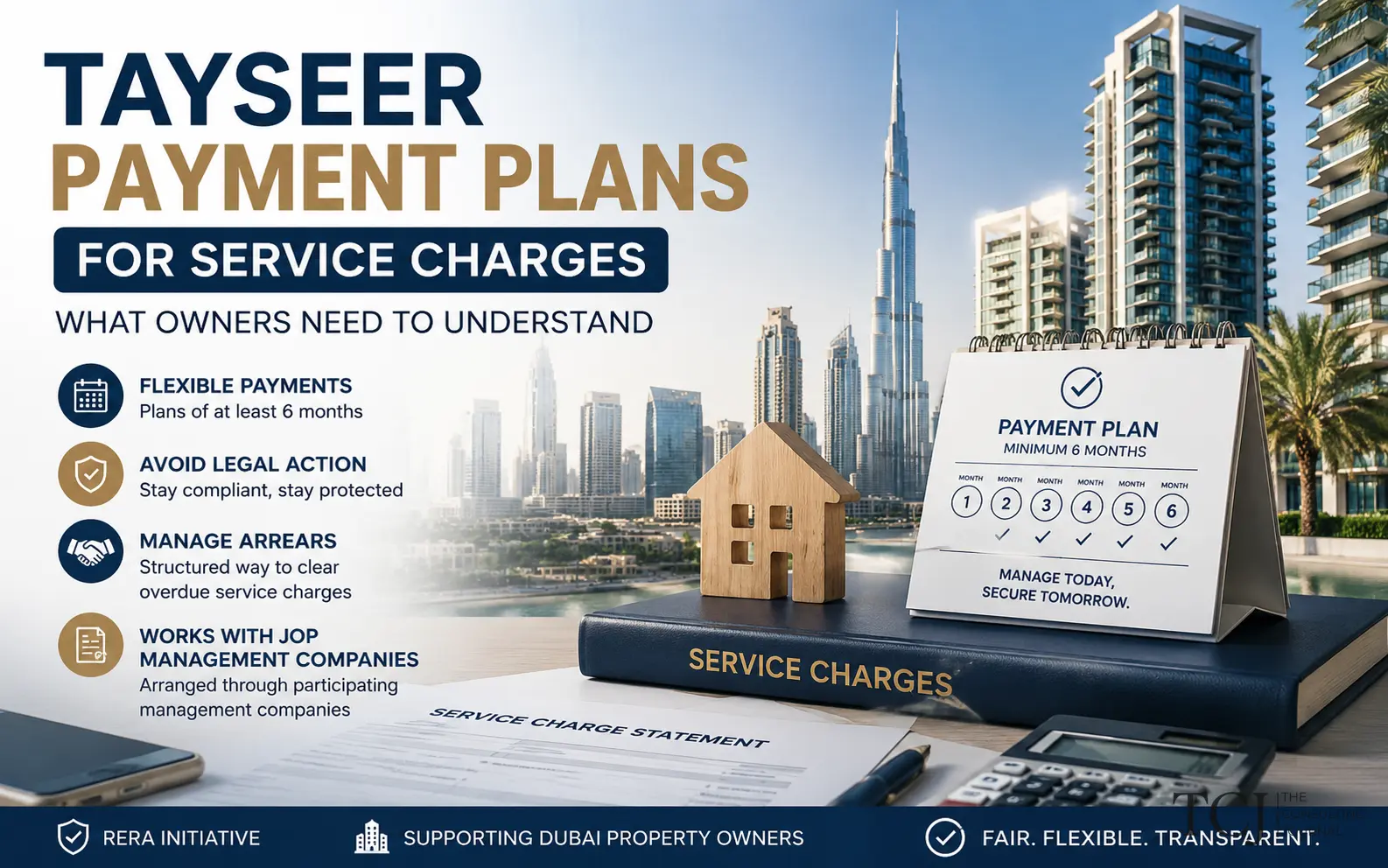
Tayseer Payment Plans for Service Charges in Dubai
Dubai property owners with overdue service charges may be able to use Tayseer payment plans. Here is what owners should verify about instalments, enforcement, ongoing charges, and property sales.