Conducting Partner and Distributor Due Diligence in the UAE
A practical UAE guide to verifying distributors and business partners through licensing, ownership, sanctions, financial, operational and contractual due diligence.
Key takeaways
- UAE distributor due diligence should verify legal identity, ownership, management, Financial capacity, operating capability and relevant compliance risks.
- The depth of review should increase when the distributor receives greater credit, exclusivity, market authority or access to sensitive customers and information.
- Beneficial ownership, sanctions screening and commercial agency considerations should be assessed according to the applicable UAE rules and facts of the relationship.
- Financial statements, site reviews and independently checked references can help test whether commercial claims match actual capability.
- Due diligence should continue after appointment through periodic or event-driven monitoring.
What does partner and distributor due diligence involve?
Partner and distributor due diligence is a structured process for verifying a third party before entering into, renewing or materially expanding a commercial relationship. In practice, the review should establish who the business is, who owns and controls it, whether it can perform the proposed role and whether identifiable legal, compliance or commercial risks require further investigation.
A practical review may cover:
- legal identity and incorporation details;
- current commercial or trade licence;
- licensed activities;
- shareholders and beneficial ownership;
- directors and authorised representatives;
- sanctions and financial-crime exposure;
- litigation or credible adverse information;
- Financial strength and payment capacity;
- employees, warehouses and logistics capability;
- customer and supplier references;
- commercial agency considerations;
- Tax and related-party issues where relevant; and
- contractual protections and ongoing monitoring.
Due diligence should produce an informed decision, not simply a completed document folder.
Why does due diligence matter when appointing a UAE distributor?
A distributor can become the public face of a manufacturer or service provider in the UAE. Weak controls at the appointment stage can expose the principal to unpaid invoices, operational disruption, compliance concerns, brand damage or contractual disputes. Effective diligence gives management evidence to decide whether risks are acceptable, manageable or require escalation.
Problems often become visible when basic representations are independently tested. A proposed distributor may claim nationwide sales coverage while operating with a very small team, or it may request that payments be made to a company that is not named in the distribution agreement.
Neither situation automatically proves wrongdoing, but both require explanation before the relationship progresses.
How should businesses build a risk-based due diligence process?
The depth of UAE distributor due diligence should normally increase with the commercial and compliance exposure involved. Higher-value arrangements, government interaction, sensitive products, significant credit, complex ownership, exclusivity or extensive subcontracting generally justify deeper review than low-value, prepaid transactions.
Businesses can begin by assessing factors such as:
- anticipated annual transaction value;
- products or services involved;
- territory and customer categories;
- payment terms and credit exposure;
- exclusivity;
- access to customer or confidential information;
- government or public-sector interaction;
- use of agents or subcontractors;
- regulatory sensitivity; and
- identified ownership or reputation concerns.
Sales teams may sponsor a distributor, but material compliance, Accounting, Financial, legal or Tax issues should typically be reviewed by the function with the appropriate expertise.
Example 1: A Dubai-based equipment supplier is considering an exclusive distributor that requests 90-day credit terms and claims access to customers across all seven emirates. Before approval, the supplier reviews the distributor's legal documents, owners, financial statements, staff, warehousing arrangements, customer references and actual geographic capacity rather than relying on the sales presentation alone.
How do you verify a UAE entity and its trade licence?
Start with the exact legal entity that will sign the agreement. Obtain its current licence and relevant corporate documents, identify the issuing authority, check the licensed activities and confirm that the same entity will contract, invoice and receive payments. Material differences between names, addresses, bank accounts or documentation should be resolved before onboarding.
Depending on the type of UAE company, useful documents can include:
- current trade or commercial licence;
- certificate or documents of incorporation;
- constitutional documents where applicable;
- registered address;
- shareholder or partner information;
- authorised signatory evidence;
- branch information; and
- details of the activities the entity is licensed to conduct.
One useful control is to compare the contracting entity with the name on invoices, bank details, email domains and other commercial documentation.
If Company A signs the agreement while payments are requested to Company B, management should establish the relationship between the companies and the commercial reason for the arrangement.
How should beneficial ownership be reviewed?
Businesses should understand both direct shareholding and ultimate control. Where corporate shareholders or intermediate entities are involved, the ownership chain should be traced far enough to identify the relevant natural persons exercising ultimate ownership or control, subject to the applicable legal definitions and the evidence available.
Cabinet Decision No. 109 of 2023 sets out the UAE framework for beneficial owner procedures. It requires relevant legal persons to maintain adequate, accurate and up-to-date beneficial ownership information and contains requirements concerning beneficial owner and shareholder or partner records.
For commercial due diligence, businesses should normally seek to understand:
- direct shareholders;
- intermediate corporate owners;
- ultimate beneficial owners;
- persons exercising control;
- directors and key decision-makers; and
- nominee or other structures requiring explanation.
Complex ownership is not necessarily a problem. Unexplained ownership complexity is more concerning.
What sanctions and financial-crime checks should be considered?
Sanctions and financial-crime screening should be proportionate to the company's legal obligations and the risk presented by the relationship. Relevant screening can extend beyond the distributor itself to beneficial owners, directors, authorised representatives and other parties with a material role in the proposed arrangement.
The UAE Executive Office for Control and Non-Proliferation publishes targeted financial sanctions instructions addressing the UAE Local Terrorist List and the United Nations Consolidated List. For persons subject to those requirements, the instructions set out screening, freezing and reporting actions relating to designated-party matches.
The Ministry of Economy & Tourism also currently lists Federal Decree-Law No. 10 of 2025 and Cabinet Resolution No. 134 of 2025 within the UAE's anti-money laundering, counter-terrorist financing and proliferation-financing framework. Businesses should determine which obligations apply to their particular activities rather than assuming every commercial company has the same regulated-entity responsibilities.
A valid licence tells you that an entity exists; good due diligence asks whether the people, finances and operating capability behind that entity support the relationship you are about to enter. — Consultant observation, KPM Global Services UAE
How can management and reputation be assessed?
Corporate registration alone does not establish management credibility.
Identify the executives responsible for the relationship and assess whether their experience is consistent with the distributor's commercial claims. Credible public information can also be reviewed for relevant regulatory action, litigation, insolvency, significant disputes or other concerns.
Source quality matters. An unsupported social media allegation should not be treated as an established fact. Material adverse information should be documented, corroborated where possible and considered in context.
Can the proposed distributor actually perform?
Commercial capability is a core part of due diligence. A company can pass basic compliance checks and still lack the Financial resources, staff, warehousing, logistics or technical capacity required to perform the distribution agreement.
Depending on the value and risk of the relationship, businesses may consider reviewing:
- recent financial statements;
- credit or banking references where appropriate;
- major liabilities;
- insurance coverage;
- payment history;
- employee numbers;
- sales resources;
- warehousing and inventory capacity;
- delivery arrangements;
- geographic coverage;
- after-sales support;
- IT and cybersecurity capability where relevant; and
- dependence on subcontractors.
Accounting information should also be read in context. Audited financial statements may provide stronger evidence than unsupported management figures, but businesses should still examine whether the numbers support the distributor's proposed commitments.
Example 2: A UAE consumer-products distributor claims strong retail coverage and asks a foreign manufacturer for substantial launch inventory on credit. A site review shows that the distributor outsources most logistics and holds limited warehouse capacity. The manufacturer does not automatically reject the appointment, but revises credit limits, inventory expectations and reporting obligations before proceeding.
What UAE commercial agency issues should be reviewed?
Businesses should distinguish ordinary distribution arrangements from structures that may raise issues under the UAE commercial agency framework. Federal Law No. 3 of 2022 regulates commercial agencies in the UAE, but the consequences for a particular relationship depend on its structure and facts.
Before signing, the parties should clearly address:
- territory;
- product scope;
- exclusivity;
- sales channels;
- online sales;
- sub-distribution;
- minimum purchase obligations;
- marketing responsibilities;
- intellectual property use;
- contract duration and renewal;
- termination; and
- post-termination obligations.
Businesses should obtain qualified UAE legal advice where agency registration, exclusivity, termination rights or other commercial agency matters may be relevant.
When do UAE Tax and transfer pricing issues become relevant?
Tax considerations may arise when the distributor and supplier are Related Parties or Connected Persons, particularly where pricing, commissions, financing or service charges are set within the same corporate group. These arrangements should be considered alongside the broader commercial and Financial review rather than treated as a separate paperwork exercise.
The UAE Federal Tax Authority states that transfer pricing rules apply to transactions with Related Parties and Connected Persons and can apply to both domestic and cross-border transactions. Relevant dealings are generally required to reflect the arm's-length principle.
Depending on the structure, businesses should consider whether their Accounting records and supporting documentation adequately explain pricing and other related-party arrangements.
When are site visits and reference checks useful?
For material appointments, a physical or appropriately verified site review can test whether the distributor's actual operations match what management has been told.
A review may examine offices, warehouses, staffing, inventory controls, delivery infrastructure and technical resources.
Reference checks are more useful when questions are specific. Ask how long the reference has worked with the distributor, whether invoices are paid on time, how customer complaints are managed and whether the company generally follows agreed territory or brand requirements.
Where possible, verify that the reference itself is genuine.
What common mistakes do businesses make?
Common problems in partner and distributor due diligence include:
- treating a trade licence as complete due diligence;
- failing to identify who ultimately owns or controls the company;
- relying entirely on information supplied by the sales team;
- accepting unexplained third-party bank accounts;
- failing to investigate inconsistencies between documents;
- accepting market-access claims without evidence;
- overlooking the distributor's Financial capacity;
- failing to review subcontractors;
- ignoring credible adverse information;
- using a standard contract without reflecting identified risks; and
- completing onboarding without setting a future review trigger.
A red flag is not necessarily proof of misconduct. It is a reason to investigate and document the answer.
What documents should be prepared for distributor due diligence?
A practical preparation checklist may include:
- current trade or commercial licence;
- incorporation and constitutional documents;
- shareholder and beneficial ownership information;
- authorised signatory details;
- organisation chart;
- director and management information;
- bank account confirmation;
- recent financial statements;
- insurance certificates where relevant;
- customer or supplier references;
- office and warehouse details;
- employee and sales-team information;
- sanctions and reputation screening records;
- details of agents or subcontractors;
- proposed distribution agreement; and
- written resolution of material red flags.
The final file should explain not only what was collected, but also what was checked and how significant concerns were resolved.
How should distributors be monitored after appointment?
Due diligence should continue after the contract is signed because ownership, management, licensing, Financial circumstances and sanctions exposure can change.
A review may be refreshed when there is:
- a change in shareholders or control;
- new senior management;
- a licence change;
- a request to use a different bank account;
- expansion into new products or territories;
- credible adverse media;
- a sanctions alert;
- a regulatory investigation;
- an unusual payment request;
- a material contract amendment; or
- renewal of the distribution agreement.
Higher-risk relationships typically justify closer monitoring.
How can KPM Global Services UAE assist?
KPM Global Services UAE can support businesses developing or strengthening partner and distributor review processes in Dubai and across the UAE.
Depending on the engagement, support can include corporate document review, ownership verification, Financial and Accounting assessment, Tax considerations, due diligence checklists, risk documentation and coordination of issues requiring specialist legal or regulatory advice.
The objective should be a defensible business process: understand the counterparty, document material risks and ensure the proposed commercial terms reflect what the review has identified.
A well-managed distributor appointment is an evidence-based business decision. Companies should establish who they are dealing with, verify what the counterparty can actually deliver and investigate inconsistencies before significant commercial exposure is created.
Contractual protections can reduce risk, but they do not replace careful selection of the underlying partner. For important relationships, businesses should combine corporate verification with Financial, operational, compliance and commercial analysis and maintain a clear record of the approval decision.
This article is for informational purposes and does not constitute legal, tax, accounting, or financial advice.
Questions and answers
Q: What is distributor due diligence in the UAE?
A: Distributor due diligence is the process of checking a proposed UAE distributor's legal identity, ownership, licensing, management, Financial condition, reputation and operating capability before appointment. The depth of review should depend on the commercial and compliance risks involved.
Q: How can I verify a potential business partner in the UAE?
A: Start with the exact legal entity, current licence, corporate documents and ownership information. Then assess management, relevant sanctions or reputation issues, Financial capacity, operating resources and references, and investigate any material inconsistencies before approval.
Q: Should beneficial owners of a UAE distributor be checked?
A: Beneficial ownership should generally form part of a robust commercial due diligence review because direct shareholders may not always show who ultimately owns or controls the business. UAE beneficial ownership procedures are addressed under Cabinet Decision No. 109 of 2023.
Q: Is sanctions screening necessary when appointing a UAE distributor?
A: Sanctions exposure should be considered within a risk-based review, with the precise legal obligations depending on the parties and circumstances. UAE targeted financial sanctions guidance addresses screening against the UAE Local Terrorist List and the UN Consolidated List for persons subject to those requirements.
Q: How often should distributor due diligence be renewed?
A: There is no single commercial review interval suitable for every distributor. Businesses should set the frequency according to risk and refresh the review when material events occur, including ownership changes, new bank details, regulatory concerns, significant adverse information or major changes to the commercial relationship.
More in AML Compliance
View all AML Compliance →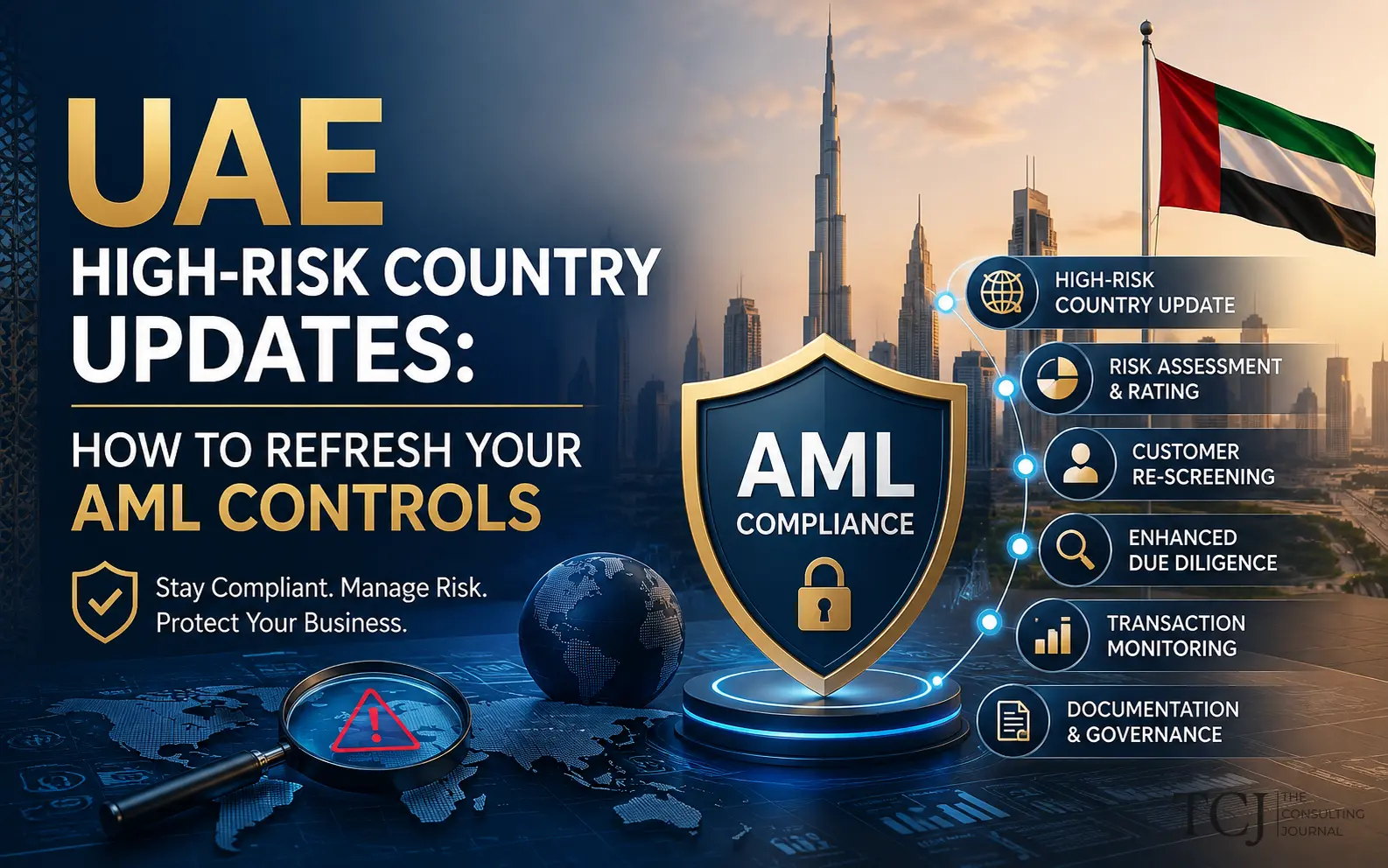
UAE High-Risk Country Updates: How to Refresh Your AML Controls
High-risk country updates can affect customer risk ratings, EDD, transaction monitoring, sanctions screening and governance. Here is how UAE businesses can refresh AML controls in a practical, traceable way.
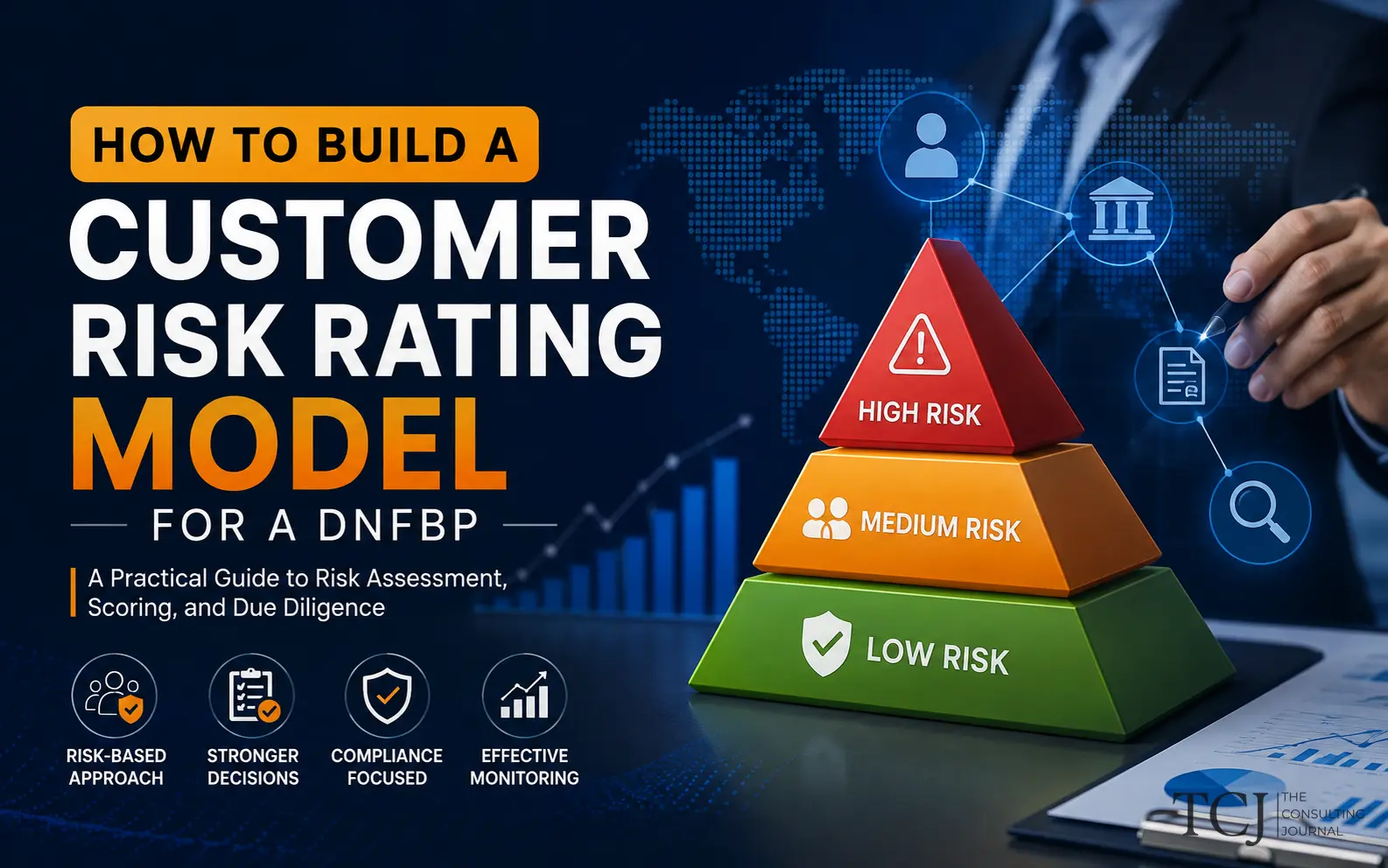
How to Build a Customer Risk Rating Model for a DNFBP in the UAE
A practical UAE-focused guide to building a customer risk rating model for DNFBPs, covering AML/CFT risk factors, scoring, weighting, EDD triggers, reviews, governance, and documentation.
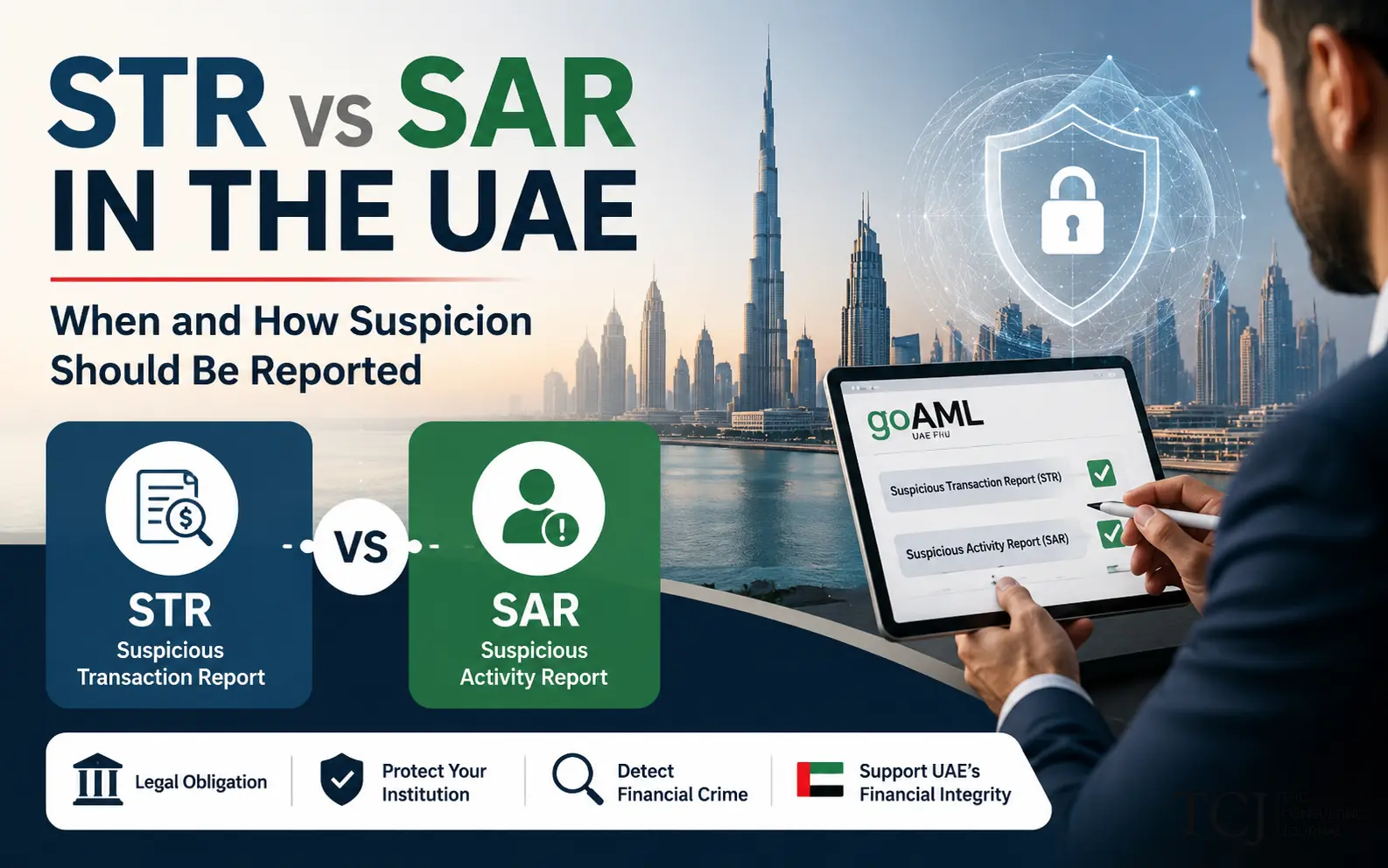
STR vs SAR in the UAE: When and How Suspicion Should Be Reported
Understand the practical difference between STR and SAR reporting in the UAE, when reasonable suspicion may arise, who must report, and how the goAML submission process typically works.