UAE Investor Visas and Business Relocation for Italian Entrepreneurs
Italian entrepreneurs considering Dubai or the wider UAE should coordinate company setup, residence visas, Tax, Accounting, banking and Italian tax-residency planning before relocating.
Key takeaways
- A UAE residence visa does not automatically end Italian tax residency.
- Italian entrepreneurs can consider company-linked residence, the Green Visa and qualifying Golden Visa routes.
- AED 2 million remains an important threshold for major UAE Golden Visa investor categories.
- Mainland and free zone decisions should follow the actual business model rather than the lowest setup price.
- Free zone incorporation does not automatically guarantee 0% UAE Corporate Tax.
- Tax, Financial, Accounting, immigration and Italian cross-border planning should be coordinated before relocation.
Why are Italian entrepreneurs considering the UAE?
The UAE can appeal to Italian founders who want a regional base, access to Gulf markets or a location from which to manage an international business. Dubai receives much of the attention, but Abu Dhabi, Ras Al Khaimah, Sharjah and other emirates also offer mainland and free zone company structures.
Foreign investors can own up to 100% of many mainland commercial companies, although activities of strategic impact and certain regulated sectors remain subject to separate requirements.
Free zones provide another route and may suit international consulting, technology, logistics, trading, e-commerce and specialised industries. The appropriate structure depends less on nationality and more on what the company will actually do.
An Italian consultant billing overseas clients, for example, may have different licensing and premises requirements from an Italian engineering group bidding for UAE projects or a manufacturer establishing a Gulf distribution operation.
A UAE structure works best when the licence, visa, operating model, banking arrangements and tax position all describe the same genuine business. — Consulting Journal observation
Which UAE residence visas should entrepreneurs consider?
Italian founders typically need to compare ordinary company-related residence with the Green Visa and, where the qualifying conditions are met, Golden Visa routes. The longest visa is not necessarily the best option. Eligibility, investment levels, family requirements, operating plans and the founder's intended time in the UAE should all be considered.
What is the UAE Green Visa for investors?
The UAE Green Visa is a renewable five-year residence route that can apply to investors and business partners. Eligible holders do not require a sponsor and may benefit from family sponsorship provisions. UAE government guidance continues to identify investors and business partners as eligible categories.
For an active founder, this can be useful where the ownership and business structure support the application. Requirements should be checked alongside the proposed licence and jurisdiction rather than after the company has already been formed.
How does the UAE Golden Visa work for investors?
The Golden Visa provides longer-term residence for qualifying categories including investors and entrepreneurs. Current UAE government guidance includes five-year and ten-year routes, with AED 2 million remaining an important qualifying threshold for major investor categories. Different conditions apply depending on whether the application is based on property, investment or entrepreneurship.
Can property investment qualify?
A qualifying real-estate investor may be able to obtain a five-year Golden Visa where the applicable property-value and authority requirements are satisfied.
Italian investors should nevertheless assess property on its commercial merits. Buying a property primarily to obtain residence can overlook financing costs, liquidity, property performance and the fact that immigration residence does not automatically determine tax residence in Italy.
Can a startup founder qualify as an entrepreneur?
Potentially, but incorporating an ordinary consultancy or trading company does not automatically turn its owner into a Golden Visa entrepreneur.
The entrepreneur route has specific qualifying conditions and is intended for eligible entrepreneurial projects. Founders developing innovative, technology-led or future-focused ventures should review the category against their actual project before relying on it as their preferred residence solution.
Should an Italian founder choose a mainland or free zone company?
A mainland company is often worth considering when the business expects to operate directly across the UAE market, work with local customers or participate in activities for which mainland licensing is commercially practical. A free zone may suit international operations, specialised sectors or businesses that benefit from a particular zone's infrastructure and ecosystem.
Price should not be the main selection factor.
A low initial licence fee may become less attractive if the structure provides insufficient visas, unsuitable activities, limited premises, difficult renewal conditions or complications for the intended commercial model.
Founders should compare:
- The exact licensed activity
- Whether customers are mainly in the UAE or overseas
- Physical office and warehouse requirements
- Expected employee and visa numbers
- Banking and payment requirements
- Regulatory approvals
- Import, export and logistics needs
- Annual renewal costs
- Corporate Tax treatment
- Future expansion plans
Example 1:
An Italian digital consultant serves companies in Europe and the GCC, has no physical inventory and expects a small UAE team. A suitable free zone structure may deserve consideration because the business is primarily service-based and internationally focused.
The founder should still assess banking, visa capacity, Accounting records and Corporate Tax rather than deciding solely on the advertised licence cost.
Example 2:
An Italian industrial supplier wants a Dubai base, local employees, warehousing and contracts with UAE customers.
A mainland structure or an appropriate industrial or logistics-focused jurisdiction may be more suitable. The decision should be based on the supply chain, licence activity, customer requirements, premises and customs position rather than on immigration benefits alone.
What UAE Corporate Tax and VAT rules should founders consider?
The UAE should not be described as universally tax-free. For taxable persons other than Qualifying Free Zone Persons, Corporate Tax is generally 0% on taxable income up to and including AED 375,000 and 9% on taxable income above AED 375,000. Qualifying Free Zone Persons have separate rules for qualifying and non-qualifying income.
Free zone incorporation therefore does not automatically mean that every dirham of profit is taxed at 0%.
Proper Accounting is also central to the analysis. A company needs Financial records that support its revenue, expenses, transactions, tax position and filings.
VAT should be reviewed separately. UAE-resident businesses generally face mandatory VAT registration when taxable supplies and imports exceed AED 375,000 over the previous 12 months or are expected to exceed that level within the following 30 days. Voluntary registration is generally available from AED 187,500, subject to the applicable conditions.
Does moving to Dubai automatically end Italian tax residency?
No. A UAE residence visa and UAE company registration should not be treated as automatic proof that an entrepreneur is no longer tax resident in Italy. Personal residence and company taxation require separate analysis based on the relevant rules, treaty considerations and the actual facts.
An Italian founder should consider where they genuinely live, where significant personal and economic ties remain, where business decisions are made and what assets, companies, contracts or income sources continue to exist in Italy.
This is particularly important for entrepreneurs who relocate personally while continuing to own or manage an Italian company.
The UAE side also requires attention to residence, management, permanent establishment and Corporate Tax rules. Establishing a company certificate without corresponding operational substance can create a structure that looks different on paper from the way the business is actually run.
What steps should an Italy-to-UAE business relocation include?
A business relocation should begin with the existing commercial structure rather than with a visa application. The founder needs to understand what exists in Italy, decide what will operate from the UAE and then choose the legal, immigration and Financial arrangements that support that plan.
A practical sequence is:
- Map the current Italian company, shareholders, contracts, employees, intellectual property, assets, liabilities and customer relationships.
- Decide whether the UAE operation will be a new company, subsidiary, branch or part of a broader restructuring.
- Choose the emirate and compare mainland and relevant free zones.
- Confirm that the UAE licence accurately covers the intended activities.
- Determine the shareholders and legal structure.
- Complete registration and licensing.
- Select the appropriate residence route.
- Establish premises, banking, bookkeeping and operational systems.
- Review Corporate Tax and VAT registration requirements.
- Coordinate the relocation with qualified Italian tax and legal advice.
This sequencing reduces the risk of forming a company that later proves unsuitable for the founder's clients, banking needs, visa plans or cross-border tax position.
What common relocation mistakes should business owners avoid?
The first mistake is treating the UAE residence visa as proof of exclusive UAE tax residence. Immigration status and tax residence are different questions.
Other recurring problems include:
- Choosing the cheapest free zone without checking the licensed activity
- Assuming every free zone company automatically qualifies for 0% Corporate Tax
- Ignoring Accounting and Financial record-keeping until a filing deadline approaches
- Selecting a structure without considering UAE customer access
- Applying for a visa before deciding how the business will operate
- Moving personally while continuing to manage substantial activity from Italy
- Failing to review existing Italian companies, assets or contracts
- Using an artificial structure that does not match the company's actual operations
- Underestimating banking, premises, payroll and annual renewal requirements
What documents and information should founders prepare?
Preparation is easier when incorporation, immigration, banking and Tax teams are working from a consistent set of information.
Businesses should consider preparing:
- Passport copies for shareholders and managers
- Proof of residential address where requested
- Proposed company names
- Clear description of business activities
- Shareholding structure
- Existing Italian company documents where relevant
- Major customer and supplier information
- Business plan or commercial summary
- Expected annual turnover
- Source-of-funds and source-of-wealth information where requested
- Office or premises requirements
- Expected employee and visa numbers
- Existing contracts and intellectual-property details
- Recent Financial statements where an existing company is involved
- VAT and Corporate Tax information relevant to the proposed activity
The exact documentation varies by authority, business activity, ownership and application type.
How can KPM Global Services UAE assist?
KPM Global Services UAE can support founders assessing how their commercial activity, UAE company structure, Accounting processes, Financial requirements and Tax compliance need to fit together.
Depending on the engagement, practical assistance may include reviewing mainland and free zone options, coordinating company setup requirements, establishing bookkeeping and Accounting processes, assessing Corporate Tax and VAT obligations, and preparing businesses for ongoing compliance.
For Italian entrepreneurs, UAE advice should be coordinated with appropriately qualified Italian advisers where Italian tax residence, restructuring, company ownership or other Italian legal and tax matters remain relevant.
KPM Global Services UAE should not be viewed as a substitute for Italian legal or tax advice where the transaction creates obligations in Italy.
What should Italian entrepreneurs decide before relocating?
The most suitable UAE arrangement is usually the one that follows the commercial reality of the business. A consultant serving international clients, a property investor, a technology founder and an Italian manufacturer entering Gulf markets may all require different company and residence structures.
Visa duration should therefore support the business strategy rather than determine it.
Italian entrepreneurs should coordinate company formation, immigration, Accounting, Corporate Tax, VAT, banking and personal relocation before making irreversible changes. This is especially important where an existing Italian company, family connections, investments or management activity will remain in Italy.
This article is for informational purposes and does not constitute legal, tax, accounting, or financial advice.
Questions and answers
Q: Can an Italian citizen obtain a UAE investor visa?
A: Yes. Italian entrepreneurs may be eligible for company-related residence, the Green Visa or qualifying Golden Visa categories depending on their investment and business circumstances. Nationality alone does not determine eligibility.
Q: How much investment is required for a UAE Golden Visa?
A: AED 2 million is an important threshold under major investor Golden Visa routes in current UAE government guidance. The precise requirements and visa duration depend on whether the applicant qualifies through property, public investment or another approved category.
Q: Can an Italian own 100% of a company in Dubai?
A: In many activities, yes. UAE rules allow up to 100% foreign ownership of many mainland commercial companies, while restrictions and additional approvals can apply to certain strategic or regulated activities.
Q: Does a UAE free zone company automatically pay 0% Corporate Tax?
A: No. A free zone company must satisfy the relevant conditions to receive Qualifying Free Zone Person treatment, and non-qualifying taxable income may be subject to 9% Corporate Tax. Businesses should review their actual activities and income before assuming a 0% rate.
Q: Does moving to Dubai automatically make an Italian entrepreneur a UAE tax resident?
A: No. A UAE residence visa or company licence does not by itself settle Italian tax residence. The entrepreneur should obtain Italian advice on personal ties, business management, assets, companies and other facts that may continue to connect them with Italy.
More in Immigration
View all Immigration →
UAE Golden Visa for Business Owners: Investment, Tax and Company Evidence
A practical 2026 guide for UAE business owners, founders and shareholders covering Golden Visa investment routes, tax contribution criteria, entrepreneur eligibility, company evidence and application preparation.
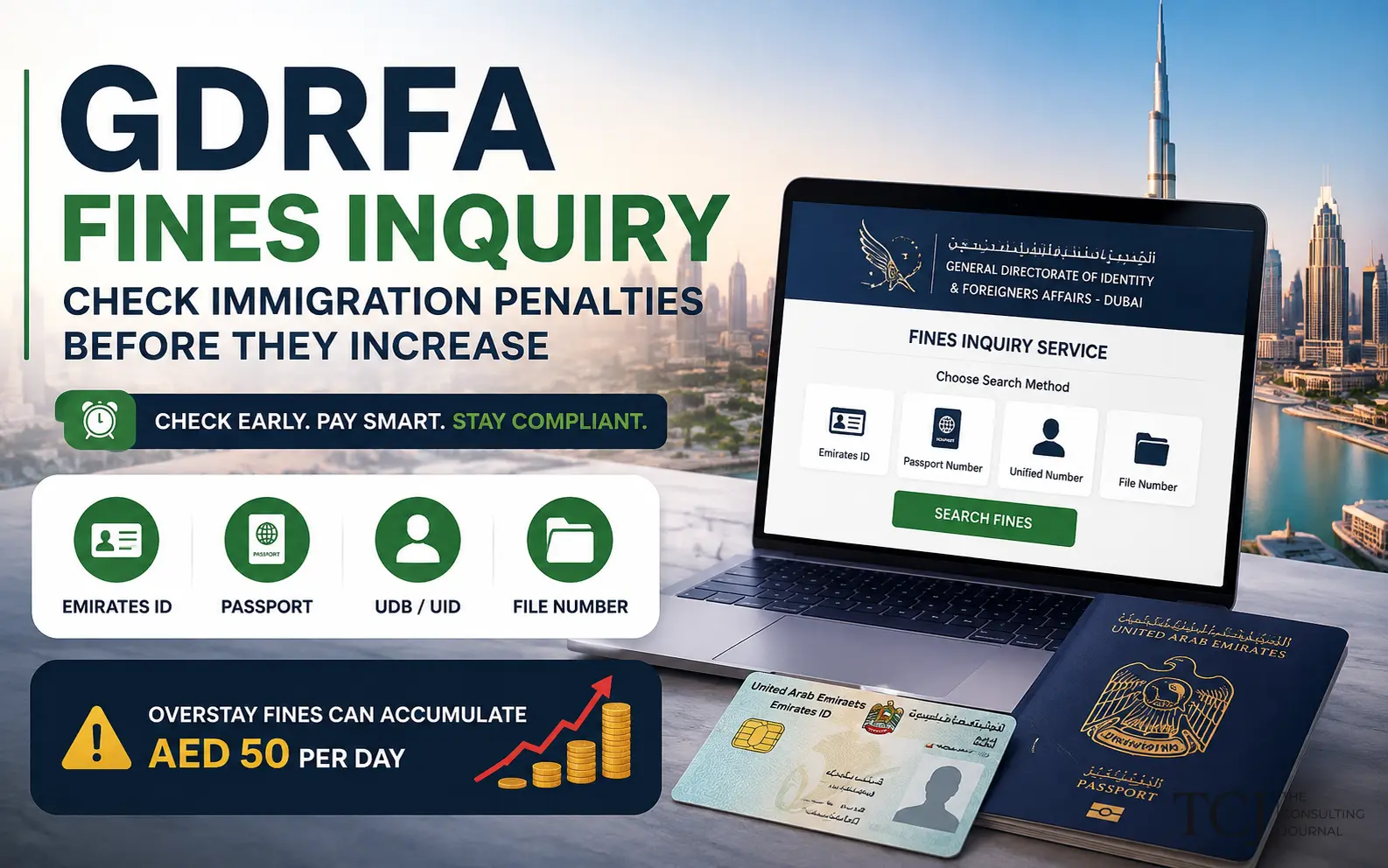
GDRFA Fines Inquiry in Dubai: How to Check Visa Fines Online
A practical guide to checking GDRFA immigration fines in Dubai using Emirates ID, passport, unified number or file number, with guidance on overstay fines and next steps.
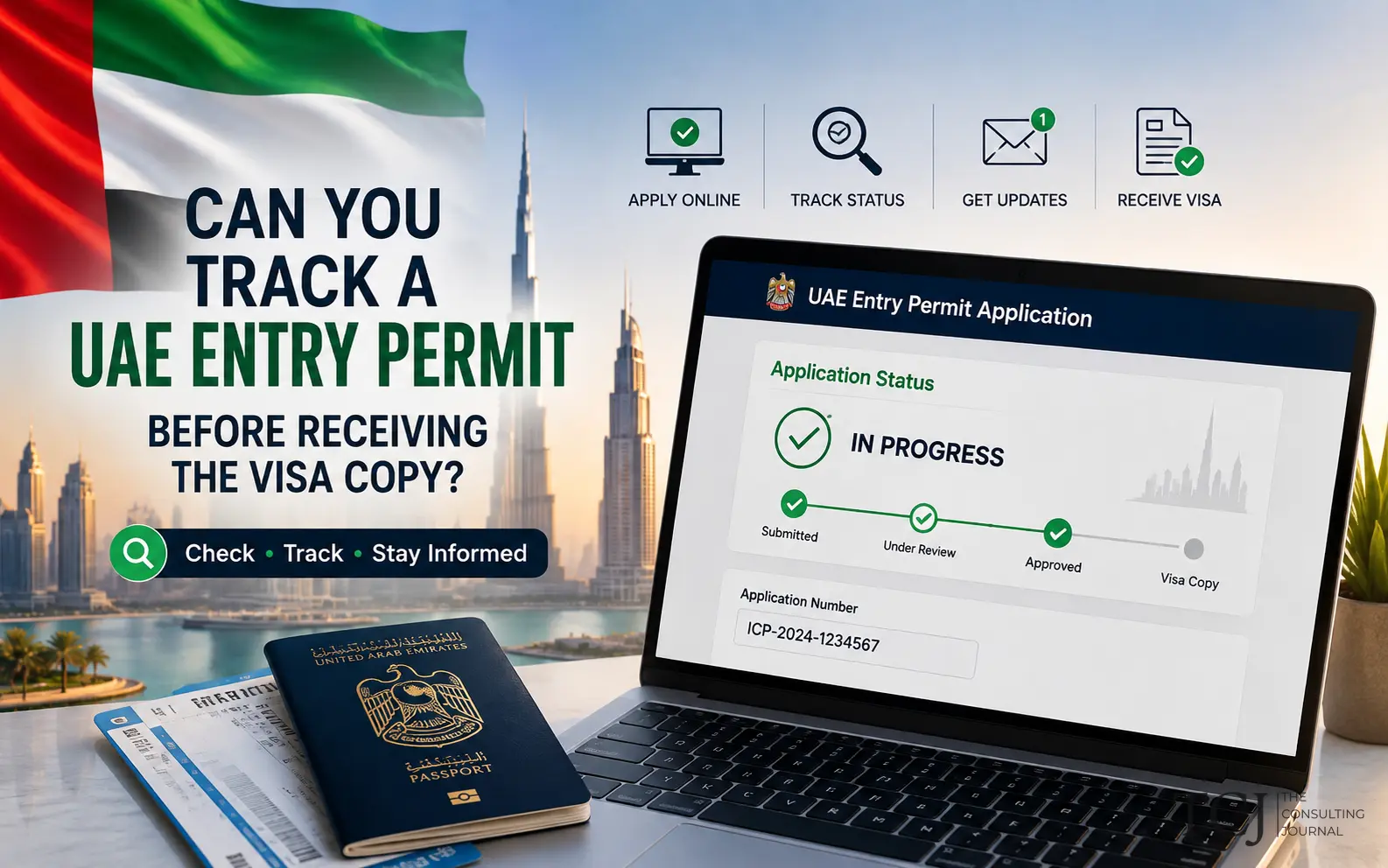
Can You Track a UAE Entry Permit Before Receiving the Visa Copy?
A UAE entry permit application can often be tracked before the final visa copy arrives. Here is how to identify the right authority, find the reference number and check the application safely.