How to Update Your Professional Title After Gaining New Qualifications
A practical guide to updating your professional title, CV, LinkedIn profile and workplace records after earning a recognised degree, certification, licence or designation.
Key takeaways
- Update your title only after the qualification has been officially awarded and its use has been authorised.
- Keep your employer-issued job title separate from your professional credentials and personal branding.
- Use only current, recognised and relevant qualifications in your CV, LinkedIn profile and email signature.
- Check UAE regulatory, licensing and recognition requirements before using a protected professional title.
- Maintain consistent information across employment records, public profiles and client-facing materials.
- Connect new qualifications with practical experience rather than relying only on abbreviations.
When should you update your professional title?
You should update your professional profile after the qualification has been officially awarded, remains valid and is relevant to your work. Before using a new designation, confirm that the awarding body permits its public use and that it does not imply a licence, seniority level or employer-issued position you do not hold.
Finishing a course is not always the same as receiving a recognised credential. Some programmes issue certificates of attendance or completion but do not grant a professional designation.
Before making changes, confirm:
- The qualification has been formally awarded.
- You have received the final certificate, membership confirmation or licence.
- The credential is current and has not expired.
- You have completed any required professional experience.
- The awarding organisation allows you to use post-nominal letters.
- The title is not restricted or protected in the jurisdiction where you work.
- The qualification is relevant to the audience viewing your profile.
For example, completing a project management course may strengthen your skills section. It does not necessarily permit you to add a recognised project management designation unless you have met the awarding body’s examination and experience requirements.
What is the difference between a job title and a professional title?
A job title is assigned by your employer and describes your position within the organisation. A professional title or designation communicates your qualifications, occupation or recognised expertise. You can normally add legitimate credentials to your professional profile, but you should not independently replace the official title recorded in your employment contract.
An employer may appoint someone as an “Accounting Executive”, “Finance Manager” or “Marketing Coordinator”. These titles describe the individual’s organisational role and level of responsibility.
Professional descriptions may include:
- Chartered Accountant
- Certified Project Management Professional
- Licensed Engineer
- Registered Nurse
- Certified Information Security Professional
- Human Resources Specialist
- Digital Marketing Professional
A person may be qualified in a particular field without holding a senior position in their current company. Similarly, an employee may hold a managerial job title without possessing a separate external certification.
Your CV and LinkedIn profile should make both points clear. You can state your official employment title within the experience section and present relevant qualifications separately in your headline, education or certification sections.
Which qualifications may justify a professional title update?
Qualifications that may justify an update include recognised academic degrees, regulated licences, accredited certifications and authorised professional memberships. The value of the update depends on whether the credential is recognised in your sector and whether it gives you a formal right to use a designation or post-nominal letters.
Academic qualifications
A completed master’s degree, doctorate or specialised postgraduate qualification may be added to your education record and, where appropriate, after your name.
Academic credentials should be used selectively. Adding every qualification can make a profile difficult to read, particularly when the degree is not relevant to the person’s current work.
A doctorate also requires careful presentation. The use of “Dr” may be understood differently across academic, medical and commercial settings. Professionals should ensure that the title does not create confusion about their occupation or licensing status.
Professional certifications
Recognised certifications can help employers identify technical competence in areas such as project management, cybersecurity, human resources, accounting, financial analysis, cloud technology and quality management.
The exact format should follow the certification provider’s rules. This includes capitalisation, abbreviations, renewal requirements and the correct use of logos or digital badges.
Expired credentials should not remain prominently displayed as if they are current. Where an older certification remains relevant, it should be clearly described as historical or previously held.
Professional licences
A licence may grant permission to perform a regulated activity or use a protected designation. Licensing conditions can vary by profession, regulator and jurisdiction.
Professionals working in Dubai or elsewhere in the UAE should avoid assuming that a qualification earned overseas automatically gives them the right to use the same regulated title locally. Depending on the profession, additional recognition, registration, examination or authority approval may be required.
Membership designations
Some institutes permit members to add post-nominal letters after meeting defined education, experience and conduct requirements.
Membership alone may not always provide this right. Certain designations are reserved for associate, full, fellow or chartered members. Check the membership certificate and the organisation’s usage guidance before updating your profile.
Example 1:
A Dubai-based project coordinator completes an accredited project management qualification. Her employer does not immediately change her job title because her responsibilities remain the same. She keeps “Project Coordinator” in her employment history but adds the recognised credential after her name and includes it in her LinkedIn headline.
This communicates her development without implying that she has been promoted to Project Manager.
How should you update your CV and LinkedIn profile?
Update your CV and LinkedIn profile only after verifying the credential’s official name and permitted abbreviation. Keep your employment title unchanged unless your employer has formally revised it. Add the qualification in the sections where recruiters are most likely to assess its relevance, validity and connection to your experience.
Updating your CV
Your CV should distinguish between your name, professional summary, employment history and qualifications.
You may update:
- Your name heading with approved post-nominal letters.
- Your professional summary to mention the new area of expertise.
- Your education section for academic qualifications.
- Your certification section with the awarding body and completion date.
- Your skills section where the qualification supports a specific capability.
- Your employment achievements if you have already applied the new knowledge.
A suitable heading might read:
Amina Rahman, MSc, PMP
The summary below it could explain her practical role:
Project delivery professional with experience coordinating commercial projects in the UAE, supported by postgraduate study and a recognised project management certification.
This is more informative than placing several unexplained abbreviations after a name.
Updating your LinkedIn profile
LinkedIn allows more flexibility than an employment contract, but the information must still be truthful.
Review the following areas:
- Headline
- About section
- Experience
- Education
- Licences and certifications
- Skills
- Featured content
- Contact information
Your headline should combine your actual work with your most relevant credential. Avoid turning it into a list of qualifications.
For example:
Financial Reporting Specialist | ACCA Affiliate | UAE Accounting Experience
This is clearer than a headline filled with several credentials that do not explain what the person actually does.
Example 2:
An accounting employee in Abu Dhabi completes a financial reporting certification while working as an Accounts Officer. He adds the credential to his CV and LinkedIn certification section but does not change his experience title to “Financial Controller”.
When applying for a more senior position, he highlights the new qualification alongside practical achievements such as monthly closing, reconciliations and management reporting. His profile shows career readiness without claiming responsibilities he has not yet performed.
Where else should you update your credentials?
Once your CV and LinkedIn profile are accurate, update the professional channels through which colleagues, clients and employers identify you. The wording should remain consistent, but the amount of detail can vary depending on the platform. Public-facing materials should never contradict your employment records or licensing status.
Relevant channels may include:
- Email signature
- Business cards
- Company website biography
- Professional portfolio
- Speaker profile
- Conference materials
- Proposal templates
- Professional directories
- Recruitment portals
- Internal employee directory
- Client presentation templates
Your email signature should remain concise. It normally needs your name, relevant credential, official job title, employer and contact information.
Do not replace your employer-issued title with a self-created alternative. An employee officially appointed as “Business Development Executive” should not use “Director of Strategic Growth” in client communication unless the company has approved that title.
Should you inform your employer?
Inform your manager or human resources team when the qualification is relevant to your role, employee record or future responsibilities. Your employer may verify the certificate, update internal systems or consider the qualification during development discussions. However, completing a qualification does not automatically require the organisation to change your position or salary.
Provide a clear copy of the certificate and explain how the qualification supports your current responsibilities.
Your employer may use the information to update:
- Personnel records
- Learning and development records
- Internal directories
- Staff biographies
- Business cards
- Proposal documents
- Competency assessments
- Succession or promotion planning
A qualification can strengthen a promotion discussion, but it should be supported by performance, experience, available responsibilities and the organisation’s structure.
A credible title should explain your professional standing, not create an impression that your qualifications or responsibilities do not support. — Consulting Journal editorial observation
What should UAE professionals check before using a new title?
UAE professionals should confirm whether the title is linked to a regulated activity, professional licence, authority registration or employer approval. Requirements may differ between sectors and between mainland and free zone organisations. Overseas credentials may also require recognition before they can be presented as equivalent to a locally regulated qualification.
Businesses and professionals should consider:
- Whether the occupation is regulated in the UAE.
- Whether a government authority or professional body controls the title.
- Whether the qualification requires local recognition.
- Whether the relevant licence is active.
- Whether continuing education or renewal is required.
- Whether the employment contract supports the title being used.
- Whether the designation could mislead a client about signing authority.
- Whether the title suggests responsibility the employee does not hold.
This is especially relevant in legal, medical, engineering, audit, accounting, financial and other regulated or client-sensitive professions.
Where there is uncertainty, confirm the position with the relevant authority, qualification provider, employer or appropriately qualified adviser before publishing the title.
Common mistakes professionals make
Changing the employer-issued title independently
Your employer controls the title attached to your position. Presenting yourself under a different title can create inconsistencies during reference checks, visa documentation, background screening or client communication.
Using a designation before it is officially awarded
Passing an examination may be only one part of the qualification process. Experience, membership, ethics or registration requirements may still be outstanding.
Displaying expired credentials as current
Some certifications require annual fees, continuing education or periodic renewal. Remove or qualify credentials that are no longer active.
Adding too many letters after your name
A long list of qualifications can distract from your actual expertise. Select the credentials that are recognised, current and relevant to your audience.
Using an unofficial abbreviation
Use the title exactly as specified by the awarding body. Creating a shorter or more impressive version can cause confusion and may breach credential usage policies.
Giving inconsistent information
Different titles across your CV, LinkedIn profile, email signature and employer website can raise questions during recruitment or due diligence.
Assuming the qualification guarantees promotion
Professional development can support progression, but promotion decisions usually consider performance, experience, business needs, available vacancies and leadership readiness.
Documents and preparation checklist
Before updating your professional title, prepare:
- Final qualification certificate
- Official transcript, where relevant
- Active professional membership confirmation
- Current professional licence
- Credential identification or verification number
- Expiry and renewal dates
- Awarding body’s title usage rules
- Continuing education requirements
- Employer approval for revised internal materials
- Updated CV
- Updated LinkedIn wording
- Revised professional biography
- Consistent email signature
- Copies of any UAE recognition or equivalency documentation
- Evidence of practical experience linked to the qualification
Keep digital copies in a secure professional records folder. Record renewal dates in your calendar so that public profiles do not continue displaying expired credentials.
How can employers manage employee title updates?
Employers should establish a clear process for verifying qualifications and separating external credentials from organisational job titles. This helps maintain accurate HR records, consistent client communication and fair promotion practices.
A practical internal process may include:
- The employee submits the qualification and verification information.
- HR confirms that the credential has been officially awarded.
- The line manager assesses its relevance to the employee’s role.
- The company decides which internal and public records should be updated.
- Any proposed job title change is reviewed separately.
- Renewal dates are recorded for time-limited credentials.
- Client-facing biographies are checked for accuracy.
This approach is particularly useful for UAE consulting, accounting, financial, engineering and technology businesses where client proposals may include employee qualifications.
Final advisory perspective
A new qualification deserves to be recognised, but the way it is presented matters.
Start by confirming what the qualification officially permits you to use. Keep your employer-issued job title unchanged unless the organisation has formally revised it. Add relevant credentials to your CV, LinkedIn profile, email signature and professional biography using consistent wording.
The strongest professional profiles connect qualifications with practical experience. Rather than relying only on letters after your name, explain how the learning supports your responsibilities, technical skills or career direction.
Accuracy protects your credibility. It also makes it easier for employers, clients and professional bodies to understand the difference between your current position, your qualifications and the work you are authorised to perform.
This article is for informational purposes and does not constitute legal, tax, accounting, or financial advice.
Questions and answers
Q: Can I change my job title after completing a certification?
A: Not automatically. Your employer decides your official job title, while you may add an authorised certification to your CV, LinkedIn profile or email signature. A job title change normally requires a formal decision by the organisation.
Q: When can I add new qualifications after my name?
A: Add them only after the qualification has been formally awarded and the awarding body permits the use of post-nominal letters. Check whether membership, work experience, renewal or licensing conditions also apply.
Q: Should my CV and LinkedIn title be identical?
A: Your employment titles and dates should be consistent across both platforms. Your LinkedIn headline may be broader than your official job title, provided it accurately describes your expertise and does not imply a position or licence you do not hold.
Q: Can I use an overseas professional title in the UAE?
A: It depends on the profession and how the title is regulated. Some overseas qualifications may require UAE recognition, local registration or an active professional licence before an equivalent designation can be used.
Q: Should I remove an expired professional certification?
A: Do not present an expired certification as active. You may retain it as part of your professional history when relevant, but clearly state that it has expired or is no longer current.
More in Medical Career
View all Medical Career →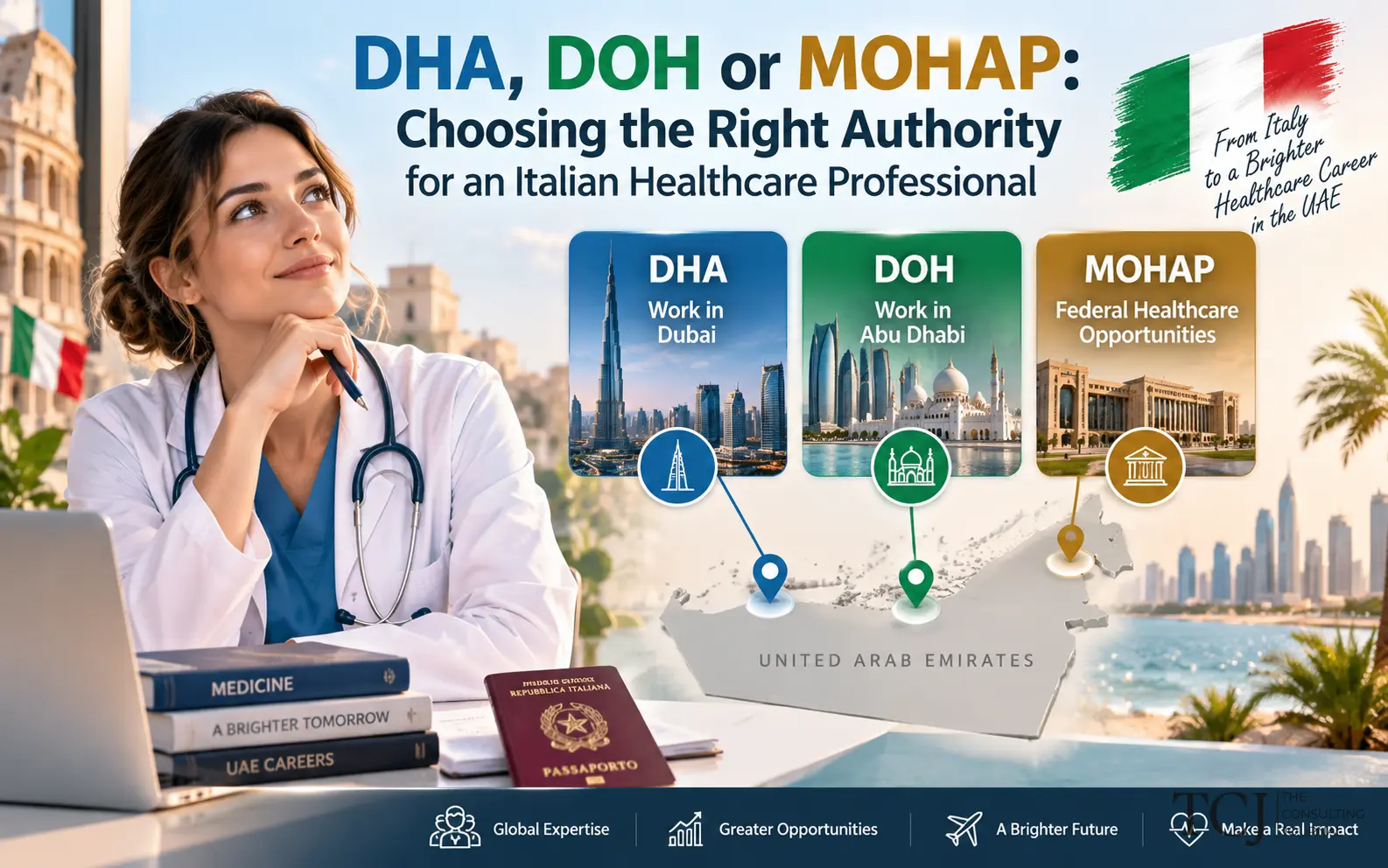
DHA vs DOH vs MOHAP: Choosing the Right UAE Healthcare Licence for Italian Professionals
Italian doctors, nurses, dentists and allied healthcare professionals should choose DHA, DOH or MOHAP according to where they plan to work in the UAE, then assess their qualifications, documents and licensing requirements.
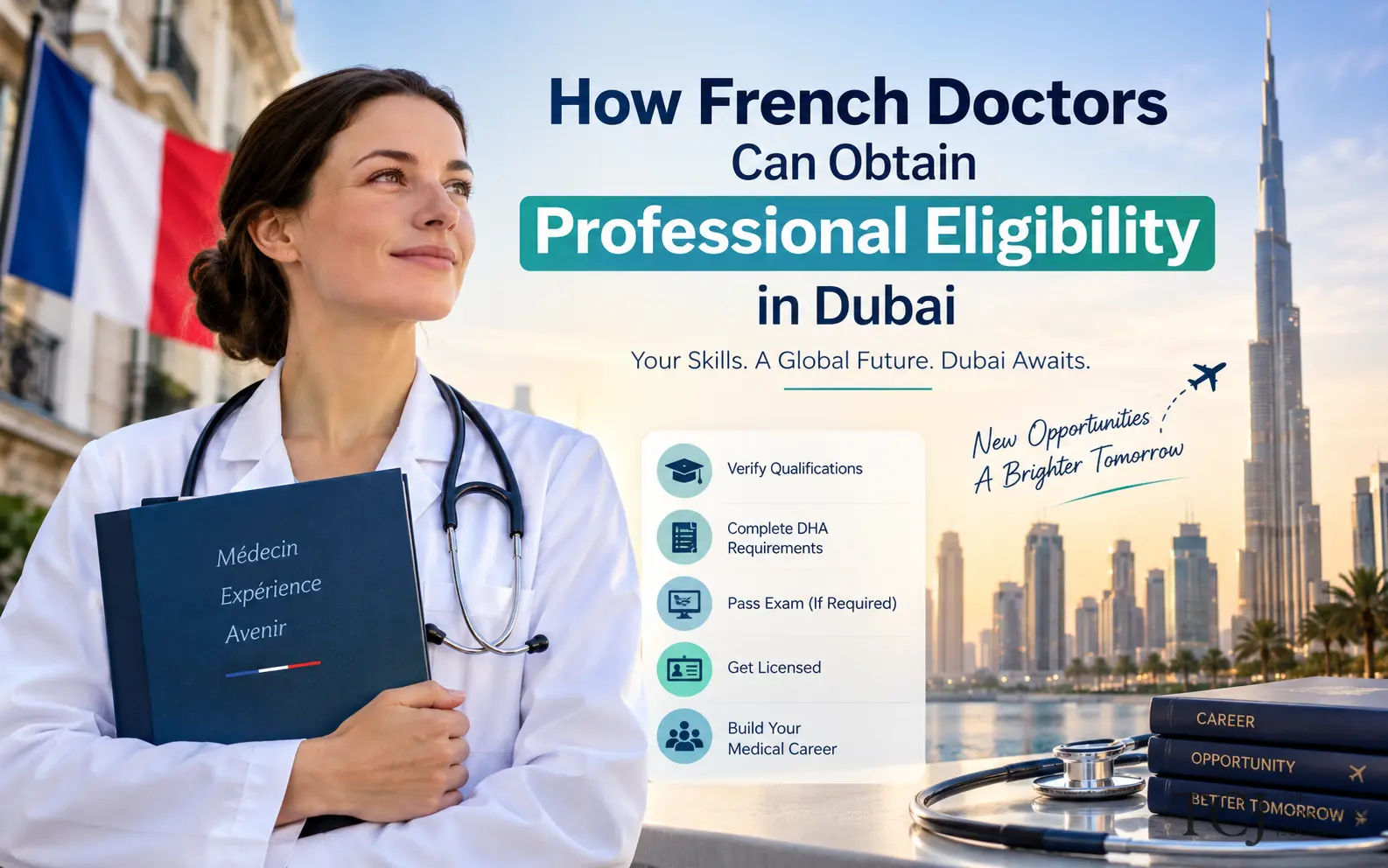
How French Doctors Can Obtain DHA Eligibility and a Medical License in Dubai
French doctors planning to practise in Dubai must match their qualifications and experience to DHA requirements, complete credential verification and obtain an activated professional license before beginning clinical work.
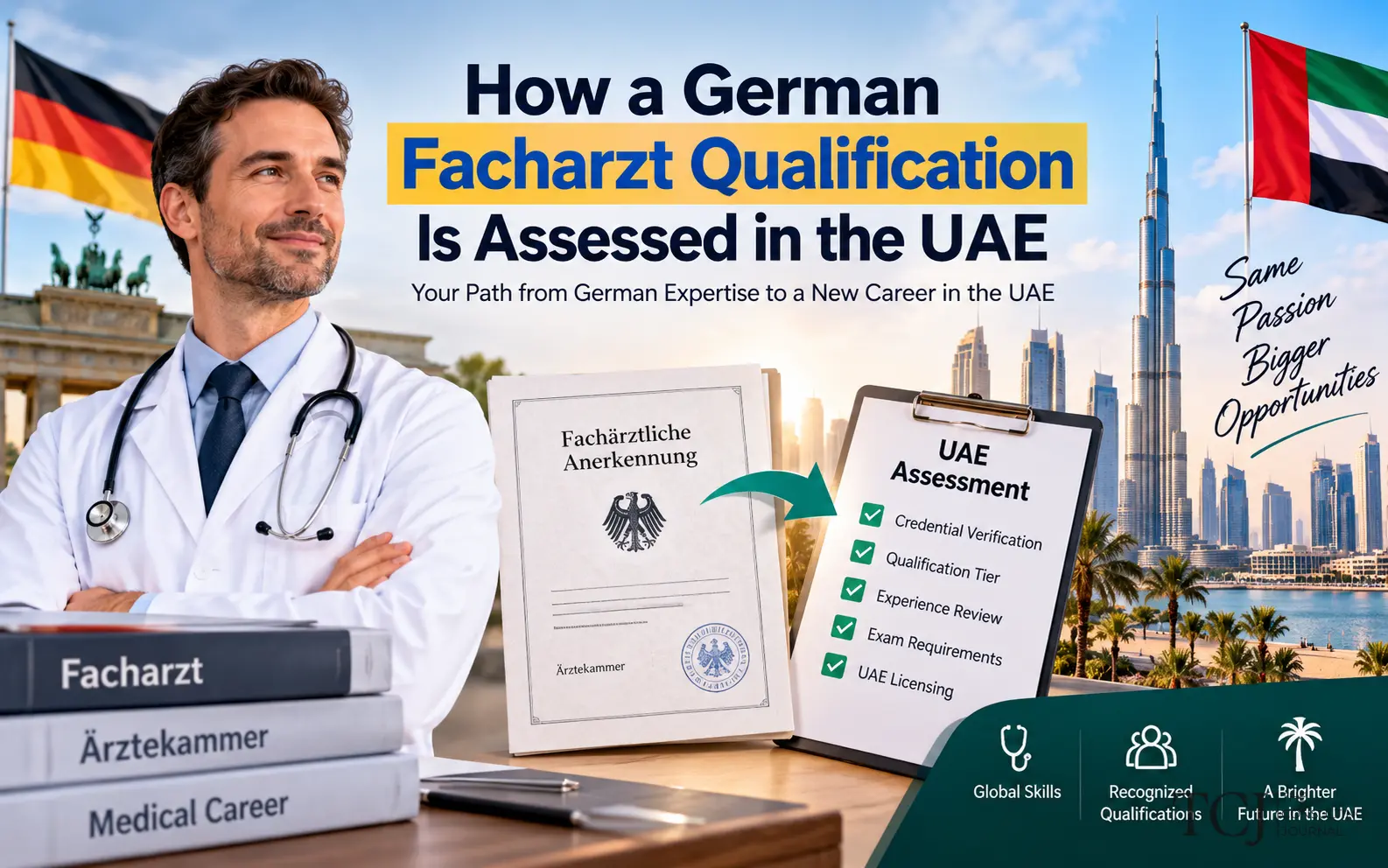
How German Facharzt Qualifications Are Assessed in the UAE
German Facharzt qualifications are recognised under the UAE healthcare licensing framework, but Oberarzt status, qualification tier, experience, verification and the professional title requested can materially affect the assessment.