Blockchain Opportunities for Italian Luxury and Product Authentication
Italian luxury brands can use blockchain to strengthen product authentication, provenance, Digital Product Passport readiness, resale verification, supplier traceability, and long-term product identity.
Key takeaways
- Blockchain is most useful in luxury when it supports persistent product identity rather than acting as a marketing feature.
- Strong physical-to-digital authentication remains essential because blockchain alone cannot prove that the physical object is genuine.
- EU Digital Product Passports do not require blockchain, although blockchain may support broader product-lifecycle use cases.
- Textiles and apparel are priority product groups under the ESPR Working Plan 2025–2030, but businesses should monitor future product-specific requirements.
- Authentication infrastructure can also support resale, servicing, ownership transfer, traceability, and long-term customer relationships.
- Italian luxury businesses should start with a measurable business problem and a controlled product-level pilot.
Why does blockchain matter to Italian luxury businesses?
Blockchain can help luxury businesses maintain a verifiable record of selected product events across manufacturing, sale, servicing, transfer, and resale. Its value is strongest where several organizations need to rely on a common product history rather than one company's internal database alone.
Counterfeiting remains one reason to consider better authentication infrastructure. An EUIPO study estimated that legitimate EU clothing businesses lost almost €12 billion in sales annually on average between 2018 and 2021 because of counterfeiting, equivalent to 5.2% of clothing sales.
Enforcement data also shows that the issue remains substantial. More than 112 million counterfeit items with an estimated retail value above €3.8 billion were detained at EU borders and within the EU internal market during 2024.
Blockchain cannot stop someone from manufacturing a fake handbag or copying a logo.
Its practical role is different. A brand can issue an authoritative digital identity for the genuine product and allow customers, retailers, service providers, resale businesses, or authentication specialists to check relevant records associated with that identity.
The business case for blockchain becomes stronger when the product record remains useful long after the first authenticity check. — Consulting Journal editorial observation
How does blockchain product authentication work?
A practical authentication system normally needs two connected elements: a reliable identity for the physical object and a digital record associated with that identity.
The physical connection might use:
- secure NFC tags;
- RFID components;
- serialized QR codes;
- embedded chips;
- tamper-evident labels;
- forensic or material markers; or
- another product-specific identification method.
The digital record can then contain or reference selected events such as production, quality verification, retail sale, warranty registration, authorized servicing, ownership transfer, authentication, or resale.
The quality of the connection between those two layers matters more than the blockchain label itself.
If unreliable information is entered at the beginning, blockchain does not make that information true. Equally, a genuine digital certificate does not prove that the physical item being presented is genuine if its identifier can easily be copied or transferred.
For high-value products, businesses should therefore treat blockchain as one component of a wider authentication system.
Example 1:
An Italian leather-goods manufacturer produces a limited collection of numbered handbags. Each bag receives a secure NFC identifier at the factory.
The manufacturer links the identifier to the model, production batch, manufacturing location, selected material information, authenticity record, care instructions, and later authorized repair events.
When the owner taps the NFC component, the brand can provide access to approved product information without exposing confidential production data.
Years later, the same identity could support resale verification or a transfer of ownership.
Where are the strongest blockchain opportunities in luxury?
The strongest opportunity is not putting the word "blockchain" in front of the customer. It is creating product identity infrastructure that can serve several functions over many years.
Anti-counterfeiting and authenticity
A brand can create an official digital record when a genuine product enters circulation.
That gives buyers and authorized businesses a reference point when checking a product. Aura, for example, lists luxury authenticity, supply-chain transparency, ownership transfer, resale, and circular-economy applications among the uses of its infrastructure.
The limitation is physical security. QR codes can be copied, and poorly secured tags can potentially be removed or transferred.
Businesses should select authentication technology according to product value, counterfeiting risk, expected product life, and the consequences of a compromised identifier.
Digital certificates and ownership history
A persistent certificate can remain useful after the first purchase.
Consider an Italian watch sold in Milan and resold many years later. Its product history could potentially include production, initial sale, authorized maintenance, later authentication, ownership transfer, and resale.
For collectible goods, provenance and servicing history can materially affect buyer confidence.
There is no requirement for that experience to resemble cryptocurrency. Customers may simply access a normal brand website or mobile interface while blockchain infrastructure operates behind the scenes.
How does blockchain relate to the EU Digital Product Passport?
Blockchain is not required for an EU Digital Product Passport. It is one possible architectural choice. Businesses should first understand the product information, identification, interoperability, and regulatory requirements that apply to them, and only then decide whether blockchain adds sufficient value.
The Ecodesign for Sustainable Products Regulation, Regulation (EU) 2024/1781, established the EU framework for Digital Product Passports.
The implementation environment also became more concrete in 2026. The European Commission launched the Digital Product Passport Registry and its testing environment on 20 July 2026. The Commission states that economic operators will register relevant unique product identifiers and associated metadata through the Registry while product data itself operates within a decentralised model.
Commission Implementing Regulation (EU) 2026/1778, adopted on 16 July 2026, sets out implementation arrangements for that Registry.
This is particularly relevant to Italian fashion businesses. Textiles, with a focus on apparel, are included among the priority product groups in the ESPR Working Plan 2025–2030. Textile-specific DPP requirements are expected to be defined through the relevant future delegated act rather than assumed from general proposals circulating in the market.
Businesses should therefore distinguish between confirmed framework requirements and product-specific rules that are still being developed.
The more strategic question is whether the same product identity used for regulatory information can also support authentication, repairs, warranty, ownership, and resale.
That is where a compliance investment may begin to deliver wider commercial value.
Can blockchain improve the luxury resale market?
Blockchain can reduce some of the information gaps that arise when a product leaves the original retail channel. A transferable digital identity may allow subsequent buyers or authorized resale businesses to review selected authenticity, ownership, servicing, and product-history records.
Second-hand luxury presents a familiar problem. The next buyer may ask:
- Is the item authentic?
- Does its identifier match the claimed model?
- Has it been serviced or repaired?
- Does an original digital certificate exist?
- Can the current owner legitimately transfer the digital record?
Blockchain cannot answer every question by itself. It can, however, preserve trustworthy events where those events were issued by recognized participants.
This could also help luxury houses maintain a relationship with products after their first sale.
With appropriate privacy and consent controls, a second or third owner could register ownership, access care information, arrange repairs, or use other brand services.
That turns authentication into part of a longer product lifecycle rather than a single transaction.
Example 2:
A luxury furniture maker in northern Italy issues a digital identity for a limited-production armchair.
The record begins with manufacturing and selected material information. The first buyer registers the item and later arranges an authorized refurbishment.
Fifteen years later, a specialist dealer receives the chair for resale. Instead of relying only on paper documentation, the dealer can review approved product and service records and append an authorized resale event.
The practical value is continuity of provenance.
How can blockchain support supply-chain traceability?
Luxury supply chains can involve raw-material suppliers, tanneries, mills, component makers, workshops, assemblers, logistics companies, boutiques, service centres, and recyclers.
Product information can therefore become fragmented across several systems.
A shared product-identity infrastructure can allow authorized participants to record selected events against a common identifier.
For a leather product, that could involve information associated with material processing, component manufacture, assembly, quality control, distribution, sale, servicing, and eventual recycling.
Not everything should be public.
Supplier contracts, pricing, commercially sensitive production information, and personal information may require separate systems or tightly controlled access. A useful traceability programme provides the right information to the right participant rather than treating complete transparency as the objective.
For smaller Italian manufacturers, structured traceability may also become commercially relevant when supplying larger groups that request increasingly organized product-level provenance and compliance information.
What opportunities exist for Italian authentication and technology businesses?
The market opportunity extends beyond major fashion houses.
Authentication providers, software companies, manufacturers, specialist technology firms, and professional advisers can support different parts of the product-identity lifecycle.
Potential services include:
- Authentication services: combining specialist physical inspection with persistent digital authentication records.
- Digital Product Passport implementation: mapping product information, identifiers, integrations, responsibilities, and supplier data.
- Physical-to-digital linking: implementing secure NFC, RFID, chip, serialization, or tamper-evident solutions.
- Supplier traceability: helping specialist manufacturers provide structured product and production data to downstream brands.
- Resale verification: enabling marketplaces, auction houses, dealers, and authenticators to review or add authorized lifecycle events.
- Systems integration: connecting product identity with ERP, CRM, product lifecycle management, e-commerce, warehouse, and point-of-sale systems.
- After-sales platforms: linking individual products with repair, servicing, warranty, care, transfer, and resale processes.
Successful projects will usually depend on integration rather than another isolated technology platform.
What mistakes should luxury businesses avoid?
Several mistakes can weaken an otherwise credible blockchain initiative.
- Treating blockchain as proof that the original data is correct. The ledger can protect the history of a record, but reliable input still depends on supplier controls and governance.
- Using weak physical identifiers. A strong digital record offers limited protection if the tag linking it to the product can easily be cloned or moved.
- Collecting unnecessary customer data. Product ownership and identity systems require careful privacy design, particularly where GDPR obligations apply.
- Building a closed system with no interoperability plan. Luxury products may remain in circulation for decades.
- Starting with technology instead of the business problem. A conventional database may be more appropriate where a single organization controls the process.
- Assuming every DPP proposal is already a legal requirement. Product-specific implementation rules continue to develop.
- Ignoring the customer experience. A scan that reveals nothing useful will produce limited long-term engagement.
What should businesses prepare before starting?
A controlled pilot is usually more useful than attempting an immediate enterprise-wide rollout.
Businesses should prepare:
- a clearly defined authentication, traceability, resale, DPP, or lifecycle problem;
- one suitable product category or collection for the pilot;
- a map of the product lifecycle and participating organizations;
- a list of authoritative data sources;
- product identifiers and serialization requirements;
- an assessment of NFC, RFID, QR, chip, or other physical authentication methods;
- rules defining which information can be public, restricted, or confidential;
- privacy and data-governance requirements;
- integration requirements for ERP, CRM, e-commerce, and product systems;
- supplier onboarding responsibilities;
- procedures for lost, damaged, replaced, or compromised identifiers;
- measurable success criteria such as product registrations, authentications, repair interactions, or ownership transfers.
A pilot should ultimately produce evidence for a business decision.
If the project does not improve trust, compliance readiness, operational efficiency, security, resale processes, or customer service, deploying blockchain at greater scale may be difficult to justify.
A practical direction for Italian luxury businesses
The most credible blockchain opportunity in Italian luxury is not cryptocurrency speculation. It is creating a durable digital identity for valuable physical goods.
Authentication can be the starting point, but the same infrastructure may support provenance, Digital Product Passports, warranty information, servicing, ownership transfer, resale, and circular-economy processes.
Existing industry adoption also shows that blockchain-based luxury infrastructure has moved beyond early experimentation. Aura reports more than 50 member brands and more than 80 million products registered on blockchain.
That does not mean every Italian luxury business needs blockchain.
The appropriate architecture depends on product value, the number of parties involved, data requirements, fraud exposure, interoperability needs, lifecycle length, and whether an auditable shared history creates measurable value.
For many businesses, the more useful question is therefore not, "How do we launch a blockchain project?"
It is, "Which parts of our product's identity and history should customers, partners, and future owners be able to trust?"
This article is for informational purposes and does not constitute legal, tax, accounting, or financial advice.
Questions and answers
Q: Can blockchain prevent counterfeit Italian luxury products?
A: Blockchain can strengthen the verification infrastructure around genuine products, but it cannot physically stop counterfeits from being manufactured. Effective authentication typically combines a trusted digital record with secure physical identifiers, controlled issuance, reliable data entry, and, where appropriate, expert authentication.
Q: Is blockchain required for the EU Digital Product Passport?
A: No. The EU Digital Product Passport framework does not require businesses to use blockchain. Blockchain is one possible technology where its auditability, shared recordkeeping, and lifecycle features suit the business and regulatory requirements.
Q: Will Italian fashion companies need Digital Product Passports?
A: Textile apparel is a priority product group under the ESPR Working Plan 2025–2030. However, textile-specific DPP requirements are to be established through further product-specific regulatory measures, so businesses should monitor official EU developments rather than assume every proposed requirement is final.
Q: Can blockchain improve authentication in second-hand luxury?
A: Yes, particularly where trusted product events have been recorded from the beginning. A transferable digital identity can potentially help resale businesses and buyers verify certificates, authorized servicing, ownership transfers, and other relevant lifecycle information while reducing dependence on fragmented paper records.
Q: Is blockchain practical for smaller Italian luxury brands?
A: Potentially, but smaller businesses do not necessarily need to build their own blockchain infrastructure. Shared platforms and specialist service providers can make product identity, authentication, traceability, and DPP preparation more accessible, provided the business case justifies the implementation cost and operational complexity.
More in Crypto
View all Crypto →
Italian-Owned Web3 Company in Dubai: 2026 Setup Guide
Italian founders can establish Web3 companies in Dubai, but the right licence, jurisdiction and regulatory pathway depend on the actual business model and whether VARA-regulated virtual-asset activities are involved.
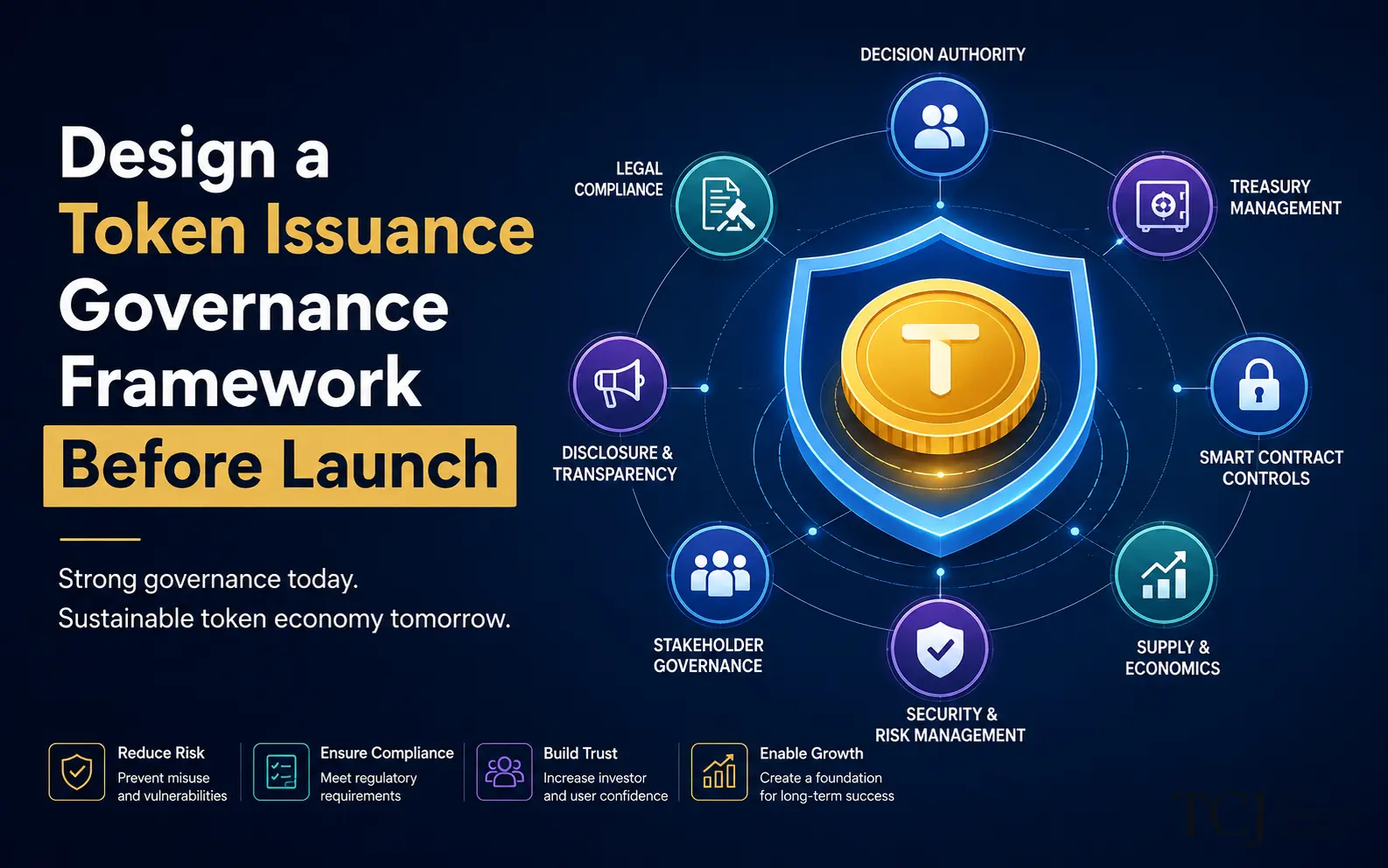
How to Design a Token Issuance Governance Framework in the UAE
A practical framework for UAE founders and Web3 teams to define token authority, supply controls, treasury governance, vesting, smart-contract permissions, compliance and launch readiness before issuance.
The UAE Crypto Travel Rule: Practical Compliance for VASPs
UAE virtual asset firms need more than a Travel Rule messaging tool. This practical guide explains thresholds, customer data, VASP checks, unhosted wallets, monitoring, exceptions and audit readiness.