Do You Need a Chartered Accountant or a Bookkeeper in the UAE?
Many UAE businesses need both a bookkeeper and a Chartered Accountant, but not always at the same stage. This guide explains how to decide based on transactions, VAT, Corporate Tax, growth, banking, and reporting needs.
Key takeaways
- A bookkeeper is usually enough when the business has simple transactions and needs clean daily records.
- A Chartered Accountant is usually needed for tax planning, financial statements, advisory, audits, and complex compliance.
- Many UAE SMEs benefit from using both: bookkeeping for routine records and accounting advice for review and decision-making.
- VAT, Corporate Tax, banking, free zone rules, and investor reporting can quickly increase the need for professional accounting support.
- The right decision depends on risk, complexity, growth plans, and how confidently management can use financial data.
Do UAE businesses need a Chartered Accountant or will a bookkeeper suffice?
Many UAE businesses can start with a bookkeeper, especially when transactions are simple and management mainly needs clean records. A Chartered Accountant becomes more useful when the business faces VAT, Corporate Tax, bank finance, free zone reporting, audits, investor discussions, or decisions that require analysis rather than only transaction recording.
For a Dubai consultancy, e-commerce store, trading company, clinic, or professional services firm, the real question is not “Which is cheaper?” It is “What level of financial judgement does the business need?”
A bookkeeper helps keep records current. A Chartered Accountant helps interpret those records, review tax positions, prepare formal reports, and advise on decisions. In practice, many UAE SMEs need both at different points in the year.
What does a bookkeeper usually do for a UAE business?
A bookkeeper records and organises the daily financial activity of the business. This usually includes invoices, receipts, supplier payments, bank reconciliations, petty cash, payroll inputs, VAT coding, and accounting software updates. The value is consistency: management can only make reliable decisions when the underlying records are complete and up to date.
Typical bookkeeping work includes:
- Recording sales invoices and customer receipts
- Entering supplier bills and expense claims
- Reconciling bank accounts and payment gateways
- Maintaining accounts payable and accounts receivable
- Organising receipts and tax invoices
- Supporting VAT return preparation with transaction data
- Preparing basic profit and loss, balance sheet, and cash flow summaries
- Maintaining accounting software such as Zoho Books, Xero, QuickBooks, or Tally
For many small UAE businesses, this is the first layer of financial control. Without it, the Chartered Accountant receives incomplete information and spends paid advisory time correcting basic records.
Example 1: A Dubai mainland marketing agency with one bank account, five recurring clients, and limited monthly expenses may only need monthly bookkeeping at first. The owner still benefits from a periodic Chartered Accountant review before VAT filing, Corporate Tax planning, or annual accounts finalisation.
What does a Chartered Accountant usually do?
A Chartered Accountant works at a higher level than transaction entry. Their role is to review, analyse, advise, and support compliance. They may prepare financial statements, review tax treatment, advise on business structure, assist with audits, evaluate cash flow, and explain what the numbers mean for management decisions.
A Chartered Accountant typically supports:
- Annual financial statements
- Corporate Tax registration, review, and return preparation
- VAT treatment reviews and compliance checks
- Management reporting and financial analysis
- Cash flow forecasting and budgeting
- Bank finance and investor reporting packs
- Audit preparation and auditor coordination
- Free zone and mainland compliance reviews
- Internal control improvements
- Business advisory for expansion, pricing, and profitability
The UAE Ministry of Finance explains that Corporate Tax taxable income generally starts from accounting income in financial statements, with adjustments made to determine taxable income for the relevant tax period. This makes proper Accounting records and professional review more important than many owners initially assume.
Clean bookkeeping tells you what happened; good accounting advice helps you decide what to do next. — Consultant observation, KPM Global Services UAE
When is a bookkeeper enough?
A bookkeeper may be enough when the business has simple activity, low transaction volume, limited compliance complexity, and no immediate need for advanced Financial analysis. This often applies to freelancers, small consultancies, home-based service businesses, and early-stage companies with straightforward income and expenses.
A bookkeeper may be sufficient when:
- Monthly transactions are limited and easy to classify
- The business has no employees or a small payroll
- There is one main bank account
- The owner only needs routine reports
- There is no external audit requirement
- There are no investors or bank facility negotiations
- VAT and Corporate Tax positions are simple
- The business is not restructuring, expanding, or entering new markets
This does not mean the owner should ignore professional accounting completely. A yearly or quarterly review by a Chartered Accountant can still help identify errors before they become expensive.
For example, a UAE freelance consultant may maintain monthly bookkeeping and then request a Chartered Accountant review before Corporate Tax filing. Natural persons conducting business activity in the UAE may have Corporate Tax registration obligations when annual business revenue exceeds the relevant threshold, so even small operators should monitor their position carefully.
When should a UAE business involve a Chartered Accountant?
A UAE business should involve a Chartered Accountant when transactions become complex, compliance risk increases, or management needs financial advice rather than only recordkeeping. This is common when the business crosses VAT thresholds, hires staff, seeks funding, opens new branches, operates in a free zone, or prepares for Corporate Tax reporting.
A Chartered Accountant is usually advisable when:
- The company is VAT registered or approaching VAT registration
- Corporate Tax registration and filing need review
- The business has multiple revenue streams
- There are related-party transactions
- The company operates across mainland and free zone structures
- Management needs audited or reviewed financial statements
- The business is applying for bank finance
- Investors request reliable financial reporting
- Cash flow is tight despite sales growth
- The owner needs advice on pricing, margins, or cost control
The FTA states that UAE VAT registration is mandatory when taxable supplies and imports exceed AED 375,000, while voluntary registration may be available above AED 187,500. These thresholds make bookkeeping accuracy important because management must know when the business is approaching registration limits.
Example 2: A Sharjah free zone trading company may begin with a bookkeeper to manage invoices and supplier payments. Once it imports stock, sells to UAE customers, opens multiple bank accounts, and prepares for Corporate Tax, it should involve a Chartered Accountant to review VAT, inventory, margins, and reporting quality.
Can a business use both a bookkeeper and a Chartered Accountant?
Yes. In many UAE SMEs, using both is the most practical model. The bookkeeper manages routine records every week or month, while the Chartered Accountant reviews the records, prepares formal reports, advises on Tax, and supports decisions that require professional judgement.
A sensible split looks like this:
Bookkeeper:
- Daily or monthly transaction posting
- Bank reconciliations
- Invoice and receipt organisation
- Accounts payable and receivable tracking
- Payroll data support
- Basic reports from accounting software
Chartered Accountant:
- Financial statement preparation or review
- VAT and Corporate Tax review
- Accounting policy decisions
- Management reporting and ratio analysis
- Audit and bank reporting support
- Cash flow and budgeting advice
- Compliance risk review
This structure keeps routine costs controlled while ensuring the business has senior Accounting and Financial input when needed.
How do UAE Tax and compliance rules affect the decision?
UAE Tax and compliance rules increase the need for accurate records and timely review. VAT, Corporate Tax, free zone requirements, banking due diligence, and audit expectations all depend on reliable accounting data. A bookkeeper can maintain the records, but a Chartered Accountant usually reviews whether those records support the right compliance position.
For Corporate Tax, the Ministry of Finance states that taxable persons must file a Corporate Tax return within nine months from the end of the relevant tax period, with the same general timing for payment of Corporate Tax due.
The FTA has also reminded taxable persons and exempt persons to retain relevant Corporate Tax records for at least seven years after the end of the tax period to which they relate.
This matters because weak bookkeeping can create problems later. Missing invoices, incorrect VAT treatment, unclassified director withdrawals, or unclear related-party transactions may not look serious month to month, but they can become difficult during return preparation, audit, bank review, or authority queries.
What common mistakes do business owners make?
The most common mistake is waiting until filing season to organise records. By then, invoices may be missing, bank narration may be unclear, and management may not remember the commercial reason for certain payments. This increases professional fees and weakens reporting confidence.
Other common mistakes include:
- Treating bookkeeping and accounting as the same service
- Choosing support based only on the lowest fee
- Not reconciling bank accounts monthly
- Mixing personal and business expenses
- Ignoring VAT registration thresholds
- Assuming free zone status removes all Tax obligations
- Not reviewing Corporate Tax registration and filing timelines
- Using accounting software without proper setup
- Failing to keep supplier tax invoices and contracts
- Not asking for management reports until cash flow becomes a problem
A good rule is simple: bookkeeping should prevent mess, and accounting advice should prevent poor decisions.
What documents should you prepare before hiring support?
A business should prepare basic company, banking, tax, and transaction documents before appointing a bookkeeper or Chartered Accountant. This reduces onboarding delays and helps the adviser understand the business model, compliance position, and reporting needs from the beginning.
Useful documents include:
- Trade licence and amendments
- Memorandum or articles of association, where applicable
- Establishment card, if relevant
- VAT registration certificate, if registered
- Corporate Tax registration details, if available
- Bank statements for all business accounts
- Sales invoices and credit notes
- Supplier invoices and receipts
- Lease agreements and Ejari, where applicable
- Payroll records and employee cost summaries
- Loan, finance, or investor agreements
- Free zone correspondence and reporting requirements
- Previous financial statements
- Existing accounting software access
- Details of related-party transactions
- Inventory records, if the business trades goods
For KPM Global Services UAE and similar advisory teams, this document pack helps identify whether the client needs basic bookkeeping, accounting cleanup, Tax review, management reporting, or a combined service.
How should businesses decide between cost and value?
Businesses should compare cost against risk, time saved, and decision quality. A bookkeeper may cost less for routine work, while a Chartered Accountant may deliver value by preventing errors, improving reporting, supporting Tax compliance, and helping owners understand profitability, cash flow, and growth decisions.
A practical decision framework:
- Choose a bookkeeper when the need is transaction recording.
- Choose a Chartered Accountant when the need is interpretation, compliance, or advice.
- Use both when the business has regular transactions and periodic strategic or Tax decisions.
- Review the setup every six months as the business grows.
- Upgrade support before, not after, a compliance issue or funding deadline appears.
In Dubai and across the UAE, the right setup often changes over time. A start-up may begin with bookkeeping, add quarterly accounting reviews, then move to monthly management accounts once revenue, payroll, VAT, Corporate Tax, or bank obligations increase.
How can KPM Global Services UAE assist?
KPM Global Services UAE can help business owners decide the right level of Accounting and Financial support based on activity, transaction volume, VAT position, Corporate Tax obligations, reporting needs, and growth plans. The aim is not to over-service a small business, but to put the right controls in place at the right stage.
Support may include:
- Monthly bookkeeping
- Accounting software setup and cleanup
- VAT registration and return support
- Corporate Tax registration and return support
- Financial statement preparation
- Management reporting
- Cash flow and budgeting support
- Audit preparation
- Accounting process improvement
- Advisory for mainland and free zone businesses
The best outcome is a system where the owner can see accurate numbers, meet UAE compliance expectations, and make decisions with fewer surprises.
What should UAE business owners do next?
Start by reviewing transaction volume, VAT position, Corporate Tax obligations, reporting needs, and business growth plans. If your records are simple, bookkeeping may be enough with periodic review. If decisions, compliance, funding, or reporting are becoming more complex, involve a Chartered Accountant before deadlines become urgent.
This article is for informational purposes and does not constitute legal, tax, accounting, or financial advice.
Questions and answers
Is a bookkeeper enough for a small business in Dubai?
A bookkeeper may be enough if the business has simple transactions, one bank account, limited expenses, and no complex Tax or reporting issues. Many small businesses still benefit from periodic Chartered Accountant review, especially before VAT, Corporate Tax, or annual financial reporting deadlines.
When should I hire a Chartered Accountant in the UAE?
You should consider hiring a Chartered Accountant when your business needs Tax advice, financial statements, audit support, bank reporting, investor reporting, or strategic Financial analysis. Growth, VAT registration, Corporate Tax filing, and free zone requirements often make professional accounting review more important.
Can a bookkeeper file VAT returns in the UAE?
A bookkeeper may help organise VAT records and prepare transaction data, depending on their experience. However, VAT treatment, registration thresholds, adjustments, and compliance review should typically be checked by a qualified Tax or Accounting professional.
Do I need both a bookkeeper and a Chartered Accountant?
Many UAE SMEs benefit from using both. The bookkeeper keeps daily records accurate, while the Chartered Accountant reviews compliance, prepares formal reports, and advises on Tax, cash flow, profitability, and business decisions.
How often should I meet my accountant?
A simple business may only need quarterly or annual reviews. A growing UAE company with VAT, Corporate Tax, payroll, bank finance, or multiple revenue streams should consider monthly or quarterly meetings so issues are identified early.
More in Finance
View all Finance →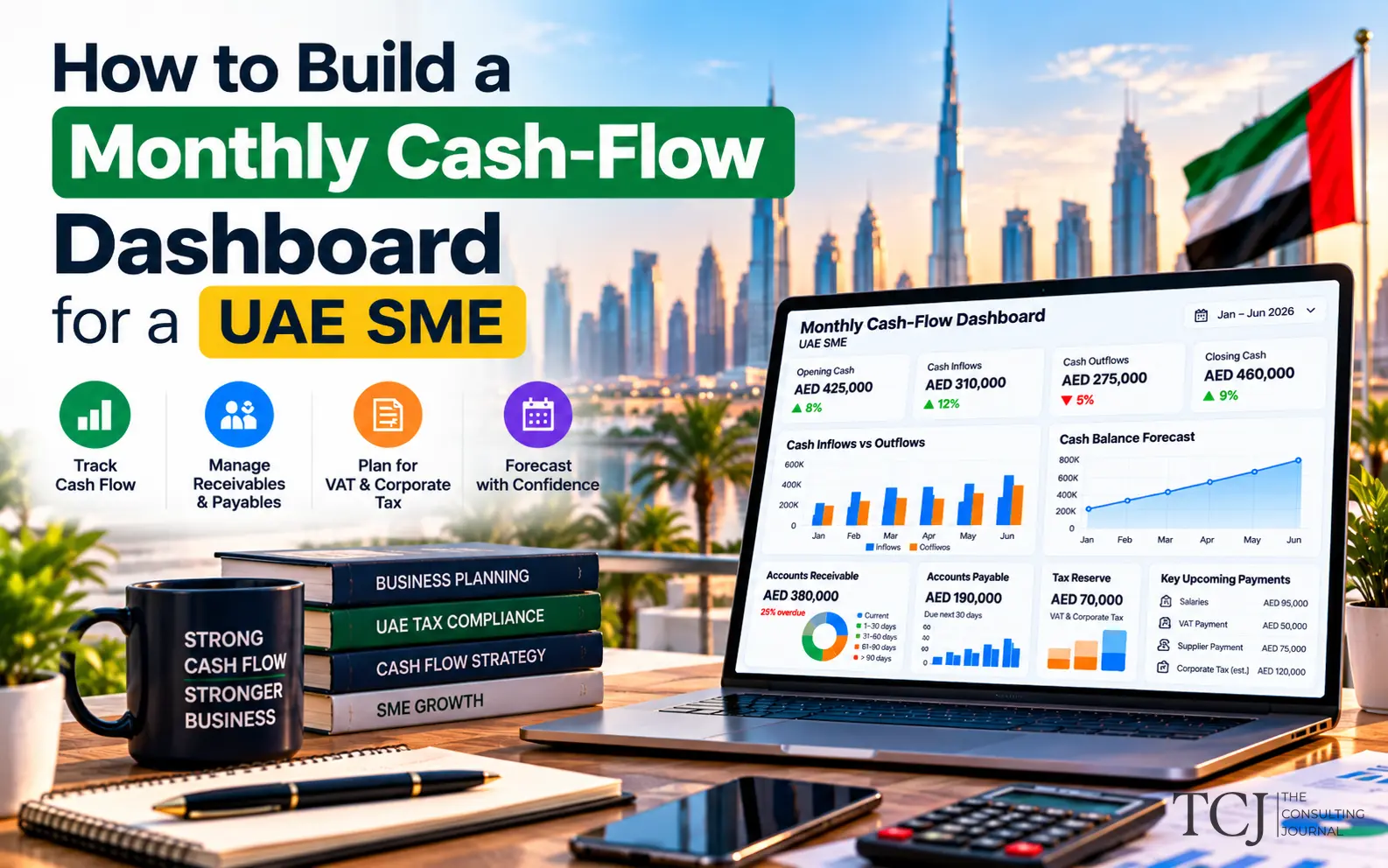
How to Build a Monthly Cash-Flow Dashboard for a UAE SME
A practical guide for UAE SME owners and finance teams on building a monthly cash-flow dashboard that tracks liquidity, collections, payments, tax obligations, forecasts, and working capital.

How UAE Companies Can Build a Faster, More Reliable Month-End Close
A practical UAE finance guide to shortening the month-end close through better reconciliations, cut-off controls, automation, tax readiness, data quality, and clear accountability.
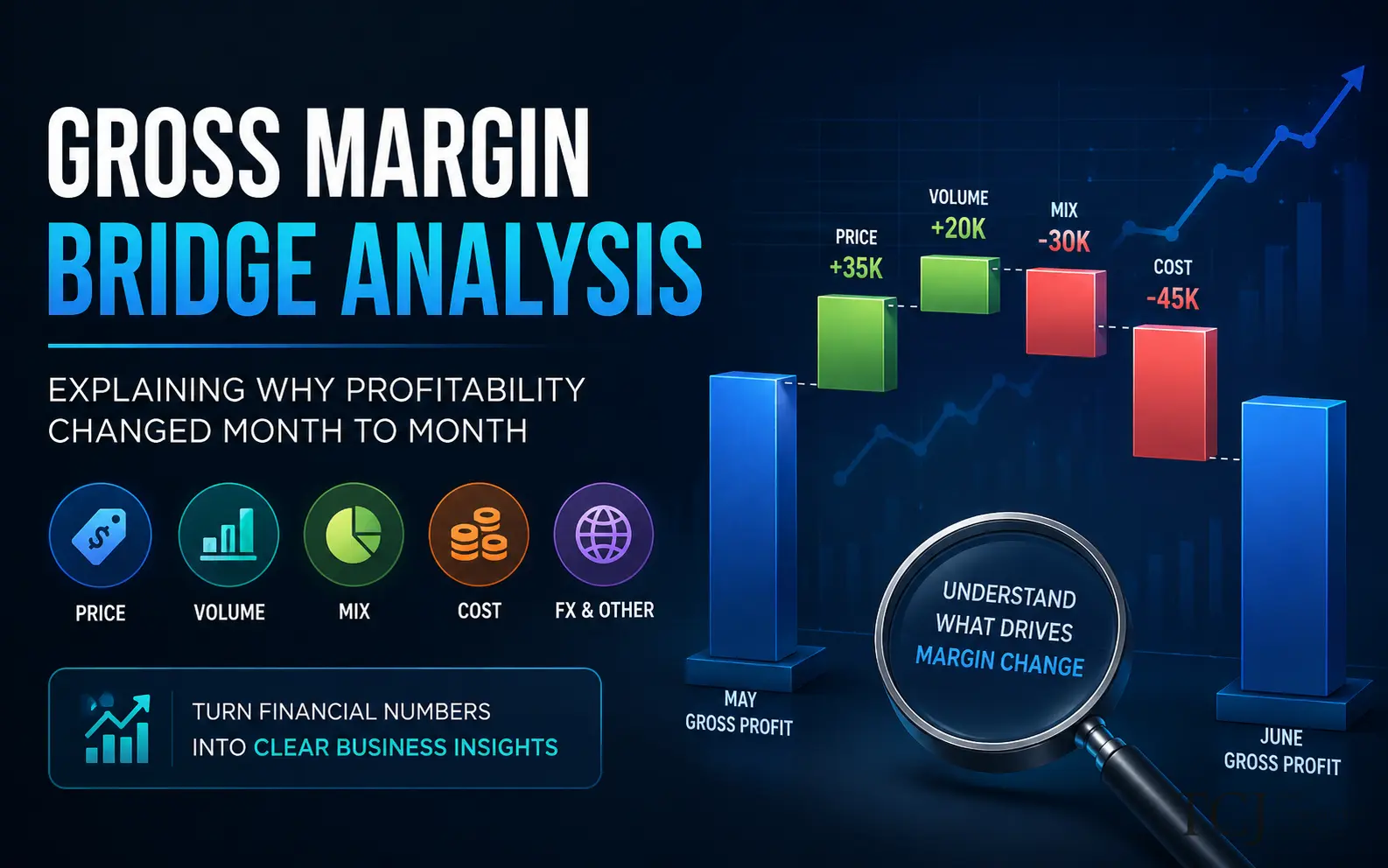
Gross Margin Bridge Analysis: Explaining Why Profitability Changed Month to Month
Gross margin bridge analysis helps finance teams explain monthly profitability changes by separating the impact of price, volume, sales mix, cost, and other operational drivers.