How DAOs Work and Why Businesses Should Study Them
DAOs are more than a Web3 experiment. Business leaders can study them to understand governance, ownership, transparency, incentives, and future operating models.
Key takeaways
- DAOs show how governance, ownership, and decision-making can be distributed across a community.
- Businesses do not need to become DAOs to learn from DAO principles.
- Smart contracts can improve transparency but do not remove the need for human judgment.
- DAO governance can create participation risks, security concerns, and regulatory uncertainty.
- UAE business leaders should study DAOs carefully before applying them to real operating models.
Understanding DAOs in plain business language
A DAO, or decentralized autonomous organization, is a digital organization where rules, voting rights, treasury controls, and certain decisions are managed through blockchain-based systems. In simple terms, it is an organization designed to reduce dependence on one central decision-maker.
Traditional businesses usually rely on directors, managers, shareholders, employees, and formal reporting lines. A DAO works differently. Members may vote on proposals, approve spending, change rules, or decide the direction of a project. Some parts of the organization can be automated through smart contracts.
Ethereum describes DAOs as organizations where decision-making is handled collectively and where smart contracts can define rules and control the treasury. This is one reason DAOs attract attention from technology founders, investor communities, and governance specialists.
For a business owner, the useful question is not, “Should I turn my company into a DAO?” In most cases, the answer will be no. The better question is, “What can DAO models teach us about participation, accountability, ownership, and transparency?”
Why businesses are studying DAO models
Many businesses struggle with the same management problems: slow approvals, weak employee engagement, unclear accountability, poor documentation, and limited trust between stakeholders. DAOs offer a different way to think about these problems.
In a DAO, decisions are usually recorded openly. Members can see proposals, voting outcomes, and treasury movements. This level of visibility can be useful for businesses that depend on community trust, investor confidence, or distributed teams.
A UAE startup, for example, may not need blockchain governance. But it may benefit from DAO-style thinking when designing employee incentive schemes, advisory boards, customer communities, or investor reporting systems.
A free zone technology company may use a normal legal structure, maintain proper accounting records, and follow licensing requirements, while still adopting selected DAO principles such as transparent budgets, member voting, or contributor-based rewards.
The real value of studying DAOs is not decentralization for its own sake; it is learning how trust can be designed into the operating model. — The Consulting Journal
The core components of a DAO
Smart contracts
Smart contracts are coded instructions that execute certain actions when agreed conditions are met. In a DAO, they may help manage funds, enforce voting outcomes, or automate permissions.
This does not mean a DAO runs itself perfectly. Smart contracts only follow the logic written into them. If the code is weak, unclear, or vulnerable, the organization may face serious operational and security risks.
For business leaders, the lesson is practical: automation works best when the underlying rules are clear. A company cannot automate confusion.
Governance tokens
Many DAOs use governance tokens to give members voting power. These tokens may allow members to submit proposals, vote on changes, or influence treasury decisions.
However, token-based voting can create its own problems. If voting power is linked mainly to token ownership, a small number of large holders may dominate decisions. That can make the DAO less decentralized than it appears.
This is similar to shareholder concentration in a traditional company. The technology may be new, but the governance risk is familiar.
Community participation
A DAO depends heavily on active participation. Members may contribute through software development, research, marketing, moderation, investment review, or governance voting.
In practice, many communities face participation fatigue. Some members join early and then stop voting. Others delegate decisions to more active participants. This can make the DAO more efficient, but it can also recreate informal leadership structures.
For SMEs and startups, this is a useful warning. Participation systems need design, communication, and incentives. Simply giving people a vote does not mean they will use it well.
How DAOs typically work
Most DAOs follow a proposal-based process.
A member identifies an issue or opportunity. This may be a new product idea, treasury allocation, contributor payment, partnership, software upgrade, or rule change.
The proposal is shared with the community. Members discuss it, challenge assumptions, and suggest changes. In mature DAOs, serious proposals often include budgets, timelines, risks, and implementation details.
Members then vote. Voting may follow different models, including one-token-one-vote, delegated voting, reputation-based voting, or quadratic voting. Each model has trade-offs.
If approved, the decision is implemented. In some DAOs, execution happens automatically through smart contracts. In others, people still need to carry out the work.
This hybrid reality matters. Even in decentralized systems, businesses still need project owners, budgets, delivery timelines, dispute handling, and documentation.
Types of DAOs businesses should understand
Investment DAOs
Investment DAOs pool capital and allow members to decide where funds should be allocated. These may focus on digital assets, startups, NFTs, community projects, or early-stage technology ventures.
Business owners should treat this area carefully. Depending on the structure, token design, jurisdiction, and investor participation, securities or financial promotion issues may arise. The SEC’s 2017 report on “The DAO” found that certain DAO tokens were securities under US federal securities laws, which remains an important reference point for regulatory caution.
Protocol DAOs
Protocol DAOs govern blockchain protocols, decentralized finance platforms, or open-source technology networks. Members may vote on upgrades, treasury use, technical changes, or ecosystem grants.
These DAOs are important because they show how large digital infrastructure can be managed without a conventional corporate hierarchy.
Service DAOs
Service DAOs operate like decentralized agencies or talent networks. Members may provide design, development, consulting, marketing, content, or research services.
A traditional consulting firm can learn from this model when building flexible expert networks across jurisdictions.
Social and community DAOs
Social DAOs are built around shared interests, access, membership, learning, events, or creative collaboration. They are less about replacing companies and more about building engaged communities.
For brands, this is one of the more relevant areas. Customer communities, founder circles, investor clubs, and industry networks can all borrow elements from DAO design without becoming legally decentralized organizations.
Why DAOs matter for UAE business leaders
The UAE has become one of the more active jurisdictions for digital assets, blockchain projects, and emerging technology regulation. In Abu Dhabi, ADGM introduced Distributed Ledger Technology Foundations Regulations to provide a framework for DLT foundations and DAOs. ADGM states that DLT Foundations may have separate legal personality and may be established to use, deploy, develop, facilitate, or support DLT, subject to the relevant framework.
This does not mean every UAE business should launch a DAO. It means founders, CFOs, legal teams, and investors should understand how decentralized governance is being formalized in some regulated environments.
A Dubai mainland trading company may have no direct DAO use case. But a Web3 startup, gaming platform, tokenized community, or digital infrastructure project may need to think seriously about governance design, licensing, documentation, accounting, tax, investor communication, and cross-border compliance.
Example 1:
A UAE-based gaming startup wants to let players vote on new features, prize pools, and community events. The founders initially describe the model as a DAO, but after review, they decide not to decentralize the company itself.
Instead, they create a structured community governance programme. The company remains responsible for licensing, accounting, payroll, contracts, and platform operations. Community members vote on selected non-critical decisions, while management retains control over legal and financial commitments.
This approach gives the business some DAO-style engagement without creating unnecessary regulatory and operational risk.
Example 2:
A free zone technology company works with contributors in several countries. The founder wants a fairer way to reward developers, marketers, and community managers.
Rather than issuing governance tokens immediately, the company starts with transparent contribution tracking, documented reward criteria, monthly community updates, and internal voting on small innovation budgets.
The result is not a DAO. But it borrows useful DAO principles: visibility, shared input, and stronger contributor ownership.
Can businesses adopt DAO principles without becoming DAOs?
Yes. This is where most real business value sits.
A company can adopt DAO-inspired practices such as transparent budgets, employee voting, community advisory groups, open project dashboards, contributor rewards, or shared decision-making frameworks.
For example, an SME preparing for expansion may allow department heads to vote on process improvement budgets. A startup preparing for investment may publish clearer governance notes to its shareholders. A professional services firm may create a contributor network where specialists earn rewards based on verified work.
These are not blockchain use cases in the strict sense. They are governance improvements inspired by decentralized models.
Common mistakes business owners make
One common mistake is assuming that decentralization automatically creates trust. It does not. Trust comes from clear rules, reliable records, good communication, and fair enforcement.
Another mistake is treating tokens as a simple substitute for ownership planning. Token design can create legal, tax, accounting, and regulatory questions, especially when tokens have economic rights or are offered to investors.
A third mistake is underestimating governance workload. Someone still needs to draft proposals, moderate discussion, manage voting, document outcomes, and monitor execution.
Many founders also ignore cybersecurity. A weak smart contract, compromised wallet, or unclear treasury control process can damage a project quickly.
Finally, some businesses use DAO language for marketing before they understand the structure. This can create confusion with investors, banks, regulators, and professional advisers.
Practical checklist before applying DAO principles
Before adopting DAO-style governance, business owners should consider:
- What decisions should be shared with the community, employees, investors, or contributors?
- Which decisions must remain with directors, managers, or licensed decision-makers?
- Are voting rights linked to contribution, ownership, tokens, reputation, or another measure?
- Who can submit proposals?
- Who approves budgets?
- How will voting records be documented?
- What happens if a vote creates legal, tax, licensing, or financial risk?
- How will treasury access, wallets, bank accounts, and accounting records be controlled?
- Does the structure create securities, virtual asset, AML, or cross-border compliance concerns?
- Is the company using DAO language accurately?
Documents and preparation checklist
Businesses exploring DAO principles should prepare the following:
- Governance policy or community charter
- Proposal and voting rules
- Treasury control policy
- Contributor agreements
- Token design memo, if tokens are involved
- Risk register
- Accounting treatment review
- Tax and compliance review
- Data protection and cybersecurity review
- Legal structure assessment
- Communication plan for members, investors, and stakeholders
For UAE-based projects, this preparation should be done before public launch, fundraising, token issuance, or community onboarding.
Final advisory note
DAOs are not a replacement for every company structure. They are still developing, and many models remain legally and operationally uncertain.
However, businesses should study them because they challenge traditional assumptions about who gets to make decisions, how trust is built, how contributors are rewarded, and how communities can participate in organizational growth.
For UAE founders, SMEs, investors, and CFOs, the practical path is measured adoption. Study the model. Understand the risks. Borrow the useful governance principles. Keep legal, accounting, tax, licensing, and banking requirements properly controlled.
This article is for informational purposes and does not constitute legal, tax, accounting, or financial advice.
Questions and answers
What does DAO mean in business?
DAO stands for decentralized autonomous organization. In business terms, it means an organization where members can participate in decisions through digital governance systems, often supported by blockchain and smart contracts.
Do DAOs remove the need for managers?
Not completely. Many DAOs still rely on active contributors, coordinators, developers, moderators, and treasury managers. The difference is that authority may be more distributed than in a normal company.
Are DAOs legally recognized in the UAE?
The UAE has frameworks relevant to digital assets and distributed ledger technology, including ADGM’s DLT Foundations regime. However, whether a particular DAO structure is suitable depends on its activity, tokens, governance model, and jurisdiction.
Can a normal company use DAO principles?
Yes. A company can use DAO-inspired ideas such as transparent budgets, contributor voting, community governance, and shared decision-making without becoming a full DAO.
What is the biggest risk of using DAO models?
The main risks are regulatory uncertainty, weak governance design, smart contract vulnerabilities, token concentration, and poor participation. Businesses should assess these risks before using DAO language or launching a decentralized model.
More in Crypto
View all Crypto →
Italian-Owned Web3 Company in Dubai: 2026 Setup Guide
Italian founders can establish Web3 companies in Dubai, but the right licence, jurisdiction and regulatory pathway depend on the actual business model and whether VARA-regulated virtual-asset activities are involved.
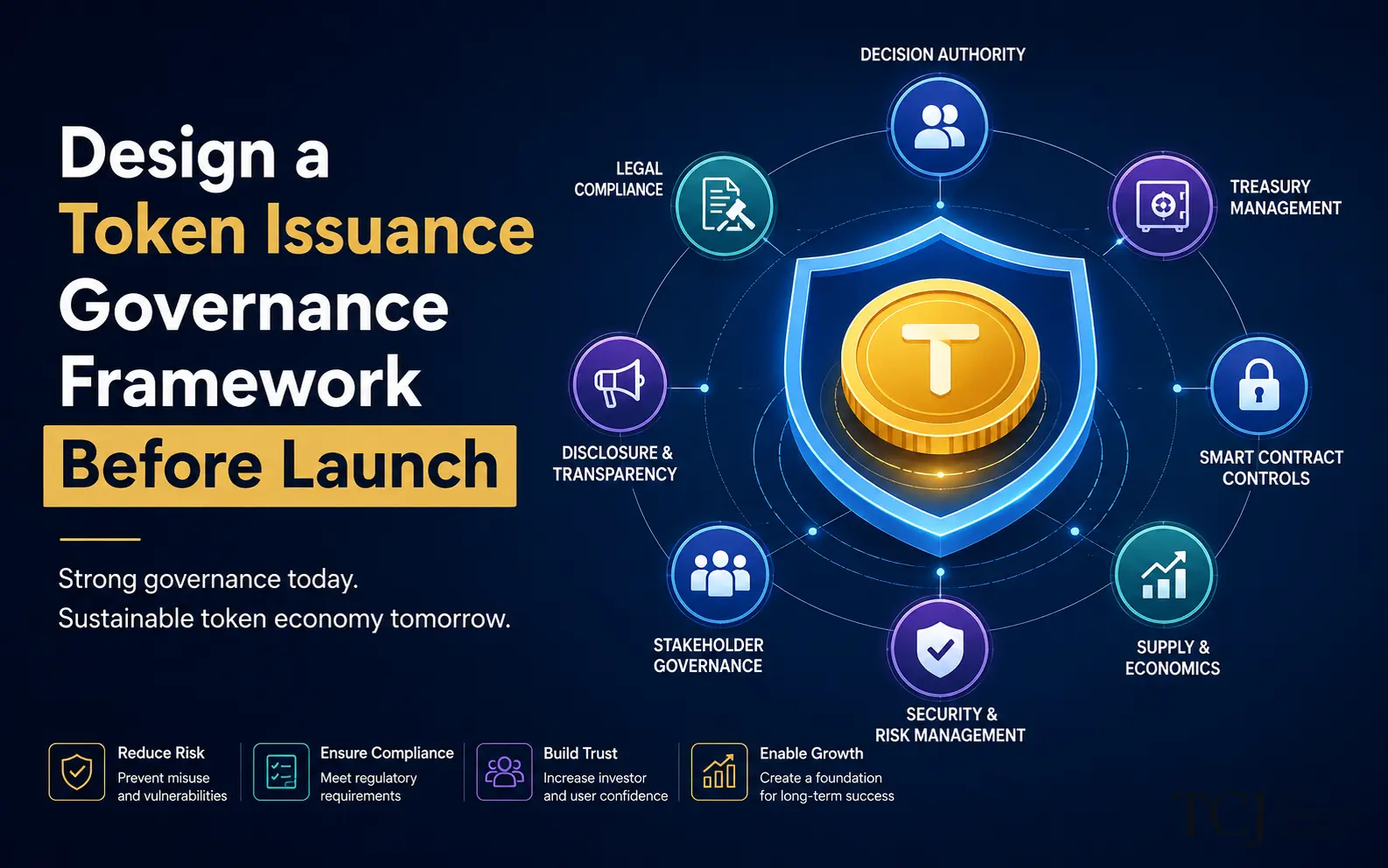
How to Design a Token Issuance Governance Framework in the UAE
A practical framework for UAE founders and Web3 teams to define token authority, supply controls, treasury governance, vesting, smart-contract permissions, compliance and launch readiness before issuance.
The UAE Crypto Travel Rule: Practical Compliance for VASPs
UAE virtual asset firms need more than a Travel Rule messaging tool. This practical guide explains thresholds, customer data, VASP checks, unhosted wallets, monitoring, exceptions and audit readiness.