How Doctors Can Find a Job in Dubai After Licensing
A practical guide for licensed doctors seeking employment in Dubai, covering licensing status, CV readiness, employer targeting, interviews, and common hiring mistakes.
Key takeaways
- Licensing improves employability, but it does not guarantee a job offer.
- Doctors should clearly state whether they hold eligibility, registration, an active license, or transfer status.
- A Dubai-ready CV should highlight licensing status, specialty, patient exposure, procedures, and availability.
- Strategic applications usually work better than sending the same CV to every employer.
- Interview preparation should cover communication, patient handling, documentation, and employer fit.
- Doctors should review contracts, salary structure, license activation, and working terms before accepting an offer.
Many doctors feel a sense of relief after receiving a Dubai medical eligibility letter or completing the licensing process. That is understandable. The licensing journey can involve document verification, exams, authority reviews, and several rounds of preparation.
But once the licensing milestone is reached, another practical question appears: how do you actually get hired?
The user-provided draft correctly identifies this gap between licensing and employment as the real challenge for many doctors entering the Dubai healthcare market. In practice, licensing improves your chances, but it does not replace the employer’s hiring decision. A hospital, clinic, day surgery centre, or medical group still reviews your experience, specialty, communication style, patient handling, availability, salary expectation, and fit with its service model.
For doctors, the better approach is to treat the job search as a professional project. That means preparing the right documents, understanding your licensing status, approaching employers carefully, and following up in a disciplined way.
Licensing is not the same as employment
A common misunderstanding is that once a doctor receives eligibility or registration approval, a job will follow automatically. That is rarely how recruitment works.
In Dubai, healthcare professional licensing is managed through the Dubai Health Authority’s Sheryan system. DHA’s professional services include registration, license activation, renewal, and related licensing actions, while license activation is linked to a healthcare facility that can activate a professional license for full-time, part-time, or trainee work.
This distinction matters. A doctor may be approved from a regulatory perspective but still needs a facility willing to hire, sponsor, activate, or transfer the relevant professional status. Employers usually prefer candidates who have already cleared licensing requirements because it reduces uncertainty, but they still assess whether the candidate fits the vacancy.
For doctors open to other emirates, licensing routes may involve the Department of Health Abu Dhabi or the Ministry of Health and Prevention. DOH lists services such as registering a new healthcare professional license and managing healthcare professional licenses, while MOHAP’s health professional evaluation service allows healthcare professionals to obtain an evaluation certificate before licensing.
Understand your current licensing position
Before applying widely, doctors should be very clear about their current status. Recruiters and HR teams will ask, and vague answers can delay the process.
In practical terms, your position may fall into one of these categories:
- You have passed assessment requirements and hold eligibility or registration approval.
- You already have an active professional license under a facility.
- You are seeking a transfer from one facility to another.
- You are licensed in another emirate and exploring opportunities in Dubai.
- You are still awaiting DataFlow, authority review, or final license activation.
A doctor who says “I have a DHA license” should be careful. Some candidates use that phrase loosely when they actually hold eligibility or registration but not an active facility-linked license. Employers know the difference.
A better statement on your CV would be clear and precise, such as: “DHA eligibility approved,” “DHA registration active,” “DHA license active under current facility,” or “DOH licensed and open to Dubai opportunities subject to authority requirements.”
Prepare your professional documents before applying
Doctors often lose momentum because they begin applying before their documents are organised. In Dubai healthcare recruitment, HR teams may request supporting documents quickly, especially when a role is urgent.
A practical document file should include:
- Updated medical CV
- Passport copy
- Recent professional photograph
- Medical degree and postgraduate qualifications
- Internship and residency certificates, where applicable
- Experience certificates with clear dates and job titles
- Good standing certificate
- Licensing or eligibility documents
- DataFlow or primary source verification reports, if available
- CME or CPD certificates, where relevant
- Recommendation letters
- Procedure logbook for surgical or procedural specialties, where required
DHA’s registration requirements may include documents such as passport copy, good standing certificate, logbook for surgical specialties, verification results, and assessment results depending on the application.
Doctors should keep these files in both PDF and cloud storage format. File names should be clean and professional. For example, “Dr-Ahmed-Khan-Good-Standing-Certificate-2026.pdf” is easier for HR teams than “scan-final-new2.pdf”.
Build a CV that works for Dubai healthcare employers
A medical CV should not read like an academic biography unless the role is academic or research-focused. Most hospital and clinic recruiters need a clear picture within the first minute.
Your CV should show:
- Medical specialty and current designation
- Years of post-qualification experience
- Licensing status
- Countries and facilities where you have worked
- Key procedures, patient categories, or clinical settings
- Languages spoken
- Availability to join
- Notice period
- Current location
For example, a specialist dermatologist applying to private clinics in Dubai should clearly show cosmetic dermatology exposure, patient volume, procedure experience, laser familiarity, and previous private-sector experience. A general practitioner should highlight emergency handling, outpatient care, chronic disease management, insurance documentation experience, and communication skills.
Avoid long paragraphs. Recruiters are not reading for literary style. They are checking fit, licensing, experience, and availability.
A licensed doctor becomes more employable when the CV answers the employer’s operational questions before the first phone call. — The Consulting Journal Editorial Team
Apply strategically, not randomly
Many doctors apply to hundreds of vacancies without adjusting their approach. This creates activity, but not always progress.
A better strategy is to segment employers.
For example, a GP may target polyclinics, urgent care centres, corporate clinics, school healthcare providers, and private medical centres. A specialist surgeon may focus on hospitals, day surgery centres, and facilities with relevant operating capacity. A psychiatrist or psychologist may find better traction with specialist mental health centres, multidisciplinary clinics, and premium outpatient groups.
Doctors should review each employer’s service profile before applying. If a clinic mainly handles family medicine, paediatrics, and basic diagnostics, a highly specialised surgical CV may not be the right match. If a hospital is expanding a women’s health department, an obstetrics and gynaecology specialist may have stronger prospects.
A weekly job search rhythm can help:
- Identify 15 to 20 suitable employers.
- Apply through official career pages where available.
- Send a concise email to HR or medical directors where appropriate.
- Contact two to three healthcare recruiters.
- Follow up after five to seven business days.
- Track every application in a spreadsheet.
The spreadsheet should include employer name, contact person, role, date applied, response status, follow-up date, and notes. Doctors who track their search usually perform better than those relying on memory.
Use recruiters carefully
Healthcare recruitment agencies can be useful, especially for private hospitals and clinics that prefer screened candidates. Recruiters may know which facilities are hiring before the vacancy appears online.
However, doctors should not depend only on agencies. A balanced search includes direct applications, recruiter relationships, LinkedIn networking, professional referrals, and targeted outreach.
When speaking with recruiters, be clear about your license status, expected salary range, notice period, specialty, and preferred facility type. Avoid overstating your licensing position. Recruiters lose confidence quickly when documents do not match the candidate’s claims.
Network inside the healthcare market
Dubai’s healthcare sector is relationship-driven. This does not mean informal hiring replaces qualifications. It means referrals and professional credibility can move your CV to the right person faster.
Doctors should build a professional network through:
- LinkedIn connections with medical directors and HR managers
- Specialty groups and healthcare associations
- UAE medical conferences and CME events
- Former colleagues already working in the UAE
- Alumni groups from medical colleges or residency programmes
- Recruiters specialising in healthcare roles
Networking should be respectful and specific. A message saying “Please give me job” is unlikely to help. A better message is brief, professional, and relevant.
Example:
“Dear Dr. Sara, I am a DHA-eligible specialist paediatrician with eight years of experience in outpatient and emergency paediatric care. I am currently exploring Dubai opportunities and would appreciate any guidance on suitable facilities expanding paediatric services.”
Prepare for interviews beyond clinical knowledge
Dubai healthcare interviews often test more than technical ability. Employers want to know whether a doctor can work with multicultural patients, handle insurance-driven documentation, communicate clearly, coordinate with nurses and administrators, and manage patient expectations.
Doctors should prepare for questions such as:
- Why do you want to work in Dubai?
- What is your current licensing status?
- What types of cases do you manage most often?
- How do you handle difficult patients or family members?
- What is your expected salary?
- When can you join?
- Are you comfortable with outpatient volumes?
- How do you document clinical decisions?
A useful method is to prepare three or four case examples from your own practice. Keep them confidential and do not reveal patient identity. Explain the situation, your clinical judgement, the action taken, and the outcome.
Example 1:
A DHA-eligible general practitioner applied to several large hospitals but received no response. After reviewing the CV, the issue was clear: it was too academic and did not highlight outpatient flow, emergency triage, insurance documentation, or patient communication. Once the CV was revised for Dubai clinic operations and applications were targeted at polyclinics and urgent care centres, interview invitations improved.
Example 2:
A specialist dentist had strong clinical experience but approached only premium clinics with very high salary expectations. After market discussion, the doctor widened the search to mid-sized dental centres, adjusted expectations, and focused on procedure mix rather than employer prestige. The revised approach created better conversations with hiring managers.
Salary expectations should be realistic
Doctors often ask for salary benchmarks, but compensation varies widely. Specialty, years of experience, employer reputation, facility size, patient volume, revenue model, language skills, and country of training can all affect offers.
A consultant in a high-demand specialty may command a very different package from a newly licensed GP. Private clinics may also structure pay differently from hospitals, with some combining fixed salary, incentives, revenue share, or performance-linked components.
Doctors should evaluate the full package, not only basic salary. Review housing allowance, medical insurance, annual leave, air tickets, malpractice coverage, visa support, working hours, on-call expectations, non-compete terms, and incentive calculation.
Common mistakes business owners and doctors make
Healthcare employers and doctors both make mistakes during recruitment. From the doctor’s side, the most common problems are usually avoidable.
Doctors often:
- Apply without stating licensing status clearly.
- Use a CV that is too long or poorly formatted.
- Send the same application to every facility.
- Overstate experience or procedural exposure.
- Ignore smaller clinics that may offer faster entry.
- Set salary expectations without understanding the facility type.
- Fail to follow up professionally.
- Wait passively after licensing instead of building a structured search.
- Use unclear scanned documents.
- Attend interviews without researching the employer.
From the employer’s side, some clinics start recruitment before confirming the exact license category, authority requirement, patient demand, and budget. This causes delays and frustration for both parties.
Documents and preparation checklist
Before entering the job market, doctors should prepare a practical hiring file.
Professional readiness
- One-page professional summary
- Updated CV in PDF format
- Clear licensing status statement
- List of procedures or clinical competencies
- Availability and notice period
- Salary expectation range
- References or recommendation contacts
Licensing and compliance file
- Authority eligibility or license documents
- DataFlow or verification records
- Good standing certificate
- Education and postgraduate certificates
- Experience certificates
- Passport copy and photograph
- Logbook, if relevant to specialty
- CME or CPD evidence, where useful
Job search tracking
- Employer list
- Application dates
- Recruiter contacts
- Interview status
- Follow-up dates
- Offer details
- Notes on each facility
Practical advisory note for doctors entering Dubai
The doctors who succeed after licensing usually do not rely on one route. They combine direct applications, recruiter contact, networking, CV improvement, and interview preparation.
They also stay flexible. A first Dubai role may not be the perfect long-term position, but it can provide local experience, patient exposure, employer references, and stronger market credibility.
At the same time, doctors should avoid accepting unclear offers. Before signing, review the role, license activation process, compensation, working hours, probation period, visa terms, and contractual restrictions. If any term is unclear, ask before committing.
This article is for informational purposes and does not constitute legal, tax, accounting, or financial advice.
Final advisory conclusion
Getting licensed in Dubai is a serious achievement, but it is not the finish line. It is the point where the professional job search begins.
Doctors should approach the market with clarity, discipline, and realistic expectations. The strongest candidates are not always those who apply the most. They are usually the ones who present their experience clearly, understand their licensing position, target the right facilities, follow up professionally, and prepare well for interviews.
For many doctors, Dubai can offer a strong healthcare career path. The opportunity becomes easier to access when the job search is treated with the same seriousness as the licensing process itself.
Key takeaways
- Licensing improves employability, but it does not guarantee a job offer.
- Doctors should clearly state whether they hold eligibility, registration, an active license, or transfer status.
- A Dubai-ready CV should highlight licensing status, specialty, patient exposure, procedures, and availability.
- Strategic applications usually work better than sending the same CV to every employer.
- Interview preparation should cover communication, patient handling, documentation, and employer fit.
- Doctors should review contracts, salary structure, license activation, and working terms before accepting an offer.
Questions and answers
Can doctors get a job in Dubai immediately after licensing?
Some doctors secure interviews quickly after licensing, but immediate hiring is not guaranteed. Timing depends on specialty demand, employer needs, salary expectations, communication skills, and how actively the doctor applies.
Is a DHA eligibility letter the same as an active medical license?
No. Eligibility or registration approval generally means the doctor has met key requirements, but an active license is usually linked to a healthcare facility. Employers will normally check the exact status before proceeding.
Should doctors apply to hospitals only?
Not necessarily. Private clinics, polyclinics, day surgery centres, specialty centres, and medical groups may also offer strong opportunities. The best route depends on the doctor’s specialty, experience, and preferred work setting.
What should a doctor mention first on a Dubai medical CV?
The first section should clearly show specialty, years of experience, current licensing status, current location, and availability. Recruiters should not have to search through the CV to understand whether the candidate is eligible for the role.
What is the biggest mistake doctors make after licensing?
The most common mistake is waiting passively for employers to respond. Doctors should run a structured search, improve their CV, contact recruiters, build referrals, and follow up with suitable facilities professionally.
More in Medical Career
View all Medical Career →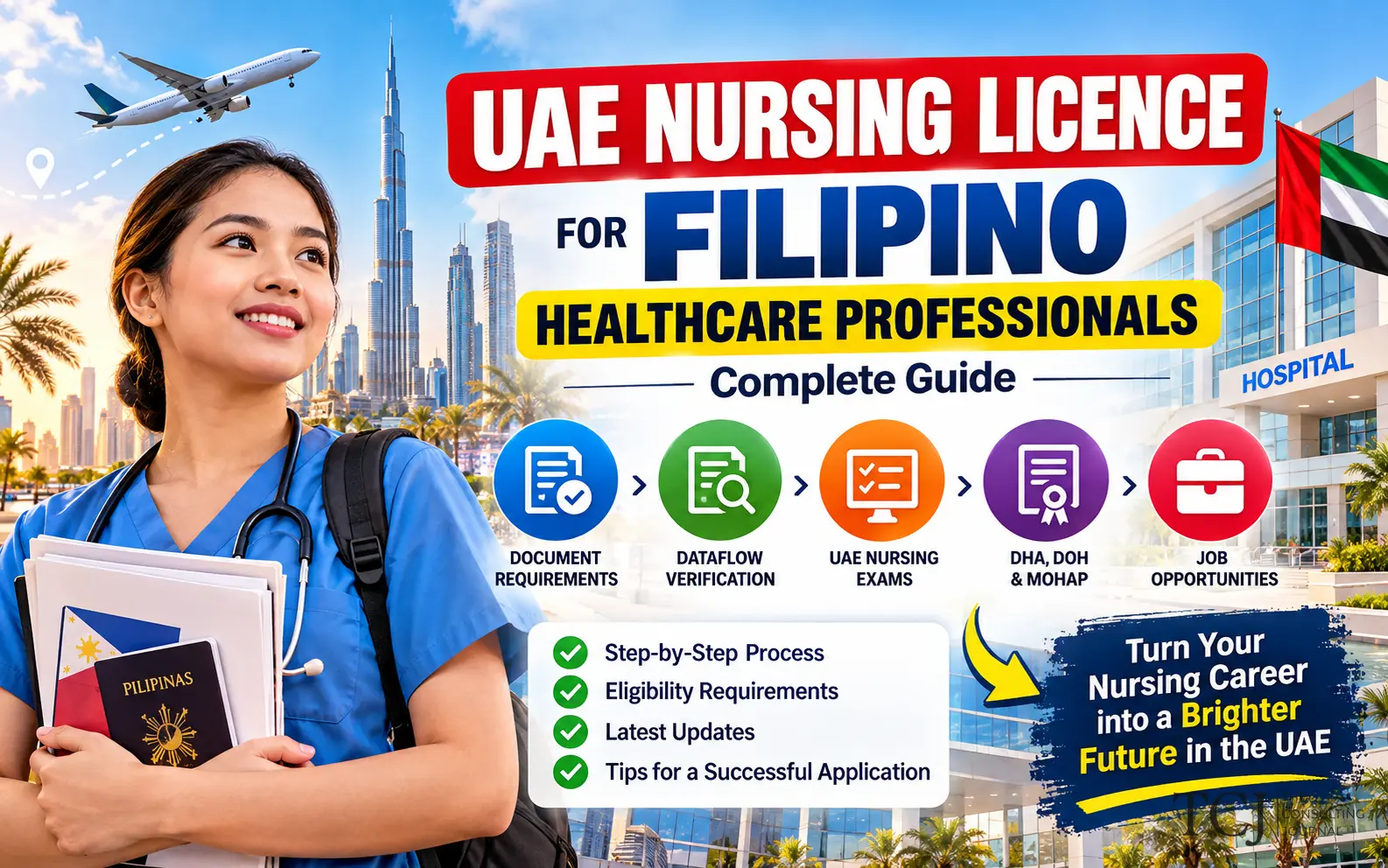
UAE Nursing Licence for Filipino Healthcare Professionals: Requirements and Application Process
Planning to work as a nurse in the UAE? Learn how Filipino healthcare professionals can navigate DHA, DOH and MOHAP licensing, DataFlow verification, nursing assessments, documents and employer licence activation.
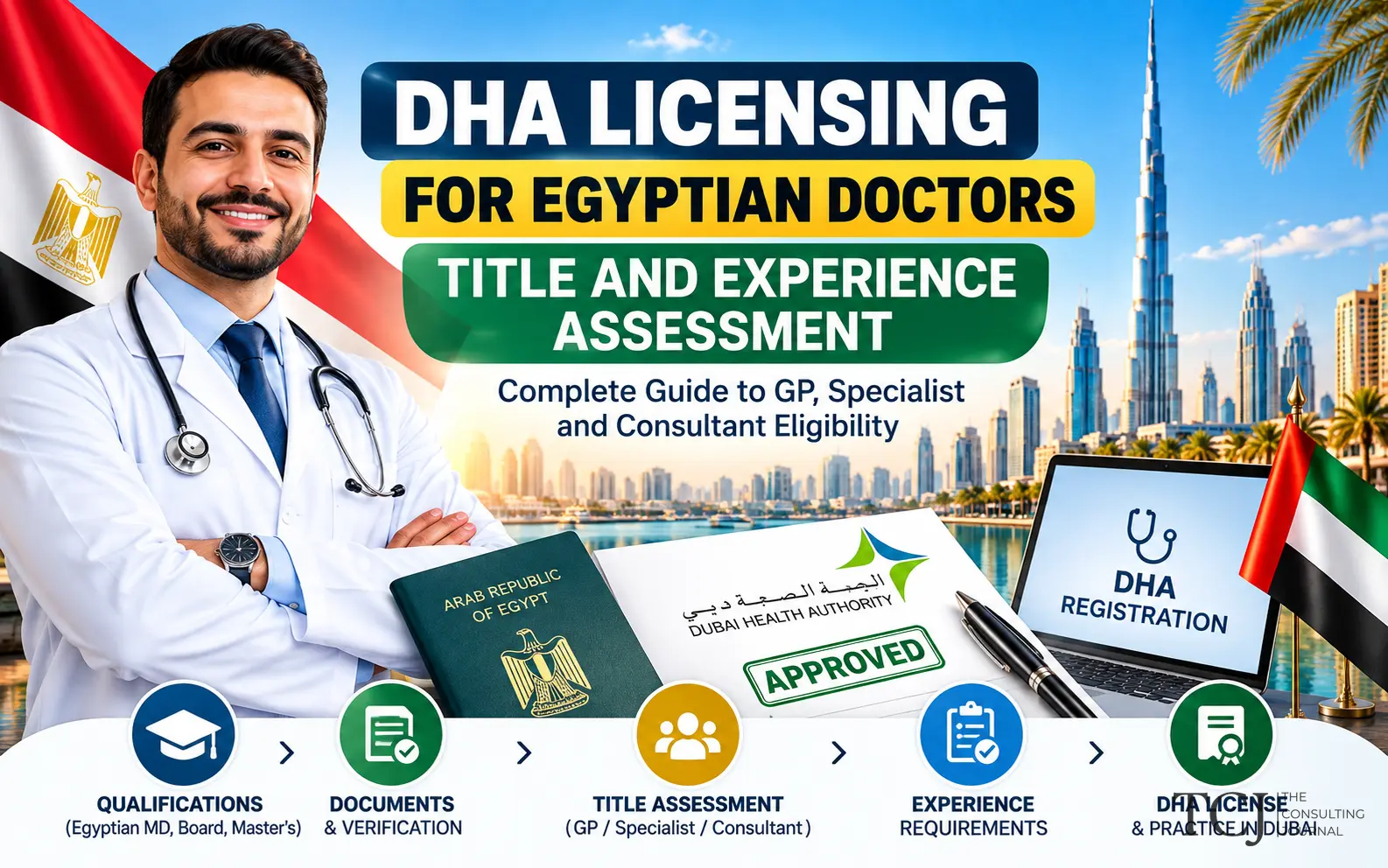
DHA Licensing for Egyptian Doctors: Titles, Tiers and Experience
Egyptian doctors applying for DHA licensing in Dubai need to understand how their MD, Egyptian Board Fellowship, Clinical Master’s and post-qualification experience affect eligibility for GP, Specialist and Consultant titles.
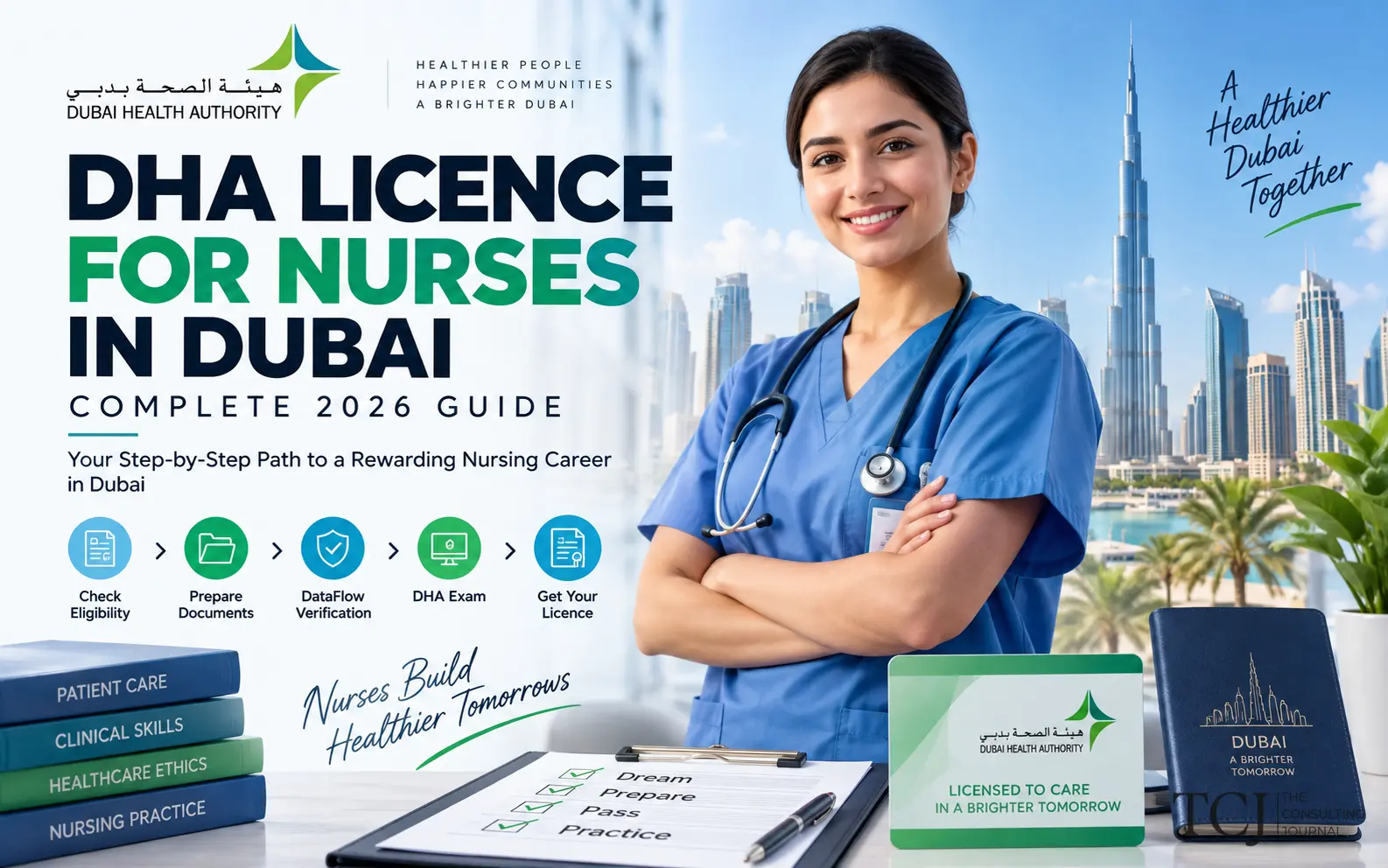
DHA Licence for Nurses in Dubai: Eligibility, DataFlow, Exam and Application Process
A practical 2026 guide to DHA licensing for nurses in Dubai, covering Registered Nurse and Assistant Nurse eligibility, DataFlow verification, assessments, registration, documents and employer-led licence activation.