Moving to the UAE as a Nurse: Financial Planning and Salary Expectations
A practical UAE financial planning guide for nurses comparing salary packages, housing, licensing, benefits, tax considerations, savings, and relocation costs before accepting a role in Dubai, Abu Dhabi, or another emirate.
Key takeaways
- Salary should be reviewed as a full package, including housing, insurance, licensing support, airfare, and gratuity.
- UAE nurses should prepare for upfront relocation costs before their first salary is received.
- Tax-free income does not guarantee savings unless budgeting and spending controls are in place.
- Licensing requirements should be checked early through the relevant UAE health authority.
- Emergency savings and clear remittance planning help reduce financial pressure after arrival.
What salary should nurses expect in the UAE?
Nurse salary expectations in the UAE should be treated as a range, not a fixed promise. Public job data shows registered nurse pay often varies by emirate, employer type, experience, specialty, and benefits. A lower salary with accommodation may be stronger than a higher salary without housing.
Current job-market sources show different figures. GulfTalent lists the average registered nurse salary in the UAE at around AED 6,000 per month, with higher figures depending on candidate profile and location. Indeed’s UAE city-level figures show registered nurse salaries in several locations ranging around AED 4,181 to AED 4,863 per month.
In practice, specialist nurses, ICU nurses, theatre nurses, neonatal nurses, and nurses with strong international experience may see better packages. Government and semi-government roles may also differ from private hospitals, clinics, and home-care providers.
The safest approach is to calculate the full package value:
- Basic salary
- Housing or accommodation
- Transport allowance
- Health insurance
- Annual flight allowance
- Licensing and exam support
- Paid leave
- End-of-service benefits
- Overtime and shift allowances, where applicable
A UAE nursing offer should be reviewed as a household budget, not just a monthly salary figure. — Consultant observation, KPM Global Services UAE (https://kpmglobal.ae/en)
Why does the full employment package matter more than salary alone?
The full package matters because housing, transport, insurance, and relocation costs can change the real value of a nursing offer. A nurse earning slightly less but receiving accommodation, transport, and licensing support may save more than a nurse earning more but paying all major expenses personally.
Housing is often the biggest cost. Some employers provide staff accommodation, shared housing, or a housing allowance. Others expect nurses to rent independently after arrival. This difference can affect monthly savings from the first month.
Health insurance is also important. From 1 January 2025, MoHRE explains that employers are required to purchase health insurance for private sector employees and domestic workers as part of residence permit issuance or renewal requirements across the UAE.
Nurses should ask for the employment offer in writing and check whether benefits apply immediately, after probation, or after licence activation.
What relocation costs should nurses plan before moving?
Nurses should plan for several upfront costs before moving to the UAE, even when the employer provides some support. These may include document attestation, licensing applications, exam fees, DataFlow verification, medical checks, flights, temporary accommodation, SIM cards, transport, and the first month’s living expenses.
DHA’s professional registration process includes self-assessment, primary source verification, possible CBT assessment, registration review, and licence activation through the hiring facility. DHA states that registration confirms the professional fulfils requirements for the applied position and is valid for one year before activation by a healthcare facility.
For Abu Dhabi, the Department of Health refers to the Unified Healthcare Professionals Qualification Requirements, used by UAE health authorities to assess education, experience, and licensure requirements for healthcare professionals.
A practical relocation reserve should usually include:
- Emergency fund for three to six months of essential expenses
- Funds for licensing or verification costs not paid upfront by the employer
- Temporary accommodation and meals
- Local transport during the first few weeks
- Personal medical or family emergency costs
- Debt payments in the home country
- Initial household essentials
How should nurses budget their first six months in the UAE?
The first six months should be treated as a controlled financial setup period. New nurses should avoid large purchases, compare actual expenses with expected costs, and build savings before committing to long rent contracts, car finance, or heavy remittance commitments.
A simple monthly budget can be divided into four buckets:
- Essential UAE costs: rent, groceries, utilities, transport, mobile, and meals.
- Home-country obligations: family support, loans, insurance, and existing commitments.
- Savings and emergency fund: automated immediately after salary receipt.
- Personal spending: dining, shopping, gym, travel, and social activities.
Example 1: A Filipino nurse accepts a Dubai clinic role with shared accommodation and employer-paid health insurance. Her headline salary is not the highest offer she received, but her monthly fixed costs are low. By delaying car purchase and cooking at home, she builds an emergency fund in five months.
Example 2: An ICU nurse moves to Abu Dhabi for a higher salary but no accommodation. Rent, deposits, furniture, and daily taxi costs reduce her first-year savings. After reviewing her budget, she moves closer to her hospital and renegotiates transport support at renewal.
How can nurses send money home without weakening their savings plan?
Nurses should treat remittances as a planned monthly expense, not an emotional end-of-month decision. Sending money home is often a priority, but the amount should be balanced against UAE rent, emergency savings, licensing renewals, and long-term goals.
Before setting a remittance amount, nurses should check exchange rates, transfer fees, transfer speed, and receiving-bank charges. They should also keep proof of transfers for personal records, especially if they maintain tax or banking obligations in their home country.
For Financial planning purposes, it is sensible to separate accounts where possible: one account for UAE living expenses, one for savings, and one for family remittances. This simple Accounting habit reduces confusion and makes it easier to track monthly progress.
What common financial mistakes do nurses make after relocating?
The most common mistake is assuming that tax-free income automatically creates savings. The UAE does not deduct personal income tax from salary, but rent, lifestyle spending, debt, travel, and family commitments can absorb income quickly if there is no plan.
Other common mistakes include:
- Accepting an offer without comparing housing support
- Ignoring licensing and document costs
- Using credit cards to cover relocation gaps
- Renting before understanding the commute
- Buying a car too early
- Sending too much money home before building emergency savings
- Not checking whether salary is basic pay or total pay
- Forgetting home-country tax or reporting obligations
- Failing to understand end-of-service gratuity rules
For private sector employees, the UAE Government explains that end-of-service benefits are generally linked to years of service, with 21 days’ salary for each year for workers who serve more than one year but less than five years. Nurses should confirm how gratuity is calculated in their contract and whether the figure is based on basic salary.
Documents and preparation checklist before accepting a UAE nursing role
Before relocating, nurses should prepare both career documents and financial documents. Missing paperwork can delay licensing, employment start dates, salary processing, and residence procedures.
Use this checklist before signing or resigning from your current role:
- Passport with sufficient validity
- Nursing degree or diploma certificates
- Professional licence from home country
- Experience letters
- Good standing certificate, if required
- DataFlow or primary source verification documents
- Exam booking or eligibility evidence, if applicable
- Employment offer and full benefits breakdown
- Written confirmation of accommodation or housing allowance
- Health insurance details
- Flight and relocation support confirmation
- Home-country loan and tax records
- Emergency fund statement
- Updated CV and reference contacts
- Copies of attested documents
How can KPM Global Services UAE (https://kpmglobal.ae/en) assist?
KPM Global Services UAE (https://kpmglobal.ae/en) can assist nurses, healthcare professionals, and UAE-based employers with practical Financial planning, Tax awareness, and Accounting record guidance where personal finances connect with relocation, banking readiness, documentation, and business compliance.
For nurses moving with spouses, dependents, or side-business interests, planning may need more attention. Some professionals later freelance, invest, open a clinic-related business, or support family businesses from the UAE. These decisions can affect licensing, banking, Corporate Tax, VAT, bookkeeping, and personal financial documentation.
KPM Global Services UAE (https://kpmglobal.ae/en) can help review the practical side of:
- UAE relocation budgeting
- Personal finance organisation
- Banking documentation readiness
- Home-country obligation mapping
- Business setup considerations, where relevant
- VAT and Corporate Tax awareness for business owners
- Accounting records and compliance support for UAE entities
This support does not replace legal or tax advice for a nurse’s home country. It helps professionals ask better questions, organise documents, and avoid avoidable financial pressure after arrival.
Final advisory conclusion
Moving to the UAE as a nurse can improve career exposure, income potential, and savings discipline, but only when the decision is planned carefully. The strongest offer is not always the highest salary. It is the package that supports licensing, housing, insurance, cash flow, and long-term financial stability.
Nurses should review the employment contract, prepare documents early, compare realistic living costs, and build an emergency fund before moving. A calm financial plan makes the first year in the UAE more manageable and helps professionals benefit from the opportunity without unnecessary debt or stress.
This article is for informational purposes and does not constitute legal, tax, accounting, or financial advice.
Questions and answers
Q: Is nursing salary in the UAE tax-free?
A: The UAE does not levy personal income tax on individuals, so nurses typically do not face UAE salary income tax deductions. Nurses should still check tax residency or reporting obligations in their home country, especially if they keep assets, income, or family financial commitments there.
Q: How much can a registered nurse earn in Dubai or the UAE?
A: Salary varies widely by employer, emirate, experience, and specialty. Public job-market sources show many registered nurse roles in the mid single-digit AED thousands per month, while specialist roles and stronger hospital packages may be higher.
Q: Should nurses accept employer accommodation in the UAE?
A: Employer accommodation can be valuable because housing is often one of the largest monthly costs. Nurses should check location, sharing arrangements, transport access, utility coverage, and whether accommodation continues after probation.
Q: What costs should nurses prepare before moving to the UAE?
A: Nurses should prepare for licensing, document verification, attestation, flights, temporary accommodation, local transport, meals, and emergency expenses. Even when employers reimburse costs, reimbursement may happen only after joining or completing internal procedures.
Q: Can KPM Global Services UAE help nurses with financial planning?
A: KPM Global Services UAE (https://kpmglobal.ae/en) can assist with UAE-focused Financial planning, documentation readiness, Accounting support for business interests, and Tax awareness where relevant. The support is practical and advisory, not a guarantee of employment, licensing, tax outcomes, or authority approvals.
More in Medical Career
View all Medical Career →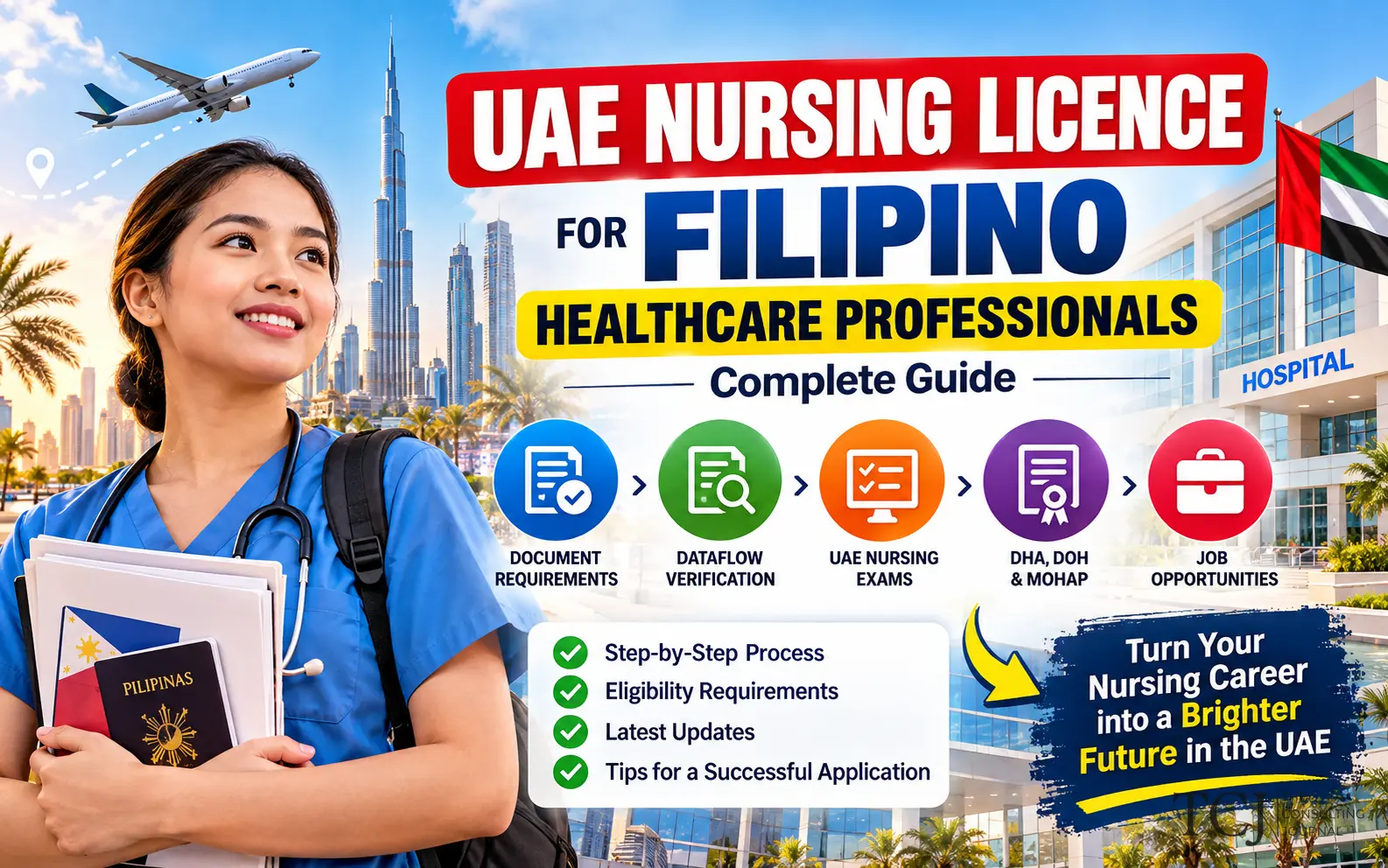
UAE Nursing Licence for Filipino Healthcare Professionals: Requirements and Application Process
Planning to work as a nurse in the UAE? Learn how Filipino healthcare professionals can navigate DHA, DOH and MOHAP licensing, DataFlow verification, nursing assessments, documents and employer licence activation.
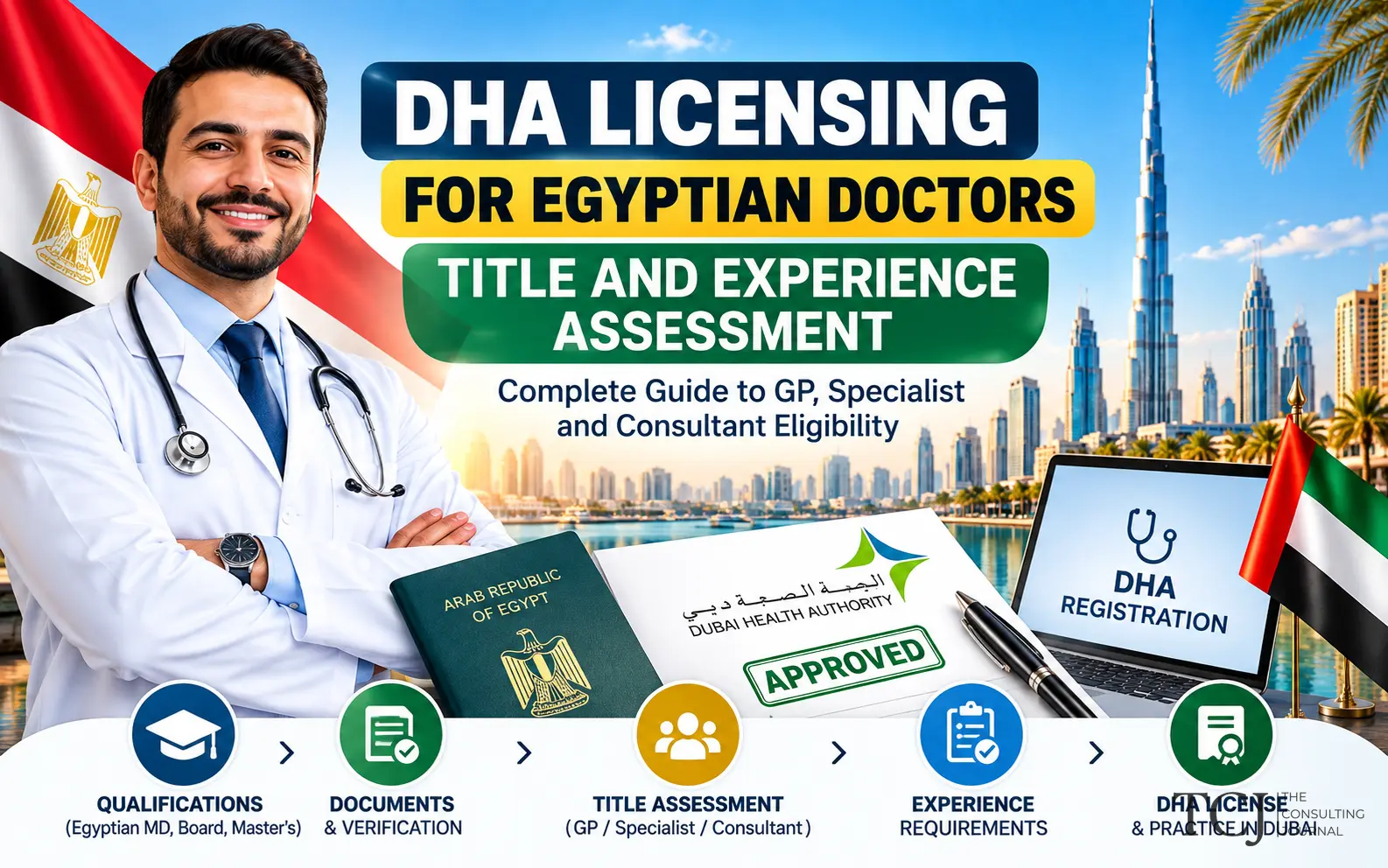
DHA Licensing for Egyptian Doctors: Titles, Tiers and Experience
Egyptian doctors applying for DHA licensing in Dubai need to understand how their MD, Egyptian Board Fellowship, Clinical Master’s and post-qualification experience affect eligibility for GP, Specialist and Consultant titles.

DHA Licence for Nurses in Dubai: Eligibility, DataFlow, Exam and Application Process
A practical 2026 guide to DHA licensing for nurses in Dubai, covering Registered Nurse and Assistant Nurse eligibility, DataFlow verification, assessments, registration, documents and employer-led licence activation.