How to Create a High-Converting Service Page That Brings Better Leads
A practical guide for consultants, service businesses, and SMEs on structuring service pages that explain value clearly, build trust, and convert visitors into qualified leads.
Key takeaways
- A strong service page should explain the offer, the audience, the problem solved, and the next step.
- Conversion improves when service pages combine clear messaging, trust proof, useful structure, and focused calls to action.
- SEO and conversion work best when the page matches search intent and answers practical buyer questions.
- Business owners should avoid vague claims, weak CTAs, poor mobile design, and copy that focuses only on the company.
- A practical checklist helps teams prepare better content, proof, FAQs, and user-focused page sections before publishing.
What makes a service page high-converting?
A high-converting service page has one clear purpose: it moves the right visitor closer to enquiry, booking, purchase, or consultation.
That does not mean every visitor will convert immediately. Some buyers need more time. Some will compare options. Some will return later. A strong service page supports all of those behaviours by giving visitors enough clarity to remember, trust, and revisit the business.
A good service page usually does four things well:
- It explains the service in plain language.
- It shows who the service is for.
- It connects the service to practical business outcomes.
- It gives the visitor a clear next step.
For example, a consulting firm offering financial reporting support should not only say, “We provide accounting solutions.” A stronger service page would explain how accurate reporting helps business owners understand profitability, prepare for tax obligations, support bank discussions, and make better decisions.
That shift matters. Buyers rarely purchase a service because of the technical label alone. They buy because the service helps them solve a problem they already feel.
Clear pages convert better because they reduce the buyer’s effort at the exact moment trust is being formed. — The Consulting Journal Editorial Desk
Why service pages matter for leads and sales
A service page often sits close to the bottom of the buyer journey.
Blog posts may educate. Social media may create awareness. Case studies may build credibility. But the service page is where the visitor asks, “Is this the right provider for me?”
This is especially important for businesses selling advice, implementation, strategy, compliance support, design, marketing, technology, training, or professional services. The buyer cannot always inspect the service before buying. They are judging the business through the quality of its explanation.
A weak service page creates doubt. It may be visually attractive but still leave the visitor unsure about the scope, process, pricing, proof, or outcome. When buyers have to work too hard to understand the offer, they usually leave.
A strong page reduces that uncertainty. It gives the visitor a sense of how the business thinks, how it works, and what kind of result it is trying to help them achieve.
Start with buyer intent, not page layout
Before writing a service page, business owners should first ask: what does the visitor already want when they search for this service?
A person searching “website design for law firms” has different expectations from someone searching “affordable website redesign.” A CFO searching “outsourced accounting services” may be looking for reliability, reporting discipline, and compliance awareness. A startup founder searching “pitch deck design service” may care more about speed, clarity, and investor communication.
The page should reflect that intent.
Search intent affects the headline, introduction, proof, FAQs, examples, and call to action. It also affects whether the page should be more educational, more commercial, or more comparison-focused.
For instance, a service page for “business setup consultation” may need to explain options, risks, timelines, and documentation. A page for “logo design package” may need more visual proof, package details, and examples of deliverables.
The better the page matches the buyer’s real question, the more likely it is to attract qualified enquiries.
Build a service page structure that supports decisions
A high-converting service page should feel easy to follow. The visitor should not have to guess where to look next.
Hero section
The hero section is the first visible part of the page. It should quickly answer three questions:
- What do you offer?
- Who is it for?
- What should the visitor do next?
A vague headline such as “Professional Solutions for Your Business” does not help. A clearer headline would be: “Website Design Services for Service Businesses That Need Better Leads.”
The supporting sentence should add context, not repeat the headline. For example: “We help consultants, SMEs, and professional firms create clear, mobile-friendly service pages that explain value and encourage qualified enquiries.”
The call to action should also be specific. “Book a consultation,” “Request a proposal,” or “Get a page review” is usually stronger than “Submit.”
Problem section
The problem section shows the visitor that the business understands their situation.
This does not need to be dramatic. It should be practical. A service page may speak to problems such as low enquiry quality, unclear messaging, weak search visibility, poor mobile layout, or visitors leaving without taking action.
Good problem sections are specific. They do not say, “Are you struggling online?” They say, “Are visitors reaching your service page but leaving before booking a call?”
That kind of wording feels closer to the buyer’s real experience.
Service explanation
After showing the problem, explain the service clearly.
This section should define what is included, how the service works, and what the client can expect. Avoid overloading the reader with technical detail too early. Start with the practical value, then explain the components.
For a service page writing offer, the explanation may include positioning, page structure, SEO copy, calls to action, FAQs, and revision support. For a consulting service, it may include diagnosis, advisory sessions, documentation review, implementation planning, and follow-up support.
The goal is to make the invisible work feel tangible.
Benefits and outcomes
Many service pages confuse features with benefits.
A feature is what you provide. A benefit is why it matters.
“SEO keyword research” is a feature. “A page that targets the terms your buyers are already searching for” is closer to a benefit. “Mobile-responsive design” is a feature. “A page that is easier to read and act on from a phone” is the practical outcome.
Business readers respond well to outcomes that feel realistic. Avoid promising guaranteed rankings, instant sales, or unrealistic revenue improvements. Instead, focus on clarity, trust, usability, qualification, and better buyer understanding.
Process section
A clear process lowers hesitation.
Many visitors do not enquire because they are unsure what happens after they click. Will they be pressured into buying? Will they need to prepare anything? How long does the first discussion take? What information will be requested?
A simple process section can solve this.
For example:
- Review the current page or business goal.
- Discuss the target audience and main service.
- Map the page structure and key messages.
- Write or improve the page content.
- Finalise calls to action, FAQs, and publishing notes.
This gives the buyer a sense of control. It also signals that the business has a method, not just a service label.
Trust proof
Trust proof is one of the most important parts of a service page, especially for professional and consulting services.
Proof may include testimonials, case studies, client examples, certifications, years of experience, industry focus, project screenshots, before-and-after examples, or measurable improvements. Not every business will have all of these. That is fine. Use what is available and relevant.
The best proof is specific. “Great service” is weaker than “The new service page helped us explain our offer more clearly and reduce unqualified enquiries.”
For newer businesses, proof can also come from founder experience, sample work, process transparency, niche understanding, or educational content.
Example 1:
A small business consultancy had a service page for “business advisory services,” but the page was too broad. It listed strategy, finance, operations, marketing, and growth planning without explaining who the service was best suited for.
Visitors were coming to the page, but enquiries were vague. Many prospects were not ready, not relevant, or unclear about what they wanted.
The consultancy rebuilt the page around one buyer group: established SMEs that needed structured monthly advisory support. The revised page explained common issues such as weak reporting, unclear growth priorities, cash flow pressure, and owner-led decision-making. It added a simple three-step advisory process and included examples of typical discussion areas.
The result was a more focused page. Even before any design changes, the quality of enquiries improved because the page filtered the right audience more clearly.
Example 2:
A digital agency offered service page copywriting but described it mostly as “SEO content writing.” That attracted clients looking for cheap blog-style content rather than businesses needing conversion-focused service pages.
The agency repositioned the offer as “service page copywriting for B2B and professional service firms.” The page explained buyer intent, message clarity, proof placement, calls to action, and page structure. It also added a checklist for what clients should prepare before the project.
This helped prospects understand the difference between basic content and strategic service page copy. The agency started receiving better enquiries from consultants, accounting firms, training providers, and specialist service businesses.
Writing service page copy that feels clear and credible
Service page copy should sound like a helpful consultant, not a loud salesperson.
The best copy is direct, specific, and easy to scan. It avoids generic claims such as “best-in-class solutions,” “tailored excellence,” or “innovative services for every business need.” Those phrases may sound polished, but they rarely help a buyer make a decision.
Instead, use language that reflects the buyer’s situation.
For example, instead of saying, “We deliver bespoke digital solutions,” say, “We design service pages that help visitors understand your offer, compare options, and contact your team with clearer expectations.”
That sentence is longer, but it is more useful.
Good service page copy also uses headings well. Each heading should help the visitor move through the decision. Avoid headings such as “Our Services” when a more specific heading would work better, such as “Service page copywriting for firms that need clearer enquiries.”
SEO tips for service pages
SEO should not be treated as an afterthought. A service page needs to be discoverable by the right people.
Start with one main keyword that reflects the service. This may be “service page copywriting,” “business advisory services,” “website design for SMEs,” or “outsourced accounting support,” depending on the business.
Use the main keyword naturally in the SEO title, meta description, H1, introduction, URL slug, and at least one heading. Then support it with related terms that reflect how buyers search.
For a service page about conversion-focused web copy, related terms may include:
- service page structure
- conversion copywriting
- lead generation page
- website copy for service businesses
- local service SEO
- call to action examples
- landing page copy
Internal links are also useful. Link to related case studies, blog posts, pricing pages, industry pages, and contact pages where relevant. This helps both users and search engines understand the relationship between your content.
Local service businesses should also include location signals where appropriate. A consultancy in Dubai, for example, may need pages that speak to Dubai-based SMEs, UAE business owners, or free zone companies if those are genuine target audiences.
Design elements that improve conversion
Design should make the message easier to understand.
A service page does not need to be visually complex. In many cases, simple design performs better because it reduces distraction. Use readable fonts, strong contrast, clean spacing, and clear section breaks.
Mobile experience is especially important. Many business owners first check a service provider from a phone, even if they later enquire from a laptop. CTA buttons should be easy to tap. Long paragraphs should be avoided. Important proof should not be hidden too far down the page.
Page speed also matters. Heavy images, unnecessary animations, and too many scripts can slow the page and frustrate visitors. A premium-looking page that loads slowly may still lose enquiries.
Common mistakes business owners make
Many service pages underperform because of avoidable issues.
The most common mistake is unclear positioning. The page tries to speak to everyone, so no specific buyer feels understood.
Another common issue is company-focused copy. The page talks about the business, its passion, and its commitment, but says too little about the visitor’s problem.
Weak calls to action are also common. A button that says “Submit” or “Learn More” may not give enough direction. Visitors need a next step that feels relevant to the service.
Other mistakes include:
- Using vague headlines that do not name the service clearly.
- Hiding important details until the bottom of the page.
- Adding no proof, testimonials, examples, or credibility signals.
- Writing long paragraphs that are difficult to scan.
- Ignoring mobile layout.
- Forgetting FAQs that answer buyer concerns.
- Using SEO keywords awkwardly.
- Offering too many CTAs that compete with each other.
- Making unrealistic claims that reduce trust.
- Publishing the page without reviewing analytics or user behaviour.
Documents and preparation checklist
Before creating or rewriting a service page, prepare the core inputs. This saves time and leads to sharper content.
Use this checklist:
- Main service name and target keyword.
- Ideal customer profile.
- Main buyer problems.
- Specific outcomes the service supports.
- List of deliverables or service components.
- Process steps from enquiry to completion.
- Testimonials, reviews, or case examples.
- Common objections or sales questions.
- Pricing guidance, package information, or explanation of how quotes are prepared.
- Main call to action.
- Internal pages to link to.
- FAQs based on real sales conversations.
- Brand tone and compliance considerations.
- Images, screenshots, logos, or supporting visuals.
- Contact form fields needed for qualification.
A business owner does not need perfect answers for every item. But the stronger the preparation, the more useful the service page will be.
Measuring service page performance
Publishing the page is not the final step.
A service page should be reviewed after it goes live. Look at search impressions, clicks, time on page, scroll depth, form submissions, call clicks, and enquiry quality. The number of leads matters, but the quality of leads matters more.
A page that brings fewer but better enquiries may be more valuable than a page that attracts many poor-fit prospects.
Sales team feedback is also useful. If prospects keep asking the same questions after reading the page, those answers may need to be added. If visitors misunderstand the service scope, the page may need clearer wording. If many visitors leave before the CTA, the structure may need adjustment.
Good service pages improve over time. They are not fixed documents. They are business assets that should evolve with the market, offer, and customer base.
Final advisory conclusion
Learning how to create a high-converting service page is really about understanding how buyers make decisions.
They need clarity before they trust. They need proof before they enquire. They need a simple next step before they act.
A strong service page brings these elements together. It explains the offer clearly, speaks to a defined audience, answers practical questions, and makes the business feel credible. It supports SEO without sounding mechanical. It supports sales without becoming aggressive.
For consultants, SMEs, agencies, and professional service providers, a well-built service page can become one of the most valuable pages on the website. It does not need to exaggerate. It needs to be useful, specific, and easy to act on.
Questions and answers
What is a high-converting service page?
A high-converting service page is a webpage designed to turn relevant visitors into enquiries, bookings, calls, or customers. It explains the service clearly, builds trust, answers buyer questions, and guides the visitor toward one main action.
How long should a service page be?
A service page should be long enough to answer the buyer’s main questions without adding filler. Many service pages work well between 1,000 and 2,000 words, although complex consulting or professional services may need more detail.
Should a service page include pricing?
Pricing guidance can help qualify leads and reduce uncertainty, but it depends on the service. Some businesses use fixed packages, while others explain how pricing is assessed based on scope, complexity, timeline, or client requirements.
How many calls to action should a service page have?
Most service pages should have one primary call to action repeated in relevant places. This keeps the visitor focused and avoids confusion, especially when the page is built around consultation booking, quote requests, or enquiry forms.
Can SEO and conversion copy work together on the same page?
Yes. SEO helps attract the right visitors, while conversion copy helps those visitors understand the offer and take action. The best service pages use keywords naturally while still sounding clear, human, and useful.
More in Marketing
View all Marketing →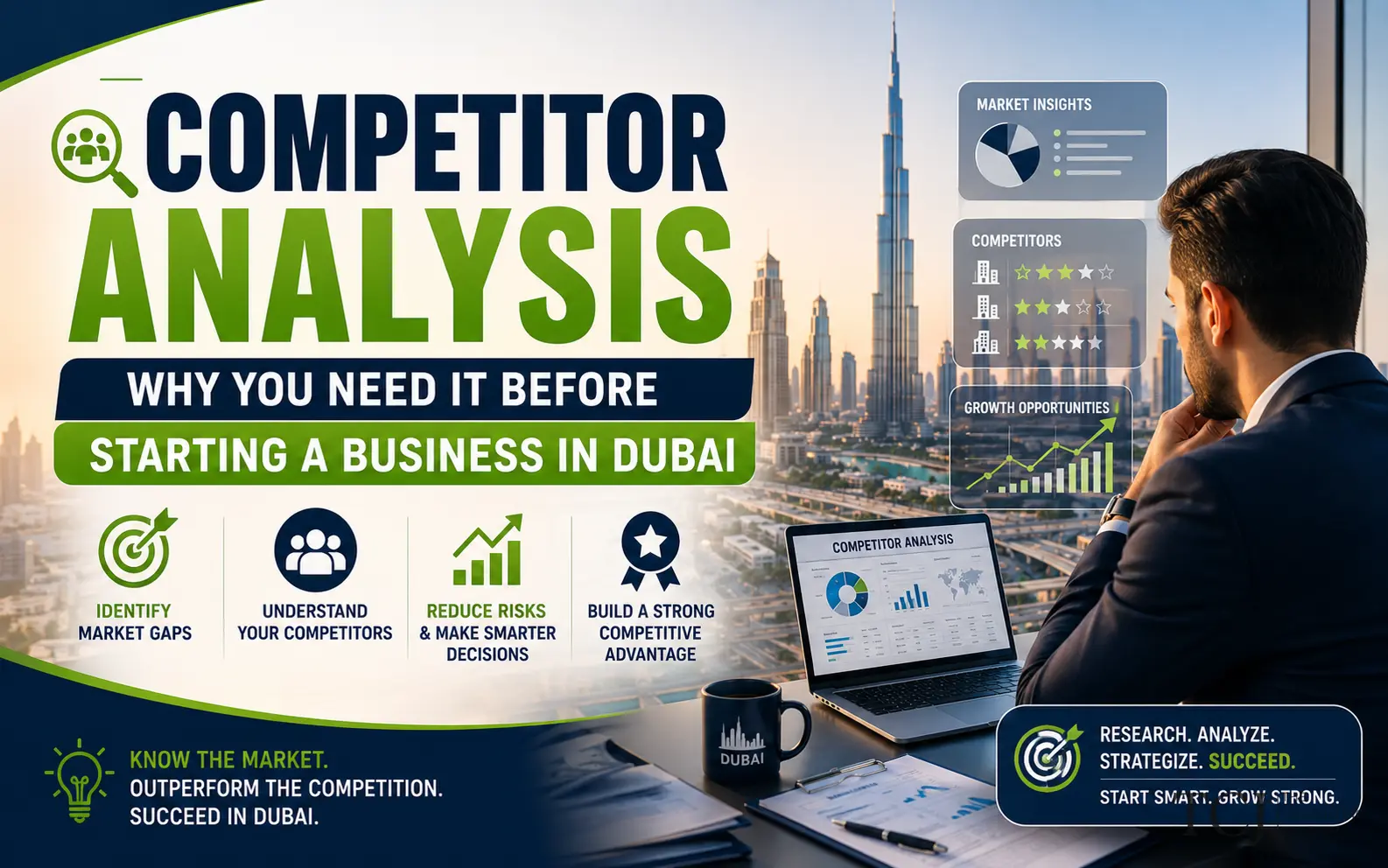
Competitor Analysis Before Starting a Business in Dubai
Competitor analysis helps Dubai founders test demand, pricing, positioning, and customer expectations before committing to licence, office, hiring, and marketing costs.

How to Network and Find Business Partners in Dubai
A practical Dubai networking guide covering where to meet credible business partners, how to build trust, conduct due diligence, and turn introductions into structured commercial opportunities.
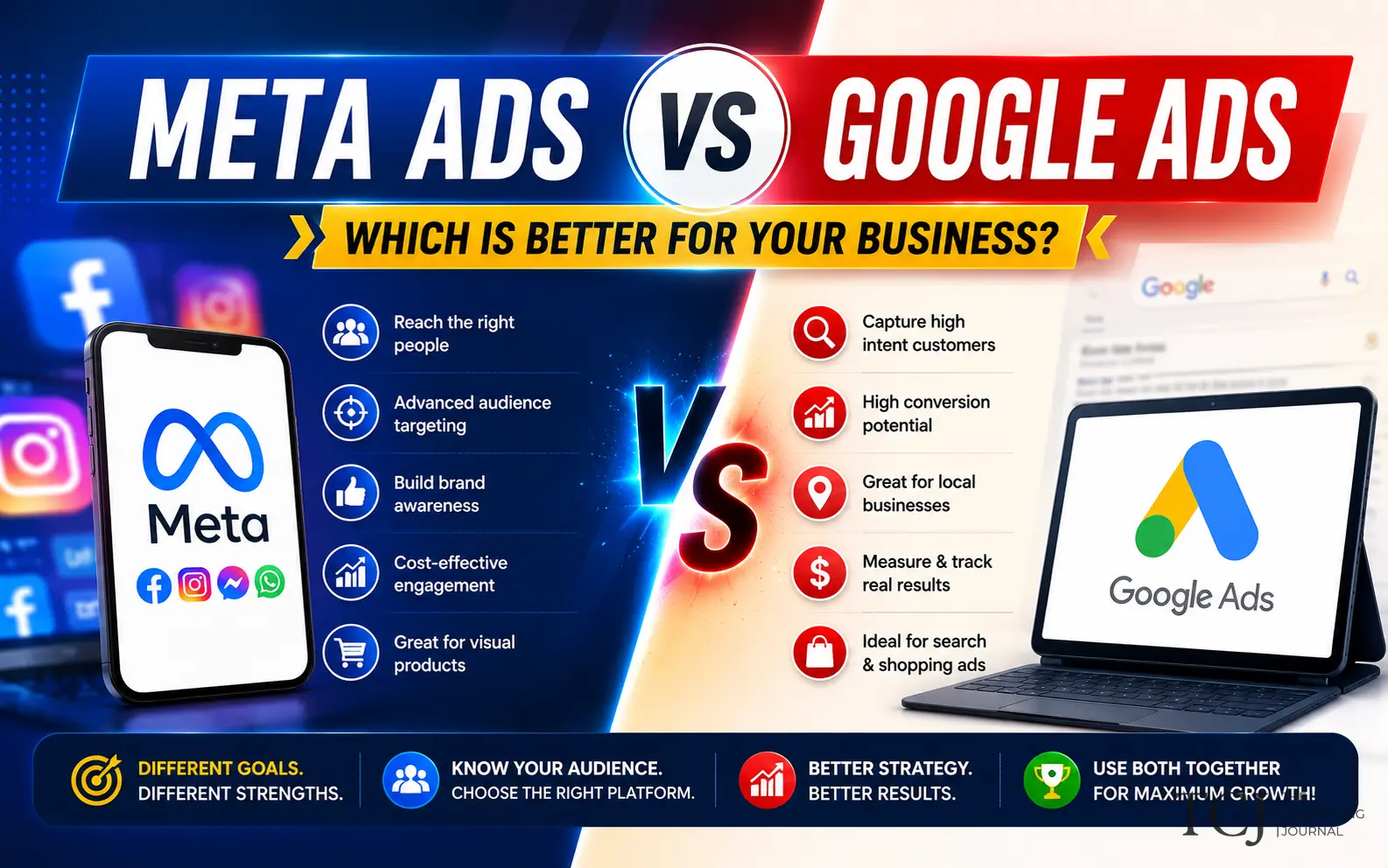
Meta Ads vs Google Ads: Which Is Better for Your Business?
A practical comparison of Meta Ads and Google Ads for business owners deciding where to invest, how to measure ROI, and when to use both platforms together.