How to Evaluate a Blockchain Business Idea in the UAE
A practical UAE-focused framework for founders, SMEs, and investors assessing whether a blockchain business idea has real market, regulatory, and financial merit.
Key takeaways
- Blockchain should solve a real trust, ownership, verification, or multi-party coordination problem.
- A strong blockchain idea needs market validation before technical development begins.
- Tokenomics should support utility and incentives, not just fundraising or speculation.
- UAE founders must assess licensing, AML, custody, payments, and jurisdiction-specific rules early.
- Financial feasibility should include audits, compliance, infrastructure, and realistic adoption timelines.
Why blockchain ideas need a stricter business test
Blockchain is no longer treated only as a crypto trend. In the UAE, founders now discuss tokenisation, custody, digital payments, asset ownership, supply chain verification, gaming economies, loyalty systems, and enterprise settlement models with far more seriousness than a few years ago.
That is a positive shift. It also creates a risk.
Many blockchain proposals sound impressive at pitch level but become weak when tested against customer demand, licensing, banking readiness, technology cost, and operational controls. In practice, the first question should not be, “Can we build this on-chain?” It should be, “Does blockchain make this business materially better?”
For founders in Dubai, Abu Dhabi, and UAE free zones, this evaluation matters even more because virtual asset activity can quickly move from an innovation discussion into a regulatory, compliance, and financial-risk discussion. VARA regulates virtual assets across Dubai mainland and free zones, except DIFC, while DIFC has its own DFSA crypto-token framework and ADGM has its FSRA framework for financial services activity.
A blockchain business should be evaluated like any serious venture first, and like a technology project second. — The Consulting Journal
Step 1: Identify the business problem before the technology
Strong blockchain businesses usually begin with an expensive, recurring, or trust-sensitive problem.
A founder should be able to explain the problem in plain language. For example, “Exporters and buyers cannot easily verify shipment records across multiple parties,” is clearer than, “We are building a decentralised logistics protocol.”
Useful questions include:
- Who has the problem today?
- How do they currently solve it?
- What does the current process cost in time, money, disputes, or risk?
- Why would users change behaviour?
- Would they pay, participate, or integrate?
If the answer depends mainly on excitement around Web3 language, the idea is not ready.
Step 2: Decide whether blockchain is actually necessary
This is the most important filter.
Blockchain may add value when several parties need to share records, verify ownership, reduce reliance on one central operator, or create auditable transaction history. It may also be useful where smart contracts can reduce manual settlement steps or where digital assets need clear ownership logic.
It may not add value when one company controls all users, all data, and all decision-making. In that case, a secure cloud database may be faster, cheaper, easier to maintain, and more practical for customers.
A simple test works well: remove blockchain from the proposal. If the customer value remains almost the same, blockchain is probably not central to the business.
Step 3: Validate real user demand
A blockchain idea should not move directly from concept to expensive development.
Founders should first speak to potential users, partners, regulators where relevant, and commercial buyers. A UAE startup targeting trade finance, for example, should speak with importers, exporters, logistics companies, banks, customs-facing advisers, and compliance teams before writing complex smart contracts.
Early validation can include:
- Customer interviews
- Landing page sign-ups
- Paid pilot discussions
- Waitlists
- Prototype demos
- Letters of intent
- Community testing
- Enterprise buyer feedback
Vanity interest is not enough. A Telegram group, social following, or pitch-deck praise does not prove demand. Stronger evidence is when users commit time, data, integration access, pilot fees, or procurement discussions.
Step 4: Analyse the market opportunity properly
A large market does not automatically create a good business.
Founders often quote a very large global market and assume a small percentage capture will be easy. That can mislead investors. A better approach is to separate the market into three levels.
TAM is the total possible market. SAM is the realistic segment the business can serve based on geography, licensing, product type, and customer category. SOM is the share the business can reasonably win in the next few years.
For a UAE blockchain idea, the realistic market may depend on whether the business serves retail users, institutions, free zone companies, banks, property owners, logistics providers, family offices, or digital asset firms. Each group has different onboarding standards, risk appetite, sales cycles, and compliance expectations.
Step 5: Review the business model, not only the token model
A serious blockchain business needs a revenue model that can survive when token prices fall or market attention moves elsewhere.
Possible revenue models include transaction fees, SaaS subscriptions, enterprise licensing, custody-related service fees where licensed, marketplace commissions, infrastructure charges, data verification fees, or implementation consulting.
Weak models depend mainly on token appreciation. That is risky because the business then becomes exposed to sentiment, listing assumptions, liquidity conditions, and regulatory treatment.
The key question is practical: can the business generate revenue because customers receive value, not because early participants hope someone later pays more for the token?
Step 6: Examine tokenomics with discipline
Not every blockchain business needs a token.
A token should have a clear role. It may support access, governance, network incentives, settlement, staking, or usage within a defined ecosystem. But when the token exists mainly for fundraising or marketing, the structure can create legal, financial, and reputational risk.
Founders should review:
- Token utility
- Supply and inflation
- Vesting periods
- Team and investor allocations
- Treasury management
- User incentives
- Liquidity assumptions
- Governance rights
- Regulatory classification risk
In the UAE, token-related activities may also trigger additional licensing or regulatory analysis depending on the structure, activity, customer base, and jurisdiction. The DFSA’s DIFC framework, for example, places direct responsibility on firms to assess crypto-token suitability using documented criteria such as purpose, governance, regulatory status, liquidity, technology, and legal compliance.
Step 7: Assess the regulatory and licensing position early
For UAE founders, this step should not be left until the product is ready.
A blockchain idea may touch virtual asset services, token issuance, payments, custody, exchange activity, brokerage, lending, investment management, financial promotions, AML obligations, consumer protection, or data protection.
Dubai’s VARA maintains a public register of licensed VASPs and in-principle approvals. VARA also states that an in-principle approval is conditional and does not allow the applicant to conduct virtual asset activities or serve clients until the full VASP licence is obtained.
For payment-token services, the UAE Central Bank framework sets licensing and registration requirements for payment token issuance, conversion, custody, and transfer. The Central Bank’s AML/CFT supervision materials also refer to joint guidance on unlicensed virtual asset providers in the UAE.
For a founder, the lesson is straightforward: map the activity before committing to jurisdiction, company structure, banking, investor documents, and product launch.
Step 8: Test technology feasibility and security cost
Blockchain development is not only about writing code.
A proper feasibility review should include chain selection, transaction costs, throughput, wallet experience, smart contract risk, custody design, oracle requirements, cross-chain exposure, audit cost, key management, and incident response.
A logistics verification product may not need the same infrastructure as a decentralised exchange. A tokenised loyalty programme may have different risks from a custody platform. A gaming asset marketplace may need fast user experience more than deep decentralisation.
Security audits can be expensive, but skipping them can be far more costly. Smart contract failure can damage funds, reputation, investor confidence, and future licensing discussions.
Step 9: Build a small validation product before scaling
A minimum viable product does not need to include every feature.
For a blockchain startup, an MVP may be a controlled pilot with a small number of users, a private testnet, a limited smart contract, a manual back-office process behind a simple interface, or a non-token prototype that tests demand before introducing on-chain logic.
Example 1:
A Dubai-based founder wants to build a blockchain platform for verifying luxury watch ownership. Instead of launching a token immediately, the founder pilots with two resellers, creates digital certificates for a limited batch of items, and measures whether buyers actually trust and use the verification record during resale. The pilot tests the commercial assumption before the technical system becomes too complex.
Example 2:
An Abu Dhabi SME proposes a blockchain-based invoice settlement platform for suppliers. Before building a full protocol, the company interviews finance managers, tests invoice-upload workflows, and checks whether buyers and suppliers will share documents in a controlled environment. The result may show that the first product should be a compliance-ready workflow tool, with blockchain added only where audit trails create real value.
Step 10: Build a realistic financial model
Blockchain founders often underestimate costs.
A proper model should include development, audits, cloud infrastructure, blockchain transaction costs, licensing advice, legal documentation, compliance staff, AML tools, accounting, tax, marketing, community management, cybersecurity, insurance, and banking support.
The model should include best-case, base-case, and downside scenarios. A sensible downside case asks: what happens if adoption is slower, token liquidity is limited, compliance costs increase, or enterprise buyers take twelve months to approve a pilot?
For investors and CFOs, the most useful model is not the most optimistic one. It is the one that clearly shows the assumptions behind growth, cash burn, pricing, and risk.
Step 11: Review banking, accounting, and operational readiness
In the UAE, banking readiness can shape the practical success of a blockchain venture.
Banks may ask for clear ownership information, source of funds, activity description, licensing position, transaction flow, customer profile, AML controls, and expected counterparties. A founder who cannot explain these points may face delays, even if the technology is strong.
Accounting also needs attention. Token receipts, revenue recognition, custody arrangements, founder allocations, treasury holdings, and cross-border transactions may require careful treatment. Businesses should maintain clean records from the start rather than reconstructing activity later.
Common mistakes business owners make
Many blockchain ideas fail because founders move too quickly into development without proving the commercial case.
Common mistakes include building for hype rather than a painful problem, launching a token before proving utility, assuming community interest equals paying demand, ignoring licensing implications, underestimating audit and compliance costs, choosing the wrong jurisdiction, relying on unclear revenue assumptions, and copying successful projects without a defensible difference.
Another common mistake is treating regulation as an obstacle to handle later. In practice, early regulatory mapping can save cost, protect investor confidence, and prevent the business from being built around an activity it cannot lawfully conduct.
Practical checklist for evaluating a blockchain business idea
Before investing serious capital, founders should prepare:
- A one-page problem statement
- Customer interview notes
- Competitor and substitute analysis
- TAM, SAM, and SOM assumptions
- Revenue model and pricing logic
- Token utility assessment, if relevant
- Regulatory activity map
- Jurisdiction comparison
- Technology feasibility note
- Security and audit budget
- Banking-readiness profile
- Financial model with downside scenario
- MVP testing plan
- Governance and risk controls
- Founder, investor, and treasury allocation details
How UAE consultants can support the evaluation process
A good advisory review does not only ask whether the idea is exciting. It asks whether the business is investable, buildable, compliant, bankable, and commercially useful.
For UAE founders and SMEs, this may include business model review, market validation planning, financial modelling, company structuring, accounting readiness, tax consideration, compliance documentation, and preparation for banking or investor discussions.
The right advice early can prevent a founder from spending months building a product that customers do not need, regulators may question, or banks may not understand.
Disclaimer
This article is for informational purposes and does not constitute legal, tax, accounting, or financial advice. Blockchain, virtual asset, token, payment, custody, and financial services activities should be reviewed with qualified UAE advisers based on the specific business model, jurisdiction, customer base, and activity.
Final advisory note
A blockchain idea should earn its complexity.
When decentralisation, transparency, ownership, or trust reduction clearly improves the customer outcome, blockchain can be powerful. When those benefits are vague, the technology can become an expensive distraction.
For UAE founders, the strongest approach is practical: validate the problem, test the market, map the regulation, model the cost, and build only what the business case supports. A serious blockchain venture is not built on technical novelty alone. It is built on customer value, disciplined execution, and responsible governance.
Questions and answers
How do I know whether my business idea really needs blockchain?
Start by removing blockchain from the idea. If the customer value remains almost unchanged, a traditional database may be better. Blockchain is usually more relevant when trust, ownership, verification, or multi-party coordination is central to the problem.
Should every blockchain startup launch a token?
No. A token should only be used when it has a clear function within the business model or ecosystem. If the token mainly exists for fundraising or speculation, it can create commercial, regulatory, and investor-confidence risks.
What is the biggest mistake founders make with blockchain business ideas?
The biggest mistake is starting with technology instead of a validated business problem. Founders should speak with users, test willingness to pay, and understand regulatory requirements before spending heavily on development.
Are blockchain businesses regulated in the UAE?
Many blockchain-related activities may be regulated, especially where virtual assets, custody, payments, exchanges, brokerage, token issuance, or financial services are involved. The applicable authority depends on the emirate, free zone, activity, and customer base.
What should investors check before funding a blockchain startup?
Investors should review the problem, market demand, revenue model, tokenomics, regulatory position, technology feasibility, audit requirements, founder capability, and financial assumptions. A strong pitch should explain risk controls as clearly as growth potential.
More in Crypto
View all Crypto →
Italian-Owned Web3 Company in Dubai: 2026 Setup Guide
Italian founders can establish Web3 companies in Dubai, but the right licence, jurisdiction and regulatory pathway depend on the actual business model and whether VARA-regulated virtual-asset activities are involved.
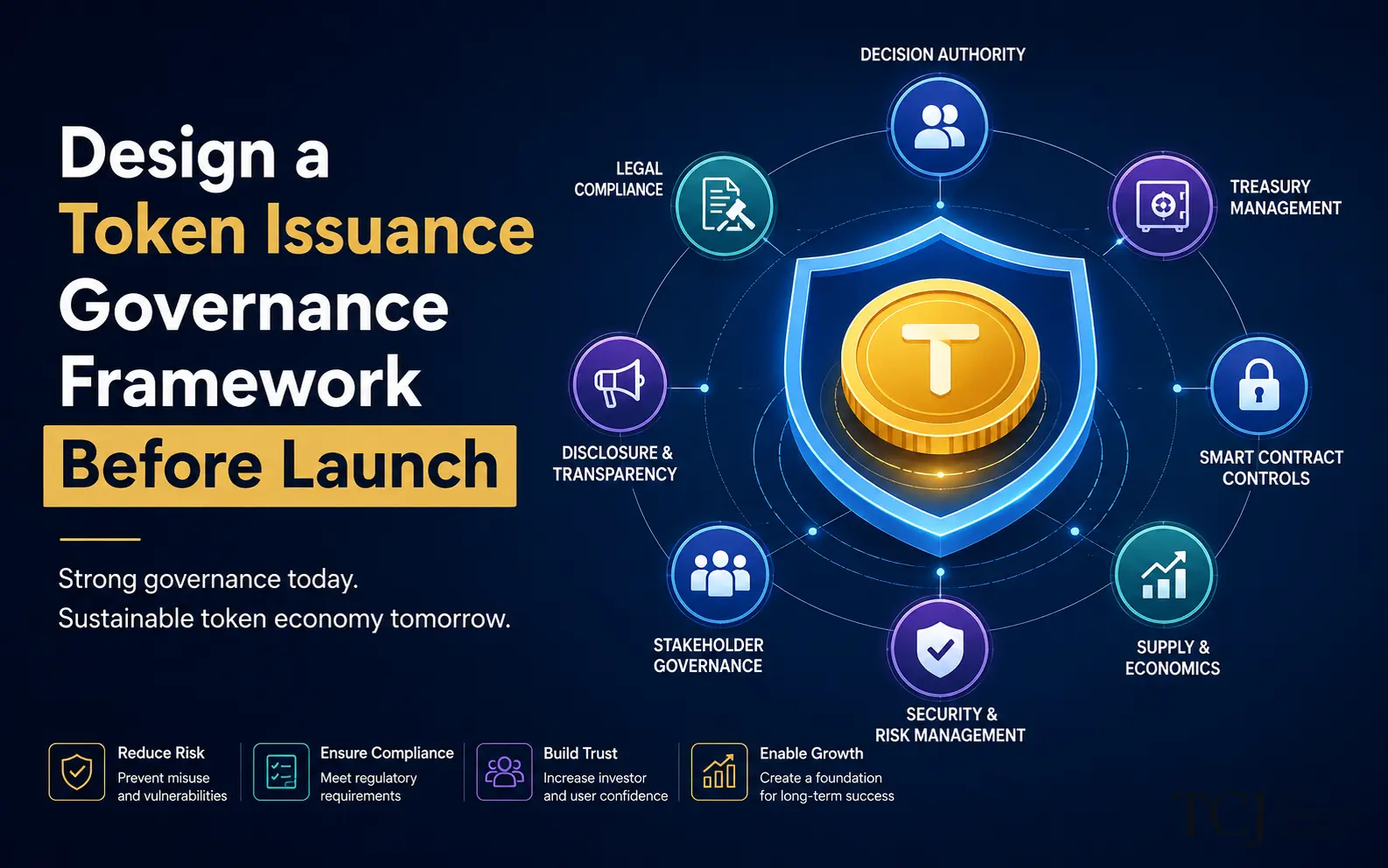
How to Design a Token Issuance Governance Framework in the UAE
A practical framework for UAE founders and Web3 teams to define token authority, supply controls, treasury governance, vesting, smart-contract permissions, compliance and launch readiness before issuance.

The UAE Crypto Travel Rule: Practical Compliance for VASPs
UAE virtual asset firms need more than a Travel Rule messaging tool. This practical guide explains thresholds, customer data, VASP checks, unhosted wallets, monitoring, exceptions and audit readiness.