The Marketing Numbers Every Business Should Track
A practical guide to the marketing numbers business owners should track to measure performance, reduce wasted spend, and make better growth decisions.
Key takeaways
- Marketing metrics help business owners replace guesswork with clearer decisions.
- Traffic quality matters more than traffic volume when measuring growth.
- Conversion rate, CAC, CLV, and ROMI show whether marketing spend is commercially useful.
- Small businesses should start with a simple dashboard before adding complex reporting.
- Marketing numbers are most valuable when reviewed regularly and linked to sales outcomes.
Why marketing metrics matter
Marketing metrics matter because they turn activity into evidence. A business may feel busy, but busyness is not the same as progress. A company can have more website traffic and still have weak sales. It can have many social media followers and still receive poor-quality enquiries. It can spend heavily on ads and still lose money on every new customer.
In advisory work, one common pattern is easy to spot: the business tracks what is visible, not what is valuable. Likes, impressions, and views are easy to see. Revenue by channel, conversion rate, cost per lead, and customer acquisition cost take more discipline. Yet those are the numbers that usually tell the owner whether marketing is helping the business grow.
A practical marketing measurement system does three things. It shows where attention is coming from. It shows whether that attention is turning into commercial action. It shows whether the cost of winning customers makes sense for the business model.
Good marketing reporting should help a business owner decide what to continue, what to improve, and what to stop. — The Consulting Journal
Website traffic and visitor quality
Website traffic shows how many people visit your website, but traffic by itself can be misleading. A business does not need every visitor. It needs the right visitors.
For example, a Dubai-based accounting firm may receive thousands of website visits from students looking for accounting definitions. That traffic may look impressive, but it may not bring clients. On the other hand, 200 monthly visits from business owners searching for VAT registration, bookkeeping support, corporate tax filing, or CFO advisory may be far more valuable.
Traffic should be reviewed with context. Look at where visitors come from, which pages they view, how long they stay, and whether they take action.
Organic traffic
Organic traffic comes from unpaid search results. This number helps show whether your SEO, website structure, and content strategy are working.
For a service business, organic traffic can become one of the most useful long-term marketing assets. A well-written page answering a real client question can continue bringing enquiries for months or years. However, organic traffic needs patience. It usually builds over time, especially in competitive markets.
Business owners should review which pages attract organic visitors. A page with many visits but no enquiries may need a stronger call to action, clearer service positioning, or better internal links. A page with fewer visits but strong enquiry quality may deserve more content support.
Paid traffic
Paid traffic comes from channels such as Google Ads, Meta ads, LinkedIn ads, and sponsored listings. Paid campaigns can be useful because they create visibility quickly. They can also waste money quickly if they are not tracked.
For paid traffic, the key question is not “How many clicks did we get?” The better question is “How many useful enquiries or customers did those clicks create?”
A mainland training company, for example, may run ads for corporate workshops. If the campaign attracts many individual learners but the company only sells business-to-business training, the traffic may not match the commercial goal. The paid campaign may need tighter keywords, better audience filtering, improved landing pages, or a clearer offer.
Conversion rate
Conversion rate shows the percentage of people who take a desired action. The action depends on the business. It may be submitting a form, calling the company, booking a consultation, downloading a guide, requesting a quote, or making a purchase.
A low conversion rate does not always mean the marketing channel is poor. Sometimes the issue is the landing page. Sometimes the form is too long. Sometimes the offer is unclear. Sometimes the sales team is slow to follow up.
Business owners should look at conversion rate page by page and campaign by campaign. A homepage, service page, landing page, and checkout page may all perform differently.
Lead conversion rate
Lead conversion rate shows how many visitors become leads. For example, if 1,000 people visit a service landing page and 40 people submit an enquiry form, the lead conversion rate is 4%.
This number is especially useful for SMEs because it highlights whether the website is doing its job. If traffic is increasing but leads are flat, the business may need to improve messaging, proof points, contact options, page speed, or trust signals.
Sales conversion rate
Sales conversion rate shows how many leads become paying customers.
This number often reveals issues beyond marketing. A campaign may generate good leads, but if proposals are delayed, follow-up is weak, or pricing is not explained properly, sales conversion may suffer.
Example 1:
A UAE free zone consultancy receives 120 enquiries in one month from a Google Ads campaign. The marketing team celebrates the lead volume, but only four enquiries become paying clients. After reviewing the funnel, the owner finds that many leads were not qualified and several serious prospects waited three days for a reply. The issue was not only the ad campaign. It was also lead qualification and response time.
Customer acquisition cost
Customer acquisition cost, often called CAC, shows how much the business spends to win one new customer.
A simple formula is:
CAC = Total sales and marketing cost ÷ Number of new customers acquired
If a business spends AED 20,000 on ads, content, agency fees, and sales support in a month, and it gains 20 new customers, the CAC is AED 1,000.
CAC should not be judged in isolation. A high CAC may be acceptable for a high-value service or repeat-purchase business. A lower CAC may still be problematic if the customer brings very little profit.
For professional services, CAC should be reviewed alongside deal value, retention, referral potential, and delivery capacity. Winning the wrong type of customer cheaply can still damage profitability.
Customer lifetime value
Customer lifetime value, or CLV, estimates how much revenue a customer brings during the full relationship with the business.
A business with repeat customers can afford different marketing economics from a business that sells once. For example, a monthly accounting client may stay for several years. A one-time document service client may generate only a single transaction. The acceptable acquisition cost will be different for each.
A practical CLV calculation can start with three numbers:
- Average purchase value
- Average purchase frequency
- Average customer lifespan
CLV is not always perfect, especially for newer companies. Still, even a rough estimate helps owners make better spending decisions.
Return on marketing investment
Return on marketing investment, or ROMI, helps show whether marketing spend is producing commercial value.
A basic formula is:
ROMI = Revenue from marketing minus marketing cost ÷ marketing cost × 100
Business owners should be careful with this number. Revenue is not the same as profit. A campaign that produces high revenue but low margin may not be as strong as it looks. Similarly, SEO and brand-building activity may not show immediate results but may support future growth.
The practical approach is to separate short-term campaign returns from long-term marketing assets. Paid ads may need closer weekly checks. SEO, email lists, referral systems, and brand awareness may need a longer review cycle.
Cost per lead
Cost per lead, or CPL, shows how much the business pays to generate one lead.
CPL = Campaign cost ÷ Number of leads
CPL is useful, but it can mislead when viewed alone. A campaign that produces cheap leads may still be poor if the leads are unqualified. A campaign that produces more expensive leads may be better if those leads convert into profitable customers.
A B2B service firm should usually care more about qualified lead cost than raw lead cost. A lead from a decision-maker with budget and need is not the same as a casual enquiry.
Email marketing performance
Email marketing remains useful because it reaches people who already showed interest. This includes past customers, newsletter subscribers, webinar attendees, and prospects who requested information.
Business owners should track open rate, click-through rate, unsubscribe rate, reply rate, and revenue or enquiries generated from email campaigns.
Open rate can show whether the subject line and sender reputation are working. Click-through rate is often more useful because it shows action. Replies can be especially valuable for service firms because they may lead directly to conversations.
A useful email report should not only say “the campaign performed well.” It should show which topics attracted attention, which links received clicks, and which segments responded.
Social media engagement
Social media engagement includes comments, saves, shares, profile visits, direct messages, and meaningful reactions. Followers alone do not tell the full story.
A small but active audience can be more valuable than a large passive one. This is especially true for B2B and advisory businesses, where trust matters more than mass attention.
The quality of engagement should be reviewed. Are people asking buying-related questions? Are existing clients interacting? Are decision-makers sharing the content? Are posts leading to website visits or enquiries?
Social media should support business objectives. Not every post needs to sell, but the channel should contribute to visibility, trust, education, recruitment, partnerships, or lead generation.
Search engine rankings
Search rankings show where your pages appear for target keywords. Rankings matter because many buyers search before they enquire.
Businesses should track different types of keywords:
- Brand keywords
- Service keywords
- Local keywords
- Problem-based keywords
- Buying-intent keywords
For example, “accounting services in Dubai” may show stronger commercial intent than “what is accounting.” Both may have value, but they serve different stages of the buyer journey.
Rankings should be reviewed with traffic and leads. A keyword ranking that brings no enquiries may not be a priority. A lower-volume keyword that creates high-quality leads may deserve more attention.
Bounce rate and time on page
Bounce rate and time on page help show whether visitors are engaging with website content. If visitors leave quickly, the page may not answer their question. The page may also be slow, confusing, too generic, or poorly matched to the search intent.
Business owners should review these numbers alongside page purpose. A contact page may naturally have a short visit if users quickly call the company. A detailed advisory article should usually hold attention for longer.
The goal is not to chase one perfect benchmark. The goal is to understand whether the page is helping visitors move forward.
Sales funnel drop-off
Every business has a funnel, whether it is formally documented or not. People discover the company, show interest, compare options, speak to the team, receive a proposal, and decide whether to buy.
Funnel drop-off shows where people leave.
A business may have strong website traffic but weak form submissions. Another may receive many enquiries but lose prospects after proposals. Another may close new customers but fail to retain them.
Example 2:
A small e-commerce brand in the UAE notices that product page visits are increasing, but checkout completion is falling. The team reviews the funnel and finds that delivery fees only appear late in the process. After making delivery costs clearer earlier, fewer customers abandon checkout. The marketing issue was partly a transparency issue.
Brand awareness metrics
Brand awareness is harder to measure than leads or sales, but it still matters. Buyers often choose companies they recognise or trust.
Useful brand awareness signals may include branded search volume, direct website visits, social mentions, referral traffic, PR mentions, event enquiries, and customer survey feedback.
For service businesses, brand awareness often shows up indirectly. A prospect may say, “I have seen your articles for months,” or “Someone shared your LinkedIn post.” These signals should be captured in the CRM where possible.
Marketing dashboard setup
A marketing dashboard keeps the key numbers in one place. It does not need to be complex. For many SMEs, a simple dashboard reviewed every week is better than an advanced dashboard nobody uses.
A practical dashboard may include:
- Website sessions by source
- Leads by channel
- Qualified leads
- Sales conversion rate
- Cost per lead
- Customer acquisition cost
- Revenue by campaign or channel
- Top website pages
- Email click-through rate
- Sales funnel drop-off
The dashboard should support decisions. If a number does not help the team act, it may not need to be on the main view.
Common mistakes business owners make
One common mistake is tracking too many numbers too early. A business does not need twenty reports if it cannot yet explain where its best customers come from.
Another mistake is treating all leads as equal. Ten high-intent enquiries may be worth more than 100 casual form fills.
Some businesses also judge campaigns too quickly. Paid campaigns may need fast monitoring, but SEO, brand trust, and email nurturing often need more time.
A further mistake is separating marketing from sales. Marketing may generate the lead, but sales process, response time, proposal quality, pricing, and follow-up often determine the final result.
Business owners should also avoid copying another company’s benchmarks without context. A good conversion rate, CAC, or CPL depends on the industry, offer, price point, margin, location, and buyer journey.
Practical checklist
Before reviewing your marketing performance, prepare the following:
- Website analytics access
- Search Console access
- Advertising platform reports
- CRM or lead tracking sheet
- Monthly marketing spend by channel
- Number of leads received
- Number of qualified leads
- Number of new customers
- Revenue linked to campaigns where possible
- Sales team feedback on lead quality
- Follow-up timing and proposal status
- List of top-performing pages and campaigns
Review active campaigns weekly. Review deeper business trends monthly. Review strategy quarterly.
Final advisory conclusion
The marketing numbers every business should track are not only for marketing teams. They help owners, founders, directors, and managers understand whether growth activity is working.
Start with the basics: traffic quality, leads, conversion rate, CAC, CLV, cost per lead, and marketing return. Then add email, SEO, social media, funnel, and brand awareness metrics as the business becomes more mature.
The value is not in collecting data for its own sake. The value is in using numbers to make better decisions. Spend more where the evidence is strong. Improve where the funnel is weak. Stop activity that keeps consuming budget without creating commercial value.
Questions and answers
What are the most important marketing numbers every business should track?
Most businesses should start with website traffic, lead volume, conversion rate, cost per lead, customer acquisition cost, customer lifetime value, and return on marketing investment. These numbers give a clearer view of whether marketing activity is producing useful business outcomes.
How often should a small business review marketing metrics?
Active campaigns should usually be checked weekly, especially paid campaigns where budget is spent daily. Wider trends such as SEO growth, customer acquisition cost, and revenue by channel can be reviewed monthly.
Is website traffic a good marketing metric?
Website traffic is useful, but only when reviewed with visitor quality and conversions. A business should look at where visitors come from, what pages they view, and whether they become leads or customers.
What is the difference between cost per lead and customer acquisition cost?
Cost per lead shows how much it costs to generate an enquiry or lead. Customer acquisition cost goes further and shows how much it costs to win an actual paying customer, including sales and marketing costs.
What should a simple marketing dashboard include?
A simple dashboard should include traffic by channel, leads, qualified leads, conversion rate, cost per lead, customer acquisition cost, revenue by channel, and key funnel drop-off points. The dashboard should be easy enough to review regularly and useful enough to support decisions.
More in Marketing
View all Marketing →
Competitor Analysis Before Starting a Business in Dubai
Competitor analysis helps Dubai founders test demand, pricing, positioning, and customer expectations before committing to licence, office, hiring, and marketing costs.

How to Network and Find Business Partners in Dubai
A practical Dubai networking guide covering where to meet credible business partners, how to build trust, conduct due diligence, and turn introductions into structured commercial opportunities.
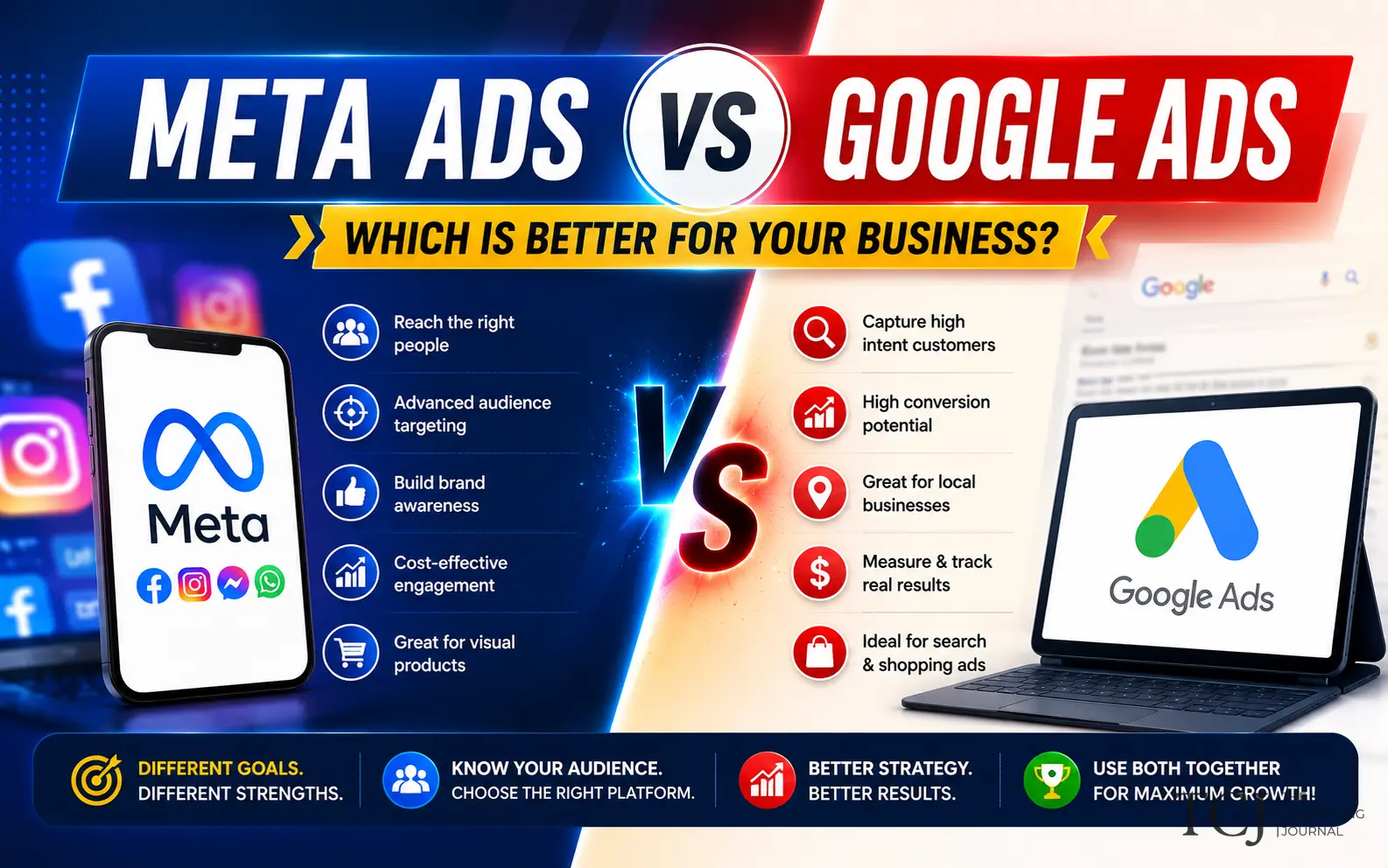
Meta Ads vs Google Ads: Which Is Better for Your Business?
A practical comparison of Meta Ads and Google Ads for business owners deciding where to invest, how to measure ROI, and when to use both platforms together.