Source of Funds vs Source of Wealth: What UAE Businesses Must Verify
Source of Funds and Source of Wealth serve different purposes in UAE AML compliance. Learn when verification is required, which documents support checks, and how businesses can manage higher-risk customers.
Key takeaways
- Source of Funds identifies the economic origin of money used in a particular transaction or business relationship.
- Source of Wealth explains how a customer accumulated their overall financial wealth over time.
- UAE AML verification requirements depend on the regulated sector, supervisory obligations and customer risk assessment.
- Higher-risk customers and relevant PEP relationships generally require more detailed due diligence and supporting evidence.
- Bank statements alone may not adequately establish the underlying origin of money.
- - Effective AML compliance requires credible documentation, appropriate escalation and ongoing customer monitoring.
What Is the Difference Between Source of Funds and Source of Wealth?
Source of Funds concerns the origin of money involved in a specific transaction or business relationship. Source of Wealth concerns the economic activities through which a customer accumulated their overall wealth. One explanation does not necessarily establish the other, and businesses may need to examine both depending on the customer and applicable AML requirements.
Consider a Dubai investor purchasing a commercial property for AED 3 million.
The customer explains that the payment will come from selling an existing apartment. The property sale represents the Source of Funds.
However, the customer originally accumulated their assets through business ownership, employment income and long-term investments. Those activities explain the Source of Wealth.
The distinction matters because proving that a customer received money from a property sale does not necessarily explain how they acquired their wider financial assets.
The Central Bank of the UAE (CBUAE) makes this distinction in its customer due diligence guidance for licensed financial institutions.
What Is Source of Funds in UAE AML Compliance?
Source of Funds refers to the economic origin of money used to fund an account, complete a transaction or support a business relationship. It allows regulated businesses to understand how the customer obtained the particular funds involved. Depending on the circumstances, verification may require supporting financial documents and an assessment of whether the explanation is credible.
Common sources include employment salaries, business income, property sale proceeds, investment returns, inheritance, bank loans and accumulated savings.
However, simply identifying the account from which a payment originated may not provide sufficient information.
For example, a customer transferring AED 800,000 from a personal bank account has demonstrated where the payment was transferred from. The bank account itself does not necessarily explain how the customer originally earned or acquired that amount.
In higher-risk situations, additional information may be necessary.
Example 1: Dubai Property Sale Funding a Business Investment
A fictional Dubai entrepreneur plans to invest AED 1.2 million into a new mainland trading company.
The entrepreneur explains that the funds were generated through the sale of a residential apartment.
Depending on the applicable due diligence requirements, supporting evidence may include the property sale agreement, relevant ownership documentation and banking records confirming receipt of the proceeds.
The reviewing institution should examine whether the dates, transaction amounts and supporting records reasonably match the explanation.
This provides a more meaningful assessment than recording only "personal savings" in the customer file.
What Is Source of Wealth and Why Is It Important?
Source of Wealth explains how a customer accumulated their overall financial assets and net worth over time. It is broader than a single transaction and may involve several economic activities, including employment, business ownership, investments, inheritance or property holdings. Understanding these sources helps regulated businesses assess whether a customer's financial position is reasonably consistent with their background.
For example, a successful business owner may have accumulated wealth through company profits, dividend distributions and a subsequent business sale.
Another individual may have acquired significant assets through inheritance and long-term property investments.
Both circumstances can provide legitimate explanations of wealth, but the depth of verification should reflect the customer's risk profile.
Example 2: Abu Dhabi Business Owner With Multiple Wealth Sources
A fictional Abu Dhabi entrepreneur seeks to establish a banking relationship involving AED 5 million in investment funds.
The customer explains that their wealth comes from 20 years of manufacturing business ownership, accumulated profits and the eventual sale of a substantial shareholding.
Depending on the risk assessment, the bank may examine company ownership records, financial statements, dividend distributions and the business sale agreement.
These documents help establish how the customer accumulated wealth, while transaction-specific banking records may establish the Source of Funds.
Why Do Source of Funds and Source of Wealth Matter Under UAE AML Regulations?
Source of Funds and Source of Wealth checks help regulated UAE entities understand customer financial activity and identify circumstances requiring further examination. They support risk-based customer due diligence, enhanced due diligence and ongoing transaction monitoring. The precise obligations depend on the applicable legislation, customer risk and supervisory authority governing the regulated business.
The UAE's AML framework includes Federal Decree-Law No. 10 of 2025 regarding Anti-Money Laundering and Combating the Financing of Terrorism and Proliferation Financing.
Cabinet Resolution No. 134 of 2025 provides the Executive Regulations, which became effective on 14 December 2025.
Businesses must also consider relevant supervisory requirements. Rules applicable to licensed financial institutions may differ from those governing Designated Non-Financial Businesses and Professions (DNFBPs).
A risk-based approach means the level of customer verification should correspond to the circumstances and identified financial-crime risks.
Official reference: UAE Legislation Portal (https://uaelegislation.gov.ae/en/legislations/3857)
Effective AML verification is not about collecting the greatest number of documents. It is about understanding the customer's financial explanation and determining whether reliable evidence supports it. — The Consulting Journal editorial observation
When Should UAE Businesses Verify Source of Funds and Source of Wealth?
Source of Funds and Source of Wealth verification becomes particularly relevant when customers present elevated financial-crime risks or enhanced due diligence is necessary. The extent of verification should reflect the customer's profile, transaction characteristics, applicable regulatory requirements and supervisory guidance. Businesses should avoid applying one identical documentation standard to every customer.
Greater scrutiny may be appropriate when a customer is identified as higher risk or is a Politically Exposed Person (PEP).
Other relevant situations include transactions inconsistent with known income, unexplained third-party transfers, complex beneficial ownership structures and business relationships involving higher-risk jurisdictions.
For example, a newly established UAE trading company receiving substantial international payments may require further assessment if its activity differs significantly from the financial profile established during onboarding.
An unusual transaction does not automatically indicate money laundering. It may, however, require a reasonable explanation and appropriate documentation.
How Can UAE Businesses Verify Source of Funds?
Source of Funds verification involves understanding where the specific money originated, obtaining suitable evidence and examining whether the documentation supports the customer's explanation. The reviewing business should consider the payment amount, transaction history, parties involved and customer risk. Any material inconsistencies should be investigated and documented before an appropriate compliance decision is made.
Identify the Actual Origin of the Money
The first step is to establish how the customer acquired the money.
A description such as "business income" may require clarification about which business generated the income and how it reached the customer.
Obtain Appropriate Supporting Evidence
Supporting documents should correspond to the declared source.
Employment-related funds may require salary records, while property sale proceeds may require sale documentation and banking evidence.
Examine the Transaction Details
The reviewing institution should compare the declared funding source with the amount, transaction dates, payment route and relevant supporting information.
Resolve Material Inconsistencies
Where records contradict the customer's explanation, further information may be required.
Document the Verification Outcome
The compliance file should explain what information was obtained, how it was assessed and the basis for the resulting decision.
How Can Businesses Verify Source of Wealth?
Source of Wealth verification focuses on the major economic activities that created a customer's overall wealth. Businesses should develop a reasonable understanding of the customer's financial history and corroborate significant claims where necessary. The depth of investigation generally increases where the customer presents greater risks or the available information raises material questions.
For a business owner, relevant information may include the company's operating history, ownership structure, financial statements and proceeds from business disposals.
For an individual whose wealth originates from inheritance, relevant estate or inheritance documentation may be appropriate.
The purpose is generally not to account for every dirham earned throughout the customer's lifetime. It is to understand the significant sources of wealth sufficiently to support the required risk assessment.
Which Documents Support Source of Funds and Source of Wealth Verification?
The supporting documents depend on the nature of the financial activity and the customer's assessed risk. A document should provide meaningful evidence of the declared source rather than merely confirm that money exists in an account. UAE businesses should select records that are relevant, credible and proportionate to the verification requirements.
Employment Income Documents
Employment contracts, salary certificates, payslips and relevant bank statements may help demonstrate funds accumulated through employment.
Business Income Documents
Company ownership records, commercial licences, financial statements, dividend records and relevant business bank statements may support explanations involving business earnings.
Property Sale Documents
Property sale agreements, ownership documents and banking records showing receipt of sale proceeds may establish the origin of property-related funds.
Investment Income Documents
Brokerage statements, investment account records, dividend statements and sale confirmations may help establish investment-related income.
Inheritance Documents
Inheritance certificates, court records, estate documentation and relevant banking evidence may support funds or wealth received through inheritance.
Loan Documents
Loan agreements, financing confirmations and evidence of disbursement may establish that money was received through documented borrowing.
What Are the Common Source of Funds and Source of Wealth Red Flags?
Source of Funds and Source of Wealth red flags are circumstances where customer explanations, financial activity or supporting documents appear inconsistent or insufficient. They do not automatically prove wrongdoing, but they may justify further enquiries, enhanced scrutiny or escalation under the organisation's applicable AML procedures.
Financial Activity Inconsistent With Known Income
Substantial transactions that cannot reasonably be explained by the customer's known income, business activities or assets may require additional review.
Unexplained Third-Party Funding
Payments received from unrelated individuals or companies without an apparent commercial explanation may increase compliance risk.
Unclear Ownership Structures
Multiple ownership layers or arrangements lacking an understandable commercial purpose can make it difficult to establish the origin of wealth.
Insufficient Supporting Evidence
Generic explanations, incomplete financial records or documents that do not match the declared transaction may require clarification.
Multiple Funding Accounts
The use of several accounts without an apparent economic purpose may warrant additional examination, particularly where other risk indicators are present.
Why Do Politically Exposed Persons Require Enhanced Due Diligence?
Politically Exposed Persons may require additional scrutiny because their public positions or relationships can present particular corruption and financial-crime risks. Applicable UAE supervisory requirements include measures relating to Source of Funds, Source of Wealth, approval procedures and ongoing monitoring. The purpose is to understand financial activity and manage risk, not to assume misconduct.
For relevant financial institution relationships, reasonable measures should be taken to establish the origins of funds and wealth.
Where transaction values appear materially inconsistent with known income or professional background, the institution may need additional documentation and clarification.
PEP status alone should not be treated as evidence of improper financial activity.
What Common Verification Mistakes Should UAE Businesses Avoid?
A common mistake is treating Source of Funds and Source of Wealth as interchangeable. Knowing that a customer owns a profitable company may help explain their wealth, but it does not necessarily establish the origin of money used for a particular transaction.
Another weakness is accepting bank account balances as sufficient evidence without considering how the funds were generated.
Businesses may also collect extensive documentation without assessing whether the documents genuinely support the customer's declarations.
Applying identical verification requirements to every customer can create unnecessary administrative work for lower-risk cases while leaving higher-risk relationships inadequately examined.
Finally, businesses should not overlook material changes in financial activity after onboarding. Customer information and risk assessments may need to be updated when circumstances change.
What Should Be Included in a UAE AML Verification Checklist?
A practical AML verification checklist should help the reviewing organisation establish customer identity, assess financial risk, collect relevant evidence and record compliance decisions. The checklist should be consistent with applicable supervisory requirements and flexible enough to accommodate different customer profiles and transaction circumstances.
Customer Identity and Beneficial Ownership
Confirm the customer's identity and establish relevant beneficial ownership information through the required verification procedures.
Business Relationship Information
Document the purpose of the relationship and the nature of financial activity expected from the customer.
Customer Risk Assessment
Assess the customer's risk using the factors required under the organisation's AML policies and applicable regulations.
Source of Funds and Source of Wealth
Obtain sufficient information about the origin of transaction money and accumulated wealth where required.
Supporting Documentation
Collect and assess relevant banking, employment, property, investment or business documents according to the declared financial source.
Screening and Escalation
Conduct applicable sanctions and PEP screening, investigate material discrepancies and obtain necessary internal approvals.
Recordkeeping and Monitoring
Maintain appropriate verification records and review customer activity in accordance with the organisation's AML procedures.
How Can KPM Global Services UAE Support AML Compliance Preparation?
UAE businesses reviewing their customer due diligence procedures may benefit from structured professional assistance.
KPM Global Services UAE can support businesses within the scope of its professional services through financial documentation reviews, accounting record organisation and assessment of internal administrative processes.
Well-maintained Accounting and Financial records can provide useful information when businesses need to explain transactions, business income or ownership arrangements during compliance reviews.
Depending on the engagement, support may include identifying documentation gaps, improving recordkeeping processes and coordinating with appropriately qualified compliance professionals.
Businesses remain responsible for fulfilling their applicable regulatory obligations. Professional assistance does not guarantee regulatory acceptance or specific authority outcomes.
What Should UAE Businesses Prioritise?
Source of Funds and Source of Wealth should be approached as separate but connected elements of customer due diligence.
The Source of Funds explanation should identify how the money involved in a particular transaction was obtained. The Source of Wealth explanation should establish how the customer accumulated their wider financial position.
For regulated UAE businesses, the practical objective is to combine reasonable customer enquiries, risk-appropriate verification, reliable documentation and ongoing monitoring.
A clear, evidence-based assessment is more useful than collecting documents without understanding their relevance.
This article is for informational purposes and does not constitute legal, tax, accounting, or financial advice.
Questions and answers
Q: What is the difference between Source of Funds and Source of Wealth in the UAE?
A: Source of Funds identifies the origin of money used in a specific transaction or business relationship. Source of Wealth explains how a customer accumulated their overall financial assets. Both may be relevant to UAE customer due diligence depending on the customer risk and applicable regulatory requirements.
Q: Is a bank statement enough to verify Source of Funds?
A: Not always. A bank statement may demonstrate where money was transferred from, but it may not explain how the customer originally obtained it. Additional records may be required depending on the circumstances and assessed risk.
Q: Do all UAE businesses need to verify Source of Funds and Source of Wealth?
A: The specific obligations depend on the business activity, regulatory classification and applicable supervisory requirements. Banks, certain financial institutions and designated non-financial businesses and professions may have relevant AML due diligence obligations. Businesses should assess the requirements applicable to their own sector.
Q: What documents can be used as evidence of Source of Wealth?
A: Relevant documents may include business ownership records, financial statements, property records, investment documents and inheritance evidence. The type and depth of verification depend on how the customer accumulated their wealth and the level of financial-crime risk identified.
Q: What should a UAE business do if Source of Funds cannot be verified?
A: A regulated business should seek appropriate clarification, reassess the customer risk and follow its internal AML escalation procedures. Depending on the circumstances, applicable requirements may affect whether the transaction or relationship can proceed and whether regulatory reporting obligations arise. Unresolved inconsistencies should not simply be ignored.
More in AML Compliance
View all AML Compliance →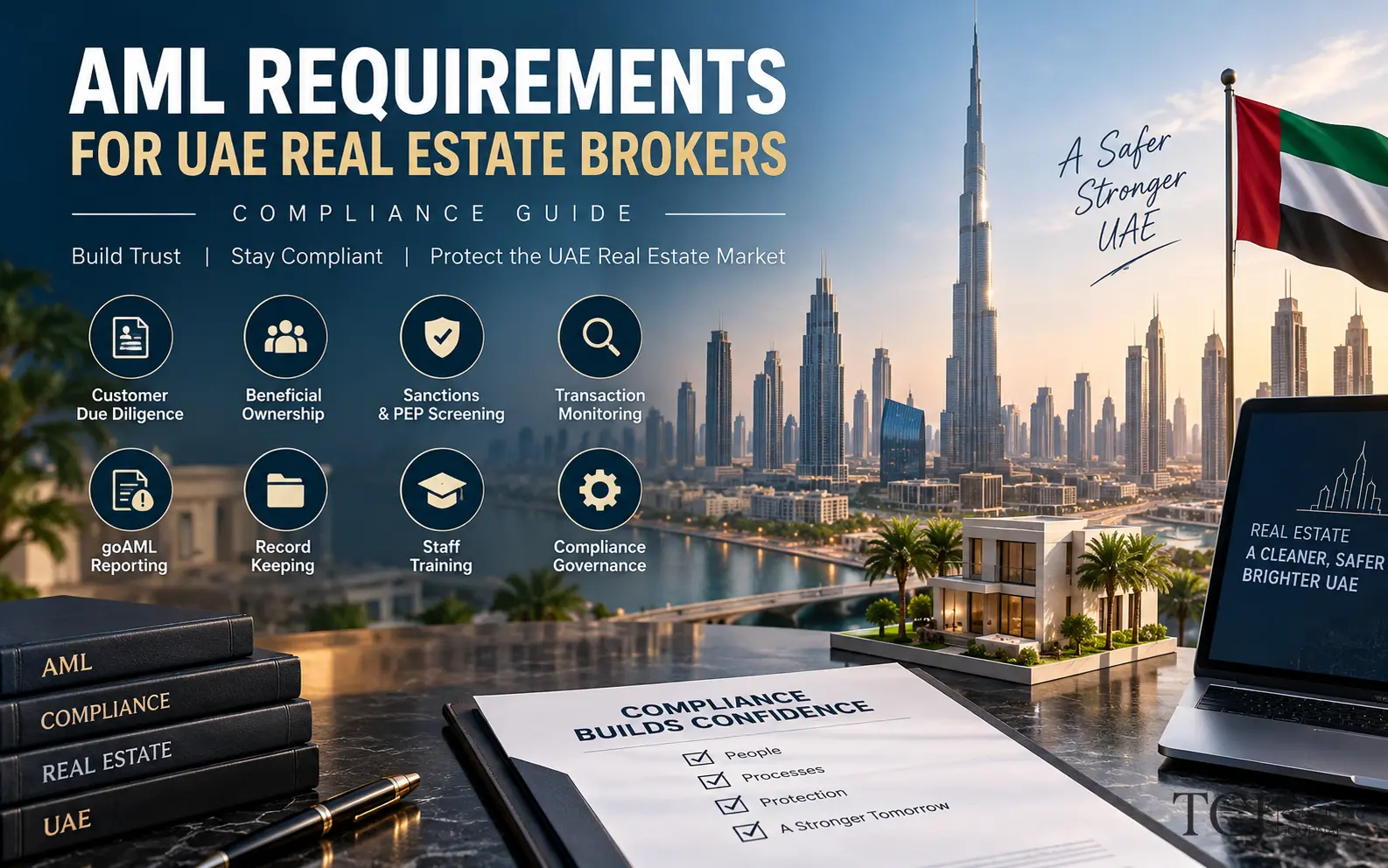
UAE AML Requirements for Real Estate Brokers: A Practical 2026 Guide
UAE real estate brokers need more than basic KYC. This practical guide explains CDD, beneficial ownership, sanctions screening, source of funds, goAML, REAR reporting, records and AML governance.

Conducting Partner and Distributor Due Diligence in the UAE
A practical UAE guide to verifying distributors and business partners through licensing, ownership, sanctions, financial, operational and contractual due diligence.
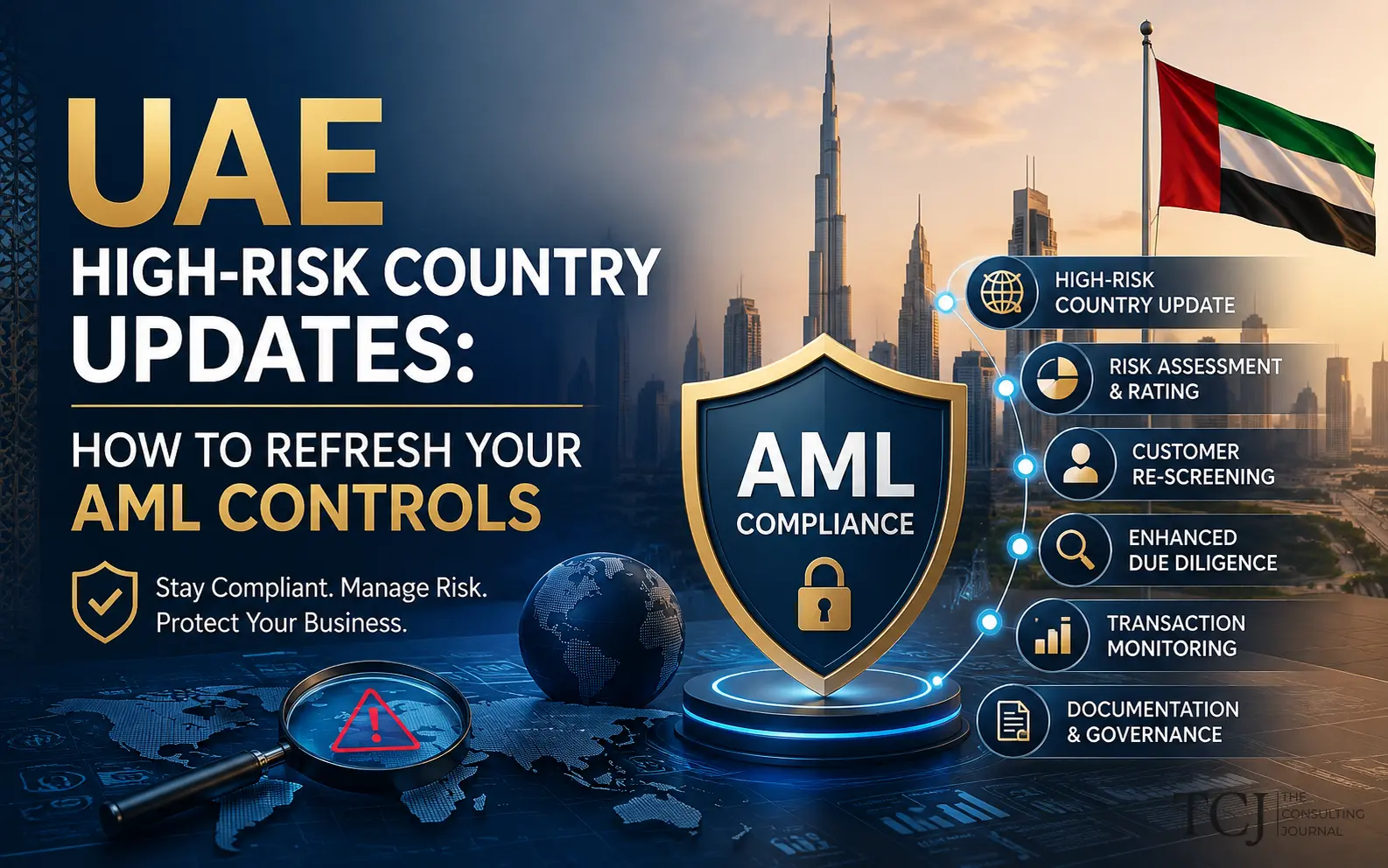
UAE High-Risk Country Updates: How to Refresh Your AML Controls
High-risk country updates can affect customer risk ratings, EDD, transaction monitoring, sanctions screening and governance. Here is how UAE businesses can refresh AML controls in a practical, traceable way.