UAE Hospital Interview Questions for Doctors: Practical Interview Guide
A practical UAE-focused guide for doctors preparing for hospital interviews, covering clinical questions, licensing readiness, documents, communication, and common mistakes.
Key takeaways
- UAE hospital interviews assess clinical knowledge, communication, ethics, teamwork, and patient safety.
- Doctors should prepare licensing documents before interviews, not after receiving an offer.
- Strong answers should be structured, practical, and linked to real clinical judgment.
- Licensing readiness varies by emirate, employer, specialty, and professional category.
- Interview preparation should include mock practice, document review, and clear salary expectations.
What UAE hospitals usually assess in doctor interviews
Most UAE hospitals assess more than medical knowledge. They look at how doctors think under pressure, how they communicate with patients, and whether they understand the importance of documentation, escalation, and patient safety.
Interview panels may include consultants, department heads, HR representatives, medical directors, or recruitment managers. A first interview may be handled by HR, while later rounds may focus on clinical scenarios, specialty experience, emergency management, and professional conduct.
For doctors applying in Dubai, Abu Dhabi, Sharjah, or the Northern Emirates, licensing status can also become part of the discussion. The UAE Professional Qualification Requirement framework is used by UAE health regulatory authorities, including MOHAP, DoH, DHA, and SHA, to assess education, experience, and licensing requirements within their jurisdiction.
The strongest interview answers are not memorised answers; they are clear clinical decisions explained in a calm and safe way. — The Consulting Journal
Understanding the UAE healthcare recruitment process
A typical hospital recruitment process may include CV screening, HR discussion, clinical interview, credential review, licensing checks, offer negotiation, and onboarding.
The order may vary. Some hospitals first check whether the doctor appears eligible for licensing. Others interview first and then ask for detailed documentation. Either way, doctors should prepare early because missing documents can slow down an otherwise promising application.
For example, a specialist physician applying to a private hospital in Dubai may be asked about clinical experience during the interview, but the employer will also want to know whether the doctor has started PSV, CBT, or registration steps where applicable. DHA’s professional registration process can include self-assessment, Primary Source Verification, CBT assessment if required, registration eligibility review, oral assessment where required, and activation of the professional licence by the hiring facility.
How to answer “Tell us about yourself”
This question sounds simple, but many doctors answer it poorly. Some give a full life story. Others repeat their CV line by line.
A stronger answer should be brief and relevant:
“I am a general practitioner with seven years of clinical experience across outpatient and emergency settings. My work has focused on patient assessment, chronic disease management, urgent care, and coordination with multidisciplinary teams. I am now looking for a UAE hospital role where I can contribute clinically while continuing to develop within a structured healthcare environment.”
This answer works because it gives experience, clinical areas, teamwork, and career direction without sounding scripted.
Common UAE hospital interview questions for doctors
Doctors should prepare for a mix of personal, clinical, behavioural, ethical, and career questions. The aim is not to memorise perfect wording. The aim is to practise structured answers.
Personal and career questions
Common questions include:
- Tell us about yourself.
- Why do you want to work in the UAE?
- Why are you interested in this hospital?
- Why are you leaving your current role?
- Where do you see yourself in five years?
- What are your strengths and weaknesses?
For UAE roles, answers should sound realistic. Saying “I want to work in the UAE only for better salary” may weaken the response. It is better to explain professional growth, exposure to international healthcare standards, multicultural teams, and long-term career stability.
Clinical questions
Clinical questions often test structure more than rare knowledge. The panel may ask:
- How do you approach a critically ill patient?
- How do you manage a patient with chest pain?
- How would you handle a medication error?
- Describe a difficult case you managed.
- How do you prioritise multiple patients during a busy shift?
For emergency scenarios, use a clear clinical framework. For example, when discussing a critically ill patient, explain assessment of airway, breathing, circulation, disability, and exposure, followed by stabilisation, senior escalation, investigations, documentation, and communication with family where appropriate.
Ethics and patient safety questions
Hospitals want doctors who understand boundaries, confidentiality, and escalation. You may be asked:
- What would you do if a patient refuses treatment?
- How do you maintain confidentiality?
- What would you do if you noticed unsafe practice?
- How do you handle a complaint from a patient’s family?
A good answer should show respect for patient autonomy, clear explanation of risks, proper documentation, and escalation through hospital policy. Avoid aggressive or defensive answers.
Teamwork and communication questions
The UAE healthcare environment is highly multicultural. Doctors work with nurses, pharmacists, technicians, reception teams, insurance coordinators, and administrators from many countries.
Questions may include:
- How do you handle disagreement with a colleague?
- Describe your experience working with nurses.
- How do you explain bad news to a patient?
- How do you manage an angry patient or family member?
A good communication answer should show calm listening, simple language, empathy, and documentation. Blaming patients, nurses, or previous employers is usually a warning sign.
Example 1:
A paediatric doctor preparing for a UAE private hospital interview had strong clinical experience but gave very short answers during mock practice. When asked about managing an emergency, she simply said, “I will stabilise the patient and call the consultant.”
After coaching, she changed her answer. She explained initial assessment, vital signs, immediate stabilisation, differential diagnosis, escalation, medication safety, documentation, and family communication. The clinical knowledge was already there. The improvement came from structuring it clearly.
Example 2:
A general practitioner applying for a clinic-linked hospital role had not prepared his licensing explanation. When HR asked about his licence status, he gave an uncertain answer and said he would “check later.”
A better answer would have been: “I am reviewing the applicable pathway for my title and emirate. I have my passport, qualifications, experience letters, good standing certificate, and licence documents ready for verification, and I understand that the employer may guide the final activation process depending on the authority.”
That type of answer shows organisation, even if the licence is not yet active.
Licensing readiness: what doctors should know before the interview
Doctors do not need to become licensing experts before every interview, but they should understand the basic position. The authority and process may depend on the emirate, healthcare facility, professional title, specialty, and current registration status.
DHA states that registration confirms the professional fulfils requirements for the applied position and allows the professional to become part of the Dubai Medical Registry; the registration is valid for one year and must be activated into a licence by a healthcare facility before practice starts.
For MOHAP licensing or re-licensing of health professionals, listed documents include passport, introductory statement, medical error insurance, physical and mental report for doctors aged 60 and above, and experience certificate. MOHAP also notes that documents must be verified by an accepted third-party agency such as DataFlow and that professional practice gaps above two years may need to be addressed under PQR requirements.
In February 2025, MOHAP announced a unified national platform for health licences, designed to standardise health professional licensing services and support integration among UAE health authorities.
Documents and preparation checklist
Before attending a UAE hospital interview, doctors should prepare both digital and printed copies where possible.
- Updated medical CV
- Passport copy
- Recent photograph
- Medical degree and postgraduate qualifications
- Internship certificate, if applicable
- Experience certificates
- Current or previous medical licence
- Good standing certificate, if applicable
- Logbook for surgical specialties, where required
- CME or CPD certificates, where relevant
- Reference details
- DataFlow or PSV documents, if already completed
- CBT, Prometric, or authority assessment result, if applicable
- Clear list of notice period, salary expectations, and relocation availability
A practical consultant’s note: documents should be named clearly before sending them to HR. “Passport.pdf” and “Experience Certificate - Hospital Name - 2021 to 2024.pdf” looks more professional than sending random scanned files with unclear names.
Common mistakes business owners make
Although this article is written for doctors, healthcare business owners, clinic operators, and recruitment teams also make avoidable mistakes during doctor hiring.
One common mistake is interviewing doctors before checking whether the role, title, and specialty match the licensing pathway. This can create delays after selection.
Another mistake is focusing only on clinical qualifications while ignoring communication style. A doctor who cannot explain treatment options clearly may create patient dissatisfaction even with good technical knowledge.
Some employers also fail to tell candidates early which authority pathway is relevant. A Dubai facility, Abu Dhabi facility, and Northern Emirates facility may have different practical steps and timelines.
Doctors also make mistakes, including:
- Giving memorised answers that sound unnatural
- Speaking negatively about previous hospitals
- Giving unclear licensing status updates
- Not preparing clinical scenarios
- Ignoring patient safety in answers
- Asking about salary before understanding the role
- Submitting incomplete or poorly scanned documents
How to discuss salary and contract expectations
Salary questions should be handled carefully. Doctors should not say “anything is fine,” because it sounds unprepared. They should also avoid making unrealistic demands before understanding the schedule, patient load, incentives, insurance, housing, on-call requirements, and licence support.
A balanced answer could be:
“I am open to discussing a package that reflects the role, responsibilities, duty schedule, and market range for my experience. I would also like to understand the licensing support, working hours, and contract terms before confirming expectations.”
This answer is professional and flexible without undervaluing the doctor.
Final interview preparation checklist
In the final 48 hours before the interview, doctors should review their CV carefully. Anything written on the CV can become a question.
Practise answers for emergency scenarios, patient complaints, conflict with colleagues, medication errors, confidentiality, and career motivation. Prepare two or three real examples from previous experience, but remove confidential patient details.
Research the hospital’s department, patient profile, location, services, and ownership type. A doctor interviewing for a large hospital should prepare differently from one interviewing for a specialised clinic or day surgery centre.
Also prepare questions for the interviewer, such as:
- What is the department structure?
- What is the expected patient volume?
- How are clinical escalations handled?
- Is there support for licensing activation?
- What training or CME support is available?
- What are the duty hours and on-call expectations?
Final advisory note
UAE hospital interviews reward preparation, structure, and professional maturity. Doctors should not treat the interview as a test of memory alone. A strong interview shows that the candidate can think clinically, communicate calmly, protect patient safety, respect hospital systems, and manage documentation properly.
For healthcare employers, the same principle applies. Recruitment should not be rushed. A doctor’s CV, licence pathway, communication style, and clinical judgment should all be reviewed together.
This article is for informational purposes and does not constitute legal, tax, accounting, or financial advice.
Questions and answers
What are the most common UAE hospital interview questions for doctors?
Common questions include “Tell us about yourself,” “Why do you want to work in the UAE?”, clinical emergency scenarios, patient safety questions, confidentiality questions, and teamwork examples. Doctors should prepare structured answers rather than memorising generic scripts.
Do UAE hospitals ask clinical scenario questions?
Yes, many UAE hospitals ask clinical scenarios, especially for emergency care, prioritisation, medication errors, and difficult cases. The panel usually wants to see safe reasoning, escalation, documentation, and calm decision-making.
Should doctors discuss licensing status during the interview?
Yes, doctors should be ready to explain their licensing stage clearly. They do not need to over-explain the full process, but they should know whether they have completed PSV, CBT, registration, or any authority-related step where applicable.
What documents should doctors prepare before a UAE hospital interview?
Doctors should prepare an updated CV, passport copy, medical degrees, experience certificates, professional licence documents, good standing certificate if applicable, logbook for surgical specialties where required, and any assessment or verification results already completed.
How can doctors give better interview answers?
Doctors should use real examples, answer in a structured way, and connect their response to patient safety. A good answer is clear, practical, and specific enough to show how the doctor behaves in a real hospital setting.
More in Medical Career
View all Medical Career →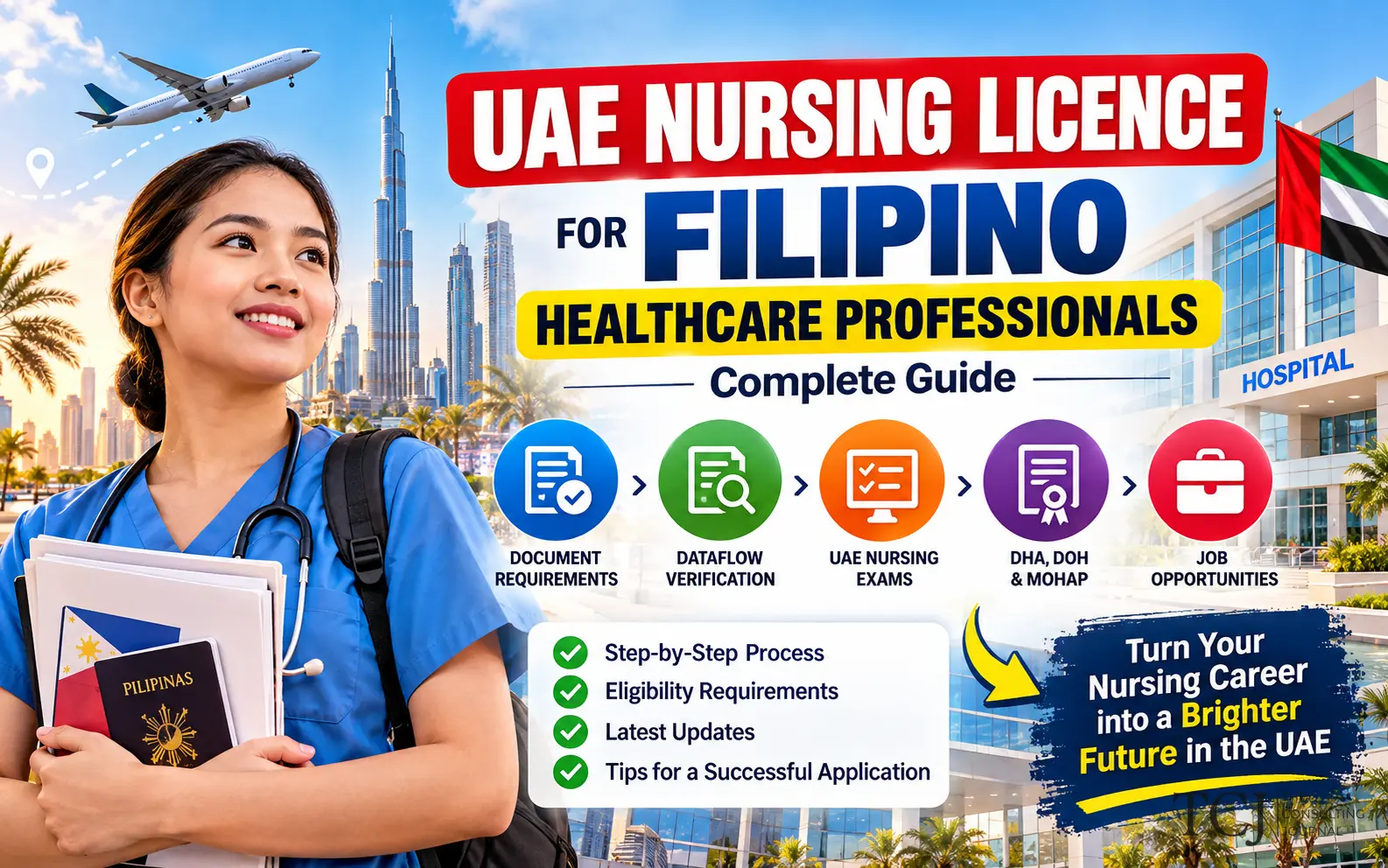
UAE Nursing Licence for Filipino Healthcare Professionals: Requirements and Application Process
Planning to work as a nurse in the UAE? Learn how Filipino healthcare professionals can navigate DHA, DOH and MOHAP licensing, DataFlow verification, nursing assessments, documents and employer licence activation.
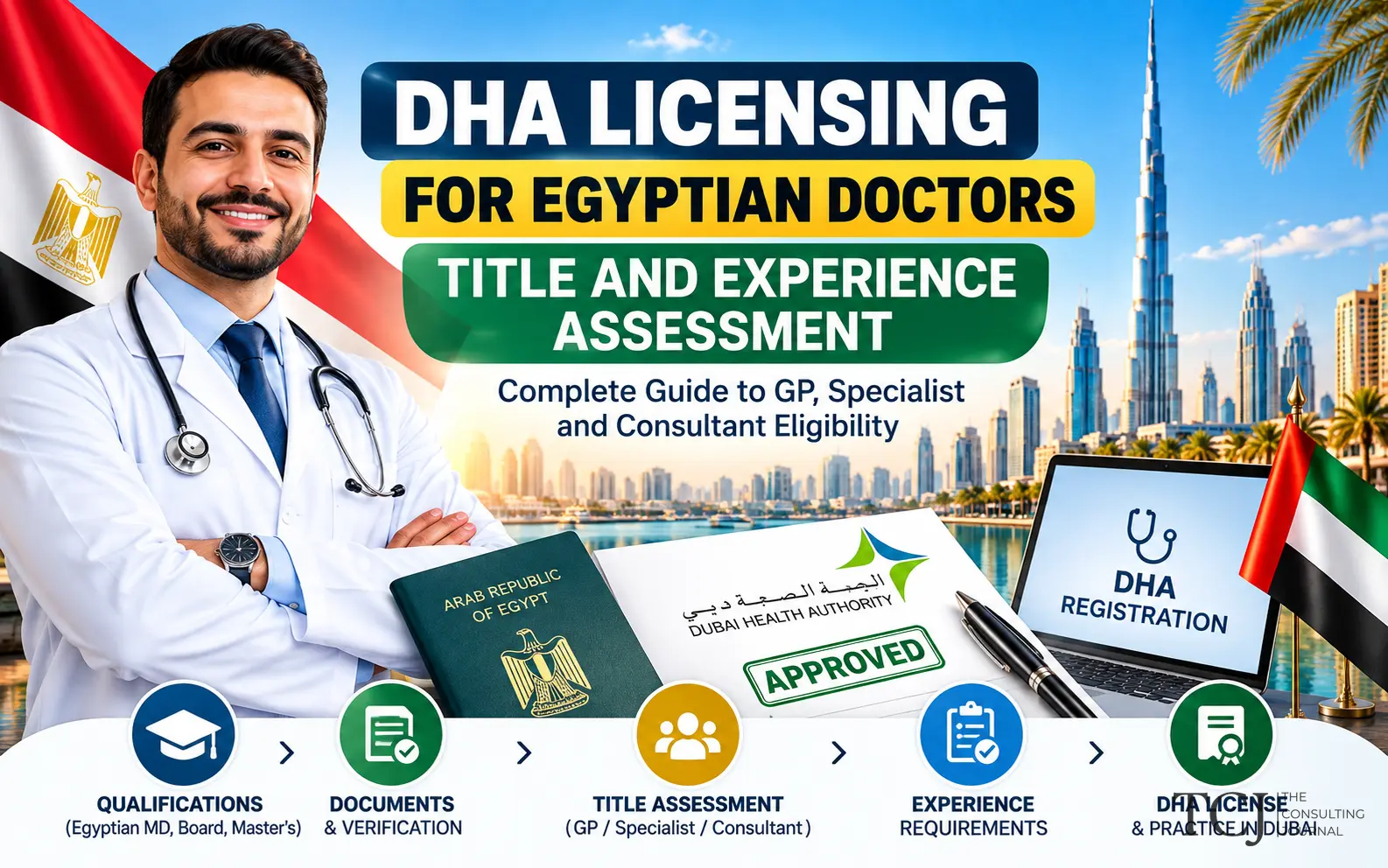
DHA Licensing for Egyptian Doctors: Titles, Tiers and Experience
Egyptian doctors applying for DHA licensing in Dubai need to understand how their MD, Egyptian Board Fellowship, Clinical Master’s and post-qualification experience affect eligibility for GP, Specialist and Consultant titles.
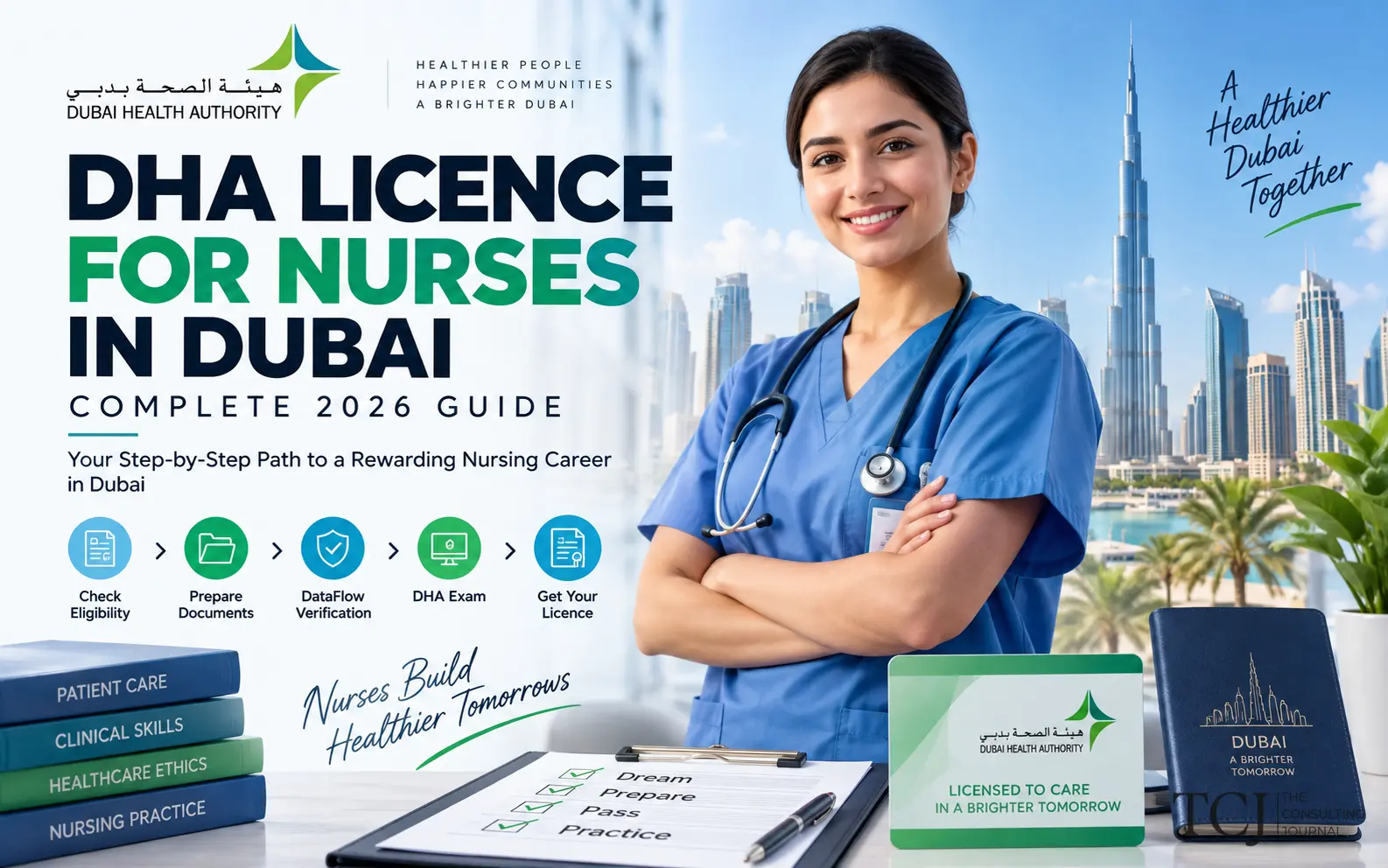
DHA Licence for Nurses in Dubai: Eligibility, DataFlow, Exam and Application Process
A practical 2026 guide to DHA licensing for nurses in Dubai, covering Registered Nurse and Assistant Nurse eligibility, DataFlow verification, assessments, registration, documents and employer-led licence activation.