Web3 Marketing Mistakes Founders Make: 17 Lessons for Sustainable Growth
Web3 founders often lose momentum by selling hype before trust. This article explains 17 practical marketing mistakes and how to avoid them.
Key takeaways
- Web3 marketing must prove utility before asking users for trust.
- Community is not a broadcast channel; it is part of the product experience.
- Tokens should support real usage, not replace product-market fit.
- Founder communication, education, and risk language shape credibility.
- Retention matters more than launch-day noise.
What Web3 marketing really means today
Web3 marketing is not simply crypto advertising with newer language. It is the process of helping users understand, trust, test, and continue using blockchain-based products such as wallets, protocols, NFT platforms, DAOs, DeFi tools, gaming ecosystems, and decentralized applications.
That distinction matters because the user relationship is different. In Web2, a person may be a customer, subscriber, or reader. In Web3, the same person may also become a holder, voter, liquidity provider, validator, tester, creator, contributor, or community advocate.
Ethereum describes Web3 around the idea of a “read-write-own” internet, where users have more control over assets, identity, and participation through blockchain networks. AWS also describes Web3 as moving toward a read/write/own model where users can become participants rather than only customers.
For founders, this changes the marketing brief. A normal campaign may create awareness. A strong Web3 strategy has to create confidence.
Why founders struggle with Web3 growth
Many Web3 teams are strong technically. They can explain smart contracts, token design, liquidity, governance, bridges, staking, or zero-knowledge proofs. The problem is that most users do not start there.
Users usually ask simpler questions first.
What problem does this solve? Why does it need blockchain? Who is behind it? Is my wallet or capital at risk? Will this still exist after launch week?
The Web3 market has also matured. The a16z crypto State of Crypto 2025 report framed the sector around stronger institutional adoption, stablecoin growth, and the convergence of crypto and AI. That maturity raises the standard for communication. Founders can no longer rely only on token excitement, community giveaways, or vague claims about decentralization.
In Web3, attention may start the conversation, but trust decides whether users stay. — The Consulting Journal
17 Web3 marketing mistakes founders make
Mistake 1: Selling hype instead of real utility
Many early-stage projects still lead with words such as “revolutionary,” “next generation,” or “the future of ownership” before explaining what the product actually does.
That is weak positioning.
A better message starts with the user problem. For example, “We help indie game studios reward players across wallet-connected games” is clearer than “We are building the future of decentralized gaming.”
Mistake 2: Ignoring community trust
A Web3 community is not an audience sitting quietly in a funnel. It is closer to a live advisory room. Members ask questions, challenge assumptions, compare projects, and watch founder behaviour closely.
Founders damage trust when they ignore criticism, avoid difficult questions, or appear only during promotional pushes.
Strong community work means regular updates, visible leadership, active moderation, and honest answers when something slips.
Mistake 3: Launching tokens too early
A token can support an ecosystem, but it cannot fix weak demand.
When founders launch tokens before product-market fit, they often attract speculators instead of users. That can make the community look active for a short time, while the actual product remains under-tested.
In practice, founders should first validate real usage, then design token incentives around behaviours that genuinely strengthen the ecosystem.
Mistake 4: Treating Discord or Telegram like a billboard
Many founders open a Discord or Telegram group and use it only for announcements. That is a missed opportunity.
These channels need onboarding, rules, support, product education, moderation, and founder presence. A quiet or chaotic community channel can hurt credibility more than having no channel at all.
Mistake 5: Copying Web2 playbooks without adjustment
Landing pages, paid campaigns, email flows, and analytics still matter. But Web3 buyers often expect more proof before they trust the project.
They may want documentation, founder visibility, audit information, token details, governance explanations, wallet safety guidance, and public progress updates.
Web2 marketing often asks users to trust the brand. Web3 marketing must help users verify the project.
Mistake 6: Weak founder storytelling
People do not only back protocols. They back teams.
A useful founder story explains why the project exists, what pain point the team saw, why the team is credible, and what trade-offs they are making. This does not need to be dramatic. It needs to be specific.
A founder who says, “We built this after seeing small creators lose track of secondary royalty flows,” gives users more reason to listen than a founder who only speaks in abstract market language.
Mistake 7: Poor education content
If users need five browser tabs and a technical glossary to understand the product, the marketing has failed.
Education content should make the user feel informed, not inferior. Beginner guides, product walkthroughs, wallet safety explainers, short videos, FAQs, and visual diagrams can reduce friction.
Good education content also helps reduce repetitive community questions, which saves operational time for the founding team.
Mistake 8: Using influencers without strategy
Influencers can create fast visibility, but they can also bring low-quality traffic.
The wrong campaign may attract people who only want airdrops, whitelist access, or short-term price movement. That does not necessarily create users.
Founders should evaluate influencers by audience fit, credibility, previous campaign quality, content depth, and post-campaign behaviour. Impressions are useful, but wallet activation, product usage, and retention tell a more honest story.
Mistake 9: Ignoring compliance and risk language
Web3 communication needs careful wording, especially for tokens, staking, DeFi, NFTs, and investment-adjacent products.
Founders should avoid promises of profit, guaranteed returns, risk-free participation, or certain listing outcomes. Clear risk language does not weaken marketing. It protects credibility.
This is especially important when a project targets users across multiple jurisdictions, where marketing claims may be interpreted differently.
Mistake 10: Building before validating demand
Some teams build complex infrastructure before confirming whether the market wants it.
A practical founder tests demand early through interviews, waitlists, beta access, developer calls, community feedback, landing pages, and small product pilots.
Building in private for months can feel productive. But if the final message does not match a real user need, the launch becomes expensive market research.
Mistake 11: No clear positioning
“Decentralized platform for everyone” is not positioning. It is a foggy sentence.
Strong positioning is narrow enough to be remembered. A royalty tracking tool for NFT artists is clearer than a creator economy protocol. A stablecoin dashboard for small treasury teams is clearer than a DeFi platform for everyone.
The more specific the positioning, the easier it becomes to write content, choose channels, brief partners, and evaluate growth.
Mistake 12: Forgetting retention after launch
Many Web3 projects spend heavily on mint day, token generation events, mainnet launches, or public announcements. Then communication slows down.
Launch day is not the finish line. It is the first trust test.
Retention needs onboarding, tutorials, product updates, customer support, community rituals, transparent roadmaps, and reasons for users to return after incentives fade.
Mistake 13: Confusing speculators with users
Not everyone in a community is a real user.
Some people join for free tokens, short-term price action, or early access. That is not automatically bad, but founders should not confuse crowd size with product demand.
Real users ask product questions, test features, report issues, refer relevant peers, and remain engaged when rewards are lower.
Mistake 14: Tracking vanity metrics
Follower count, Discord size, impressions, and announcement engagement can look impressive. They can also mislead founders.
Better indicators include active wallets, user retention, feature usage, documentation views, support tickets, conversion from education content, community response quality, and repeat participation.
A smaller community with real product usage is usually healthier than a large inactive audience.
Mistake 15: Weak partnerships
Partnership announcements are common in Web3, but many create little practical value.
A real partnership should produce something measurable: integration, shared distribution, developer access, liquidity support, co-created education, product utility, or user acquisition.
Logo partnerships may look good in a launch thread, but experienced users can usually spot when nothing meaningful is happening behind the announcement.
Mistake 16: Not explaining security clearly
Security is part of marketing in Web3.
Users want to understand audits, contract permissions, wallet risks, custody arrangements, admin controls, bug bounty processes, and what happens if something goes wrong.
A founder does not need to turn every user into a smart contract auditor. But simple safety pages, audit summaries, and plain-language risk notes help users make more informed decisions.
Mistake 17: Inconsistent communication
Silence creates uncertainty.
Founders should communicate during strong weeks and difficult weeks. Changelogs, roadmap notes, community calls, incident updates, and honest delay explanations can preserve trust.
In Web3, people watch how founders behave when the timeline changes.
Example 1:
A Web3 gaming startup launched a large Discord campaign before its beta was ready. The community grew quickly, but most members joined for early rewards. When the beta arrived, only a small share of members tested the product.
The team adjusted by narrowing its positioning. Instead of marketing to “all Web3 gamers,” it focused on indie game communities that wanted portable wallet-based rewards. It also replaced generic announcements with demos, creator interviews, and user onboarding sessions.
The result was a smaller but more useful community.
Example 2:
A DeFi dashboard promoted itself as a “simple tool for everyone.” The message was too broad. Retail users found it too technical, while treasury operators felt it was not specific enough.
After reviewing user interviews, the founders repositioned the product for small crypto-native teams managing stablecoin balances across wallets. The content became more practical: treasury checklists, wallet hygiene tips, reporting templates, and risk reminders.
The product did not change much at first. The message did. That made growth easier to diagnose.
Common mistakes business owners make
Founders often treat marketing as something that starts after the product is built. In Web3, marketing starts when the project first explains its reason to exist.
The most common mistakes include overusing technical language, launching public channels too early, relying on influencers without onboarding, delaying risk communication, and measuring community size instead of user quality.
Another common mistake is avoiding difficult public updates. In client-facing consulting work, this is often where trust is lost. Users can accept delays more easily than confusion. What they struggle with is silence.
Practical checklist for Web3 marketing strategy
Before the next launch, founders should review the following:
- Can a first-time user explain the project in one sentence?
- Is the blockchain element genuinely necessary to the product?
- Does the website explain the user problem before the technology?
- Are founder identity, roadmap, and product status clear?
- Are risk notes written in plain language?
- Is the community channel moderated and useful?
- Are onboarding materials ready before launch?
- Are metrics focused on usage, retention, and conversion?
- Is there a plan for communication after launch week?
- Do partnerships create practical value beyond announcements?
Final advisory note
The strongest Web3 projects are not always the loudest. They are usually the clearest, most useful, and most consistent.
Founders should build marketing around proof. That means showing the problem, explaining the product, educating users, communicating risks, and staying visible after launch.
Web3 users are often more sceptical than traditional app users because the stakes can be higher. Wallets, assets, identity, governance, and community reputation may all be involved. That scepticism is not a barrier. It is a signal that founders need to communicate with more discipline.
This article is for informational purposes and does not constitute legal, tax, accounting, or financial advice.
Questions and answers
What are the most common Web3 marketing mistakes founders make?
The most common mistakes are selling hype before utility, launching tokens too early, ignoring community trust, using unclear positioning, and measuring vanity metrics instead of real usage. These mistakes often create short-term attention without long-term adoption.
Why is community so important in Web3 marketing?
Community matters because users may become contributors, holders, testers, voters, and advocates. A Web3 community is not only a promotional audience; it is often part of the product’s trust layer.
Should Web3 founders use influencers?
Influencers can help when there is strong audience fit and a clear conversion plan. Founders should measure product usage, wallet activation, retention, and community quality rather than only views, likes, or impressions.
Is token marketing enough to grow a Web3 project?
No. A token can support growth, but it cannot replace product value, education, user trust, or retention. If the product does not solve a real problem, token-led attention usually fades quickly.
How can Web3 founders build trust before launch?
Founders can build trust with clear documentation, founder visibility, product demos, audit or security explanations, honest roadmaps, and regular community updates. Users are more likely to stay when they understand both the opportunity and the risks.
More in Crypto
View all Crypto →
Italian-Owned Web3 Company in Dubai: 2026 Setup Guide
Italian founders can establish Web3 companies in Dubai, but the right licence, jurisdiction and regulatory pathway depend on the actual business model and whether VARA-regulated virtual-asset activities are involved.
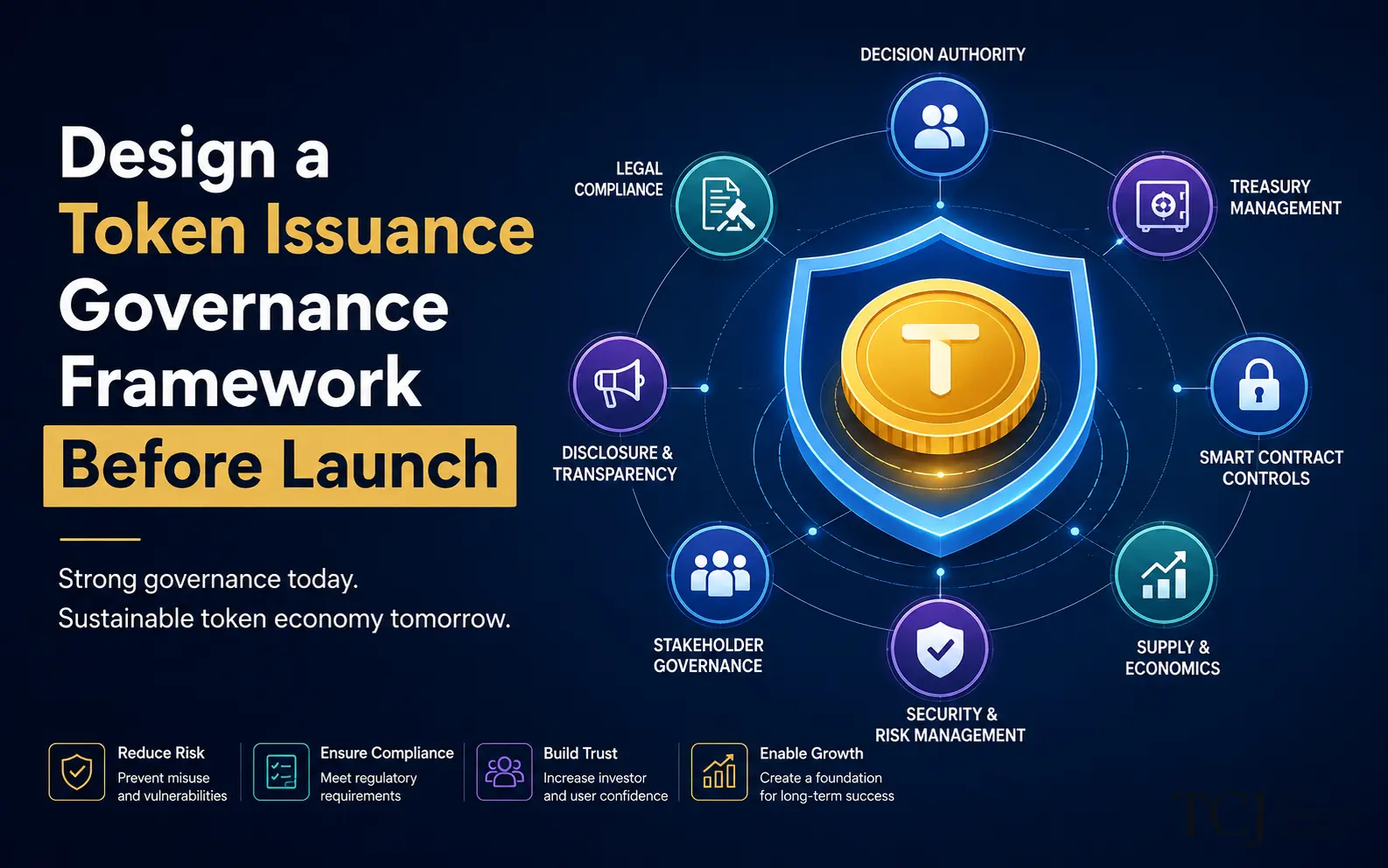
How to Design a Token Issuance Governance Framework in the UAE
A practical framework for UAE founders and Web3 teams to define token authority, supply controls, treasury governance, vesting, smart-contract permissions, compliance and launch readiness before issuance.

The UAE Crypto Travel Rule: Practical Compliance for VASPs
UAE virtual asset firms need more than a Travel Rule messaging tool. This practical guide explains thresholds, customer data, VASP checks, unhosted wallets, monitoring, exceptions and audit readiness.