Why Crypto Projects Fail Despite Strong Technology
Strong blockchain technology does not save a crypto project if users do not trust it, need it, understand it, or see a sustainable business model behind it.
Key takeaways
- Strong technology cannot replace real user demand, clear positioning, and a practical business model.
- Poor token utility and weak tokenomics can damage trust even when the product itself is technically sound.
- Crypto founders should treat compliance, security, governance, and communication as core operating functions, not later-stage tasks.
- Projects that build for real users before market hype usually have a stronger chance of surviving difficult cycles.
- Investors should look beyond code quality and assess revenue, transparency, leadership, liquidity, and regulatory readiness.
Introduction: Great code does not guarantee adoption
Crypto founders often assume that better technology will win the market. Faster transactions, cleaner smart contracts, lower fees, or a more elegant blockchain architecture may look impressive in a whitepaper. But in practice, users and investors rarely support a project because the technology is impressive on its own.
They support it because it solves a problem they care about.
This is where many Web3 projects lose direction. The team builds the protocol first, then tries to find the market later. That approach can work in experimental research, but it is risky in a commercial environment where users have alternatives, investors expect discipline, and regulators are paying closer attention.
The crypto market is also crowded. CoinMarketCap listed more than 52 million cryptos on its tracker as of its 2026 page snapshot, although many are inactive, low-quality, or highly speculative assets. That level of noise makes attention difficult and trust even harder to earn.
For founders, the practical lesson is clear: strong technology is only one layer of the business. A sustainable crypto project also needs demand, simple usage, sound token economics, credible leadership, market timing, security, and regulatory awareness.
The core problem behind crypto project failure
The common weakness behind many failed crypto projects is not always technical. It is strategic.
A project may have a talented engineering team but no clear answer to basic commercial questions:
- Who needs this product badly enough to use it?
- Why does the solution need blockchain?
- What does the token do beyond speculation?
- How will the project earn revenue?
- Who is accountable when things go wrong?
- What happens when liquidity dries up?
- Which regulatory risks could block growth?
In consulting work with startups and digital asset businesses, this gap often appears early. The founder can explain the chain architecture in detail but struggles to describe the customer in plain language. That is usually a warning sign.
A project does not fail because it has too much technology. It fails because technology becomes a substitute for business discipline.
Weak product-market fit
Product-market fit is one of the most misunderstood issues in crypto. Many founders believe that if a solution is decentralized, users will naturally prefer it. That is rarely true.
Most users are practical. They want the product to be faster, safer, cheaper, more useful, or more rewarding than what they already use. Decentralization may be valuable, but it is not always enough to change behaviour.
A decentralized storage tool, for example, may be technically impressive. But if onboarding is difficult, pricing is unclear, recovery is complicated, and customer support is weak, business users may stay with familiar cloud providers.
The same applies to DeFi, gaming, NFTs, tokenized assets, and infrastructure projects. If the project does not solve a painful problem for a specific user group, adoption becomes dependent on hype. Hype can bring wallets. It rarely creates loyalty.
Example 1:
A Web3 startup builds a treasury management tool for DAOs. The smart contracts are audited, and the dashboard looks modern. But the team never tests whether DAO operators want the exact workflow being offered. After launch, users say the product is too complex for small communities and too limited for institutional treasuries. The technology works, but the market fit is weak.
Poor token utility
One of the fastest ways to weaken a crypto project is to create a token without a strong reason for that token to exist.
A token should not be treated as a fundraising shortcut. It needs a clear function within the project’s economy. Users, investors, exchanges, and regulators will eventually ask what the token actually does.
Poor token utility often appears in familiar ways. The token is used only for speculative trading. Users can access the product without needing the token. Governance rights are symbolic rather than meaningful. Rewards attract short-term farmers who leave when incentives fall. Insiders hold too much supply and the community feels exposed.
In such cases, price becomes the story. Once price weakens, confidence falls with it.
A token is not a business model; it is an incentive layer that must support a real business purpose. — The Consulting Journal
Good token design starts with behaviour. What action should the token encourage? What value does it help coordinate? Why would a serious user hold it after launch excitement fades?
Without strong answers, the token becomes a liability.
Unsustainable tokenomics
Tokenomics can damage a project even when the product has genuine value.
Common problems include large insider allocations, aggressive unlock schedules, unclear vesting terms, weak demand drivers, and reward programmes that create sell pressure. These issues may not be obvious during a bull market. They become painful when sentiment changes.
Founders should be careful with emissions. A project that pays users too heavily in tokens may look active on dashboards, but that activity can disappear when rewards slow down. Investors increasingly look for evidence of organic usage, not only inflated transaction numbers.
Transparent tokenomics should explain supply, unlocks, incentives, treasury management, revenue connection, and governance rights in plain language. If a normal investor cannot understand the token economy, trust becomes fragile.
Why strong blockchain technology is not enough
Technology solves technical problems. It does not automatically solve demand, distribution, trust, or profitability.
Many crypto products still create friction for ordinary users. Wallet setup, private keys, gas fees, bridges, seed phrases, network switching, and transaction approvals can feel risky. Even experienced users may hesitate when large funds are involved.
A technically strong protocol can therefore lose to a simpler product with better onboarding and clearer support. This is especially true for business users, family offices, SMEs, and institutional participants. They need controls, reporting, accountability, and compliance documentation. They do not want to rely only on Discord announcements and anonymous moderators.
In markets such as Dubai, regulatory readiness is also part of trust. VARA states that it regulates and oversees the provision, use, and exchange of virtual assets in and from Dubai, and it identifies itself as the sole authority for virtual assets across Dubai mainland and free zones except DIFC. For projects targeting the UAE or regional investors, regulatory planning cannot be treated as an afterthought.
Bad marketing and poor storytelling
Marketing in crypto is often confused with noise. Strong projects do not need empty hype, but they do need clear communication.
A project should be able to explain its purpose in simple terms. Who does it help? What problem does it solve? Why does blockchain improve the solution? What role does the token play? Why should users trust the team?
When the story is unclear, communities create their own version of the story. That can lead to unrealistic expectations, price-only discussion, and reputational risk when milestones are missed.
Founders should also remember that marketing claims may create regulatory exposure. In Dubai, VARA’s marketing regulations apply broadly, and businesses are not permitted to offer regulated virtual asset services or activities in Dubai without VARA approval or confirmation of no objection.
A serious project needs marketing that is accurate, measured, and supported by evidence.
Lack of revenue model
Many crypto projects depend too heavily on token appreciation. That is not the same as revenue.
A sustainable project should have a practical income path. This may include protocol fees, software subscriptions, institutional tools, transaction fees, enterprise integrations, licensing, analytics, custody-related services, or ecosystem partnerships.
The exact model depends on the activity. But the principle is the same: a project that cannot generate value beyond token speculation will struggle when markets turn cautious.
Revenue also affects governance. A project with income can fund development, audits, compliance, support, and community programmes. A project with only a treasury and a falling token price may be forced to cut essential work at the worst possible time.
Example 2:
A DeFi protocol grows quickly because it offers high token rewards. Deposits rise for three months, and the community celebrates the total value locked. But the protocol earns limited real fee income. When token emissions reduce, liquidity providers leave. The dashboard was growing, but the underlying business model was not strong enough.
Weak leadership and governance
Crypto projects are not only technology platforms. They are communities, financial ecosystems, operational teams, and trust networks.
That makes leadership important.
Weak leadership shows up through missed updates, unclear decision-making, poor treasury disclosure, founder conflict, slow delivery, and inconsistent governance. Decentralization is valuable, but it should not become an excuse for lack of accountability.
Investors should look at how decisions are made. Is there a clear governance process? Are treasury movements transparent? Are conflicts of interest disclosed? Does the team communicate bad news early? Are security incidents handled professionally?
Strong governance does not remove risk, but it reduces confusion when the project faces pressure.
Security breaches and loss of trust
Security is one of the most direct reasons crypto projects fail. A single exploit can damage years of development.
Chainalysis reported that illicit cryptocurrency addresses received at least $154 billion in 2025, while also noting that this remained below 1% of attributed crypto transaction volume. The same report highlighted major stolen-fund risks, including DPRK-linked thefts and the Bybit exploit.
For founders, the lesson is not that every project will be hacked. The lesson is that users now expect serious controls.
Projects should consider independent audits, continuous monitoring, bug bounty programmes, treasury controls, multisig governance, incident response planning, and plain-language risk disclosures. Security should be budgeted from the beginning, not added after the first scare.
Common mistakes business owners make
Crypto founders, investors, and business owners often repeat the same mistakes:
- Building around technology before validating user demand
- Launching a token before defining its real utility
- Using rewards to create short-term activity instead of loyal usage
- Assuming community size equals customer demand
- Delaying legal and regulatory planning
- Overpromising through marketing and public roadmaps
- Ignoring treasury controls and financial reporting
- Treating audits as a one-time event rather than an ongoing process
- Depending on token price instead of revenue
- Underestimating how much trust is lost after poor communication
These mistakes are not limited to inexperienced teams. They also happen in well-funded projects when founders move too quickly and fail to build operating discipline.
Practical checklist for stronger crypto projects
Before launching or scaling a crypto project, founders should prepare the following:
- A clear problem statement and target user profile
- Evidence of user demand from interviews, pilots, or early usage
- A simple explanation of why blockchain is necessary
- Token utility notes written in plain business language
- Token allocation, vesting, and unlock schedule
- Revenue model and cost structure
- Security audit plan and incident response procedure
- Governance framework and treasury controls
- Market communication policy
- Regulatory assessment for target jurisdictions
- Risk disclosures for users and investors
- Financial records for treasury inflows, expenses, grants, and fees
This checklist will not guarantee success. It does, however, force the team to answer the questions that usually surface later during fundraising, exchange discussions, licensing reviews, partnerships, or community pressure.
Final advisory note
Why crypto projects fail despite strong technology comes down to a simple reality: technology may create the product, but trust creates the market.
The stronger projects are usually not the loudest. They are the ones that understand their users, communicate honestly, manage incentives carefully, protect funds, respect regulation, and build a business model that can survive beyond the next market cycle.
For investors, code quality matters, but it should not be reviewed in isolation. A sensible review should also examine demand, token design, revenue, leadership, governance, liquidity, security, and compliance exposure.
For founders, the message is practical. Build the product, but also build the business around it.
This article is for informational purposes and does not constitute legal, tax, accounting, or financial advice.
Questions and answers
Why do crypto projects fail even when the technology is strong?
They usually fail because technology alone does not create demand, trust, liquidity, revenue, or community loyalty. A project needs a clear user problem, practical onboarding, sound tokenomics, security, and credible leadership.
Is tokenomics more important than blockchain technology?
Both matter, but poor tokenomics can destroy confidence even when the technology works well. If supply, unlocks, rewards, and utility are poorly designed, users may see the project as speculative rather than sustainable.
What is the biggest warning sign of a weak crypto project?
A major warning sign is when price discussion becomes more important than real product usage. Other red flags include unclear token utility, anonymous or unaccountable leadership, weak treasury reporting, and unrealistic marketing claims.
Can marketing save a crypto project with weak fundamentals?
Marketing can create attention, but it cannot replace product-market fit or trust. If the product is not useful, the token has no purpose, or the team cannot execute, marketing may only delay the market’s reaction.
How can founders reduce the risk of crypto project failure?
Founders should validate demand early, simplify the user experience, design transparent tokenomics, build a revenue model, invest in security, and review regulatory obligations before launch. They should also communicate progress and risks honestly.
More in Crypto
View all Crypto →
Italian-Owned Web3 Company in Dubai: 2026 Setup Guide
Italian founders can establish Web3 companies in Dubai, but the right licence, jurisdiction and regulatory pathway depend on the actual business model and whether VARA-regulated virtual-asset activities are involved.
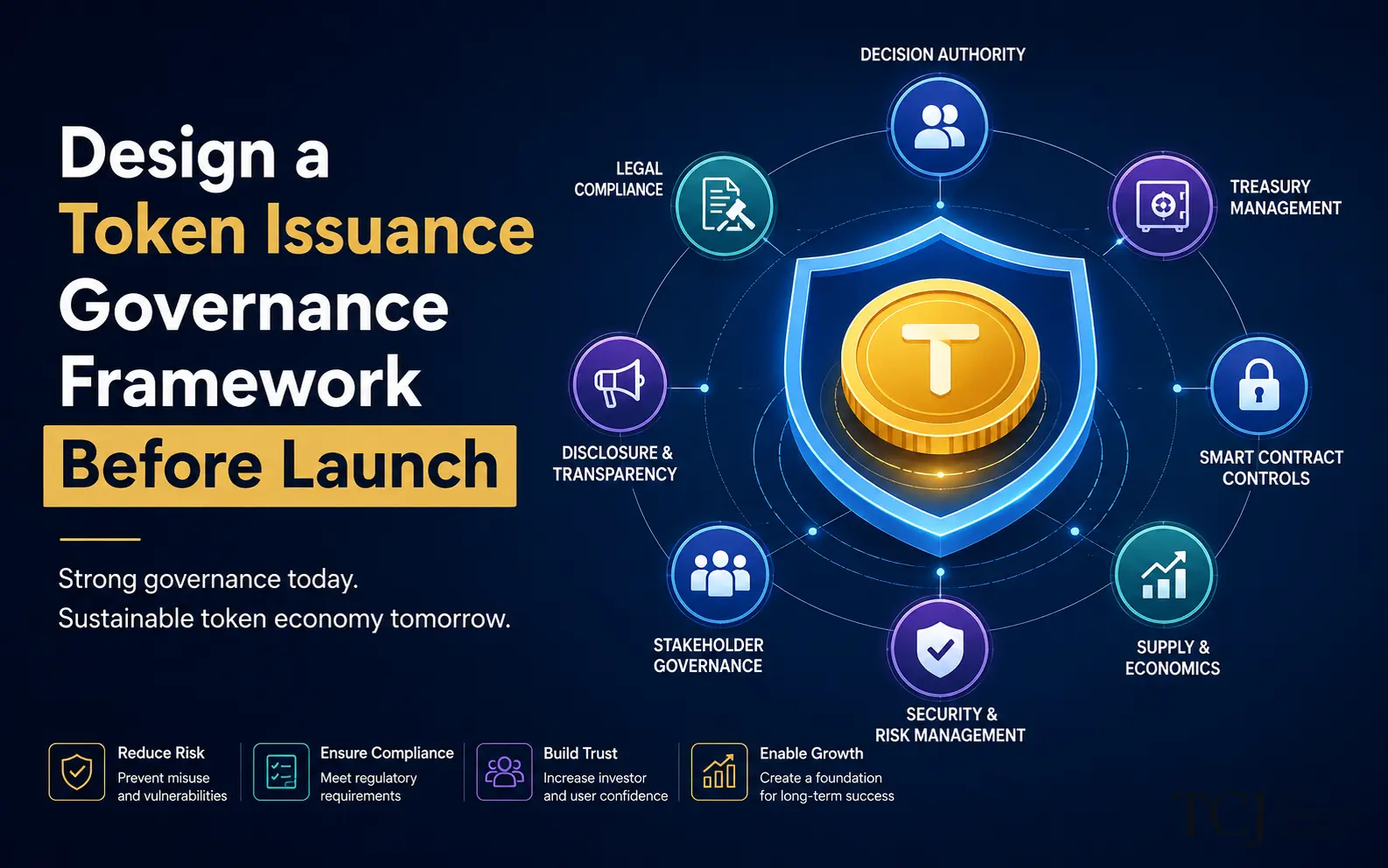
How to Design a Token Issuance Governance Framework in the UAE
A practical framework for UAE founders and Web3 teams to define token authority, supply controls, treasury governance, vesting, smart-contract permissions, compliance and launch readiness before issuance.

The UAE Crypto Travel Rule: Practical Compliance for VASPs
UAE virtual asset firms need more than a Travel Rule messaging tool. This practical guide explains thresholds, customer data, VASP checks, unhosted wallets, monitoring, exceptions and audit readiness.