Why Global Asset Managers Are Expanding Their Presence in Dubai
Dubai is attracting global asset managers through DIFC’s regulated financial ecosystem, access to regional capital, international connectivity, and growing demand from institutional and private investors.
Key takeaways
- Dubai is developing into a meaningful operating base for international asset managers, not only a regional marketing location.
- DIFC combines independent financial regulation with an English-language common law court system.
- Access to Gulf investors is valuable, but firms must obtain the correct permissions before conducting regulated activity.
- Free-zone status does not automatically guarantee a 0% Corporate Tax outcome.
- Substance, governance, staffing, Accounting, Tax, banking, and compliance costs should be included in the expansion budget.
- Early preparation can help firms avoid unsuitable structures and incomplete regulatory applications.
Why has Dubai become an important financial centre?
Dubai has combined financial regulation, commercial infrastructure, international connectivity, and government-backed economic development within a relatively concentrated business environment. This allows asset managers to operate close to regional capital while retaining many of the legal, operational, and professional standards expected in established global financial centres.
DIFC is central to this positioning. It is a purpose-built financial free zone where financial services are independently regulated by the Dubai Financial Services Authority. The DFSA’s mandate covers asset management, collective investment funds, securities, custody, banking, insurance, Islamic finance, and other regulated financial activities conducted in or from the centre.
The legal environment is another practical consideration. DIFC Courts operate an English-language common law jurisdiction for commercial and civil disputes. This is familiar to many international financial institutions, fund managers, investors, lawyers, and counterparties accustomed to common law documentation and dispute-resolution principles.
Dubai’s advantage is not one isolated incentive; it is the ability to combine regulation, capital access, professional services, and international connectivity within one operating base. — Consultant observation, KPM Global Services UAE
Why is Dubai a strategic gateway to MEASA markets?
Dubai gives asset managers a practical base between European, Asian, African, and Middle Eastern markets. Firms can use one regional office to coordinate investor relationships, business development, portfolio oversight, and management activity across multiple jurisdictions, depending on their regulatory permissions and operating model.
The Middle East, Africa, and South Asia region contains different investor profiles and levels of market maturity. These include sovereign institutions, pension-related capital, family offices, private banks, entrepreneurial wealth, government-backed investment vehicles, endowments, and corporate investors.
Being present in Dubai can make relationship management more effective. Institutional allocations are rarely secured through occasional visits alone. Investors typically expect consistent access to senior decision-makers, clear reporting, strong governance, responsive due diligence, and evidence that the manager understands regional requirements.
Dubai also offers overlapping working hours with parts of Europe and Asia. This can support investor communications, transaction coordination, trading oversight, and group reporting across international offices.
Example 1: A fictional London-based private credit manager initially serves Gulf investors through quarterly visits. As its regional relationships grow, it establishes a properly licensed DIFC operation with local compliance support and senior investor-relations staff. The office does not replace the London investment team, but it improves regional coverage, due diligence coordination, and communication with institutional allocators.
Why do international firms value DIFC regulation?
International asset managers value regulatory clarity because their UAE activities must align with defined permissions, governance arrangements, financial resources, conduct requirements, and investor-protection obligations. A recognised regulatory environment can also support discussions with global counterparties, institutional investors, banks, custodians, and group compliance teams.
The DFSA reported that it licensed and registered 182 new firms during 2025, bringing the number of regulated entities to 1,050 at year-end. The fund management sector included 121 authorised firms and 276 funds. Assets under management reached USD 176 billion, while assets under advisory across the broader wealth and asset management sector reached USD 220 billion.
These figures show scale, but a DFSA application remains a detailed regulatory exercise. The appropriate licence depends on what the business will actually do. Managing assets, advising on financial products, arranging investments, operating a fund, managing a collective investment fund, and providing custody-related services can involve different permissions and requirements.
A firm should therefore define its proposed UAE activities before selecting its entity, office, staffing, and cost structure. Using broad descriptions such as “investment consultancy” or “regional advisory office” without mapping the underlying services can create licensing uncertainty.
Does Dubai provide meaningful tax advantages?
Dubai can offer competitive tax and personal remuneration conditions, but financial firms should avoid assuming that every free-zone structure automatically receives a zero Corporate Tax rate. The correct position depends on the entity, income, activities, customers, operating substance, and application of the UAE Corporate Tax rules.
The UAE does not impose income tax on individuals. This can support international recruitment and remuneration planning, subject to each employee’s personal tax residence and obligations in other countries.
For businesses, the UAE Corporate Tax regime applies nationally. A Qualifying Free Zone Person may benefit from a 0% Corporate Tax rate on Qualifying Income, but conditions must be satisfied. Other taxable income may be subject to the applicable 9% rate. The Federal Tax Authority also requires consideration of adequate substance, permanent establishments, qualifying activities, excluded activities, and other compliance conditions.
For an international asset manager, the tax review may need to cover:
- The legal and regulatory activities performed by the UAE entity
- Management, advisory, performance, referral, or service-fee income
- Transactions with related parties and overseas group companies
- Transfer pricing policies and supporting documentation
- Permanent-establishment exposure
- Economic substance and decision-making in Dubai
- VAT treatment of fees and cross-border services
- Withholding tax and treaty considerations in other jurisdictions
- Accounting treatment and Corporate Tax adjustments
Tax efficiency should be treated as an outcome of a compliant operating model, not as the starting assumption behind the structure.
Where is the demand for asset management services coming from?
Demand is being supported by sovereign capital, institutional investment programmes, family offices, private wealth, regional business owners, and internationally mobile investors. Many of these investors are seeking broader diversification, institutional reporting, alternative investments, private-market access, and professionally governed wealth structures.
The opportunity is not limited to fundraising. Dubai-based asset managers may also support portfolio advisory, manager selection, investment research, private-market origination, risk oversight, fund structuring, Sharia-compliant solutions, succession-related investment planning, and cross-border wealth management.
DIFC’s 2025 results reported more than 500 wealth and asset management entities, including 102 hedge funds and more than 1,289 family-related entities. The continued concentration of managers, investors, advisers, banks, and service providers strengthens the commercial case for maintaining a local presence.
However, firms should distinguish between access to capital and entitlement to market regulated services. Marketing funds, advising investors, arranging transactions, and managing portfolios can trigger specific regulatory requirements. The intended client type, communication method, product, jurisdiction, and contractual role should be reviewed before activity begins.
How does the DIFC ecosystem support new entrants?
DIFC gives asset managers access to a network of banks, legal advisers, auditors, tax consultants, compliance professionals, technology providers, recruiters, fund administrators, trustees, custodians, and corporate service providers. This can reduce the need to build every support function internally.
The ecosystem can also make recruitment and professional collaboration easier. Experienced employees may already understand regional investor expectations, DFSA supervision, UAE employment practices, cross-border structures, and the documentation commonly requested by banks and institutional counterparties.
This does not mean that every function should be outsourced. The board and senior management remain responsible for governance, oversight, regulatory compliance, financial controls, and the conduct of the business. Outsourcing arrangements should have clear scopes, service standards, reporting processes, access rights, and escalation procedures.
Example 2: A fictional Singapore-based asset manager wants to open a Dubai office to advise professional clients. Its first cost estimate covers only incorporation, office rent, and employee visas. A readiness review identifies additional requirements for regulatory capital, compliance resources, controlled functions, audited Financial statements, technology controls, professional indemnity cover, and group-service agreements. Addressing these matters before filing produces a more realistic budget and implementation plan.
How are technology and digital finance affecting the sector?
Dubai’s financial sector is creating opportunities for managers working with financial technology, automated reporting, digital onboarding, data analytics, tokenised assets, and regulated crypto-related products. These opportunities remain subject to licensing, product, investor, custody, technology, and risk-management requirements.
The DFSA’s updated Crypto Token framework came into force on 12 January 2026. It is intended to provide clearer requirements for regulated financial services involving crypto tokens within DIFC while maintaining market-integrity and investor-protection standards.
Asset managers considering digital products should assess more than the commercial concept. They may need to address custody arrangements, valuation, liquidity, cybersecurity, financial crime controls, client classification, disclosures, technology governance, outsourcing, and conflicts of interest.
Technology can improve operations, but it does not remove the need for accountable human oversight.
What challenges should asset managers consider before expanding?
Dubai offers significant opportunities, but entry costs and regulatory obligations can be underestimated. Firms should evaluate whether expected regional revenue and strategic value justify the full cost of maintaining a credible, compliant operation.
Important challenges include:
- Defining the correct DFSA permissions
- Recruiting appropriately experienced senior personnel
- Demonstrating genuine local management and substance
- Meeting regulatory capital and financial-resource requirements
- Establishing AML, sanctions, risk, compliance, and reporting controls
- Securing suitable office space
- Opening operational and client-related bank accounts
- Aligning UAE activities with the global group structure
- Managing transfer pricing and intercompany agreements
- Maintaining reliable Accounting records and audit readiness
- Protecting client information and managing cybersecurity risk
- Monitoring geopolitical, market, and cross-border regulatory developments
A representative office, advisory business, fund manager, or portfolio-management firm will not have the same regulatory profile. Costs and timelines should therefore be based on the proposed activity rather than on a generic company-formation estimate.
What common mistakes do asset managers make?
A common mistake is incorporating an entity before confirming whether the planned services require DFSA authorisation. This can result in an unsuitable legal structure, lease, activity description, or staffing model.
Other frequent mistakes include:
- Treating a Dubai office as a sales location without reviewing financial-promotion rules
- Assuming free-zone status automatically provides 0% Corporate Tax
- Preparing financial projections that omit regulatory and compliance costs
- Appointing nominal personnel without sufficient authority or local availability
- Using incomplete intercompany agreements for shared employees and services
- Delaying bank-account preparation until after licensing
- Failing to document source of funds, ownership, and group structure clearly
- Underestimating ongoing audit, bookkeeping, payroll, VAT, and Tax obligations
- Applying global policies without adapting them to UAE and DIFC requirements
- Marketing products before confirming permissions and investor eligibility
Which documents should firms prepare?
A well-prepared application and operating plan will typically require a coordinated set of corporate, regulatory, Financial, Tax, Accounting, and compliance documents.
Businesses should consider preparing:
- Detailed business plan and UAE market rationale
- Proposed regulated activities and permission map
- Three-year financial forecasts and capital calculations
- Group ownership and organisational charts
- Ultimate beneficial owner documentation
- Board and senior-management profiles
- Controlled-function applications and experience records
- Compliance, AML, sanctions, risk, and governance manuals
- Client-classification and onboarding procedures
- Product, fund, advisory, or investment-management documents
- Outsourcing and intercompany service agreements
- Transfer pricing analysis
- Technology, cybersecurity, and business-continuity policies
- Office and staffing plan
- Banking-readiness file
- Tax registration and compliance assessment
- Accounting policies and chart of accounts
- Audit and regulatory-reporting timetable
The precise list depends on the activity, licence category, ownership structure, client profile, products, and whether the UAE company will manage assets, advise, arrange transactions, or operate funds.
How can KPM Global Services UAE assist?
KPM Global Services UAE can support asset managers with the Financial, Tax, Accounting, documentation, and operational planning required for a Dubai expansion.
Support may include:
- Reviewing the proposed business and revenue model
- Coordinating company-establishment requirements
- Preparing financial projections and operating budgets
- Assessing UAE Corporate Tax and VAT considerations
- Supporting transfer pricing and intercompany documentation
- Establishing bookkeeping and management-reporting processes
- Preparing banking and source-of-funds documentation
- Developing payroll, invoicing, and expense controls
- Coordinating audit and year-end reporting requirements
- Supporting ongoing Accounting and Tax compliance
- Working with legal and regulatory specialists where regulated advice is required
The objective should be to establish an operating model that is commercially practical, properly documented, and capable of meeting ongoing UAE obligations.
What is the outlook for Dubai’s asset management industry?
Dubai is likely to remain an important expansion market for global asset managers as its regulated financial community, investor base, infrastructure, and professional-services ecosystem continue to develop. The most successful entrants are likely to be firms that combine international investment capability with credible local leadership and disciplined compliance.
The number of active DIFC companies passed 10,000 during the first half of 2026, while wealth and asset management firms increased to 592. This indicates that Dubai is becoming a substantive operating centre rather than simply a representative location for occasional regional business development.
Growth will also increase competition. Firms will compete for experienced staff, investor attention, office space, banking relationships, and trusted service providers. A recognisable global brand may open doors, but regional success will still depend on performance, access, communication, governance, and long-term relationship building.
Questions and answers
Q: Why are global asset managers opening offices in Dubai?
A: Dubai provides access to Gulf investors, institutional capital, family offices, and clients across the wider MEASA region. DIFC also offers an established regulatory, legal, banking, and professional-services environment for international financial firms.
Q: Does an asset manager need a DFSA licence in Dubai?
A: A DFSA licence is typically required when a firm conducts regulated financial services in or from DIFC. The required permissions depend on whether the firm manages assets, advises clients, arranges investments, manages a fund, or performs another regulated activity.
Q: Do DIFC asset managers pay UAE Corporate Tax?
A: UAE Corporate Tax treatment depends on the entity’s activities, income, clients, structure, and compliance with the Free Zone rules. A Qualifying Free Zone Person may receive a 0% rate on Qualifying Income, but firms should not assume that all income will qualify.
Q: What should an asset manager budget for when entering Dubai?
A: The budget should typically cover licensing, regulatory capital, office space, staffing, visas, compliance, audit, Accounting, Tax, insurance, technology, banking, and professional support. The total cost will depend on the activity and operating structure.
Q: How long does it take to establish an asset management business in DIFC?
A: The timeline varies according to the licence, ownership structure, application quality, senior appointments, documentation, and regulatory review. Firms can reduce avoidable delays by completing their business plan, projections, policies, ownership records, and staffing arrangements before submission.
More in Investment
View all Investment →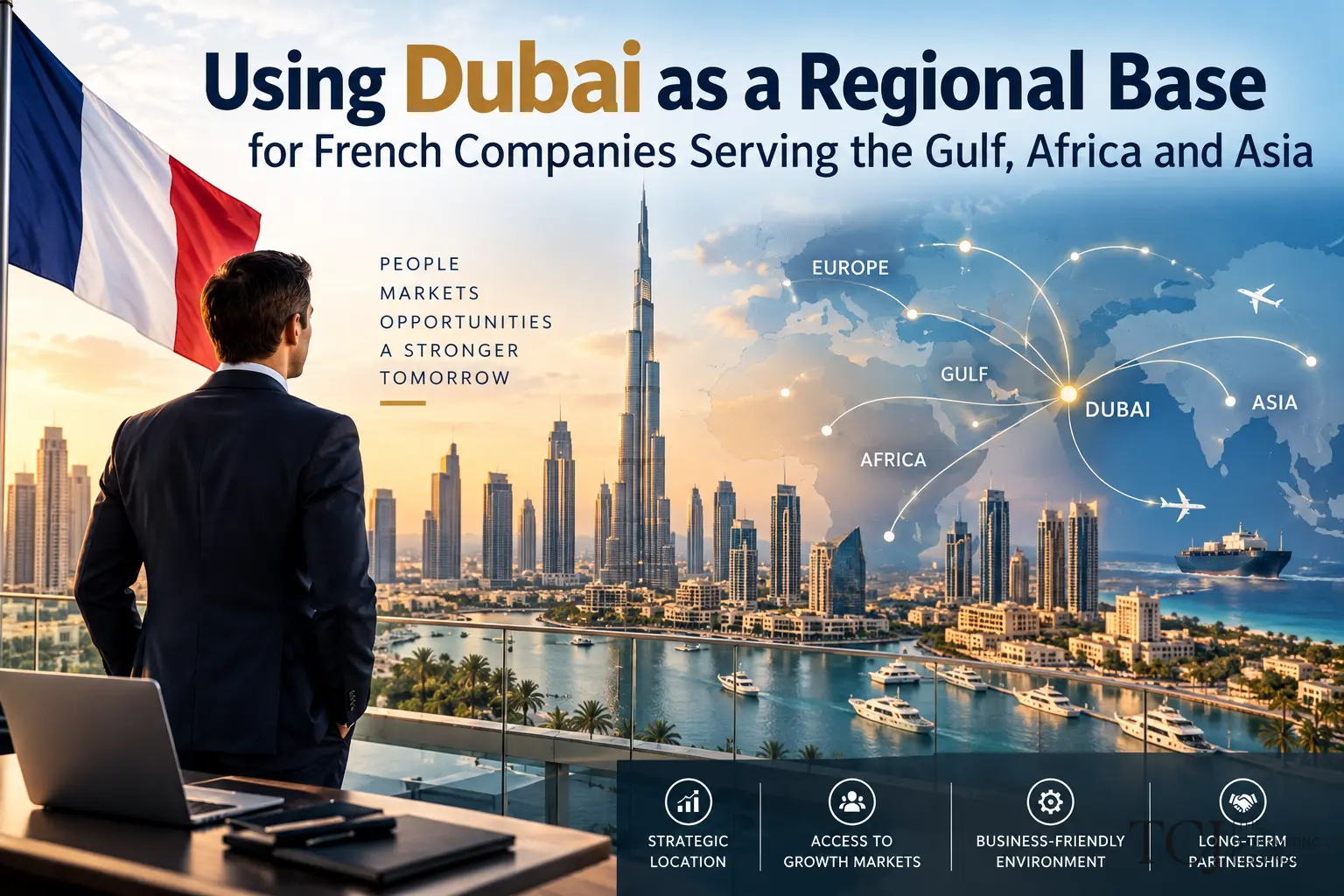
Using Dubai as a Regional Base for French Companies Serving the Gulf, Africa and Asia
Dubai can give French companies a practical base for managing Gulf, African and Asian markets, but the right structure depends on commercial functions, licensing, tax, substance and local-market requirements.

UAE Market Entry for German Industrial Companies: 2026 Guide
German industrial companies entering the UAE need more than a company licence. This practical framework covers market validation, mainland and free-zone structures, Tax, licensing, ICV, distribution, localization, service capability, and phased investment.
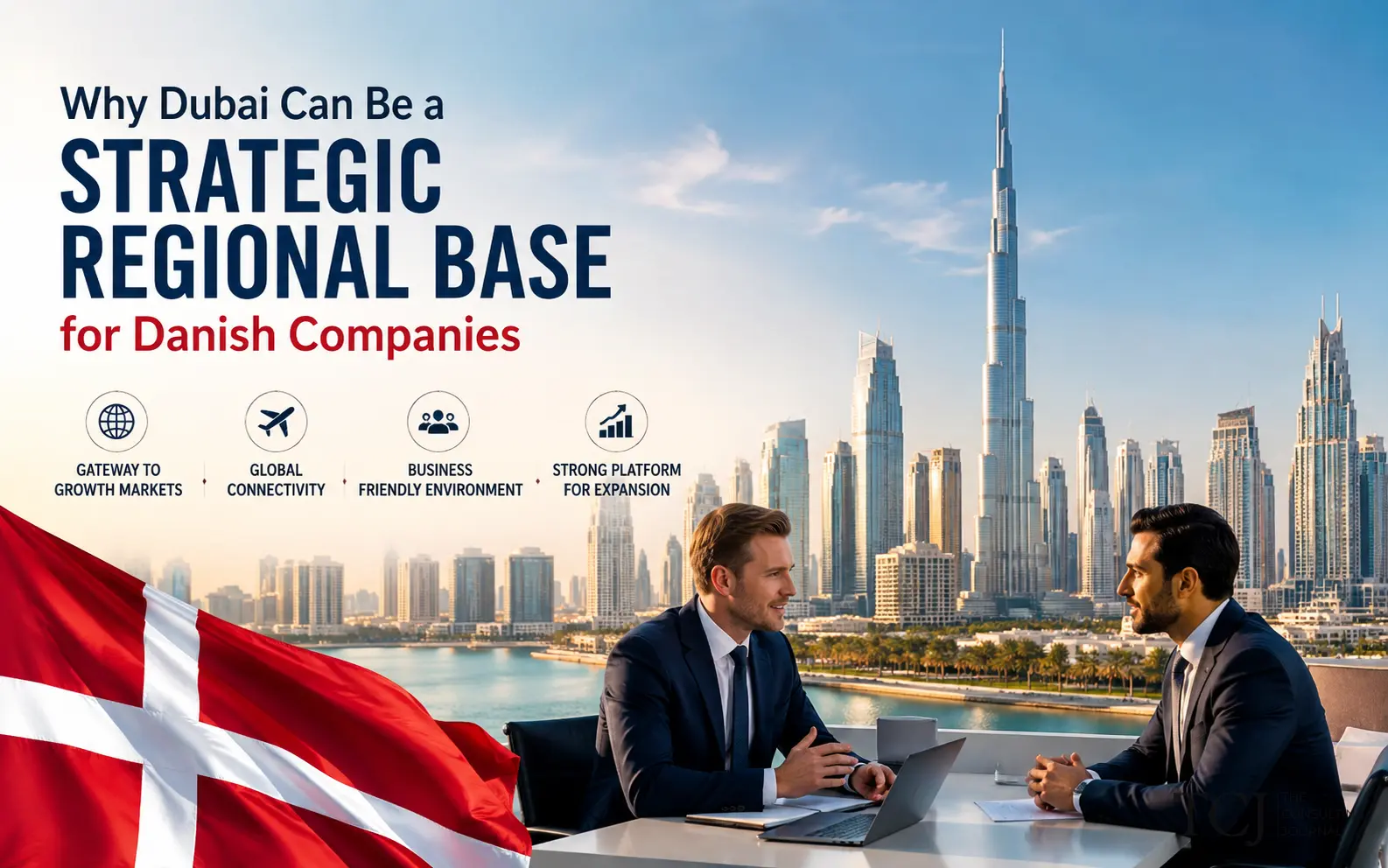
Why Dubai Is a Strategic Base for Danish Companies
Dubai can give Danish companies a practical base for UAE and wider MENA expansion, provided market demand, licensing, tax, staffing, and operating structure are assessed before incorporation.