AI Automation for UAE SMEs: How to Cut Costs Without Losing Control
A practical UAE SME guide to using AI automation for cost reduction, customer service, accounting, inventory, HR, and better decision-making without weakening control.
Why AI automation now matters for UAE SMEs
For many UAE small and medium businesses, the cost pressure is real. Rent, salaries, software subscriptions, delivery expenses, banking requirements, and customer expectations all sit on the owner’s desk at the same time.
That is why AI automation is becoming more than a technology discussion. For a Dubai café, an Abu Dhabi trading business, a Sharjah e-commerce seller, or a professional services firm in a free zone, the question is practical: which repetitive work can be reduced without damaging service quality?
The UAE has also made AI part of its national digital direction. The UAE Strategy for Artificial Intelligence aims to support government performance, competitiveness, and AI adoption across priority sectors. For SMEs, this does not mean every business needs an expensive AI transformation project. It means the market is moving toward faster, data-supported operations, and smaller businesses should prepare.
What AI automation means in day-to-day business
AI automation combines software workflows with tools that can read, classify, predict, respond, or recommend based on data.
A normal automation may send an invoice reminder after seven days. An AI-supported workflow may identify which customers usually delay payment, which invoices need a follow-up call, and which reminders should be sent first.
That difference matters for SMEs because the owner’s time is often the most expensive resource in the company. The right automation removes low-value manual work so the team can focus on selling, servicing, compliance, collections, and customer relationships.
The best AI automation project is not the most advanced one; it is the one that removes a real bottleneck without creating a new control problem. — The Consulting Journal
Where UAE SMEs can use AI automation first
Customer support and WhatsApp enquiries
Many UAE SMEs receive customer enquiries through WhatsApp, Instagram, website forms, and phone calls. Without a system, enquiries get missed or answered inconsistently.
AI chatbots and response assistants can help with:
- Frequently asked questions
- Appointment requests
- Order status updates
- Basic product information
- Lead qualification
- Customer feedback collection
The consultant’s advice is to avoid giving the bot full authority too early. Start with common questions, clear escalation rules, and human review for complaints, pricing disputes, refunds, or sensitive matters.
Accounting and bookkeeping workflows
Accounting is one of the strongest use cases for SME automation, but it must be handled carefully.
AI-supported accounting tools can help classify expenses, capture invoice data, match receipts, flag duplicate entries, and prepare management reports. For a UAE business, this is useful because poor accounting records later affect VAT filing, corporate tax readiness, banking reviews, audit preparation, and management decisions.
The real saving is not only in bookkeeping hours. It is in fewer corrections, cleaner records, and earlier visibility of cash flow.
A mainland business, for example, may automate invoice capture and expense coding but still ask an accountant to review VAT treatment, supplier balances, payroll entries, and closing adjustments. That balance is usually safer than relying completely on software output.
Inventory and supply chain planning
Retailers, restaurants, e-commerce companies, and trading businesses often lose money through overstocking, stockouts, slow-moving items, or poor purchase planning.
AI-based inventory tools can review sales patterns, seasonal demand, customer behaviour, and reorder timing. For a small supermarket, this may reduce wastage. For an online seller, it may prevent cash from being blocked in products that move slowly. For a restaurant, demand forecasting can support purchasing and staff scheduling.
The owner should still check the data. If historical sales are messy, returns are not recorded properly, or promotions distort demand, the AI recommendation can be misleading.
HR, payroll, and recruitment support
AI can help SMEs screen CVs, schedule interviews, prepare onboarding checklists, and answer basic HR questions. It can also help payroll teams identify missing attendance data, unusual overtime, or incomplete employee records.
For UAE businesses, HR automation should be connected with proper documentation. Employment contracts, payroll records, leave balances, visa details, and WPS-related payroll processes must remain accurate and reviewable.
Automation should not replace judgment in hiring or employee matters. It should reduce administrative workload and improve consistency.
Marketing and sales automation
Many SMEs spend money on marketing but do not follow up properly. Leads sit in inboxes. Campaigns are sent without segmentation. Sales teams forget repeat customers.
AI-supported CRM and marketing tools can help with lead scoring, customer segmentation, email flows, campaign timing, and sales forecasting. A service-based SME can use automation to remind clients about renewals, unpaid invoices, upcoming appointments, or required documents.
The practical point is simple: automation works best when the sales process is already clear. If the business has no defined lead stages, pricing rules, or follow-up responsibilities, software will only automate confusion.
Example 1:
A Dubai-based salon with two branches receives most bookings through WhatsApp and Instagram. The owner wants to reduce missed enquiries but does not want customers to feel they are speaking to a machine.
A sensible first step is an AI-assisted booking workflow. The system answers basic questions about location, services, timing, and price range. It suggests available slots and sends reminders. Complaints, discount requests, and VIP client messages are sent to a human manager.
Within a few weeks, the business can track missed enquiries, confirmed bookings, cancelled appointments, and repeat clients more clearly. The automation does not replace the receptionist. It gives the receptionist a better system.
Example 2:
A Sharjah trading company imports spare parts and sells to garages across the UAE. The owner has cash tied up in slow-moving inventory while fast-moving items run out too often.
The company starts with a simple AI-supported inventory report. It reviews sales history, purchase cycles, product margins, and stock ageing. The owner then sets reorder rules for high-demand items and discount plans for old stock.
The result is not a dramatic “AI transformation”. It is better purchasing discipline, fewer urgent orders, and improved working capital control.
Common mistakes business owners make
Many SMEs make the same mistake: they buy the tool before defining the problem.
A business owner may subscribe to an AI chatbot, CRM, accounting app, and reporting dashboard, then discover the team is not using them properly. The issue is rarely the software alone. It is usually the absence of process ownership.
Common mistakes include:
- Automating a broken workflow instead of fixing it first
- Using AI tools without checking data quality
- Giving junior staff access to sensitive financial or customer data without controls
- Ignoring UAE data privacy and sector-specific obligations
- Expecting instant cost reduction without training the team
- Buying too many tools that do not connect with each other
- Failing to review AI-generated accounting, tax, or compliance outputs
- Measuring “activity” instead of business results
Data protection also deserves attention. The UAE’s federal Personal Data Protection Law regulates the processing of personal data and is relevant when businesses collect, store, or use customer and employee information in digital systems. SMEs should treat customer data, employee records, financial information, and supplier details as controlled business assets, not casual software inputs.
A practical approach to starting AI automation
The best starting point is not a large project. It is a controlled pilot.
First, identify repetitive work that consumes time every week. This may include data entry, invoice follow-ups, appointment reminders, customer FAQs, inventory reports, or sales pipeline updates.
Second, estimate the cost of the problem. How many hours are lost? How many customers are missed? How many invoices are delayed? How much inventory is stuck?
Third, choose one use case with low compliance risk and measurable benefit. For many SMEs, this may be customer enquiries, reporting, CRM follow-ups, or expense capture.
Fourth, document the workflow before automation. Who receives the information? Who reviews it? What happens if the AI output is wrong? Who approves the final action?
Finally, train the team. Employees are more likely to support AI automation when they understand that the goal is to reduce repetitive work, not remove accountability.
Practical checklist before adopting AI automation
Before investing in an AI tool, UAE SMEs should prepare a short internal checklist:
- Identify the business process to automate
- Define the expected saving in time, cost, accuracy, or customer response
- Check whether customer, employee, financial, or sensitive data will be used
- Review software access rights and approval levels
- Confirm whether the tool integrates with accounting, CRM, inventory, or HR systems
- Assign one internal owner for the workflow
- Test the tool on a small data set before full rollout
- Keep human review for accounting, payroll, tax, legal, and compliance matters
- Track results monthly
- Stop or redesign the automation if it creates errors, confusion, or customer complaints
Documents and preparation checklist
A business does not need heavy documentation for every AI project, but some preparation avoids expensive mistakes.
Keep the following ready:
- Current workflow notes
- List of repetitive tasks and responsible staff
- Customer enquiry templates
- Chart of accounts and bookkeeping process notes
- Inventory master data, where relevant
- CRM or customer list structure
- Access control policy
- Data backup process
- Vendor proposal or software subscription terms
- Internal approval matrix
- Monthly performance report format
For accounting and financial workflows, also keep invoice samples, VAT treatment notes, supplier ledgers, customer ageing reports, bank reconciliation records, and payroll summaries. These records help the business check whether automation is improving accuracy or simply moving errors faster.
Final advisory view
AI automation for UAE SMEs should be treated as an operating discipline, not a trend. The goal is not to replace every manual task. The goal is to reduce waste, improve visibility, and help owners make faster decisions with better information.
The smartest businesses will start small, protect their data, train their people, and connect automation with accounting, financial control, customer service, and management reporting.
This article is for informational purposes and does not constitute legal, tax, accounting, or financial advice.
Questions and answers
What is AI automation for UAE SMEs?
AI automation uses software and artificial intelligence to reduce repetitive business tasks such as customer replies, invoice processing, inventory planning, scheduling, and reporting. For UAE SMEs, the benefit is usually better speed, lower admin workload, and clearer management information.
Can AI automation reduce costs for small businesses in Dubai and the UAE?
Yes, but the saving depends on the process selected. SMEs usually see better results when they automate repetitive work such as enquiry handling, accounting data capture, appointment reminders, inventory reports, and CRM follow-ups.
Is AI automation suitable for accounting and bookkeeping?
AI can support accounting by capturing invoices, classifying expenses, matching receipts, and preparing reports. However, accounting, VAT, payroll, and tax-related outputs should still be reviewed by a qualified professional because software can misread context or apply the wrong treatment.
What should SMEs check before using AI tools with customer data?
SMEs should review what data is collected, where it is stored, who can access it, and whether the tool is appropriate for the type of customer or employee information being processed. Access controls, backups, vendor terms, and internal review procedures should be checked before full rollout.
What is the safest way for a UAE SME to start with AI automation?
Start with one practical use case, such as customer FAQs, appointment reminders, expense capture, or sales follow-ups. Test it with a small team, measure the result, keep human review in place, and expand only after the workflow is stable.
More in Finance
View all Finance →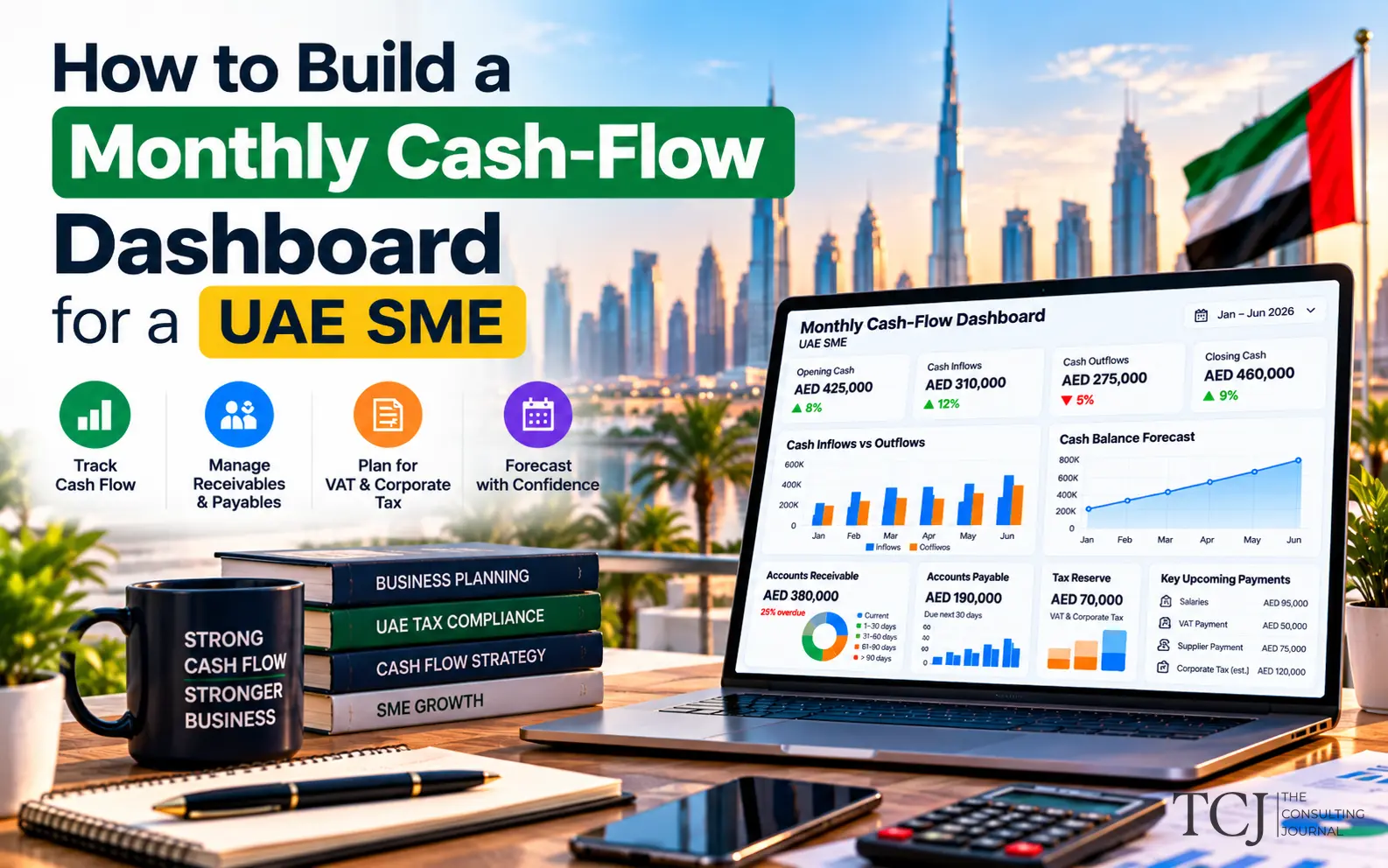
How to Build a Monthly Cash-Flow Dashboard for a UAE SME
A practical guide for UAE SME owners and finance teams on building a monthly cash-flow dashboard that tracks liquidity, collections, payments, tax obligations, forecasts, and working capital.

How UAE Companies Can Build a Faster, More Reliable Month-End Close
A practical UAE finance guide to shortening the month-end close through better reconciliations, cut-off controls, automation, tax readiness, data quality, and clear accountability.
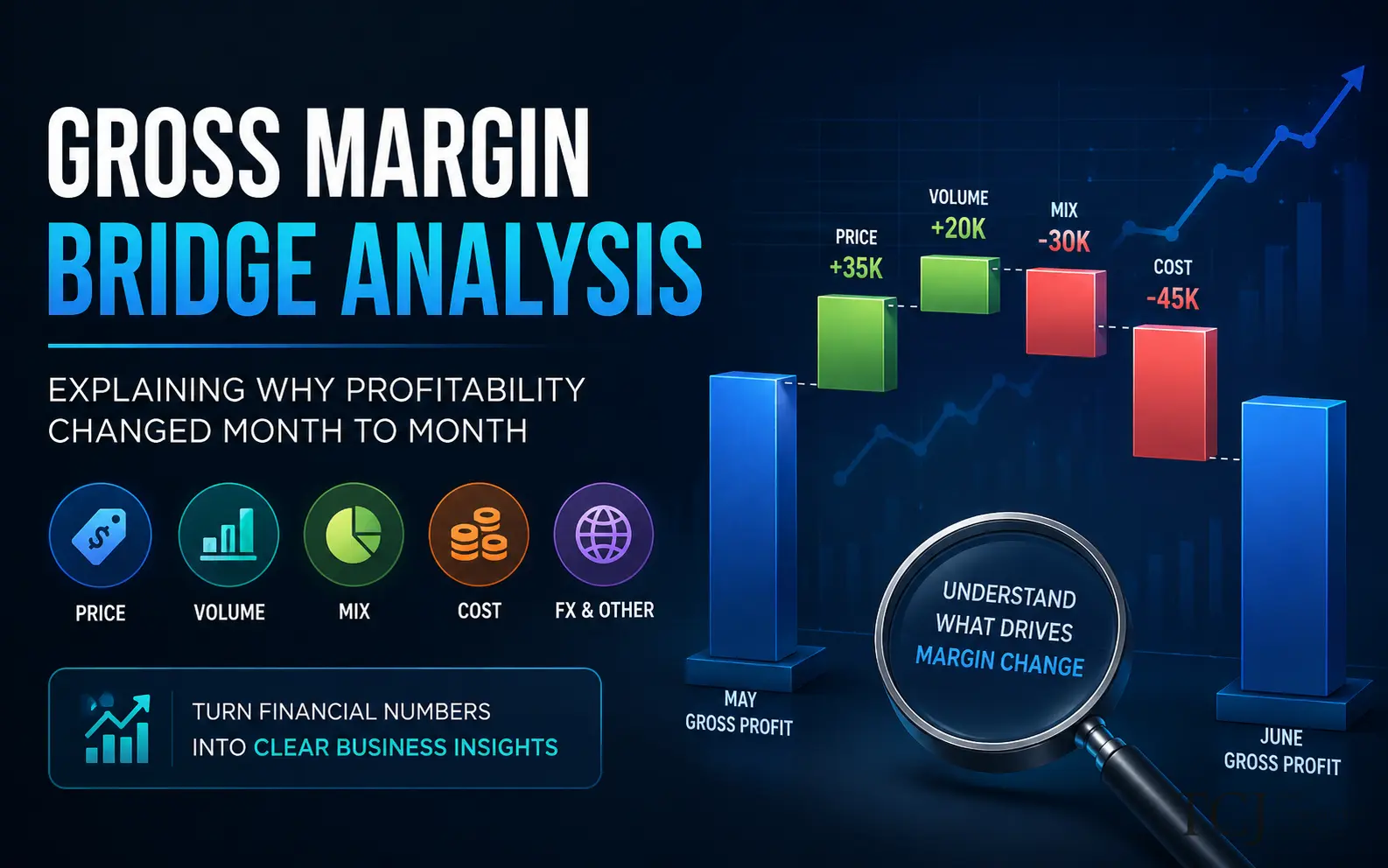
Gross Margin Bridge Analysis: Explaining Why Profitability Changed Month to Month
Gross margin bridge analysis helps finance teams explain monthly profitability changes by separating the impact of price, volume, sales mix, cost, and other operational drivers.