Asset Tokenization in the UAE: What Business Owners Should Know
Asset tokenization is moving from pilot projects to practical finance use cases in the UAE. Here is what business owners, investors, and compliance teams should understand before participating.
Key takeaways
- Asset tokenization can improve liquidity, but it does not remove the need for legal, regulatory, and ownership checks.
- Dubai, DIFC, and ADGM are developing regulated pathways for digital asset and tokenized investment activity.
- Real estate is currently one of the most visible UAE tokenization use cases, supported by official pilot initiatives.
- Businesses should assess licensing, custody, investor disclosures, accounting records, and cybersecurity before entering tokenized markets.
- Tokenization is best treated as a finance and compliance project, not only as a blockchain technology project.
Asset Tokenization in the UAE: Why the Conversation Has Changed
A few years ago, asset tokenization sounded like a future-facing blockchain idea. In the UAE, that has changed. The subject is now being discussed by real estate developers, private investment platforms, family offices, fintech founders, financial free zone firms, and compliance teams.
At its simplest, asset tokenization means representing rights in an asset through digital tokens recorded on a blockchain or distributed ledger. The asset could be real estate, a fund unit, a bond, sukuk, a commodity, or another investment product. The commercial promise is clear: fractional ownership, wider access, faster settlement, and potentially improved liquidity.
The practical reality is more careful. A token is not valuable just because it sits on a blockchain. It needs a recognised legal structure, proper custody, investor disclosures, technology controls, accounting treatment, and regulatory permissions. In client discussions, this is where many early assumptions become more realistic.
The UAE is an important market because it combines capital, property activity, digital finance ambition, and active regulators. Dubai’s Virtual Assets Regulatory Authority regulates virtual assets across Dubai mainland and free zones, except in the DIFC, where the DFSA operates its own financial services framework.
What Asset Tokenization Actually Means for Businesses
For business owners, tokenization should not be viewed as a shortcut to raising money. It is better understood as a different way of structuring access to an asset.
A property owner may tokenize economic rights linked to a real estate asset. An investment manager may explore tokenized fund units. A commodities business may consider digital representation of ownership interests in gold or other assets. A financial institution may examine tokenized bonds, sukuk, or settlement models.
In each case, the business question is not only “Can this be tokenized?” The better question is: “What legal right does the token holder actually receive?”
That right may include rental income, profit participation, redemption rights, voting rights, or a claim against an issuer. If that is not clear, token holders may assume ownership they do not legally have. This is one of the biggest risk areas in early-stage tokenization projects.
Tokenization only becomes useful when the commercial right, legal structure, investor protection, and technology record all point in the same direction. — The Consulting Journal advisory note
Why the UAE Is Becoming a Serious Tokenization Market
The UAE has several conditions that make tokenization attractive. It has a large real estate market, international investor interest, active financial free zones, digital government initiatives, and a business community that is used to cross-border capital flows.
Dubai’s real estate tokenization pilot is a useful example. Dubai Land Department states that its pilot phase is powered in collaboration with VARA, Dubai Future Foundation, and the Central Bank of the UAE, and positions DLD as the first real estate registration entity in the Middle East to adopt blockchain-based tokenization.
In May 2025, Dubai Land Department also announced the region’s first tokenized real estate investment project through the Prypco Mint platform. During the pilot phase, the platform was available to UAE ID holders, transactions were carried out in UAE dirhams, and the minimum investment was stated as AED 2,000.
This matters because it shows the market is moving beyond general blockchain discussion. It is entering the more difficult stage: regulated pilots, investor onboarding, banking rails, platform controls, and real asset documentation.
The Regulatory Picture: Dubai, DIFC, and ADGM
Businesses should avoid treating “UAE regulation” as one single pathway. The correct route depends on where the activity is conducted, what the token represents, who the investors are, and whether the activity falls under virtual asset, securities, fund, custody, brokerage, or investment services rules.
In Dubai outside the DIFC, VARA is central to virtual asset regulation. VARA’s updated activity-based rulebooks cover activities such as advisory services, broker-dealer services, custody services, exchange services, lending and borrowing, VA management and investment, transfer and settlement, and virtual asset issuance.
In the DIFC, the DFSA has been developing its own digital asset and crypto token approach. The DFSA launched a Tokenisation Regulatory Sandbox in March 2025 for firms seeking to test tokenized investment products and services through a controlled pathway. By June 2025, the DFSA said the sandbox had received 96 expressions of interest from several markets, including the UAE, UK, EU, Canada, Singapore, and Hong Kong.
ADGM has also continued refining its digital asset framework. In June 2025, ADGM’s FSRA implemented amendments focused on accepted virtual assets, capital requirements and fees for authorised persons, product intervention powers, and restrictions involving privacy tokens and algorithmic stablecoins.
For a founder or CFO, the practical message is straightforward: before spending heavily on technology, confirm the regulatory perimeter. A project that looks like a simple digital investment product may trigger licensing, custody, marketing, financial promotion, AML, investor classification, or fund-related requirements.
Where Tokenization Is Most Likely to Grow in the UAE
Real estate
Real estate is the most visible area. The UAE has high-value property assets, strong investor demand, and a large international buyer base. Tokenization may allow smaller investors to access economic exposure to premium assets, while property owners may benefit from new funding or exit options.
However, tokenized real estate must be handled carefully. Property title, beneficial ownership, rental income, service charges, valuation, transfer restrictions, and investor exit rights all need proper documentation.
Example 1: A Dubai-based property platform wants to tokenize income rights from a completed residential asset. Before launch, the management team reviews title documents, tenancy contracts, valuation reports, custody arrangements, investor disclosures, platform permissions, and bank settlement processes. The project becomes less about “minting tokens” and more about building a compliant investment structure.
Funds, bonds, and sukuk
Tokenized financial instruments may become increasingly relevant for regulated firms. The DFSA’s sandbox specifically referenced tokenized investments such as equities, bonds, sukuk, and fund units.
For investment managers, tokenization could improve distribution, transferability, reporting, and settlement. But it also creates questions around investor suitability, disclosure, custody, valuation, and ongoing monitoring.
Commodities and private assets
The UAE’s position in gold, commodities, trade, and private wealth may support future tokenization models. These structures will need strong proof of reserve, auditability, custody, insurance, and redemption mechanics. For business owners, the credibility of the underlying asset is more important than the technology used to represent it.
Benefits Business Owners Should Understand
The first benefit is fractional access. A high-value asset can be divided into smaller economic interests, making participation possible for a broader investor base.
The second benefit is potential liquidity. Assets that are difficult to sell may become easier to transfer if a compliant secondary market exists. This should not be overstated. Liquidity depends on demand, platform rules, regulatory permissions, market makers, and investor confidence.
The third benefit is operational efficiency. Smart contracts may automate distributions, compliance checks, or ownership records. But automation only helps when the underlying legal and accounting process is already clean.
The fourth benefit is transparency. Blockchain records can support traceability, but they do not automatically verify the truth of off-chain information. A tokenized property still needs accurate title records, valuation, rent collection data, and legal documentation.
Common Mistakes Business Owners Make
One common mistake is assuming tokenization removes regulation. In practice, tokenization often increases regulatory attention because it involves investor access, marketing, custody, and financial risk.
Another mistake is treating the token as the asset itself. Usually, the token represents a right connected to an asset. The legal documents must explain that right clearly.
A third mistake is underestimating custody and cybersecurity. Private keys, wallet controls, platform permissions, administrator access, and incident response plans are not technical details to leave until the end.
Some businesses also begin public marketing before confirming permissions. This can create avoidable regulatory and reputational risk, especially where investors may believe a project is officially approved when it is not.
A final mistake is weak accounting preparation. Tokenized income, investor distributions, platform fees, VAT considerations, corporate tax treatment, and audit trails should be reviewed before launch, not after the first reporting period.
Practical Checklist Before Starting a Tokenization Project
Businesses exploring tokenization in the UAE should prepare the following before approaching regulators, platforms, investors, or banking partners:
- Clear description of the asset and the rights being tokenized
- Ownership documents, title records, contracts, or asset custody evidence
- Legal structure showing issuer, platform, investors, and asset owner
- Regulatory assessment for Dubai, DIFC, ADGM, or other relevant jurisdiction
- AML, KYC, sanctions screening, and investor classification process
- Whitepaper, offer document, or investor disclosure pack where applicable
- Custody and wallet governance framework
- Cybersecurity and incident response controls
- Accounting, audit, valuation, and tax treatment review
- Banking and settlement flow in fiat currency or approved rails
- Marketing approval process and risk warnings
- Exit, transfer, redemption, or secondary market rules
Example 2: An Abu Dhabi investment firm considers tokenized units in a private income fund. Its first internal review identifies three gaps: unclear investor suitability criteria, incomplete custody procedures, and no agreed accounting treatment for token-related distributions. By addressing these gaps before launch, the firm reduces regulatory friction and improves investor confidence.
How Consulting Advisers Can Support Tokenization Readiness
A tokenization project usually needs several advisers working together: legal, regulatory, tax, accounting, technology, cybersecurity, valuation, and banking. The role of a consulting adviser is to make sure the business case is commercially sound and the operational model can survive due diligence.
For SMEs and founders, the first advisory step is often a feasibility review. This looks at the asset, target investors, jurisdiction, licensing pathway, documentation, costs, risks, and timeline. If the structure does not make sense on paper, blockchain development should not begin.
For CFOs and finance teams, the focus is usually accounting records, investor reporting, tax position, valuation support, and controls around cash movement. For compliance teams, the main work is around AML, sanctions, KYC, customer risk rating, disclosures, and marketing governance.
Final Advisory View
Asset tokenization in the UAE has real potential, especially in real estate and regulated financial products. The market is moving from concept to controlled implementation, supported by official pilots and regulatory sandboxes.
Still, business owners should approach tokenization with discipline. The strongest projects will not be the ones with the most technical language. They will be the ones with clear asset rights, compliant investor onboarding, reliable custody, accurate accounting, strong governance, and honest risk disclosure.
This article is for informational purposes and does not constitute legal, tax, accounting, or financial advice.
Questions and answers
What is asset tokenization in simple terms?
Asset tokenization is the process of representing rights in a real-world or financial asset through digital tokens. The token may represent economic exposure, income rights, fund units, or another defined legal interest, depending on the structure.
Is asset tokenization legal in the UAE?
Tokenization can be pursued in the UAE, but the correct regulatory route depends on the asset, jurisdiction, activity, and investor base. Businesses should assess whether VARA, DFSA, ADGM FSRA, securities, fund, custody, marketing, or AML requirements apply.
Which UAE sector is most active in tokenization?
Real estate is one of the most visible sectors, especially after Dubai Land Department’s real estate tokenization pilot and related platform developments. Financial products such as fund units, bonds, sukuk, and tokenized investment instruments are also gaining regulatory attention.
Can small investors participate in tokenized assets?
Fractional ownership can lower entry thresholds, but access depends on the approved platform, investor eligibility rules, jurisdiction, and product terms. Smaller ticket sizes do not remove the need for proper risk disclosure and investor protection.
What should a business prepare before launching a tokenization project?
A business should prepare asset documents, legal structure, regulatory analysis, investor disclosures, AML/KYC procedures, custody controls, accounting treatment, and cybersecurity governance. The project should be reviewed as a regulated finance initiative, not only as a technology build.
More in Crypto
View all Crypto →
Stablecoin Payments for UAE Businesses: Benefits, Regulations and Risks
Stablecoin payments offer UAE businesses new possibilities for cross-border settlements and financial operations. Explore commercial benefits, CBUAE regulations, compliance risks, and practical steps before adoption.
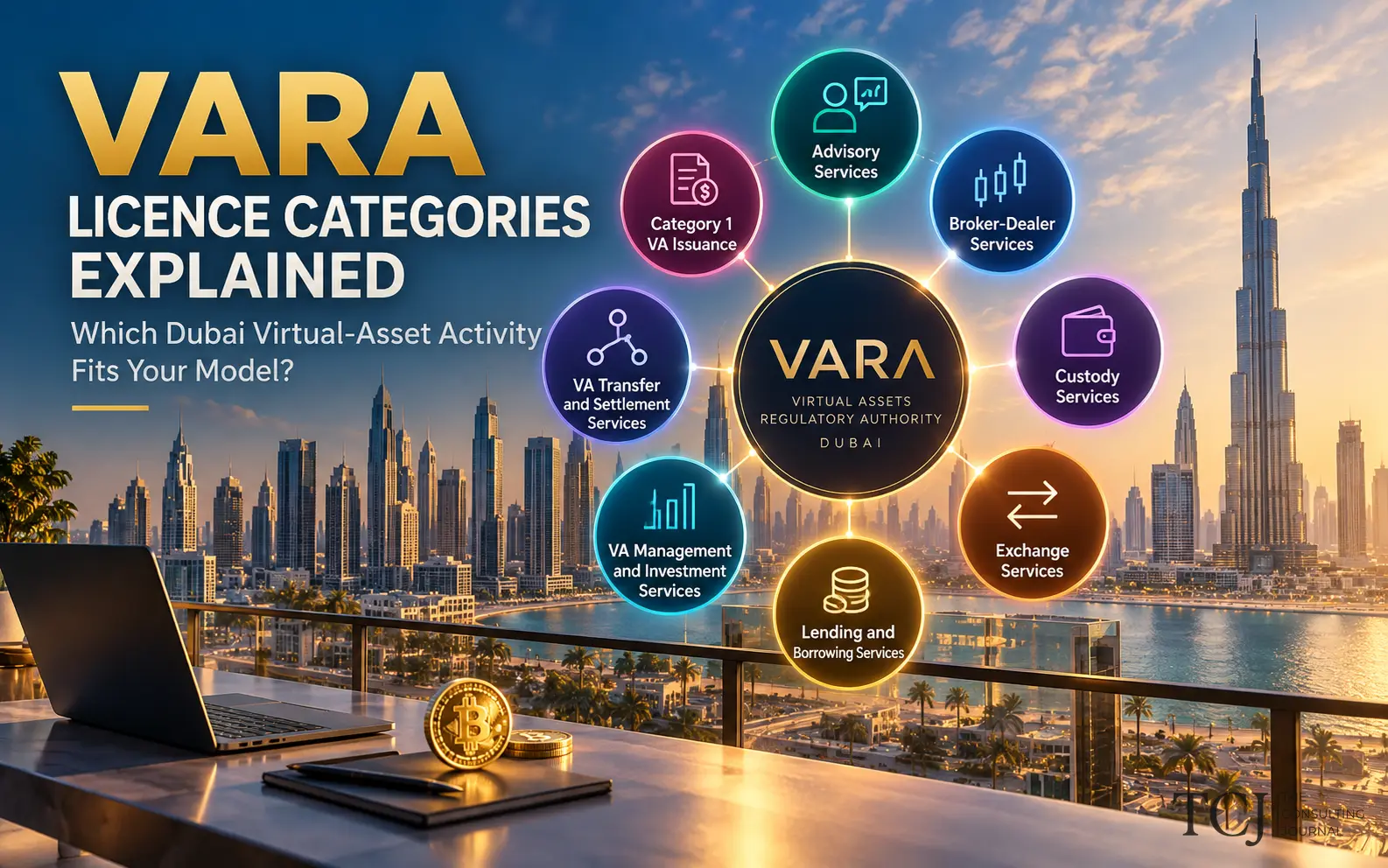
VARA Licence Categories Explained: Which Dubai Virtual-Asset Activity Fits Your Model?
Dubai’s virtual-asset framework is activity based, meaning there is no single generic crypto licence. This guide explains the eight VARA licence categories, how different business models may fall within them, and what founders should assess before launching a virtual-asset business in Dubai.

When Does a Spanish Digital-Asset Business Need a VARA Licence in Dubai?
Spanish crypto and digital-asset firms expanding to Dubai need to assess activities, entity location, marketing and licensing separately. This guide explains when VARA may apply, how MiCA fits, and what businesses should prepare before launch.