7 Ways Tokenized Equity Could Change Startup Funding in the UAE
Tokenized equity may widen startup funding access, improve ownership records, and support secondary liquidity, but UAE founders must handle legal, tax, financial, and compliance risks carefully.
Key takeaways
- Tokenized equity can widen access to startup funding, but legal ownership rights must be clear.
- UAE founders should assess licensing, securities, VARA, DIFC, and compliance implications before issuing tokens.
- Fractional ownership may attract smaller investors, but it does not remove valuation, custody, or tax risks.
- Smart contracts can support cap table controls, but they cannot replace shareholder agreements or governance documents.
- Investor protection, KYC, AML, and transparent disclosures will decide whether tokenized equity becomes useful or risky.
What is tokenized equity?
Tokenized equity is a digital representation of company ownership or investment rights, usually recorded on blockchain or distributed ledger technology. The original draft supplied the core article angle on tokenized equity, startup funding, investor access, liquidity, compliance, and risks.
In simple terms, a startup may issue a token that represents a share, a fraction of a share, or a contractual right linked to shares. The token may move digitally, but the legal question remains the same: what rights does the holder actually receive?
The U.S. Securities and Exchange Commission has warned that tokenized securities may or may not give holders ownership, voting, information, or other rights in the underlying security, depending on the structure. It also distinguishes between custodial tokenized securities and synthetic tokenized securities, where the holder may only receive exposure to an asset rather than direct ownership.
For UAE founders, this distinction matters. A token that looks like equity may be treated very differently from a token that only gives access, rewards, utility, or economic exposure. The name of the product is less important than the rights, risks, and obligations attached to it.
Tokenization does not remove the ordinary discipline of fundraising; it makes documentation, ownership controls, and investor communication more visible. — Consultant observation, KPM Global Services UAE
How could tokenized equity change startup funding?
Tokenized equity could change startup funding by making ownership smaller, more transferable, and easier to record. It may help founders reach wider investor pools, including overseas investors, strategic backers, and community supporters. In practice, its success depends on enforceable legal rights, regulator readiness, custody arrangements, and investor protection.
1. Wider investor access
Traditional startup funding often depends on venture capital firms, angel investors, family offices, and strategic investors. Many UAE SMEs and early-stage businesses struggle to access these networks, especially outside well-known technology sectors.
Tokenized equity could allow founders to structure smaller investment units and reach verified investors across borders. A Dubai-based software startup, for example, may be able to raise from regional angel investors, overseas customers, and sector specialists without relying only on one large investor.
This does not mean “anyone can invest.” Investor eligibility, securities rules, financial promotion restrictions, anti-money laundering checks, and cross-border rules still matter.
2. Fractional ownership
Tokenization can divide ownership into smaller digital units. This may allow more investors to participate at lower ticket sizes.
For founders, fractional ownership can create access to a wider capital base. For investors, it may make startup exposure more accessible. But fractional ownership also creates more administration. More investors usually means more communication, more tax reporting questions, more cap table discipline, and more governance planning.
A poorly managed fractional model can become operationally heavy very quickly.
3. Faster settlement and transfers
Private share transfers can be slow. They may require board approvals, shareholder consents, updated registers, amended cap tables, and legal review.
A tokenized model may make some transfer steps faster by using digital records and pre-programmed rules. For example, a smart contract could block a transfer to an unverified wallet or restrict transfers during a lock-up period.
Still, code cannot override the law. If a shareholder agreement requires consent, the token system should reflect that requirement instead of bypassing it.
4. Better cap table visibility
Cap table problems are common in fast-growing startups. Founders may issue shares, options, convertible instruments, side letters, SAFE-style agreements, or informal promises without keeping one clean ownership record.
Tokenized equity may improve visibility by recording ownership movements in a consistent digital system. It can help show who owns what, when tokens were issued, and whether any transfer restrictions apply.
However, Accounting and Financial records must still match legal documentation. A blockchain record alone is not enough if the company’s statutory register, shareholder agreement, licensing file, and accounting records tell a different story.
What does tokenized equity mean for UAE founders?
For UAE founders, tokenized equity should be viewed as a funding structure requiring legal, financial, tax, accounting, and regulatory planning. It may be relevant for fintech, Web3, AI, gaming, SaaS, and community-led startups, but it is not suitable for every business or investor base.
Dubai, DIFC, ADGM, mainland UAE, and free zone businesses may face different regulatory pathways depending on the activity and product design. In the DIFC, the DFSA states that its Investment Tokens framework applies to persons interested in marketing, issuing, trading, or holding Investment Tokens in or from the DIFC, including authorised firms dealing with related financial services.
The DFSA has also launched a Tokenisation Regulatory Sandbox for firms exploring tokenised investment products and services within DIFC. Its stated scope includes tokenised investments such as equities, bonds, sukuk, and collective investment fund units, while crypto tokens and fiat crypto tokens are outside that sandbox scope.
For Dubai outside DIFC, VARA states that it is the sole authority regulating virtual assets across Dubai mainland and free zones, except within DIFC. VARA’s VA Issuance Rulebook guidance also requires entities issuing virtual assets in the Emirate in the course of business to assess the category of issuance and comply with applicable requirements.
The practical point is simple: founders should not choose a token model first and ask compliance questions later.
What are the main benefits for investors?
Tokenized equity may give investors lower entry points, clearer records, and possible future exit routes. It may also support faster verification of ownership and transfer history. These benefits are useful, but they only matter if the investor understands whether the token gives actual equity, indirect rights, synthetic exposure, or another contractual claim.
IOSCO’s 2025 report on tokenization highlights that risks differ across tokenized assets and arrangements. It notes investor protection concerns where the legal meaning of token ownership and underlying asset ownership may not be transparent or aligned with investor expectations.
For UAE investors, this is a key due diligence point. A token’s dashboard may look modern, but the real questions are traditional:
- Who is the issuer?
- What legal rights does the investor receive?
- Is there voting power?
- Are dividends or distributions possible?
- Is the token transferable?
- Who holds custody?
- Which law and forum govern disputes?
- What happens if the platform, issuer, or custodian fails?
Example 1: Dubai SaaS startup raising from regional angels
Example 1: A fictional Dubai SaaS company wants to raise AED 3 million from 60 regional angel investors. The founders like the idea of tokenized equity because smaller tickets may bring more strategic supporters.
A consultant would first review the licence activity, shareholder structure, investor eligibility, offer documents, financial projections, accounting treatment, KYC process, and whether the structure falls under securities or virtual asset rules. The token should not be marketed until the company understands which regulator, rules, disclosures, and approvals may apply.
Example 2: UAE family business investing in tokenized startup shares
Example 2: A fictional UAE family office is offered tokenized shares in an overseas AI startup. The offer deck says the token is “equity-backed,” but the legal terms say the token only tracks the value of shares held by a third party.
The family office should treat this as a high-risk financial investment. It should review custody, counterparty risk, tax consequences, reporting obligations, valuation assumptions, redemption limits, and whether the token gives voting or dividend rights. The word “equity” does not automatically mean direct shareholder ownership.
Common mistakes business owners make
A common mistake is assuming tokenization removes regulation. It does not. If a token gives investment rights or economic exposure to shares, securities and financial services rules may apply.
Another mistake is launching with weak documents. A whitepaper, pitch deck, shareholder agreement, token terms, cap table, and accounting records must speak the same language.
Founders also underestimate investor relations. A tokenized fundraising round may create many smaller investors. That can mean more questions, complaints, reporting expectations, and governance pressure.
Some businesses confuse liquidity with tradability. A token may be technically transferable, but that does not guarantee buyers, marketplace access, regulatory permission, or fair pricing.
The final mistake is ignoring Tax and Accounting early. Token issuance, investor proceeds, employee incentives, token-related expenses, and future gains may all require careful treatment depending on the structure.
Documents and preparation checklist
Before exploring tokenized equity, UAE founders should prepare:
- Current trade licence and activity details.
- Company constitutional documents and shareholder register.
- Updated cap table, including options, SAFEs, convertibles, and side letters.
- Draft investment terms and shareholder rights.
- Token rights summary, including voting, dividends, transferability, and redemption.
- Legal opinion on whether the token may be a security, investment token, virtual asset, or other regulated product.
- KYC, AML, sanctions screening, and investor onboarding process.
- Financial model, valuation support, and use-of-funds schedule.
- Accounting treatment memo for proceeds, expenses, and obligations.
- Tax impact assessment for the UAE and cross-border investors.
- Custody, wallet, cybersecurity, and recovery process.
- Investor communications and complaint-handling process.
How KPM Global Services UAE can assist
KPM Global Services UAE can help founders and investors assess tokenized equity structures before they become expensive compliance problems.
Support may include business model review, UAE company structuring, accounting readiness, financial documentation, investor reporting, Tax considerations, and coordination with legal or regulatory advisers where specialised advice is required.
For founders, the immediate value is clarity. A tokenized funding idea should be tested against licensing, ownership, investor eligibility, cap table control, cash flow, and documentation requirements before any public offer or investor campaign.
For investors, KPM Global Services UAE can assist with financial due diligence, accounting review, valuation support, investment documentation checks, and practical risk questions before capital is committed.
Final advisory note
Tokenized equity could make startup funding more accessible, transparent, and efficient. It may help UAE startups reach broader investor pools and improve ownership records. But it is not a shortcut around securities rules, investor protection, Tax, Financial, or Accounting obligations.
The strongest tokenized equity models will be the ones that combine useful technology with clear legal rights, clean documentation, careful investor onboarding, and disciplined financial reporting.
This article is for informational purposes and does not constitute legal, tax, accounting, or financial advice.
Questions and answers
What is tokenized equity in startup funding?
Tokenized equity is a digital representation of company ownership or investment rights. It may represent shares, fractional shares, or contractual exposure linked to shares, depending on the legal structure.
Is tokenized equity allowed in the UAE?
It depends on the activity, location, rights attached to the token, and regulator involved. UAE founders should review securities, virtual asset, DIFC, VARA, free zone, and cross-border rules before making any offer.
Does tokenized equity give investors real shares?
Not always. Some tokens may provide direct or indirect ownership, while others may only provide synthetic exposure or contractual rights linked to shares. Investors should review the legal documents, not only the marketing material.
Can tokenized equity improve startup liquidity?
It may improve liquidity, but it does not guarantee it. Transfer restrictions, investor eligibility, regulatory permissions, marketplace access, and buyer demand all affect whether a token can actually be sold.
What should UAE founders prepare before tokenized fundraising?
Founders should prepare a clean cap table, licence documents, shareholder agreements, token terms, investor onboarding process, financial model, accounting records, tax assessment, and compliance review. Proper preparation reduces the risk of investor disputes and regulatory issues.
More in Crypto
View all Crypto →
Stablecoin Payments for UAE Businesses: Benefits, Regulations and Risks
Stablecoin payments offer UAE businesses new possibilities for cross-border settlements and financial operations. Explore commercial benefits, CBUAE regulations, compliance risks, and practical steps before adoption.
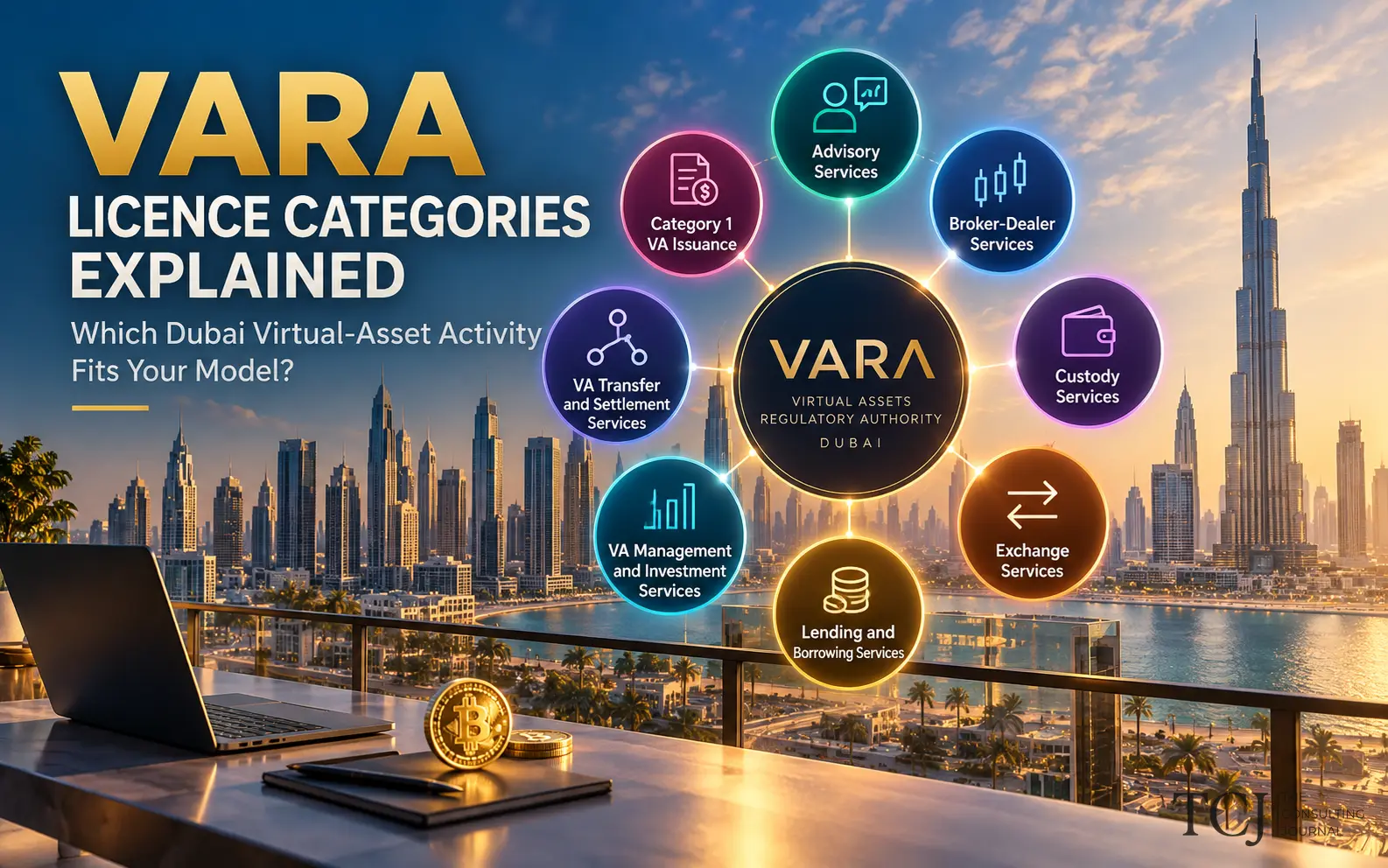
VARA Licence Categories Explained: Which Dubai Virtual-Asset Activity Fits Your Model?
Dubai’s virtual-asset framework is activity based, meaning there is no single generic crypto licence. This guide explains the eight VARA licence categories, how different business models may fall within them, and what founders should assess before launching a virtual-asset business in Dubai.

When Does a Spanish Digital-Asset Business Need a VARA Licence in Dubai?
Spanish crypto and digital-asset firms expanding to Dubai need to assess activities, entity location, marketing and licensing separately. This guide explains when VARA may apply, how MiCA fits, and what businesses should prepare before launch.