Crypto Risk Management for UAE SMEs and Investors
A practical UAE guide for SMEs and investors on managing crypto risk through custody controls, wallet security, Tax records, compliance checks, and treasury policy.
Key takeaways
- Crypto risk management starts with clear exposure limits before any UAE SME accepts, holds, or invests in digital assets.
- Custody risk is a management issue because private keys, approvals, backups, and reconciliation determine who can move company funds.
- UAE businesses should keep complete Accounting and Tax records for crypto transactions, including fiat values, fees, wallet addresses, and approvals.
- Stablecoins may reduce volatility but still carry issuer, reserve, platform, liquidity, and regulatory risks.
- KPM Global Services UAE can help SMEs build practical crypto policies, records, controls, and finance-team workflows.
What is crypto risk management for SMEs and investors?
Crypto risk management is the process of identifying, limiting, monitoring, and documenting risks linked to digital assets. For UAE SMEs and investors, this usually includes market volatility, wallet security, custody, fraud, Accounting treatment, Tax records, regulatory exposure, and internal approval controls before any crypto transaction is made.
For a Dubai trading company, crypto risk may appear when accepting customer payments, holding stablecoins, using a payment processor, or investing surplus cash. For an individual investor, the risk may sit in portfolio concentration, leverage, custody choices, or unclear records.
The aim is not to make crypto risk-free. That is not realistic. The aim is to avoid unmanaged exposure. A business owner should know who controls the wallet, who approves transfers, how values are recorded, and what happens if a platform freezes withdrawals.
In Dubai, virtual asset activity must also be considered against the regulatory perimeter. VARA states that it regulates virtual assets across Dubai mainland and free zones, except within DIFC, and its framework applies to Virtual Asset Service Providers operating in or from Dubai.
Why does crypto risk matter for UAE SMEs?
Crypto risk matters because a single weak control can create a Financial, operational, cyber, Tax, or reputational problem. SMEs often focus on price movement, but in practice the larger issue may be poor approval discipline, missing transaction records, weak custody, or using a provider without checking licensing and compliance.
An SME that receives crypto without a written policy may struggle later with bank questions, audit evidence, VAT analysis, Corporate Tax records, or ownership documentation. This is especially relevant in the UAE, where companies are expected to maintain reliable books and records.
The UAE Corporate Tax regime applies to financial years beginning on or after 1 June 2023, and taxable income generally starts from accounting income shown in the financial statements before required tax adjustments. The Federal Tax Authority has also stated that Taxable Persons and certain Exempt Persons must retain relevant Corporate Tax records for at least seven years after the end of the relevant Tax Period.
That means crypto transactions should not sit outside the Accounting system. Wallet movements, exchange statements, conversion rates, fees, gains, losses, customer receipts, supplier payments, and approvals should be captured in a way the finance team can explain.
How should SMEs manage crypto market volatility?
SMEs should set exposure limits before buying, accepting, or holding crypto. A practical policy should decide how much can be held, when crypto must be converted to fiat, who can approve exceptions, and which funds must never be exposed, such as payroll, rent, VAT, Tax, and supplier reserves.
Crypto prices can move quickly. A company that accepts a customer payment in a volatile asset may find the value materially different by the time the invoice is reconciled. This can affect margins, cash flow planning, and management reporting.
A sensible UAE SME policy may include:
- Maximum crypto holding as a percentage of monthly revenue or cash reserves.
- Same-day or next-day conversion rules for operating receipts.
- No use of payroll, VAT, Corporate Tax, rent, or supplier funds for speculative holdings.
- Monthly review of unrealised gains and losses.
- Board or owner approval for any treasury allocation.
- Separate treatment for payments, investment holdings, and client-related funds.
Example 1: A Dubai e-commerce SME accepts a crypto payment through a third-party payment processor. The founder initially wants to hold the full amount as crypto. After a finance review, the company decides to convert 90% to AED within one business day and retain only a small balance for testing future payments. This reduces volatility risk and keeps working capital predictable.
What wallet and custody controls should businesses use?
A business should decide whether it will self-custody assets, use a regulated custodian, or avoid direct custody altogether. Each option creates different risks. Self-custody gives control over private keys, but the business carries full responsibility for access, backups, internal approvals, and recovery.
For SMEs, wallet control should never depend on one employee, one device, or one founder’s memory. A simple wallet setup can still fail if private keys are stored in email, screenshots, cloud folders, or messaging apps.
Good controls typically include:
- Hardware or cold wallets for longer-term holdings.
- Hot wallets only for limited operating balances.
- Multi-factor authentication on exchange and email accounts.
- Two-person approval for transfers above a set threshold.
- Separate maker and checker roles.
- Backup and recovery procedures documented offline.
- Immediate access removal when staff leave.
- Monthly wallet reconciliation against Accounting records.
A crypto policy is useful only when it changes daily behaviour: who approves, who reconciles, who reviews risk, and who stops a transfer when something feels wrong. — KPM Global Services UAE consultant observation
Custody also needs commercial due diligence. Before using an exchange, payment processor, or custodian, ask who controls the private keys, whether client assets are segregated, how withdrawals work, what jurisdiction applies, and whether the provider has the required permissions for the relevant activity.
What UAE compliance issues should SMEs consider?
UAE businesses should check whether their crypto activity is a simple treasury or payment decision, or whether it moves into regulated virtual asset services. Depending on the activity, promotion, custody, transfer, exchange, advisory, management, or payment token services may require licensing, registration, approval, or regulatory review.
The Central Bank’s Payment Token Services Regulation covers payment token issuance, conversion, custody, and transfer. It sets rules and conditions for licensing or registration for those services in the UAE. The regulation also restricts certain payment token services and promotions unless the person is licensed, registered, or otherwise permitted under the regulation.
This does not mean every business mentioning crypto is automatically a regulated provider. It means SMEs should avoid casual assumptions. A retailer accepting payment, a consultancy advising clients, a fintech building wallet infrastructure, and a fund-like business managing assets may sit in very different regulatory positions.
FATF continues to highlight illicit finance risk in virtual assets and has urged stronger global action around virtual assets and virtual asset service providers. UAE SMEs should therefore expect banks, auditors, payment providers, and regulators to ask better questions about source of funds, transaction monitoring, counterparties, and recordkeeping.
How should investors control portfolio risk?
Investors should decide their crypto allocation before buying, not during a market rally. A disciplined investor sets a maximum exposure, avoids excessive leverage, diversifies carefully, documents transactions, and reviews whether crypto still fits their wider Financial plan.
For many investors, the main mistake is not buying crypto. It is buying too much, too quickly, with no exit plan. Another common issue is treating unrealised gains as cash. A token balance is not the same as available liquidity, especially during market stress or platform restrictions.
A practical investor checklist includes:
- Set a maximum crypto allocation.
- Avoid using emergency funds.
- Keep records of every buy, sell, transfer, fee, and conversion.
- Do not rely only on social media or influencer claims.
- Use secure wallets and unique passwords.
- Review exposure monthly or quarterly.
- Avoid leverage unless the risk is fully understood.
- Consider whether gains, losses, or business-related activity require Tax or Accounting review.
Example 2: An Abu Dhabi-based investor holds several tokens across two exchanges and one wallet. The investor cannot easily explain cost, current value, or transfer history. After organising exchange exports and wallet records, the investor creates a simple portfolio register and decides not to add new positions until the existing exposure is reconciled.
What should a crypto treasury policy include?
A crypto treasury policy should explain why the business uses crypto, who can approve it, how much can be held, how it is valued, where it is stored, and how transactions are recorded. The policy should be practical enough for management, finance, operations, and external advisers to follow.
For UAE SMEs, the policy should connect crypto activity with Accounting, Tax, banking readiness, cybersecurity, and licensing review. It should not sit as a technical document used only by one person.
A strong policy may cover:
- Business purpose Explain whether crypto is used for customer payments, supplier payments, treasury diversification, investment, or technology testing.
- Approved assets and providers List permitted tokens, wallets, exchanges, custodians, and payment processors.
- Exposure limits Set maximum holding limits by amount, percentage, or purpose.
- Approval levels Define who can initiate, review, approve, and reconcile transactions.
- Conversion rules State when crypto receipts should be converted to AED or another fiat currency.
- Accounting treatment Record valuation method, transaction evidence, exchange rate source, fees, and reconciliation frequency.
- Compliance checks Include counterparty due diligence, source of funds review, sanctions screening where relevant, and licensing checks.
- Incident response Explain what to do if keys are compromised, a transfer is suspicious, or a platform freezes withdrawals.
Common mistakes business owners make
Many crypto losses happen because governance is introduced after the problem. UAE business owners should avoid these common mistakes:
- Allowing one person to control all wallets and exchange accounts.
- Accepting crypto payments before checking regulatory and banking implications.
- Treating stablecoins as risk-free cash.
- Failing to reconcile wallet balances with Accounting records.
- Mixing personal and company crypto activity.
- Using screenshots instead of complete transaction records.
- Ignoring Tax and audit evidence until year-end.
- Approving vendors or platforms based only on popularity.
- Holding operating cash in volatile assets.
- Promoting crypto-related services without checking permissions.
Stablecoins may reduce price volatility, but they still carry issuer, reserve, platform, liquidity, and regulatory risk. They should be reviewed as Financial instruments, not treated casually as a bank balance.
Documents and preparation checklist
Before a UAE SME starts accepting, holding, or investing in crypto, it should prepare a basic file that can be shared internally with management, finance, auditors, and advisers.
The file should include:
- Trade licence and activity details.
- Board, owner, or management approval for crypto use.
- Crypto treasury policy.
- Wallet ownership records.
- Exchange or custodian onboarding documents.
- KYC and due diligence documents for service providers.
- Transaction register.
- Wallet addresses used by the business.
- Fiat value at transaction date and time.
- Invoices, receipts, and customer or supplier documents.
- Exchange statements and wallet exports.
- Monthly reconciliation reports.
- Cybersecurity access register.
- Incident response plan.
- Tax and Accounting review notes.
For businesses with larger volumes, this should be supported by clear segregation of duties. The person initiating a transfer should not be the only person approving and reconciling it.
How KPM Global Services UAE can assist
KPM Global Services UAE can support SMEs, founders, investors, and finance teams with practical crypto risk management from a UAE business perspective. The work typically starts with understanding the activity, transaction flow, custody model, Accounting records, Tax exposure, and internal controls.
Support may include:
- Crypto transaction review and documentation.
- Treasury policy drafting.
- Wallet and exchange control review.
- Accounting reconciliation support.
- Corporate Tax and VAT record preparation.
- Management reporting for crypto holdings.
- Risk register development.
- Vendor and payment processor due diligence.
- Internal approval workflow design.
- Banking readiness support for crypto-related transaction explanations.
KPM Global Services UAE does not promise guaranteed approvals, tax savings, licensing outcomes, or authority treatment. The practical objective is to help management make better decisions, maintain stronger records, and reduce avoidable risk.
A safer way forward
Crypto risk management for SMEs and investors is not about avoiding innovation. It is about using proper discipline before money moves. In the UAE, that discipline should include exposure limits, wallet protection, custody review, regulatory checks, Accounting records, Tax documentation, and regular management review.
A business that treats crypto as a controlled Financial activity is better prepared than one that treats it as an experiment outside normal governance. The same applies to investors. Crypto may form part of a wider portfolio, but it should not replace planning, liquidity, or evidence.
This article is for informational purposes and does not constitute legal, tax, accounting, or financial advice.
Questions and answers
Can a UAE SME accept crypto payments?
A UAE SME may consider crypto payments, but it should first review the activity, token type, payment flow, licensing position, banking impact, and Accounting treatment. In practice, many businesses use a payment processor and convert quickly to fiat to reduce volatility and recordkeeping problems.
Is crypto taxable for UAE businesses?
Crypto activity may affect Accounting income, Corporate Tax analysis, VAT review, and financial reporting depending on the facts. Businesses should keep detailed records of acquisitions, disposals, conversions, fees, and valuations so their advisers can assess the correct treatment.
Are stablecoins safe for business treasury use?
Stablecoins can reduce price volatility, but they are not risk-free. SMEs should review issuer quality, reserve transparency, liquidity, platform risk, redemption terms, and UAE regulatory treatment before using them for treasury or payments.
What is the biggest crypto risk for SMEs?
The biggest risk is often weak governance rather than price movement alone. One-person wallet control, missing approvals, poor records, and unverified platforms can create losses, audit issues, banking questions, and compliance exposure.
How can investors reduce crypto portfolio risk?
Investors can reduce risk by setting a maximum allocation, avoiding leverage, diversifying carefully, securing wallets, and keeping complete transaction records. Crypto should fit within a wider Financial plan rather than drive every investment decision.
More in Crypto
View all Crypto →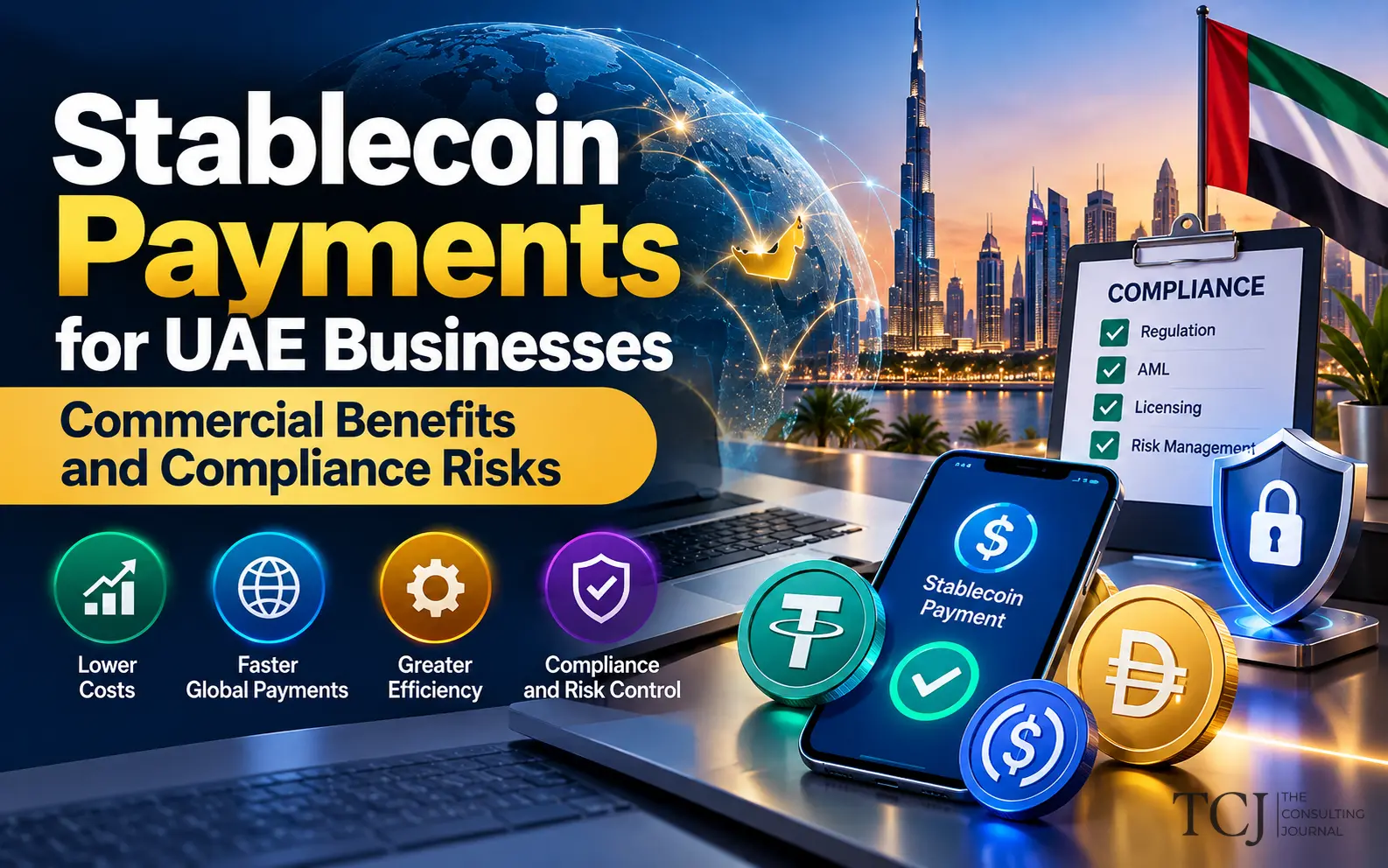
Stablecoin Payments for UAE Businesses: Benefits, Regulations and Risks
Stablecoin payments offer UAE businesses new possibilities for cross-border settlements and financial operations. Explore commercial benefits, CBUAE regulations, compliance risks, and practical steps before adoption.

VARA Licence Categories Explained: Which Dubai Virtual-Asset Activity Fits Your Model?
Dubai’s virtual-asset framework is activity based, meaning there is no single generic crypto licence. This guide explains the eight VARA licence categories, how different business models may fall within them, and what founders should assess before launching a virtual-asset business in Dubai.

When Does a Spanish Digital-Asset Business Need a VARA Licence in Dubai?
Spanish crypto and digital-asset firms expanding to Dubai need to assess activities, entity location, marketing and licensing separately. This guide explains when VARA may apply, how MiCA fits, and what businesses should prepare before launch.