Best Areas in Dubai for Hospitality and Service Industry Workers
Practical UAE guide for hospitality and service workers choosing affordable, well-connected areas in Dubai near hotels, malls, airports, restaurants, and metro links.
Key takeaways
- The best area depends on workplace location, shift timing, budget, and transport access.
- Deira, Bur Dubai, Karama, Satwa, and Al Barsha are practical for central Dubai service roles.
- Discovery Gardens can suit workers in Dubai Marina, JLT, Ibn Battuta, and Jebel Ali.
- Al Nahda, International City, DIP, and Muhaisnah may offer lower-cost options but need commute planning.
- Workers should calculate total monthly cost, including transport, utilities, food, and late-shift taxi needs.
- Employers should consider accommodation and transport planning as part of workforce stability.
What makes an area suitable for hospitality and service workers in Dubai?
A suitable area is usually affordable, well-connected, close to work zones, and practical for daily life. Workers should look at rent, shared accommodation quality, metro or bus access, late-shift transport options, supermarkets, clinics, laundries, and the true cost of commuting before choosing a location.
Hospitality and service workers often work split shifts, late nights, early mornings, weekends, and public holidays. This makes location more important than it may appear during a quick room viewing.
The best area depends on the workplace. A waiter in Dubai Marina, a housekeeping supervisor in Downtown Dubai, a barista in Deira, and an airline support worker near Dubai International Airport will not have the same ideal location.
The right Dubai neighbourhood is not always the cheapest one; it is the one that protects a worker’s time, energy, and monthly savings. — Consulting Journal UAE observation
Why does Dubai remain attractive for hospitality and service careers?
Dubai has a year-round tourism, retail, aviation, food, events, and lifestyle economy. The first half of 2025 alone recorded 9.88 million international overnight visitors, up 6% compared with the same period in 2024, according to DET’s tourism performance data.
This demand supports employment across hotels, restaurants, cafés, malls, transport services, housekeeping, airport operations, events, salons, spas, security, cleaning, and delivery support.
For many workers, Dubai also offers wider job movement across brands and sectors. A person may begin in a restaurant, move to hotel F&B, shift into retail, or later take a supervisory role. Living in a connected area can make that career movement easier.
What should workers check before choosing accommodation?
Workers should check total monthly cost, not only rent. This includes transport, utilities, internet, food access, deposits, maintenance charges, laundry, and late-night taxi expenses. A room that looks cheaper on paper may cost more if it is far from the workplace or poorly connected.
Rent and shared accommodation
Many service workers in Dubai choose shared rooms, bed spaces, partition rooms, company accommodation, or shared apartments. Areas such as Deira, Bur Dubai, Karama, Al Nahda, International City, Muhaisnah, and parts of Dubai Investment Park are often considered by budget-conscious workers.
Before paying any deposit, workers should check the number of occupants, bathroom sharing, cleanliness, building rules, access cards, maintenance responsibility, and whether utilities are included.
Metro, bus, and shift timing
Dubai’s Roads and Transport Authority provides public transport services including metro, buses, trams, taxis, and journey-planning information through official platforms. RTA also lists bus routes and connections, including routes linking to metro stations.
For hospitality workers, the key question is not only whether an area has public transport. It is whether transport works for the actual shift pattern. Late closing shifts, airport reporting times, and split shifts can change the daily cost.
Distance from hotels, malls, airports, and restaurants
Many service jobs are concentrated around Dubai Marina, JBR, Downtown Dubai, Business Bay, Deira, Dubai Mall, Mall of the Emirates, Dubai International Airport, Jumeirah, Palm Jumeirah, Expo City, and Jebel Ali.
Living near a metro station or company transport pickup can reduce stress. Workers should test the commute during the same time they will actually travel, not only during quiet daytime hours.
Which are the best areas in Dubai for hospitality and service workers?
The best areas include Al Barsha, Deira, Bur Dubai, Al Nahda, International City, Discovery Gardens, Dubai Silicon Oasis, Jumeirah Village Circle, Karama, Satwa, Dubai Investment Park, and Muhaisnah. Each area suits a different budget, workplace zone, and transport need.
1. Al Barsha
Al Barsha is practical for workers employed near Mall of the Emirates, Sheikh Zayed Road, Dubai Marina, Jumeirah, Palm Jumeirah, and nearby hotels. It has supermarkets, restaurants, shared flats, and access to Mall of the Emirates and Mashreq metro stations.
It can cost more than older budget areas, but the location often saves time for hotel, spa, restaurant, and retail workers.
2. Deira
Deira is one of Dubai’s most established and practical areas for service workers. It is close to Dubai International Airport, older hotels, restaurants, retail shops, trading businesses, and public transport.
It suits airport support staff, housekeeping teams, retail employees, restaurant workers, and cleaning staff. The area is busy, but daily essentials are usually nearby.
3. Bur Dubai
Bur Dubai is popular among hospitality, restaurant, salon, retail, and support workers because it has shared housing, affordable food options, clinics, supermarkets, and metro access.
It is also convenient for workers in hotels, offices, banks, travel agencies, tourist areas, and central Dubai service businesses.
4. Al Nahda
Al Nahda is near the Dubai-Sharjah border and is often considered by workers seeking lower rent. It has supermarkets, clinics, family buildings, bachelor accommodation options, and bus connections.
It suits workers employed in Deira, Al Qusais, airport-related locations, and northern Dubai. The main trade-off is commute time during peak hours.
5. International City
International City is known for budget-friendly accommodation and is often chosen by restaurant staff, delivery riders, supermarket workers, and service employees.
The main advantage is rent. The main drawback is that metro access is limited, so workers should calculate bus, taxi, or shared transport costs before moving.
6. Discovery Gardens
Discovery Gardens works well for workers employed in Dubai Marina, JLT, Jebel Ali, Ibn Battuta, and hotels along Sheikh Zayed Road. It has metro access through the Route 2020 extension and offers a more residential environment than some older central areas.
It can be a good balance for workers who want lower rent than Marina but better connectivity than remote areas.
7. Dubai Silicon Oasis
Dubai Silicon Oasis is suitable for people working in cafés, clinics, salons, restaurants, offices, retail outlets, and nearby service businesses.
It is more practical when the job is located in or near DSO. For workers employed in Marina, Downtown, or Deira, the commute may be less convenient.
8. Jumeirah Village Circle
JVC has many apartment options and is often more affordable than Dubai Marina, Downtown Dubai, or Jumeirah. It also has restaurants, hotels, salons, gyms, and supermarkets.
The main issue is public transport. JVC works better for workers with company transport, carpooling, nearby employment, or flexible shift support.
9. Karama
Karama is one of the most practical choices for service workers. It offers affordable food, shared accommodation, metro access, clinics, laundries, and shops.
It suits workers in Bur Dubai, Oud Metha, Downtown Dubai, DIFC, restaurants, retail, and service businesses. The area can be crowded, but it is highly convenient.
10. Satwa
Satwa is close to Jumeirah, Sheikh Zayed Road, DIFC, Downtown Dubai, and many hotels and restaurants. It has affordable eateries, shops, laundries, and shared accommodation options.
It can be a smart choice for workers in luxury hotels, restaurants, cafés, salons, cleaning, and support services around Jumeirah and central Dubai.
11. Dubai Investment Park
Dubai Investment Park is practical for workers employed in Dubai South, Expo City, Jebel Ali, catering, logistics, industrial services, and staff accommodation-linked jobs.
It is less suitable for workers employed in central Dubai unless company transport is provided.
12. Muhaisnah
Muhaisnah is known for staff accommodation and labour housing. It is used by companies in cleaning, facilities management, logistics, construction support, and hospitality support roles.
It is affordable and functional, but commute planning is essential. Workers should confirm pickup points, transport timing, and daily travel distance.
Which areas are best for workers without a car?
Workers without a car should usually prioritise Deira, Bur Dubai, Karama, Al Barsha, Discovery Gardens, and other areas with metro or strong bus access. These locations can reduce taxi dependency and make daily travel more predictable, especially for workers on fixed shifts.
Metro access is valuable, but it should not be the only factor. The room may still be far from the station, or the final workplace may require a long walk, bus connection, or taxi ride.
Workers should test the full journey from room door to workplace entrance. This is especially important for hotel staff who must arrive before shift briefing.
Which areas are best for airport and airline workers?
Airport and airline staff often prefer Deira, Al Qusais, Al Nahda, Rashidiya, Garhoud, and Muhaisnah. These areas can reduce travel pressure for early morning reporting, night shifts, ground services, catering, cleaning, security, and airport hotel roles.
Airport jobs are timing-sensitive. Missing transport can affect attendance, payroll, and performance records. Workers should confirm whether company transport is available and whether it covers early and late shift changes.
Which areas are best for hotel and restaurant workers?
Hotel and restaurant workers should choose areas based on their actual workplace zone. For Dubai Marina and JBR, Discovery Gardens, JLT, Al Barsha, and JVC may be practical. For Downtown Dubai, Satwa, Karama, and Bur Dubai are often better. For Deira hotels, Deira, Al Qusais, and Al Nahda can make sense.
For Palm Jumeirah jobs, Al Barsha, Discovery Gardens, and JVC may be considered, depending on transport. For Jumeirah hotels, Satwa, Karama, and Al Barsha are often convenient.
Example 1: Restaurant worker in Dubai Marina
A fictional restaurant waiter working in Dubai Marina first chooses a low-cost bed space in International City. The rent looks attractive, but daily travel becomes tiring because of shift timing and transport changes.
After two months, he moves to Discovery Gardens. The rent is higher, but the commute is shorter, sleep improves, and late-shift taxi costs reduce. His total monthly cost becomes more manageable because transport is planned better.
Example 2: Housekeeping staff near Downtown Dubai
A fictional housekeeping employee working near Downtown Dubai considers JVC because the room is newer. After checking the route, she realises that late-night transport may be difficult.
She chooses Karama instead. The building is older, but food, laundry, clinics, metro access, and shared transport are easier. For her shift pattern, practical access matters more than apartment appearance.
What common mistakes do workers make when choosing an area?
The most common mistake is choosing the cheapest room without calculating commute cost and daily fatigue. Other mistakes include paying deposits without receipts, ignoring late-shift transport, overlooking cleanliness, accepting overcrowded rooms, and not checking whether utilities are included.
Common mistakes include:
- Choosing rent only, without checking transport cost.
- Not visiting the accommodation at night.
- Paying cash deposits without written proof.
- Ignoring building cleanliness and pest control.
- Not checking bathroom sharing and occupancy.
- Assuming the metro will solve every commute.
- Forgetting late-night taxi costs after closing shifts.
- Moving far from work without company transport.
- Not confirming DEWA, internet, gas, and maintenance charges.
- Sharing with unknown occupants without basic safety checks.
Documents and preparation checklist before moving
Before moving, workers should prepare documents, confirm payment terms, and inspect the accommodation carefully. This reduces disputes and helps avoid unexpected costs after moving in.
Checklist:
- Emirates ID copy, if requested by the accommodation provider.
- Passport and visa copy, if needed for building records.
- Employment details or staff ID, where required.
- Written rent amount and payment schedule.
- Deposit receipt.
- Utility and internet cost confirmation.
- Access card or building entry details.
- Bed space, room, or partition terms in writing.
- Maintenance contact number.
- Transport route checked during actual shift timing.
- Emergency taxi budget for late shifts.
- Nearby supermarket, clinic, laundry, and pharmacy checked.
Budget tips for service industry workers in Dubai
Workers should compare total monthly cost, not only room rent. A slightly higher rent near work may save money if it reduces taxi use, long bus journeys, missed rest, and daily stress.
Practical tips:
- Live near metro, bus, or company transport pickup where possible.
- Share accommodation only with trusted occupants.
- Check whether utilities are included.
- Avoid rooms with unclear deposit terms.
- Keep written proof of all payments.
- Choose areas with affordable food and laundry.
- Test the commute before paying.
- Keep emergency cash for late shifts.
- Avoid moving too far from work unless transport is reliable.
- Review monthly costs after the first salary cycle.
How KPM Global Services UAE (https://kpmglobal.ae/en) can assist
KPM Global Services UAE (https://kpmglobal.ae/en) supports UAE businesses with practical advisory services across business setup, licensing, accounting, tax, financial planning, and compliance. For hospitality, restaurant, retail, cleaning, facilities, and service businesses, good workforce planning is linked to cost control, documentation, payroll readiness, and business continuity.
Business owners and managers can work with KPM Global Services UAE (https://kpmglobal.ae/en) to review setup requirements, accounting records, payroll documentation, VAT and corporate tax readiness where applicable, and financial processes that support better operational decisions.
Final advisory note
The best areas in Dubai for hospitality and service industry workers are not the same for everyone. Deira, Bur Dubai, Karama, Satwa, Al Barsha, Discovery Gardens, International City, Al Nahda, Dubai Investment Park, JVC, Dubai Silicon Oasis, and Muhaisnah all work for different budgets and job locations.
The practical decision is simple: choose the area that gives the best balance between rent, commute, rest, safety, and access to daily essentials. For service workers, time and energy are part of the real cost of living in Dubai.
This article is for informational purposes and does not constitute legal, tax, accounting, or financial advice.
Questions and answers
Q: What are the best areas in Dubai for hospitality and service workers?
A: The best areas include Deira, Bur Dubai, Karama, Satwa, Al Barsha, Discovery Gardens, Al Nahda, International City, JVC, Dubai Investment Park, and Muhaisnah. The right choice depends on the workplace, rent budget, transport access, and shift timing.
Q: Which Dubai area is cheapest for service workers?
A: International City, Muhaisnah, Al Nahda, and some parts of Deira are often considered more budget-friendly. Workers should still calculate transport costs because cheaper rent can become expensive if the commute is long.
Q: Which area is best for hotel workers in Dubai Marina?
A: Discovery Gardens, JLT, Al Barsha, and JVC can be practical for Dubai Marina hotel workers. Discovery Gardens and JLT may be more convenient for workers who rely on metro access or shorter travel times.
Q: Which area is best for airport staff in Dubai?
A: Deira, Al Qusais, Al Nahda, Rashidiya, Garhoud, and Muhaisnah are commonly practical for airport-related workers. These areas can reduce travel stress for early morning, late-night, and rotating shifts.
Q: Should hospitality workers live near a metro station in Dubai?
A: Yes, living near a metro station can reduce taxi costs and make commuting more predictable. Workers should still check walking distance, bus connections, last metro timing, and the route from the station to the workplace.
More in Real Estate
View all Real Estate →
Off-Plan Property Due Diligence in Dubai: 12 Checks Before Paying a Deposit
Buying off-plan property in Dubai requires more than reviewing a brochure. Check the developer, DLD project status, escrow account, SPA, unit details, payment plan, registration and exit conditions before transferring a deposit.

How to Start a Holiday Home Business in Dubai: DET Guide
Starting a holiday home business in Dubai requires the right owner or operator structure, DET registration, individual unit permits, guest compliance, Tourism Dirham administration, and annual renewals.
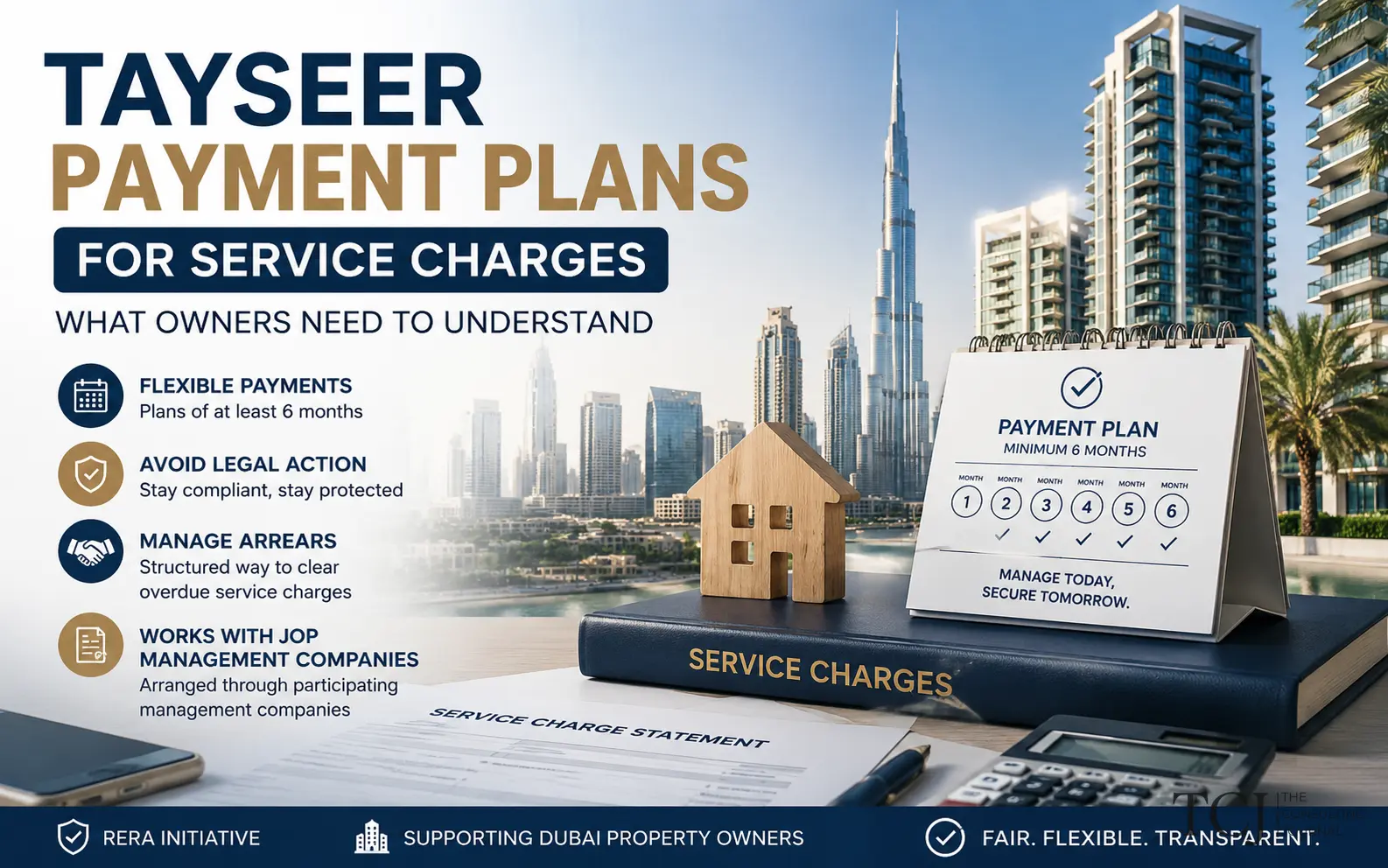
Tayseer Payment Plans for Service Charges in Dubai
Dubai property owners with overdue service charges may be able to use Tayseer payment plans. Here is what owners should verify about instalments, enforcement, ongoing charges, and property sales.