CMA vs CPA in UAE: Which Finance Qualification Fits?
A practical UAE guide comparing CMA and CPA for finance professionals, accountants, CFO-track candidates, and business owners hiring accounting talent in Dubai and across the UAE.
Key takeaways
- CMA is usually better for management accounting, budgeting, FP&A, cost control, and finance leadership roles.
- CPA is usually better for audit, public accounting, financial reporting, tax, assurance, and compliance-focused roles.
- UAE employers value certifications, but practical experience with records, reporting, tax files, and audit readiness matters heavily.
- Business owners should hire based on the company’s finance problem, not only the qualification title.
- KPM Global Services UAE can support SMEs with accounting, tax, reporting, financial controls, and finance process advisory.
What does CMA focus on?
CMA focuses on management accounting and financial decision support. It is designed for professionals who want to work closer to business planning, budgeting, cost control, performance management, corporate finance, risk, and internal reporting. In practice, CMA is often useful for people aiming for finance manager, FP&A, controller, or CFO-track roles.
The Certified Management Accountant credential is administered by the Institute of Management Accountants. IMA describes the CMA as a two-part exam covering financial planning, performance and analytics, and strategic financial management. Part 1 includes topics such as planning, budgeting, forecasting, cost management, internal controls, and technology and analytics. Part 2 includes financial statement analysis, corporate finance, decision analysis, risk management, investment decisions, and ethics.
For UAE companies, this makes the CMA especially relevant where finance teams are expected to support pricing, cash flow planning, margin reviews, procurement decisions, inventory control, and board reporting. A Dubai trading company, for example, may not only need accurate books. It may also need someone who can explain why gross margins are changing, whether credit terms are affecting cash, and which products are tying up working capital.
What does CPA focus on?
CPA focuses on public accounting, audit, financial reporting, taxation, regulation, and assurance. It is often the stronger route for professionals who want technical accounting credibility, especially in audit firms, multinational finance teams, reporting roles, compliance functions, and tax-focused advisory work.
The CPA credential is licensed through U.S. state boards. NASBA explains that becoming a CPA generally involves passing the Uniform CPA Exam and meeting the licensing requirements of the state board where the candidate wants to be licensed. Requirements can differ by jurisdiction, including education, experience, and other state-specific conditions.
The current CPA Exam structure includes three Core sections and one Discipline section. AICPA lists the Core sections as Auditing and Attestation, Financial Accounting and Reporting, and Taxation and Regulation. Candidates then choose one Discipline section, such as Business Analysis and Reporting, Information Systems and Controls, or Tax Compliance and Planning.
For UAE employers, CPA can be attractive where the role involves IFRS reporting, audit coordination, group consolidation, tax documentation, internal controls, and dealings with external auditors. It can also help professionals who want to work with international clients, U.S.-linked groups, or multinational reporting structures.
CMA vs CPA in UAE: Which is better for your career?
Neither qualification is automatically better. CMA is typically stronger for internal finance, planning, business performance, and CFO-track roles. CPA is typically stronger for audit, public accounting, reporting, tax, and assurance roles. The better choice depends on the work the professional wants to do every week, not only the title they want later.
A finance professional in a UAE manufacturing business may benefit from CMA because costing, pricing, budgeting, and variance analysis can directly affect profitability. A professional in an audit firm or tax advisory team may benefit more from CPA because the work is closer to financial reporting, assurance, and regulatory interpretation.
Business owners should also understand the difference when hiring. A CMA-qualified finance manager may be suitable when the company needs better forecasting, cash flow discipline, and management reporting. A CPA-qualified accountant or advisor may be more suitable when the company needs stronger audit readiness, accounting treatment analysis, and tax documentation support.
A qualification opens the door, but UAE employers usually promote finance professionals who can convert technical knowledge into cleaner records, better decisions, and fewer surprises. — Consultant observation, KPM Global Services UAE
How do the exam structures compare?
The CMA exam is shorter in structure because it has two parts. The CPA Exam is broader because candidates complete three Core sections and one selected Discipline section. That does not mean CMA is easy or CPA is always harder. It means the learning journey is different.
CMA candidates usually prepare deeply for management accounting, analytics, finance strategy, and decision-making cases. CPA candidates usually prepare across a wider technical accounting and assurance base, including audit, reporting, taxation, regulation, and selected specialist content.
For working professionals in Dubai, time planning matters. A finance executive managing month-end close, VAT filings, supplier payments, and management reporting may prefer the more focused CMA structure. An audit associate or reporting accountant may accept the broader CPA route because it aligns more closely with their daily responsibilities and long-term licensing objective.
Which roles in the UAE usually suit CMA?
CMA can suit professionals working in internal finance and commercial decision support. Common UAE roles include finance analyst, cost accountant, budget analyst, management accountant, FP&A manager, finance manager, commercial finance manager, financial controller, and CFO-track positions.
The qualification can be useful in sectors such as trading, manufacturing, retail, logistics, hospitality, healthcare, real estate operations, and technology. These businesses often need finance teams that can explain numbers clearly to owners and managers.
Example 1: A Dubai-based food distribution company has accurate accounting records but weak margin visibility. The finance manager wants to understand product profitability by customer, route, and payment terms. A CMA-oriented skillset can support better costing, budget controls, and management dashboards.
Which roles in the UAE usually suit CPA?
CPA can suit professionals working in audit, accounting advisory, financial reporting, tax, assurance, and compliance-heavy roles. Common UAE roles include external auditor, senior accountant, audit manager, tax consultant, financial reporting manager, internal controls specialist, compliance manager, and finance controller in a multinational group.
The CPA route can be especially relevant for professionals working with audit firms, regulated entities, listed or group companies, cross-border structures, and businesses that need strong technical accounting judgement.
Example 2: A UAE free zone technology company is preparing for an external audit and needs stronger revenue recognition documentation, intercompany schedules, and tax support files. A CPA-oriented profile may help the company improve audit readiness, technical accounting review, and reporting discipline.
How should UAE business owners compare candidates with CMA and CPA?
Business owners should start with the business problem, not the certificate name. If the company needs better budgets, cash flow forecasting, pricing analysis, and management reports, CMA may be more aligned. If the company needs audit readiness, tax documentation, financial reporting controls, and technical accounting support, CPA may be more aligned.
For SMEs, the best finance hire may not always be the person with the most prestigious qualification. It may be the person who can close accounts on time, reconcile balances, manage documentation, communicate with auditors, and explain cash flow pressure before it becomes urgent.
In practice, some of the strongest UAE finance professionals combine certification with hands-on experience in accounting software, VAT processes, corporate tax preparation, banking documentation, payroll, and internal controls.
What about salary expectations in Dubai and the UAE?
CMA and CPA can both support better salary prospects, but compensation depends on experience, employer size, industry, role scope, and management responsibility. A newly certified candidate without UAE experience may not command the same salary as a professional who has handled audits, tax files, month-end closing, and board reporting for several years.
For hiring teams, the qualification should be treated as one signal. It should be assessed alongside practical achievements. Has the candidate reduced month-end delays? Improved receivables reporting? Built a cash flow model? Managed audit schedules? Supported VAT or corporate tax documentation? These answers usually matter more than the acronym alone.
Common mistakes finance professionals make when choosing CMA or CPA
- Choosing based only on perceived salary rather than daily work preference.
- Assuming either certificate guarantees a senior role in Dubai or the UAE.
- Ignoring state-specific CPA licensing rules before starting the process.
- Treating CMA as only a “budgeting” qualification and CPA as only an “audit” qualification.
- Underestimating the time needed for exam preparation while working full-time.
- Failing to connect the qualification with UAE tax, accounting, audit, and compliance practice.
- Adding credentials to a CV without building reporting, communication, and business advisory skills.
Documents and preparation checklist
Finance professionals should prepare the following before committing to either route:
- Updated CV with finance, accounting, tax, audit, and reporting experience.
- University degree documents and transcripts.
- Employment letters or experience records.
- Current job description and target career path.
- Budget for exam fees, memberships, review materials, and retakes if needed.
- Study calendar aligned with month-end, audit season, and tax deadlines.
- Jurisdiction review for CPA candidates.
- IMA membership and CMA requirement review for CMA candidates.
- UAE-specific skills plan covering VAT, corporate tax, accounting records, audit files, and financial reporting.
- Employer discussion, where relevant, about study leave or professional development support.
How KPM Global Services UAE can assist
KPM Global Services UAE can help business owners, founders, SMEs, CFOs, and finance teams understand what type of finance capability their company actually needs. This may include accounting process review, management reporting support, VAT and corporate tax readiness, audit coordination, bookkeeping improvement, and financial controls advisory.
For hiring or team development, KPM Global Services UAE can also help companies define finance role requirements more clearly. A business may need a management accountant, tax accountant, reporting controller, or outsourced accounting support before it needs a senior full-time hire. The right structure depends on activity, transaction volume, compliance obligations, and growth plans.
This article is for informational purposes and does not constitute legal, tax, accounting, or financial advice.
Final advisory view
CMA and CPA both have value in the UAE, but they serve different professional outcomes. CMA is usually the better fit for finance professionals who want to work inside businesses, improve performance reporting, and support strategic decisions. CPA is usually the better fit for professionals who want deeper exposure to audit, reporting, tax, regulation, and assurance.
For business owners, the same logic applies when hiring. A company that struggles with cash flow, budgets, and profitability analysis may need CMA-style skills. A company facing audit issues, reporting gaps, or tax documentation weaknesses may need CPA-style skills. Many UAE businesses eventually need both types of thinking as they grow.
Questions and answers
Is CMA recognized in the UAE?
Yes, CMA is recognized by many UAE employers, especially for finance, budgeting, FP&A, cost control, and management accounting roles. It is particularly useful in businesses that need stronger internal reporting and decision support.
Is CPA recognized in Dubai and the UAE?
Yes, CPA is respected in Dubai and across the UAE, especially in audit, accounting advisory, financial reporting, tax, and compliance-related roles. Candidates should remember that CPA licensing requirements depend on the relevant U.S. state board.
Which is better for a CFO career in the UAE, CMA or CPA?
CMA is often more directly aligned with CFO-track work because it focuses on planning, performance, corporate finance, and decision-making. CPA can also support a CFO career, especially where the role requires strong reporting, audit, tax, and control oversight.
Should UAE accountants choose CMA or CPA first?
Accountants should choose based on their target role. CMA may suit those moving into internal finance and business analysis, while CPA may suit those focused on audit, financial reporting, tax, and technical accounting.
Can a finance professional complete both CMA and CPA?
Yes, some professionals pursue both over time. This can create a strong mix of strategic finance and technical accounting skills, but it requires careful planning, budget control, and a clear reason for each qualification.
More in Finance
View all Finance →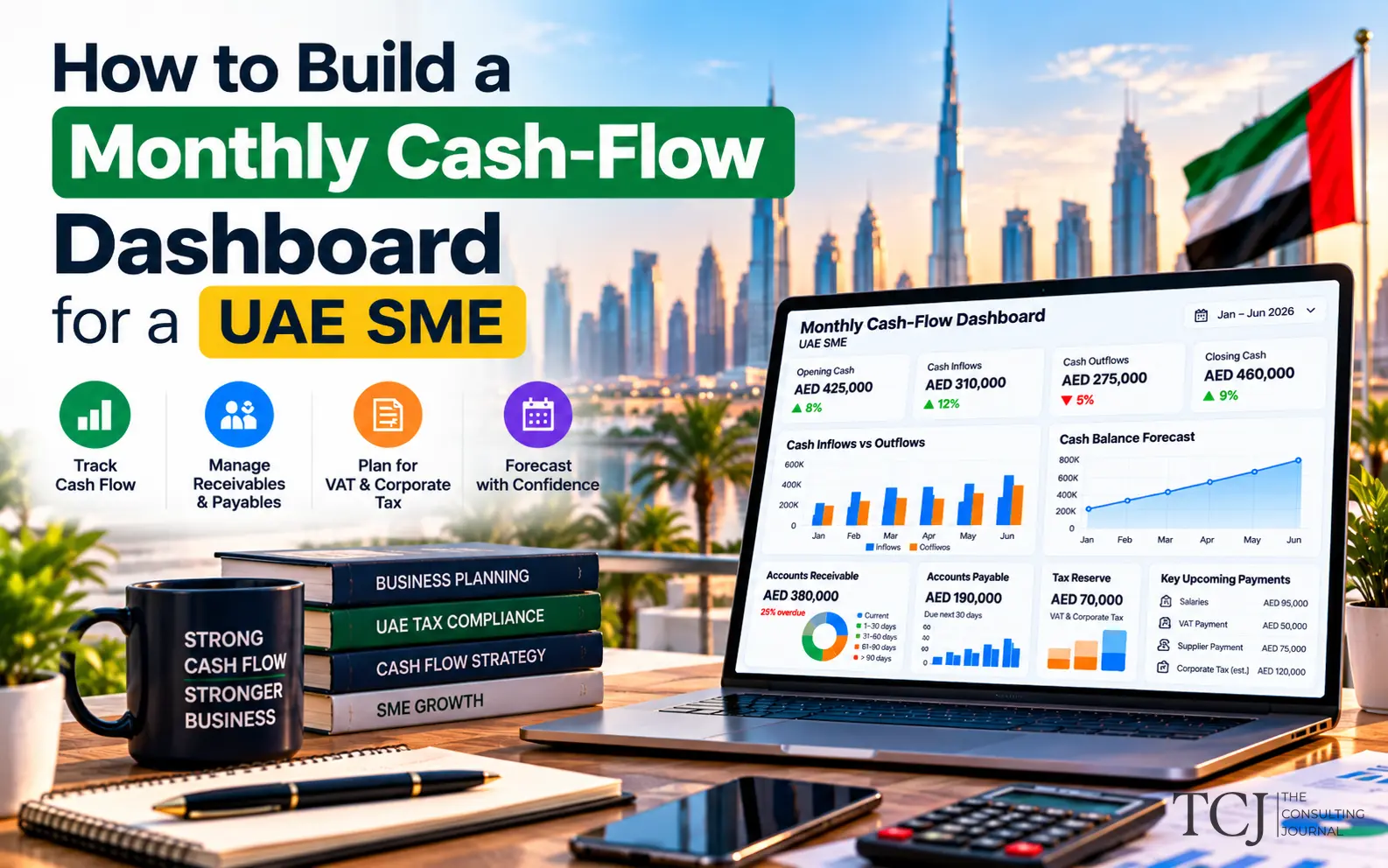
How to Build a Monthly Cash-Flow Dashboard for a UAE SME
A practical guide for UAE SME owners and finance teams on building a monthly cash-flow dashboard that tracks liquidity, collections, payments, tax obligations, forecasts, and working capital.

How UAE Companies Can Build a Faster, More Reliable Month-End Close
A practical UAE finance guide to shortening the month-end close through better reconciliations, cut-off controls, automation, tax readiness, data quality, and clear accountability.
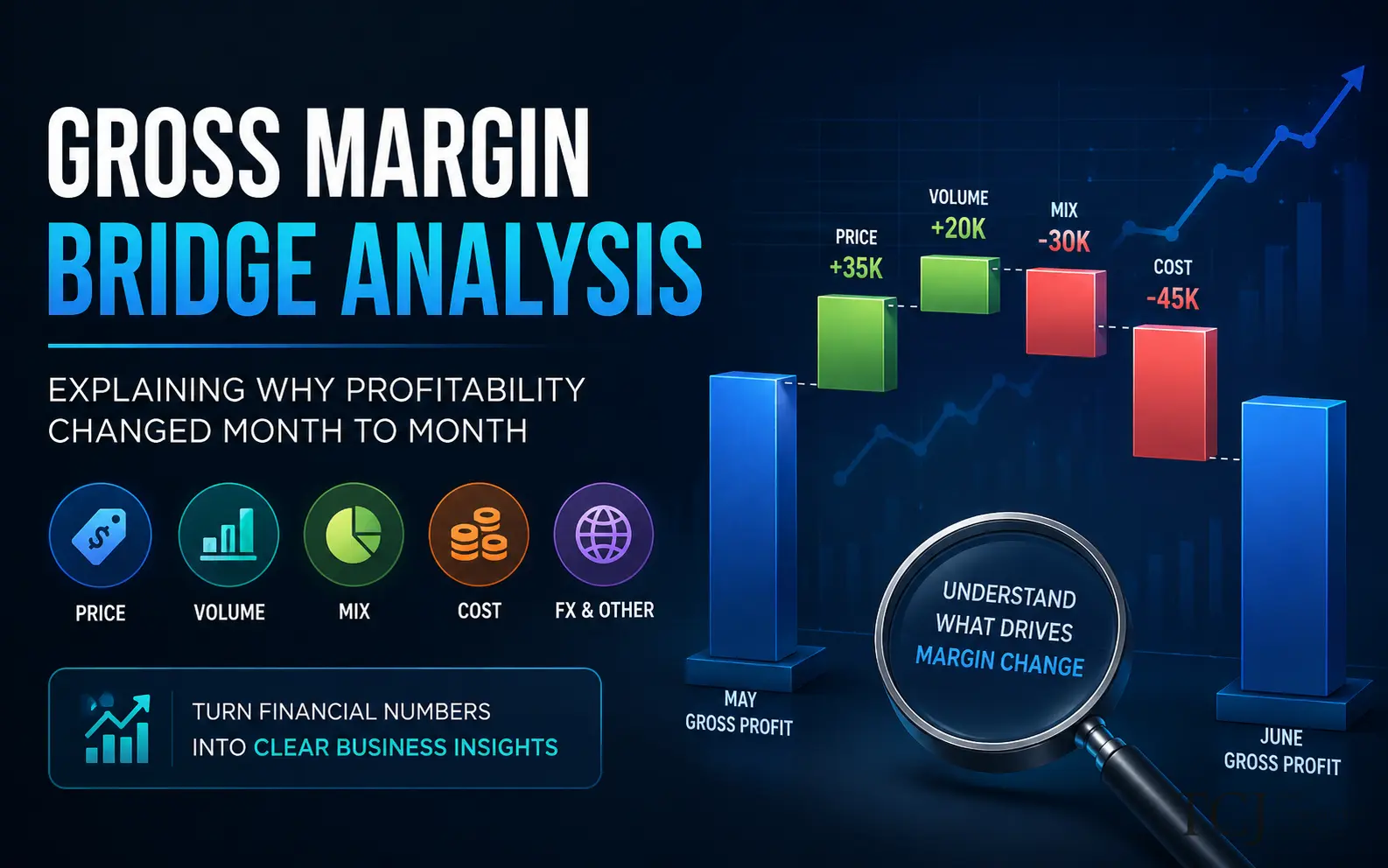
Gross Margin Bridge Analysis: Explaining Why Profitability Changed Month to Month
Gross margin bridge analysis helps finance teams explain monthly profitability changes by separating the impact of price, volume, sales mix, cost, and other operational drivers.