Common Legal Risks in Crypto Business Models in the UAE
Crypto founders in the UAE must manage licensing, AML, token classification, tax records, disclosures, custody, data protection, and cross-border risk before scaling.
Key takeaways
- Crypto businesses in the UAE should assess licensing before launch, not after onboarding customers.
- Token classification, custody, marketing, AML, sanctions, and tax records can create serious regulatory exposure.
- Dubai, DIFC, ADGM, and other UAE jurisdictions may apply different virtual asset rules depending on the activity.
- Strong documentation helps founders respond to banks, regulators, investors, auditors, and commercial partners.
- Compliance should be built into the product, governance, onboarding, and finance process from day one.
Common Legal Risks in Crypto Business Models in the UAE
Crypto businesses are no longer operating in a grey corner of the financial market. In the UAE, virtual assets are now part of a more mature regulatory conversation involving licensing, anti-money laundering controls, investor protection, custody, marketing, governance, and tax documentation.
This article has been prepared as an original UAE-focused Consulting Journal version of the supplied topic and outline on common legal risks in crypto business models.
For founders, the practical issue is simple. A product may look technical, but regulators and banks often view it through a financial-risk lens. A wallet, exchange, token launch, staking model, NFT marketplace, DeFi front end, or crypto payment feature can quickly raise questions about who controls customer assets, who performs onboarding, where the business is managed, and which authority should supervise the activity.
Dubai’s VARA framework, the UAE Securities and Commodities Authority’s federal role, the DFSA’s DIFC crypto token regime, and ADGM’s FSRA framework all show that the UAE is not treating virtual assets as an unregulated experiment. VARA states that it regulates virtual assets across Dubai’s mainland and free zones, except DIFC, while SCA and VARA have also set out cooperation arrangements for VASP licensing and supervision in the wider UAE.
Why crypto business models carry unusual legal risk
Traditional businesses usually know their regulatory category before they launch. A restaurant needs a food licence. A trading company needs an import/export or commercial licence. A consultancy needs a professional licence.
Crypto businesses are more complicated. The same platform may combine technology services, payment flows, custody, investment features, token issuance, marketplace activity, data handling, cross-border customer onboarding, and financial promotion.
That overlap creates risk. A founder may describe the business as “software only,” while a regulator may see brokerage, exchange, custody, lending, payment, investment, or advisory activity. A bank may see a financial crime risk. An investor may ask for legal opinions. An auditor may ask for transaction records and wallet evidence. A customer may ask who is responsible if a smart contract fails.
In consulting practice, the biggest problems usually appear when the founder has already built the product, signed commercial agreements, hired staff, opened social media channels, and started onboarding users before mapping the regulatory position.
In crypto, the legal risk is often not one big mistake; it is a chain of small assumptions that were never documented. — The Consulting Journal
Licensing and regulatory perimeter risk
Licensing is one of the first risks a crypto founder should assess. The question is not only “Do we need a licence?” It is also “Which licence, in which jurisdiction, for which activity, and before which customer interaction?”
In Dubai outside DIFC, VARA’s Virtual Assets and Related Activities Regulations cover regulated VA activities, licensing, AML/CFT obligations, marketing, market offences, supervision, examinations, enforcement, and fines. The current VARA rulebook version shows an effective date of 19 June 2025.
For businesses operating in or from Dubai, SCA and VARA have stated that VASPs operating in or from Dubai, or wishing to service Dubai, require a VARA licence and may be registered by default with SCA to service the wider UAE. VASPs operating from other Emirates must be licensed by SCA.
This matters for business planning. A founder cannot assume that a general technology licence, free zone company setup, or offshore entity is enough to operate a virtual asset service. The activity, customer base, custody model, revenue model, and marketing approach all need review.
Example 1:
A Dubai-based startup builds a crypto rewards wallet for merchants. The founder initially treats it as a loyalty technology product. During banking review, the bank asks whether the company holds customer assets, processes transfers, allows conversion into tokens, or connects users to third-party exchanges. Suddenly, the business is no longer just a software discussion. It becomes a licensing, AML, custody, and banking-readiness discussion.
Token classification and securities-style risk
Token classification is another major risk. A token may be called a utility token, governance token, payment token, NFT, stablecoin, or reward token. Those labels are not decisive on their own.
Regulators usually look at the real economic substance. Does the token give profit participation? Is it marketed as an investment? Are purchasers relying on the project team to create value? Is there a buyback mechanism, yield promise, revenue share, staking return, or treasury strategy?
If the answer is yes, the token may attract securities-style, investment, collective investment, or financial promotion concerns depending on the jurisdiction. In DIFC, the DFSA states that firms carrying out financial services activities involving crypto tokens in DIFC must be authorised, and the updated crypto token rules are effective from 12 January 2026.
A practical founder test is this: if your pitch deck focuses more on token price, return potential, market cap, liquidity, and exchange listing than on actual product utility, you are creating legal and reputational risk.
AML, KYC, sanctions, and Travel Rule exposure
Anti-money laundering compliance is central to crypto regulation. Crypto businesses may need customer due diligence, enhanced due diligence, wallet screening, transaction monitoring, sanctions screening, suspicious transaction reporting, recordkeeping, and governance oversight.
The Central Bank of the UAE explains that the UAE Virtual Assets Travel Rule improves transparency and traceability in virtual asset transfers by requiring accurate originator and beneficiary information, along with associated obligations. The CBUAE also lists joint guidance on combating unlicensed virtual asset providers as part of AML/CFT supervisory cooperation.
This is not only a regulator issue. Banks, payment partners, institutional investors, auditors, and large customers also ask AML questions. A crypto company with weak onboarding documents may struggle to open or maintain a bank account, even if the product itself is promising.
In practice, founders should document:
- Customer onboarding and identity checks
- Risk rating methodology
- Sanctions screening process
- Wallet and transaction monitoring approach
- Suspicious activity escalation process
- MLRO or compliance officer responsibilities
- Record retention policy
- Jurisdiction restrictions and blocked countries
Marketing, advertising, and disclosure risk
Crypto marketing creates legal risk faster than many founders expect. Words such as “guaranteed,” “risk-free,” “passive income,” “fixed returns,” “bank-grade safety,” or “approved by authorities” can cause serious issues if they are inaccurate, exaggerated, or unsupported.
VARA’s rulebook structure includes marketing, advertising or promotion requirements, as well as market offences and enforcement powers.
The practical point is that marketing teams need compliance review before campaigns go live. This includes landing pages, influencer posts, token launch materials, referral programmes, whitepapers, pitch decks, Telegram announcements, YouTube scripts, and paid ads.
A simple rule helps: every claim should be accurate, balanced, documented, and understandable to a non-technical user.
Custody, wallets, and client asset risk
Custody is one of the most sensitive areas in crypto. If the business controls private keys, pooled wallets, smart contract admin keys, exchange accounts, treasury assets, or customer deposits, the legal risk increases.
Founders should be clear about:
- Who controls private keys
- Whether assets are segregated or pooled
- How withdrawals are approved
- What happens during cyber incidents
- Whether insurance exists and what it actually covers
- Which party is liable for failed transfers
- How lost access, fraud, or operational errors are handled
The DFSA’s updated crypto token framework highlights enhanced governance, custody, disclosure, financial crime controls, and technology resilience expectations for firms conducting crypto token activities in DIFC.
For UAE businesses, custody questions also affect banking, audit, corporate governance, and investor due diligence.
Smart contract and technology liability
Smart contracts can automate execution, but they do not remove responsibility. Bugs, oracle failures, bridge exploits, front-end manipulation, admin key misuse, and governance attacks can all create liability questions.
A founder may say, “The code did it.” Customers and regulators may ask, “Who designed it, who controlled it, who marketed it, and who benefited from it?”
For DeFi models, this is especially important. If a team controls the website, governance process, treasury, upgrade keys, liquidity incentives, or user interface, the project may not be as decentralised as its branding suggests.
A practical risk reduction approach includes independent smart contract audits, bug bounty programmes, incident response planning, admin key controls, access logs, governance records, and clear user disclosures.
Example 2:
A free zone company launches a DeFi analytics dashboard. At first, it does not touch customer funds. Later, it adds a “one-click earn” feature that routes users into third-party pools. The legal profile changes. The company now needs to review whether it is merely displaying data, arranging access, promoting financial returns, or facilitating regulated activity.
Tax, accounting, and transaction record risk
Crypto tax and accounting issues are often underestimated. UAE businesses still need reliable books, invoices, transaction evidence, wallet records, exchange statements, valuation support, payroll records, and corporate tax documentation where applicable.
Problems often arise when crypto transactions are spread across personal wallets, offshore exchanges, business wallets, treasury accounts, employee wallets, and decentralised protocols. By the time the business prepares for audit, due diligence, or tax filing, the finance team may not have a clean trail.
Business owners should consider:
- Whether token income is revenue, capital, commission, fee income, or another category
- How crypto holdings are valued in accounting records
- Whether payments to staff or contractors are properly documented
- Whether VAT analysis is required for services, subscriptions, or advisory fees
- Whether related-party transactions need transfer pricing support
- Whether wallet ownership can be proven
This is where many crypto founders need accounting structure early, not only after fundraising or year-end.
Data protection and privacy risk
Crypto businesses often collect passports, Emirates IDs, proof of address, selfies, wallet addresses, transaction information, device data, risk scores, and source-of-funds documents. That information must be handled carefully.
There is also a tension between blockchain transparency and privacy rights. Public wallet activity may be visible, but customer identity data must still be protected. The business should have clear privacy notices, access controls, data retention policies, vendor due diligence, breach procedures, and internal staff training.
For UAE-facing businesses, privacy and cybersecurity are not back-office issues. They affect customer trust, regulator confidence, and enterprise partnerships.
Cross-border risk and jurisdiction confusion
Crypto businesses often serve users across several countries from day one. This creates a common but dangerous assumption: if the company is incorporated in one place, only that place matters.
In reality, regulators may consider where customers are located, where management decisions are made, where marketing is targeted, where servers or staff operate, where assets are custodied, and where counterparties sit.
ADGM states that financial services entities wishing to conduct digital asset activities in ADGM must apply for Financial Services Permission from the FSRA under applicable financial services regulations. Its framework covers Virtual Assets, Fiat-Referenced Tokens, Digital Securities, Derivatives, and Funds of digital assets.
A UAE crypto founder should therefore map jurisdictions before accepting users, not after receiving a foreign regulator’s letter or a bank compliance query.
Common mistakes business owners make
Many crypto legal issues are avoidable. The problem is usually timing. Founders often seek advice after the business model has already created exposure.
Common mistakes include:
- Treating a free zone company licence as approval for regulated crypto activity
- Using investment-style marketing before token classification is reviewed
- Onboarding users before AML and sanctions controls are ready
- Mixing company assets and founder-controlled wallets
- Relying on copied whitepaper language from another project
- Ignoring DIFC, ADGM, Dubai mainland, and wider UAE regulatory differences
- Launching staking, yield, or rewards features without legal review
- Keeping poor transaction records for tax and audit purposes
- Using influencers without compliance checks
- Assuming decentralisation removes responsibility
Documents and preparation checklist
Before launching or scaling a crypto business in the UAE, founders should prepare a structured file. This file is useful for regulators, banks, investors, auditors, and internal governance.
Key documents include:
- Business model description
- Jurisdiction and regulatory perimeter assessment
- Token classification memo, if tokens are involved
- AML, KYC, sanctions, and Travel Rule procedures
- Customer risk rating methodology
- Data protection and privacy policy
- Wallet and custody control policy
- Smart contract audit reports, where applicable
- Incident response and cybersecurity plan
- Marketing and disclosure approval process
- Terms of use and customer risk disclosures
- Accounting policy for crypto transactions
- Board or founder resolutions for key decisions
- Bank account and source-of-funds support documents
How KPM Global Services UAE can assist
KPM Global Services UAE can support crypto and fintech founders with practical business, accounting, tax, and compliance readiness before they approach regulators, banks, investors, or commercial partners.
This may include reviewing the business model, preparing documentation, strengthening accounting records, improving AML and onboarding files, supporting corporate tax readiness, assisting with finance policies, and helping founders understand the operational gaps that may affect licensing, audit, banking, or investor due diligence.
The aim is not to slow innovation. It is to help founders build a business that can withstand review.
Final advisory view
Crypto businesses can still build, scale, and attract serious capital in the UAE. But the market is becoming more disciplined. Founders who treat compliance as a product-design issue usually have stronger conversations with banks, investors, regulators, auditors, and enterprise customers.
The safer approach is to define the activity, map the regulator, document the controls, clean up the accounting records, and review customer-facing language before launch.
This article is for informational purposes and does not constitute legal, tax, accounting, or financial advice.
Questions and answers
Do crypto businesses in Dubai need a VARA licence?
Depending on the activity, a virtual asset business operating in or from Dubai, outside DIFC, may require VARA licensing. Founders should assess the exact service, customer base, custody model, and marketing plan before launch.
Can a UAE free zone company operate a crypto business without separate approval?
Not necessarily. A company formation or commercial licence does not automatically authorise regulated virtual asset activity. The business model should be reviewed against the relevant UAE, Dubai, DIFC, or ADGM framework.
What is the biggest legal risk for crypto startups?
The biggest risk is usually misclassification. A founder may view the platform as technology, while a regulator may see exchange, custody, payment, investment, advisory, or token issuance activity.
Why are AML and KYC controls so important for crypto companies?
Crypto transactions can create money laundering, sanctions, and source-of-funds risks. Banks and regulators expect clear customer due diligence, transaction monitoring, screening, escalation, and recordkeeping processes.
Should crypto founders prepare tax and accounting records from the beginning?
Yes. Poor wallet records, missing exchange statements, unclear token valuations, and undocumented payments can create audit, tax, banking, and investor due diligence problems later. Early finance discipline is much cheaper than reconstructing records after growth.
More in Crypto
View all Crypto →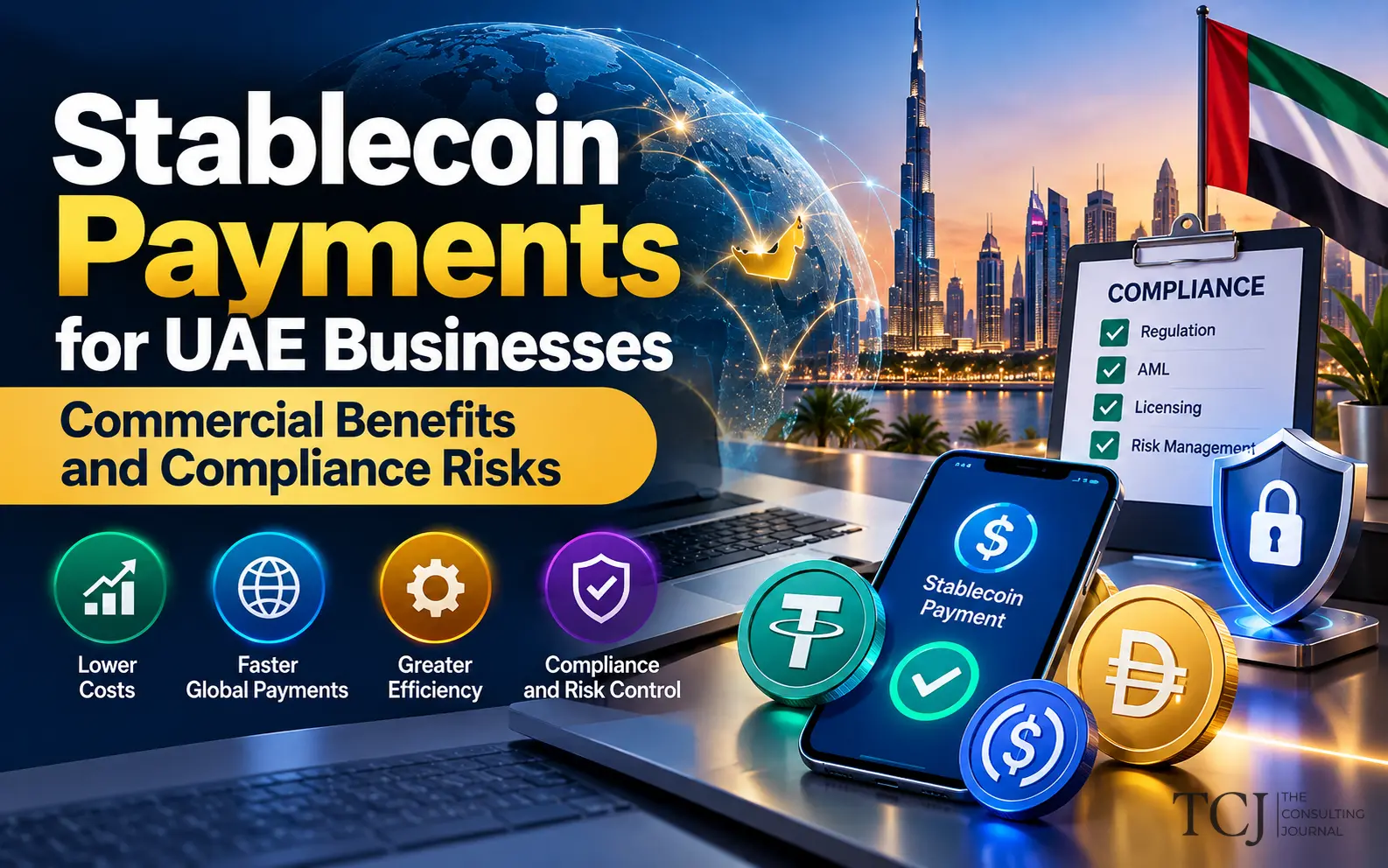
Stablecoin Payments for UAE Businesses: Benefits, Regulations and Risks
Stablecoin payments offer UAE businesses new possibilities for cross-border settlements and financial operations. Explore commercial benefits, CBUAE regulations, compliance risks, and practical steps before adoption.

VARA Licence Categories Explained: Which Dubai Virtual-Asset Activity Fits Your Model?
Dubai’s virtual-asset framework is activity based, meaning there is no single generic crypto licence. This guide explains the eight VARA licence categories, how different business models may fall within them, and what founders should assess before launching a virtual-asset business in Dubai.

When Does a Spanish Digital-Asset Business Need a VARA Licence in Dubai?
Spanish crypto and digital-asset firms expanding to Dubai need to assess activities, entity location, marketing and licensing separately. This guide explains when VARA may apply, how MiCA fits, and what businesses should prepare before launch.