Dubai Escrow Accounts Explained for Off-Plan Property Buyers
Understand how Dubai escrow accounts work for off-plan property purchases, how developers access funds, what buyers should verify before paying, and the financial risks escrow protection does not eliminate.
Key takeaways
- Dubai escrow accounts are project-specific bank accounts used to manage qualifying off-plan property payments and project financing.
- Developers can access eligible escrow funds under applicable withdrawal requirements, including before project completion.
- Dubai's escrow framework includes a 5% post-completion retention safeguard for the applicable period and purpose.
- Buyers should independently verify the project, developer, escrow information, and payment instructions before transferring money.
- Escrow protection does not guarantee construction completion, timely handover, rental income, or investment returns.
- - Financial planning, contract review, and complete transaction records remain essential for informed off-plan property investment decisions.
What Is a Dubai Escrow Account?
A Dubai escrow account is a dedicated bank account opened for a particular real estate development. It is used to receive and manage qualifying buyer payments and project-related funds under the relevant project framework.
The key point is that the account is tied to the project, not just to the developer in a general sense.
This matters because a developer may be running several projects at the same time. If a buyer is purchasing in one development, the question is not simply whether the developer has an escrow account somewhere. The more practical question is whether that exact project has the correct escrow arrangement and whether the buyer's payments are being directed properly.
For off-plan buyers, this project-specific structure is one of the most important concepts to understand before paying a booking amount or instalment.
Why Do Escrow Accounts Matter for Off-Plan Buyers?
Escrow accounts matter because buyers usually pay for off-plan properties before construction is complete. The escrow structure helps control how project money is collected and used, which reduces certain risks linked to early-stage property purchases.
In a completed property transaction, the buyer can usually inspect the unit, review the building, and complete the purchase with more certainty around the physical asset.
Off-plan property works differently. Buyers may commit substantial sums when construction is still at an early stage. Because of that, the handling of funds becomes a major part of buyer protection.
In practice, escrow accounts help create a more structured relationship between the buyer, the developer, the project, and the financial institution involved in managing the account. This gives buyers more comfort than simply transferring funds into an ordinary company bank account.
That said, escrow should be seen as a safeguard, not as a full guarantee.
How Do Dubai Escrow Accounts Work?
Dubai escrow accounts work by linking buyer payments to a registered real estate development and placing those funds within a controlled project framework. Developers may access eligible funds for project purposes, but not in the same way as unrestricted corporate cash.
The process can be understood in five simple stages.
1. The project is set up within the relevant development framework
Before eligible off-plan sales can progress properly, the project itself needs to be part of the required registration and development process.
For buyers, this is the first reminder that the project should be verified, not just marketed.
2. A project-specific escrow account is opened
A dedicated account is opened for the development. This is the account connected to the project rather than a general operating account of the developer.
3. Buyer payments are deposited into the project structure
When a purchaser pays a booking amount or instalment for the off-plan unit, the relevant payment should be directed according to the project's proper payment arrangement.
4. Funds are used for the development
The escrow structure is designed so that qualifying project funds are used in connection with the development rather than for unrelated purposes.
5. Funds are released under applicable controls
Escrow funds are not frozen until handover. Developers may be able to access qualifying amounts as construction progresses, subject to the relevant requirements and project conditions.
For buyers, the practical lesson is simple: escrow is a controlled funding mechanism, not a sealed vault.
What Happens to a Buyer's Money After Payment?
When a buyer makes a qualifying off-plan property payment, the money is directed into the project's escrow framework and becomes part of the controlled funding structure connected to that development.
This is important because many buyers assume escrow means the money cannot move at all until completion. That is not how the system works in practice.
Developers need project funding to continue construction. As a result, money in escrow may be released for eligible project purposes in line with the applicable rules and procedures. The protection comes from the structure and oversight around the use of funds, not from permanent inaccessibility.
Example 1: A buyer agrees to purchase an off-plan apartment in Dubai for AED 1.4 million under a staged payment plan. The buyer pays an initial booking amount, followed by instalments linked to construction milestones. Instead of assuming the payment plan alone makes the project safe, the buyer verifies the project name, developer identity, and payment details before each transfer. This is a more sensible approach than relying on sales assurances alone.
Can Developers Withdraw Money From Escrow Before Completion?
Yes, developers can typically access eligible funds before completion, subject to the conditions that apply to the project and the nature of the withdrawal. Escrow does not mean all money stays untouched until handover.
This point is often misunderstood by buyers.
Developers need capital to continue building. A functioning escrow system is meant to support project delivery while introducing controls around how money is accessed and used.
From a buyer's point of view, the right question is not whether a developer can ever withdraw money. The better question is whether project funds are being handled within a controlled and project-linked framework.
That distinction helps buyers understand what escrow does and does not do.
What Is the 5% Retention Requirement?
The 5% retention concept is a post-completion safeguard associated with the project framework. In practice, it is intended to provide an additional layer of support around certain defects that may appear at completion or during the following period.
This matters because property issues do not always become visible on the exact day a project is completed. A retention element can help maintain a degree of protection after completion rather than ending every control at handover.
For buyers, it is useful to know that escrow-related protection may continue beyond the construction stage. However, buyers should still review handover terms, snagging procedures, and practical defect follow-up steps carefully.
How Can Buyers Verify an Escrow Account?
Buyers can verify an escrow account by checking the project details carefully, confirming the developer identity, and matching payment instructions against the official project information and sale documents.
A useful verification process includes the following checks:
- Confirm the exact project name.
- Confirm the developer's legal identity.
- Check that the project details match the sales documents.
- Review the current project status where available.
- Compare the beneficiary and account details against the payment instructions.
- Independently verify any unexpected changes in bank details.
- Keep copies of all receipts, transfer confirmations, and written communication.
The biggest practical risk for many buyers is not a lack of paperwork. It is making assumptions too quickly.
If payment instructions change suddenly, or if the beneficiary name does not clearly align with the expected project arrangements, that should be checked before any money is transferred.
Is an Escrow Account the Same as Oqood Registration?
No, an escrow account and Oqood registration are not the same thing. Escrow relates to project funds, while Oqood is associated with the registration of off-plan real estate transactions.
Buyers often hear both terms during the transaction and assume they refer to the same process. They do not.
Escrow is mainly about how the development's qualifying money is handled. Oqood is more closely linked to the registration side of the off-plan sale.
For a buyer, both matter. A project may have escrow arrangements, but the buyer should still make sure the individual transaction is handled properly from a documentation and registration perspective.
What Does Escrow Help Protect Buyers From?
Escrow helps reduce certain financial and operational risks by creating more structure around project funds. It does not remove all investment risk, but it can reduce the risk of poor fund handling.
Some of the main protections include:
- Reduced risk of buyer funds being treated as ordinary unrestricted business cash.
- Better separation between one project's money and another project's activity.
- Added oversight around how funds are used.
- Greater transparency for buyers doing project-level due diligence.
- A more disciplined structure for development-related payments.
These protections are especially relevant in off-plan transactions, where the buyer is paying before receiving the completed unit.
What Does Escrow Not Guarantee?
Escrow does not guarantee that a project will finish on time, that the investment will make a profit, or that every dispute will be avoided. It is an important safeguard, but it does not make off-plan property risk-free.
Buyers should be realistic about what escrow can and cannot do.
Escrow does not guarantee:
- On-time project completion.
- Capital appreciation.
- Rental income performance.
- Absence of construction delays.
- Absence of contractual disagreements.
- Protection from every payment fraud attempt.
- A positive resale outcome.
An escrow account is a useful layer of financial protection, but buyers still need to verify the project, the documents, and the payment path before treating the investment as commercially sound. — Consulting Journal editorial observation
This is why buyers should assess the project itself, not just the existence of an escrow account.
What Common Mistakes Do Off-Plan Buyers Make?
Many buyers make the mistake of assuming escrow protection removes the need for further due diligence. In practice, some of the most costly issues come from basic verification failures rather than from the idea of escrow itself.
Common mistakes include:
- Paying too quickly without checking the exact beneficiary details.
- Assuming every project by the same developer follows the same payment path.
- Relying only on verbal promises from sales representatives.
- Ignoring differences between the contract, project details, and payment requests.
- Failing to understand the Sale and Purchase Agreement.
- Not keeping proper records of receipts and transfers.
- Treating escrow as a guarantee of project success.
- Overlooking future cash flow pressure caused by instalment obligations.
- Ignoring service charges and long-term ownership costs.
Example 2: A UAE business owner plans to purchase an off-plan commercial unit for investment. Shortly before an instalment is due, the buyer receives revised bank details by email. Instead of transferring immediately, the buyer confirms the instructions through an independently verified channel. The revised details turn out to be unauthorised. This simple verification step prevents a potentially serious payment mistake.
What Documents Should Buyers Keep Ready?
Buyers should maintain a complete transaction file before and during the purchase process. Good recordkeeping helps with verification, instalment tracking, and dispute prevention.
A practical checklist includes:
- Reservation or booking form.
- Sale and Purchase Agreement.
- Project details and unit information.
- Payment schedule.
- Verified payment instructions.
- Bank transfer confirmations.
- Receipts issued for payments made.
- Identity documents connected to the transaction.
- Registration-related documents.
- All written correspondence with the developer, broker, or representative.
- Handover and completion records when available.
For business buyers, it is also sensible to align the purchase records with internal accounting and financial reporting documentation.
How Should Buyers Assess Financial Readiness?
Buyers should look beyond the initial booking payment and assess whether they can comfortably manage the full financial commitment. An off-plan purchase can place pressure on future cash flow if instalments continue during business or market uncertainty.
Key financial points to review include:
- Total purchase cost.
- Timing of future instalments.
- Available cash reserves.
- Financing needs, if any.
- Expected holding period.
- Ongoing service and maintenance charges.
- Possible delays in rental income.
- Potential resale restrictions or transaction costs.
- Exposure to changes in property market conditions.
This kind of review is especially important for SME owners and investors who are balancing real estate decisions against wider business liquidity needs.
How Can KPM Global Services UAE Assist?
KPM Global Services UAE can assist buyers and investors with the financial side of property decision-making, including budgeting, cash flow planning, accounting considerations, and documentation support related to real estate investments.
For individual buyers, support may focus on affordability review, payment planning, and financial readiness.
For companies, the scope may include accounting treatment, documentation discipline, internal approval support, and the broader financial impact of the acquisition on working capital and business plans.
Where a matter involves legal rights, title concerns, contract disputes, or detailed property law interpretation, businesses should also consider obtaining advice from an appropriately qualified UAE legal professional.
What Should Buyers Remember Before Paying?
The biggest practical takeaway is that escrow is helpful, but verification is still essential. Buyers should not treat the existence of an escrow account as a substitute for checking the project, contract, and payment path carefully.
Before making a payment, buyers should:
- Verify the exact project.
- Verify the developer identity.
- Confirm the payment instructions independently.
- Review the Sale and Purchase Agreement carefully.
- Keep a complete record of every document and payment.
- Assess whether the investment is financially suitable.
Dubai's escrow framework gives buyers an important layer of protection in off-plan transactions. Used properly, it supports a more disciplined and transparent payment environment. But the most careful buyers still combine escrow awareness with proper due diligence, document review, and financial planning.
This article is for informational purposes and does not constitute legal, tax, accounting, or financial advice.
Questions and answers
Q: What is an escrow account in Dubai real estate?
A: A Dubai real estate escrow account is a dedicated bank account associated with a specific property development. Qualifying payments from off-plan property buyers and project financiers are deposited into the account and managed under the applicable escrow framework. It helps regulate the use of funds for the relevant development.
Q: Is an escrow account mandatory for off-plan property developers in Dubai?
A: Developers falling within Dubai's applicable off-plan real estate escrow framework are required to maintain the relevant escrow arrangements. The requirements depend on the nature of the development and transaction. Buyers should verify the registered project's escrow details before making payments.
Q: Can a developer withdraw money from an escrow account before completion?
A: Yes, developers may access eligible project funds before construction is completed, subject to applicable withdrawal procedures and conditions. Escrow accounts are intended to regulate the use of project money rather than hold every payment untouched until handover. The specific requirements depend on the type of withdrawal and project circumstances.
Q: How can I check whether a Dubai property project has an escrow account?
A: Buyers can check available registered project details through Dubai Land Department's project enquiry services and the Dubai REST application, where supported. Compare the project name, developer, and available escrow information with the documents provided during the purchase process. Independently verify payment instructions before transferring money.
Q: Does an escrow account guarantee that my off-plan property investment is safe?
- A: No, an escrow account reduces certain risks associated with the handling of project funds but does not guarantee property completion or investment profitability. Construction delays, market fluctuations, financing challenges, and contractual disputes can still affect buyers. Escrow verification should be combined with financial, legal, and project due diligence.
More in Real Estate
View all Real Estate →
Off-Plan Property Due Diligence in Dubai: 12 Checks Before Paying a Deposit
Buying off-plan property in Dubai requires more than reviewing a brochure. Check the developer, DLD project status, escrow account, SPA, unit details, payment plan, registration and exit conditions before transferring a deposit.

How to Start a Holiday Home Business in Dubai: DET Guide
Starting a holiday home business in Dubai requires the right owner or operator structure, DET registration, individual unit permits, guest compliance, Tourism Dirham administration, and annual renewals.
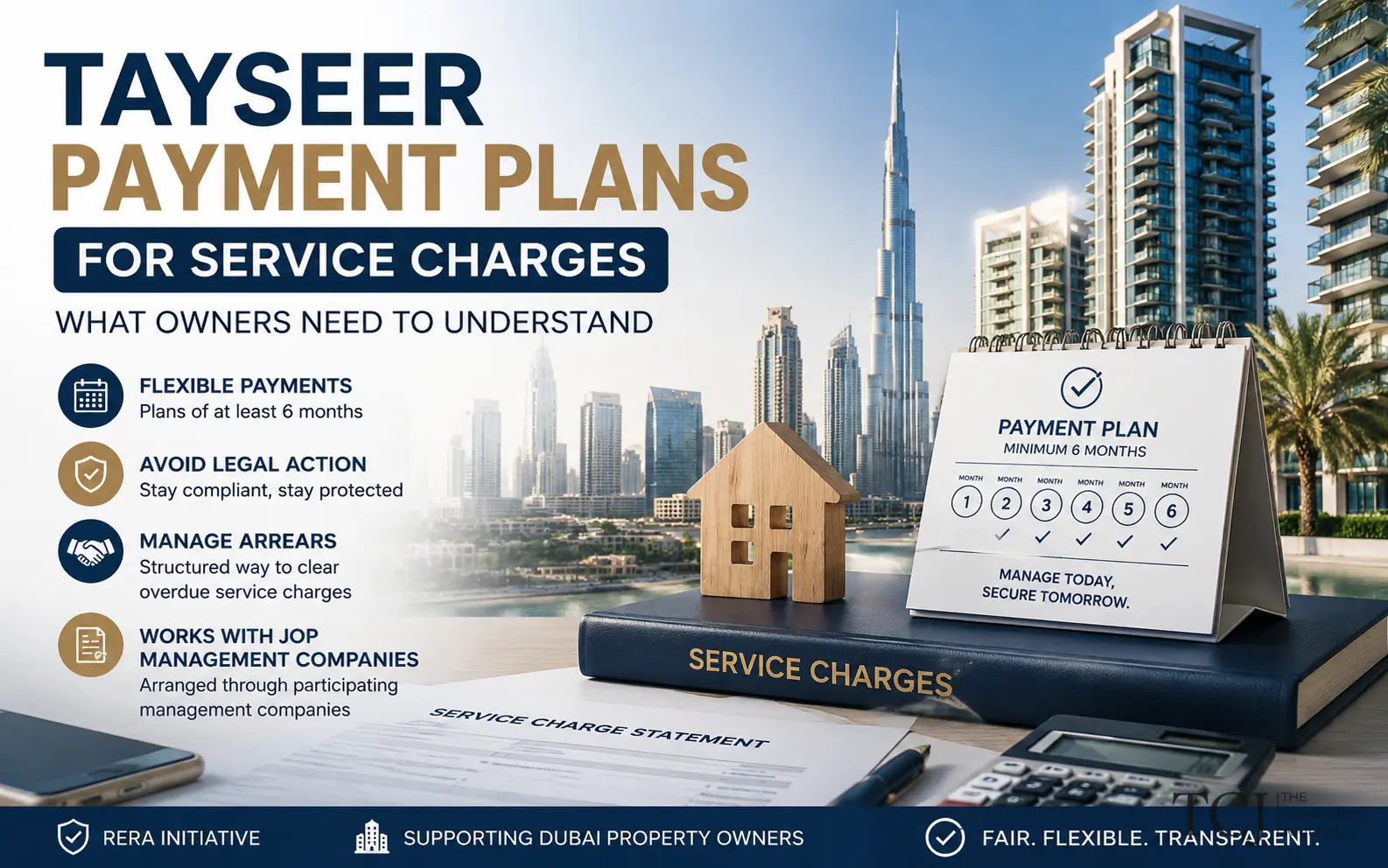
Tayseer Payment Plans for Service Charges in Dubai
Dubai property owners with overdue service charges may be able to use Tayseer payment plans. Here is what owners should verify about instalments, enforcement, ongoing charges, and property sales.