How Dubai’s Smart Rental Index Shapes Lease Negotiations
Dubai’s Smart Rental Index gives tenants and landlords a clearer basis for discussing renewals, permitted rent increases, property quality, and documented lease negotiations.
Key takeaways
- Dubai’s Smart Rental Index is the main official reference for assessing permitted increases in existing residential lease renewals.
- A property qualifying for an increase does not mean the landlord can automatically apply any percentage requested.
- A proposed change should typically be notified at least 90 days before the tenancy expires, unless the contract provides otherwise.
- Tenants and landlords should verify the index result using accurate property and tenancy information.
- Written records are essential when negotiating rent, payment terms, maintenance, or lease duration.
- Commercial factors such as vacancy costs, tenant reliability, moving expenses, and cash flow should be considered alongside the official benchmark.
What is Dubai’s Smart Rental Index?
The Smart Rental Index is Dubai Land Department’s system for assessing residential rental values and determining whether an existing tenancy may qualify for an increase. It moves beyond broad community averages by considering the classification and characteristics of the relevant building alongside current rental market information.
The Dubai Land Department launched the Smart Rental Index in January 2025 as part of its efforts to improve transparency and fairness in the rental market. The system uses artificial intelligence and an advanced building-classification approach rather than treating every property in the same district as equivalent.
This distinction matters in communities where buildings vary considerably. Two apartments may have similar floor areas and be located on the same street, but the buildings may differ in maintenance, parking arrangements, common-area quality, facilities, finishes, and overall management.
The index therefore provides a more relevant reference than a simple comparison with advertised properties in the wider neighbourhood.
How does the Smart Rental Index assess rental value?
The index considers the building’s quality, technical condition, location, services, facilities, finishes, maintenance, cleanliness, parking management, and the wider state of the real estate market. Its standards can also be updated as market conditions change.
This does not mean every attractive feature automatically justifies a rent increase. A renovated kitchen, upgraded appliances, better maintenance, or improved building facilities may strengthen a landlord’s commercial argument, but the official index result and the applicable rental rules remain central to an existing lease renewal.
Similarly, tenants should not assume that the lowest advertised unit in a community represents the correct benchmark. A cheaper listing may relate to a different building category, condition, layout, payment structure, or tenancy situation.
The most useful approach is to treat the Smart Rental Index as the primary reference and use comparable properties as supporting context.
A productive Dubai lease negotiation begins with the official rental position, then considers the property’s actual condition and the commercial value of keeping a reliable tenancy. — Consulting Journal editorial observation
How are permitted rent increases calculated?
Dubai’s rent-increase framework links the maximum permitted increase to how far the existing rent falls below the average rental value of comparable properties shown by the approved index.
Under Decree No. 43 of 2013:
- No increase applies when the existing rent is up to 10% below the average rental value.
- A maximum increase of 5% may apply when the rent is 11% to 20% below the average.
- A maximum increase of 10% may apply when the rent is 21% to 30% below the average.
- A maximum increase of 15% may apply when the rent is 31% to 40% below the average.
- A maximum increase of 20% may apply when the rent is more than 40% below the average.
These percentages are maximum permitted increases for lease renewals. They should not be read as an automatic entitlement to increase every tenancy by the highest available percentage.
The relevant index result, the existing annual rent, the timing of the notice, the tenancy terms, and any agreement between the parties should all be reviewed.
How does the index affect tenants during lease renewal?
The index gives tenants an official reference for checking whether a proposed rent increase appears consistent with the approved rental framework. It can help move the discussion away from informal estimates, advertised asking rents, or unsupported statements about market demand.
A tenant receiving a renewal proposal should check:
- Whether a rent increase has actually been proposed in writing.
- When the proposal was received.
- The tenancy contract’s expiry date.
- The official rental index result for the property.
- The existing rent stated in the Ejari contract.
- The percentage increase requested by the landlord.
- Whether the property details used for the calculation are accurate.
Tenants should also consider the full financial effect of moving. A lower advertised rent elsewhere may involve agency fees, deposits, moving costs, utility activation expenses, additional commuting time, or a less favourable payment schedule.
A negotiation should therefore compare both the legal position and the practical cost of each option.
Example 1:
A tenant in Dubai Marina receives a request to increase the annual rent from AED 100,000 to AED 120,000. The tenant checks the official index and finds that the permitted increase is lower than the amount requested.
Rather than rejecting the renewal immediately, the tenant sends the landlord the index result, confirms the existing Ejari rent, and proposes a revised figure within the applicable limit. The discussion remains focused on documents instead of informal market claims.
How does the index affect landlords?
For landlords, the Smart Rental Index provides a clearer basis for setting renewal expectations and explaining why a property may qualify for an increase. It can also help identify whether improvements in building management, maintenance, finishes, or facilities are reflected in the property’s classification.
Before issuing a renewal proposal, landlords should verify the index result and calculate the increase against the current contractual rent. A percentage taken from an online listing or a new-tenancy asking price may not be appropriate for an existing tenant.
Landlords should also assess the commercial value of tenant retention. A reliable tenant who pays promptly, maintains the unit, communicates professionally, and intends to remain for another year may reduce vacancy, marketing, repair, and administrative costs.
The highest permitted rent is therefore not always the best commercial outcome. Depending on the property, accepting a moderate increase or adjusting the payment structure may provide more predictable income.
Example 2:
A landlord owns an apartment in Jumeirah Village Circle that has been occupied by the same tenant for four years. The tenant has paid on time and maintained the unit well.
The official index permits an increase, but the landlord also estimates that changing tenants could create several weeks of vacancy and require repainting, maintenance, brokerage support, and new documentation. The parties agree on a lower increase in return for a two-year tenancy and a payment schedule acceptable to both sides.
What is the 90-day notice rule?
Unless the tenancy contract provides otherwise, a party seeking to change a lease term should notify the other party at least 90 days before the contract expires. This includes a landlord proposing a rent increase for the renewal period.
Dubai Land Department has also explained that a rent increase should not be applied where the landlord failed to provide the required notice, even when the Smart Rental Index indicates that the property would otherwise qualify for an increase.
The timing should be calculated carefully from the tenancy expiry date. Landlords should avoid waiting until the final weeks of the contract, while tenants should not ignore a renewal notice because discussions have not yet started.
Both parties should retain evidence showing when the notice was sent and received. Depending on the circumstances, evidence may include registered correspondence, emails, approved digital communications, or other documented notices permitted under the applicable framework.
How can tenants and landlords negotiate effectively?
Successful lease negotiations usually involve more than exchanging competing annual rent figures. Both parties should identify their priorities and decide which terms have genuine commercial value.
Tenants should consider negotiating:
- The annual rent.
- The number and timing of rental payments.
- The lease duration.
- Maintenance response expectations.
- Responsibility for minor repairs.
- Parking allocation.
- Furnishing or appliance replacement.
- Early termination provisions.
- Any agreed property improvements.
Landlords should consider:
- The tenant’s payment and conduct history.
- Vacancy and remarketing costs.
- Planned maintenance expenditure.
- Building and unit condition.
- Comparable completed rental transactions.
- The official Smart Rental Index result.
- The value of a longer tenancy.
- Whether flexible payments improve tenant retention.
The agreement should be clearly recorded. Verbal understandings about repairs, payment dates, rent-free periods, or new equipment can create disputes when they are not reflected in the renewal documents.
What common mistakes do tenants and landlords make?
Treating advertised rents as the official benchmark
Online listings usually show asking prices for new tenancies. They may not reflect completed transactions or the rules governing an existing lease renewal.
Applying the maximum percentage without checking eligibility
A 20% increase is not a general market allowance. It applies only where the existing rent falls within the relevant band below the indexed average.
Missing the notice deadline
A landlord may have a reasonable market argument but weaken the renewal position by issuing notice too late.
Using incorrect property details
The result may be unreliable when the wrong building, property type, contract information, or tenancy details are entered.
Ignoring the condition of the unit
Tenants may focus only on the index while overlooking unresolved maintenance. Landlords may refer to building amenities while ignoring defects inside the apartment.
Negotiating only by telephone
Undocumented calls can lead to different recollections of the agreed rent, payment schedule, repairs, or renewal deadline.
Confusing a rent-increase notice with an eviction notice
A proposal to amend the rent is different from a notice requiring the tenant to vacate. Different legal conditions and notice periods may apply.
What documents should be prepared before negotiating?
Tenants and landlords should organise the following:
- Current tenancy contract.
- Ejari certificate.
- Official Smart Rental Index result.
- Written rent-increase or renewal notice.
- Evidence of the date the notice was received.
- Previous renewal correspondence.
- Rental payment records.
- Property inspection reports.
- Photographs of relevant maintenance issues.
- Invoices for significant landlord-funded improvements.
- Comparable property evidence, where relevant.
- Proposed renewal terms.
- Written record of concessions discussed.
- Identification and ownership or authorised agency documents.
- Copies of any formal notices exchanged.
The records should be complete and easy to follow. A folder containing dated correspondence and supporting documents is usually more useful than a series of screenshots without context.
What happens when the parties cannot agree?
Where a landlord and tenant cannot agree on the renewed rent or another tenancy issue, the dispute may fall within the jurisdiction of Dubai’s Rental Disputes Center.
Dubai tenancy law allows the competent tribunal to determine fair rent by considering the RERA criteria, the property’s condition, the rental value of similar properties, the prevailing economic situation, and other relevant factors.
The Rental Disputes Center handles rental disputes between landlords and tenants and includes a conciliation function intended to explore settlement before a matter proceeds further.
Formal proceedings should not be treated as the first negotiation method. Before escalating, both parties should review the documents, identify the exact point of disagreement, exchange a written proposal, and consider qualified legal advice.
How can KPM Global Services UAE assist?
KPM Global Services UAE can help landlords, investors, business owners, and corporate tenants organise the commercial and Financial aspects of a lease review.
Support may include:
- Reviewing rental payment schedules and cash-flow impact.
- Organising lease, Ejari, notice, and payment documents.
- Comparing renewal scenarios.
- Assessing the Financial effect of renewing or relocating.
- Supporting Accounting treatment and record-keeping.
- Preparing structured information for management decisions.
- Coordinating with qualified real estate or legal professionals where specialist advice is required.
For businesses leasing offices, staff accommodation, warehouses, or other premises, rent decisions can affect budgeting, working capital, VAT documentation, Accounting records, and operational planning. The review should therefore involve both the operational team and the person responsible for Financial control.
KPM Global Services UAE does not guarantee a particular negotiation, authority, or dispute outcome. The objective is to help clients prepare reliable information and make a commercially informed decision.
This article is for informational purposes and does not constitute legal, tax, accounting, or financial advice.
Questions and answers
Q: Does the Smart Rental Index set the final rent for a Dubai property?
A: The index provides the official benchmark for assessing rental value and permitted increases, but the parties may still negotiate the final renewal terms within the applicable framework. The tenancy contract, notice timing, existing rent, and agreed concessions should also be considered.
Q: Can a landlord increase the rent without giving 90 days’ notice?
A: Typically, a proposed change to the tenancy terms should be notified at least 90 days before expiry unless the parties have agreed otherwise. A landlord should not assume that an index result alone corrects a late notice.
Q: Can a tenant reject an increase shown by the Smart Rental Index?
A: A tenant can discuss the proposal and verify whether the calculation, notice, and property details are correct. Where the parties cannot agree, the matter may require advice or consideration by the Rental Disputes Center.
Q: Where can tenants and landlords check the rental index?
A: The rental index can be accessed through Dubai Land Department’s official services and the Dubai REST platform. Dubai REST also provides services relating to lease registration, renewal, cancellation, rental information, and dispute applications.
Q: Does the Smart Rental Index apply to every type of Dubai property?
A: The Smart Rental Index launched in 2025 covers residential areas across Dubai, including special development areas and free zones. Businesses dealing with commercial or industrial premises should verify which official index or valuation process applies to their specific property.
More in Real Estate
View all Real Estate →
Tayseer Payment Plans for Service Charges in Dubai
Dubai property owners with overdue service charges may be able to use Tayseer payment plans. Here is what owners should verify about instalments, enforcement, ongoing charges, and property sales.
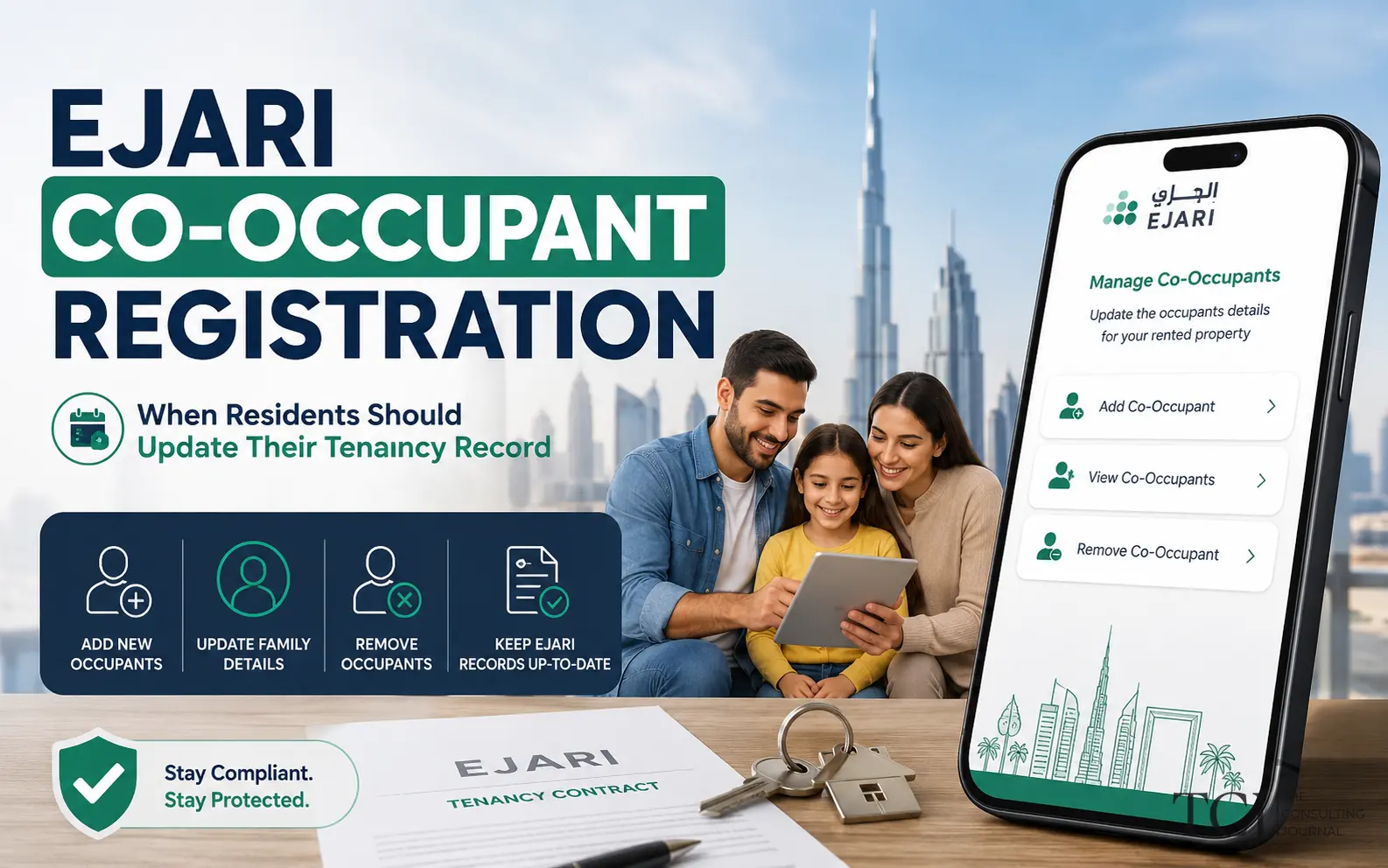
Ejari Co-Occupant Registration in Dubai: When Should Records Be Updated?
Dubai tenants should review Ejari co-occupant information when the people actually living at a rented property change. Here is when to update records, how Dubai REST works, and why occupant registration is different from changing the tenancy contract.

Dubai’s First-Time Home Buyer Programme: A Practical Guide
Dubai’s First-Time Home Buyer Programme gives eligible UAE residents access to selected property launches, developer incentives and mortgage offers. This guide explains the criteria, process, costs and checks buyers should consider.