Dubai’s First-Time Home Buyer Programme: A Practical Guide
Dubai’s First-Time Home Buyer Programme gives eligible UAE residents access to selected property launches, developer incentives and mortgage offers. This guide explains the criteria, process, costs and checks buyers should consider.
Key takeaways
- UAE residents of any nationality may apply if they meet the programme criteria.
- Applicants must not currently own a freehold residential property in Dubai.
- The intended property must be valued below AED 5 million.
- Programme registration does not guarantee a mortgage or a particular developer incentive.
- Buyers should assess total ownership costs rather than focusing only on the purchase price.
What is Dubai’s First-Time Home Buyer Programme?
The programme is a government-supported route through which eligible residents can register their first-time buyer status with DLD. Approved applicants receive a QR code that can be presented to participating developers and banks when exploring qualifying properties, incentives and mortgage products.
The programme covers opportunities associated with both off-plan and ready properties. Developer benefits are mainly connected with participating projects and selected inventory, while bank benefits may also be available to eligible buyers purchasing ready properties. A mortgage is not compulsory for participation. is important to distinguish programme eligibility from property suitability. A buyer may qualify for the initiative but still find that a particular unit, payment plan or mortgage does not meet their financial needs.
Why did Dubai introduce the programme?
The initiative supports Dubai’s wider objective of making homeownership more accessible to residents while strengthening the emirate’s property sector. It is also aligned with the Dubai Real Estate Strategy 2033 and the Dubai Economic Agenda D33.
For residents who have rented in Dubai for several years, buying a home can be difficult because of the initial deposit, registration expenses, financing requirements and uncertainty around property selection. The programme attempts to reduce some of these entry barriers through coordination between DLD, developers and financial institutions. does not replace the normal property transfer, financing or compliance process. Standard DLD registration fees, bank charges and developer costs generally continue to apply unless a participating partner offers a specific concession. Who qualifies for the First-Time Home Buyer Programme?
Applicants generally qualify when they are UAE residents aged 18 or above, do not currently own a freehold residential property in Dubai and intend to purchase a property valued below AED 5 million. The programme is open to residents of any nationality.
The official eligibility conditions are:
- The applicant must be a UAE resident.
- The applicant must be at least 18 years old.
- The applicant must not currently own a freehold residential property in Dubai.
- The intended residential property must be below AED 5 million in value.
Owning property in another emirate does not automatically prevent participation. DLD states that an applicant may still qualify provided they do not currently own a freehold property in Dubai. Ownership in a non-freehold area may also be treated differently under the programme criteria. nt buyers should check eligibility carefully. DLD indicates that a joint purchase under the programme is permitted only when both proposed owners meet the eligibility requirements. What benefits may first-time buyers receive?
Eligible buyers may receive priority access to selected launches, preferential prices on certain off-plan units, flexible developer payment plans and improved access to mortgage offers from participating banks. The exact benefit depends on the developer, bank, property and buyer profile.
Current DLD information identifies benefits such as:
- Early access to new property launches and selected existing inventory
- Preferential prices from selected developers
- Flexible payment arrangements for qualifying off-plan units
- Instalment arrangements for DLD registration fees through eligible credit cards
- Preferential mortgage rates or fees from participating banks
- Additional partner-specific offers
These benefits should not be assumed to apply to every property. A developer may reserve only certain units for the programme, while a bank may apply its normal income, affordability, credit and valuation requirements.
A programme benefit can improve access, but affordability still depends on the buyer’s cash flow, debt commitments and long-term ownership costs. — Consultant observation
A discounted price is not automatically a good purchase. Buyers should compare the programme price with similar units, assess the location and confirm whether the payment schedule remains manageable.
Which developers and banks participate?
DLD maintains the current list of participating developers and financial institutions. The partner network includes major Dubai developers and banks, but available inventory and commercial terms may change as new projects and offers are introduced.
The DLD programme page currently identifies banks including Commercial Bank of Dubai, Dubai Islamic Bank, Emirates NBD, Emirates Islamic and Mashreq Bank. It also lists developers such as Emaar, Nakheel, DAMAC Properties, Binghatti, Danube Properties, Meraas, Wasl, Ellington Properties and several others. ers should review the live DLD programme page rather than relying on an older partner list. They should also obtain the specific offer in writing from the relevant developer or bank.
How do buyers apply?
Applicants register through the DLD website or Dubai REST app and provide the requested personal, residency and property-preference information. DLD reviews the application and issues an eligibility confirmation and First-Time Home Buyer QR code to approved applicants.
The general process is:
- Review the current eligibility conditions.
- Register through the DLD website or Dubai REST app.
- Submit the required identification and residency details.
- Wait for DLD to verify the application.
- Receive the First-Time Home Buyer QR code if approved.
- Present the code to participating developers or banks.
- Compare properties and financing offers before committing.
- Complete the normal booking, mortgage and registration process.
There is no additional fee to register for or participate in the programme. Standard transaction, registration, financing and property-related charges may still apply. The QR code generally remains valid until the buyer purchases and registers a property with DLD. Does the programme guarantee mortgage approval?
No. Programme approval confirms that an applicant meets DLD’s first-time buyer criteria. It does not guarantee that a bank will approve a mortgage, offer the maximum financing percentage or provide a particular interest rate.
Each bank conducts its own assessment. This typically considers:
- Monthly salary or verified business income
- Existing loans and credit card limits
- Employment or business stability
- Credit history
- Age and proposed mortgage term
- Property valuation
- Deposit availability
- Bank statements and supporting documents
For example, Emirates NBD’s programme page states that applications remain subject to the bank’s credit policies. Its advertised eligibility and financing levels also differ for UAE nationals and expatriates, demonstrating why buyers should confirm terms directly with each lender rather than treating a general programme benefit as a firm approval. tgage pre-approval should ideally be obtained before a buyer pays a significant booking amount. The pre-approval letter should be reviewed for its validity period, conditions, maximum loan amount and any property-related restrictions.
What costs should buyers include in their financial plan?
The purchase price is only one part of the homeownership budget. Buyers should allow for the deposit, DLD registration fees, mortgage charges, valuation costs, insurance, service charges, moving expenses and future property maintenance.
Depending on the transaction, costs may include:
- Reservation or booking payment
- Down payment
- DLD registration fees
- Property trustee or administrative charges
- Mortgage arrangement or processing fees
- Property valuation fees
- Life or property insurance
- Real estate agency commission for secondary-market purchases
- Developer administration charges
- Annual service charges
- Utility deposits and moving costs
- Maintenance and furnishing expenses
A buyer should also keep an emergency reserve after completing the purchase. Using all available savings for the deposit and transaction expenses can leave the household exposed to repairs, job changes or unexpected service-charge demands.
Example 1:
A fictional Dubai-based marketing agency founder earns a reasonable annual income but receives irregular client payments. She qualifies for the programme and is offered an attractive off-plan payment plan. Before booking, she prepares a monthly cash-flow forecast and realises that two large instalments fall during her agency’s quieter billing period.
She negotiates a different unit with a more manageable schedule rather than choosing solely on the initial discount. The programme helps her access the project, but cash-flow planning determines whether the purchase is sustainable.
Example 2:
A fictional finance manager living in Dubai receives DLD approval and begins comparing ready apartments. One bank offers a lower introductory rate, while another offers slightly higher pricing but lower processing charges and more flexible partial-settlement terms.
After comparing the total cost over several years, he chooses the second option. His decision is based on the complete financing structure rather than the headline rate alone.
What should buyers examine before selecting a property?
Buyers should assess the property on its own merits, even when it carries programme incentives. Location, developer history, construction quality, community costs, completion risk and resale demand can have a greater long-term impact than a temporary discount.
For an off-plan property, consider:
- The developer’s delivery record
- Project registration and escrow arrangements
- Construction and handover schedule
- Payment milestones
- Delay and cancellation provisions
- Expected service charges
- Unit size and usable layout
- Rules covering assignment or resale
- Remedies stated in the sale and purchase agreement
For a ready property, consider:
- Title deed and ownership status
- Property inspection findings
- Outstanding service charges
- Building maintenance quality
- Current tenancy status
- Vacating arrangements where applicable
- Comparable transaction values
- Mortgage valuation
- Community facilities and recurring costs
Buyers should not rely only on brochures, show units or verbal representations. Any material promise concerning price, specifications, views, payment terms or handover should appear in the relevant written documentation.
What common mistakes do first-time buyers make?
The most common mistakes arise when buyers concentrate on qualifying for the programme but do not test whether the property and financing arrangement remain suitable over the long term.
Common errors include:
- Assuming DLD approval guarantees bank financing
- Paying a non-refundable booking amount before securing pre-approval
- Comparing mortgage rates without comparing fees and conditions
- Ignoring service charges and maintenance expenses
- Selecting a unit mainly because it carries a promotion
- Failing to review the sale and purchase agreement
- Overestimating future salary or business-income growth
- Using nearly all available savings for the transaction
- Treating an off-plan payment plan as equivalent to a mortgage
- Failing to confirm whether a specific unit receives programme benefits
- Relying on verbal promises from sales representatives
- Buying without an independent property inspection where appropriate
Another mistake is failing to separate a home purchase from an investment decision. A property suitable for personal occupation may not produce the strongest rental yield, while an investment-focused unit may not meet a family’s practical needs.
What documents should buyers prepare?
Document requirements depend on whether the buyer is salaried, self-employed, purchasing jointly or applying for a mortgage. Preparing a complete file early can reduce delays when dealing with DLD, developers and banks.
A practical preparation checklist includes:
- Valid passport
- Emirates ID
- UAE residence visa details
- Proof of residential address
- Salary certificate or employment letter
- Recent payslips
- Personal bank statements
- Existing loan and credit card details
- Evidence of available deposit funds
- DLD programme confirmation and QR code
- Property quotation or booking form
- Mortgage pre-approval, where financing is required
- Source-of-funds documents
- Marriage certificate for relevant joint applications
- Trade licence for self-employed applicants
- Company bank statements
- Audited or management financial statements
- VAT or Corporate Tax records where requested to support business income
- Sale and purchase agreement
- Property valuation and insurance documents
Self-employed founders should expect closer review of income consistency. Clean Accounting records, clear transfers between business and personal accounts, current trade-licence documentation and organised Tax filings can improve the quality of the financial application, although they do not guarantee approval.
How can KPM Global Services UAE assist?
KPM Global Services UAE can help founders, business owners and self-employed applicants organise the Financial and Accounting information that may be required during mortgage and affordability reviews.
Support may include:
- Reviewing personal and business cash-flow information
- Preparing or updating management accounts
- Organising bank statements and income evidence
- Separating business and personal transactions
- Reviewing Financial commitments before a purchase
- Supporting budgeting for deposits and ownership costs
- Improving Accounting record quality
- Coordinating supporting VAT and Corporate Tax documentation where relevant
This support does not replace independent legal advice, property valuation, mortgage advice or technical property inspection. Bank approval, programme eligibility and property registration remain subject to the relevant authority and institution.
Is the programme worth considering?
The programme is worth reviewing for eligible residents who already intend to purchase their first home in Dubai. It may provide earlier access to selected units, useful developer terms and preferential financing options.
Its value depends on the specific offer. A buyer should compare the programme property with alternatives available outside the initiative and examine the full purchase price, financing cost, service charges and contractual obligations.
The best use of the programme is as an additional purchasing channel, not as a reason to accelerate an unaffordable or poorly researched decision.
This article is for informational purposes and does not constitute legal, tax, accounting, or financial advice.
Questions and answers
Q: Can expatriates apply for Dubai’s First-Time Home Buyer Programme?
A: Yes. UAE residents of any nationality may apply, provided they are at least 18, do not currently own a freehold residential property in Dubai and meet the remaining programme criteria. Residency must be valid when the application is assessed.
Q: Can I apply if I own a property outside Dubai?
A: Yes, depending on the ownership circumstances. DLD states that an applicant may participate when they own property in another emirate but do not currently own a freehold property in Dubai. Buyers should confirm their individual position during registration.
Q: Does the programme cover ready properties or only off-plan homes?
A: It covers opportunities connected with both property types. Developer incentives are commonly associated with selected off-plan projects, while participating banks may provide programme mortgage benefits for eligible buyers purchasing ready properties.
Q: How long does the First-Time Home Buyer QR code remain valid?
A: DLD states that the QR code generally remains valid until the buyer purchases and registers a property. Registration can therefore remain active while the applicant compares participating projects and financing offers.
Q: Can two people jointly purchase a property through the programme?
A: Yes, but both proposed owners must be eligible participants. DLD states that a programme purchase cannot be completed jointly with a person who does not meet the first-time buyer eligibility requirements.
More in Real Estate
View all Real Estate →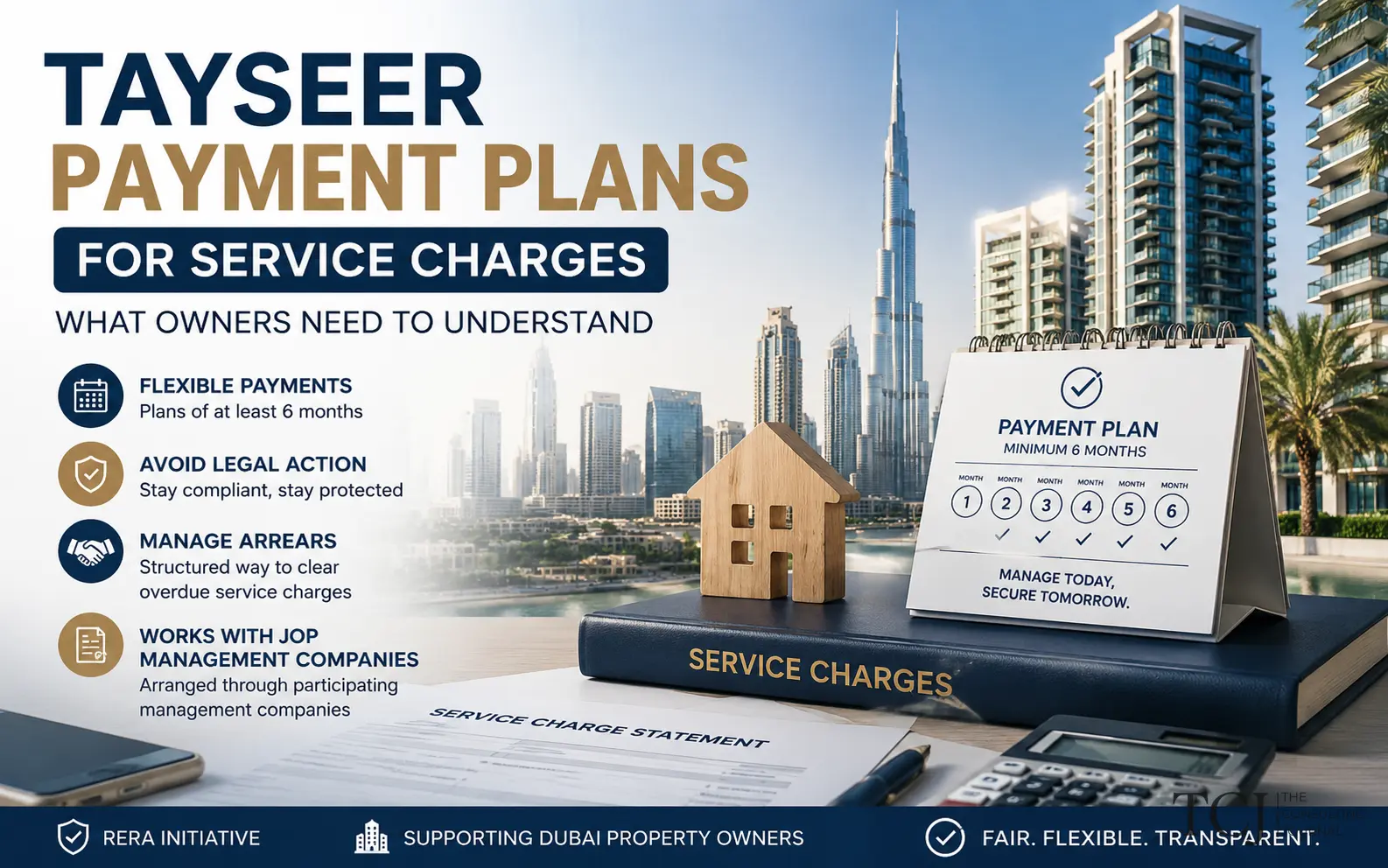
Tayseer Payment Plans for Service Charges in Dubai
Dubai property owners with overdue service charges may be able to use Tayseer payment plans. Here is what owners should verify about instalments, enforcement, ongoing charges, and property sales.
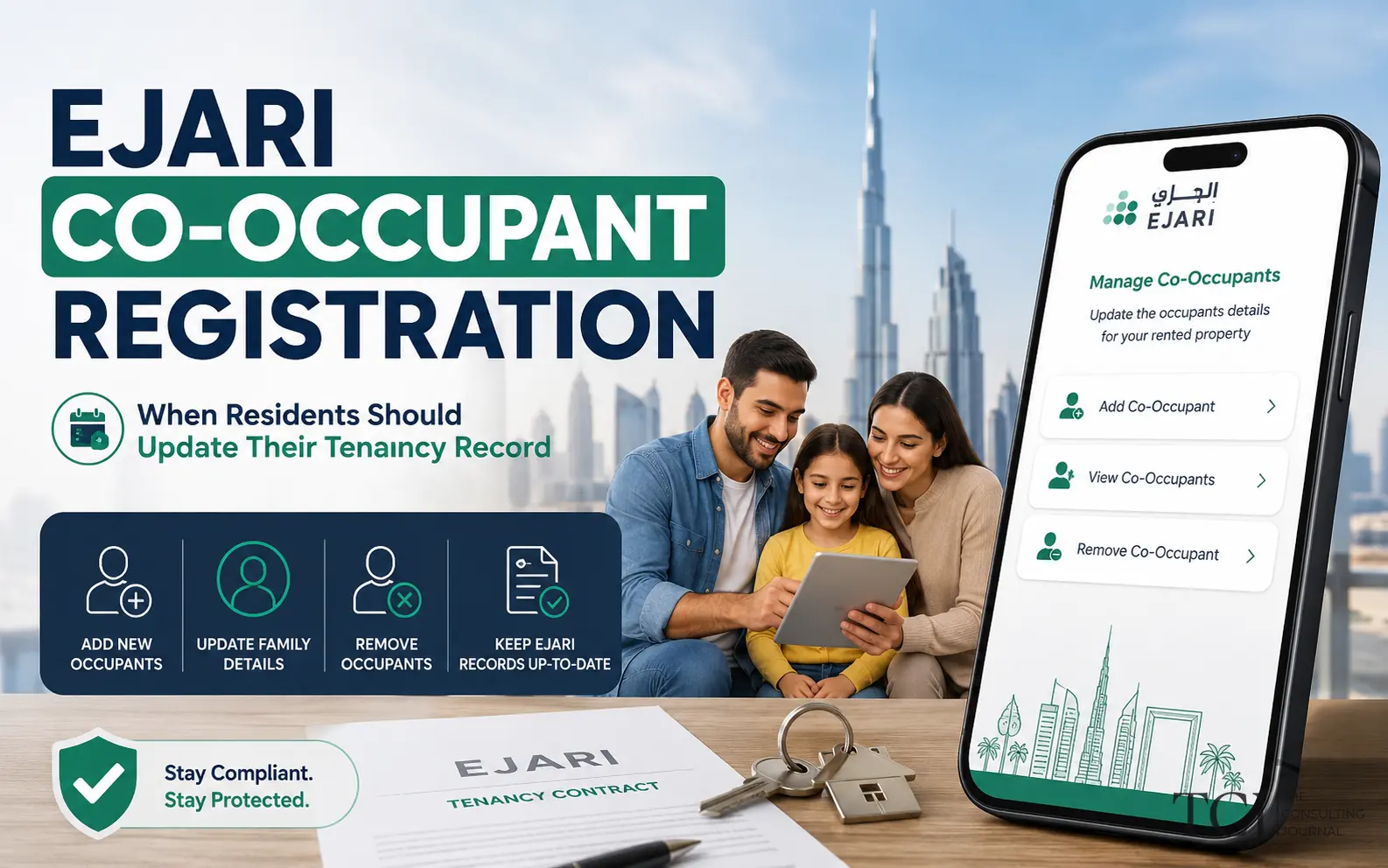
Ejari Co-Occupant Registration in Dubai: When Should Records Be Updated?
Dubai tenants should review Ejari co-occupant information when the people actually living at a rented property change. Here is when to update records, how Dubai REST works, and why occupant registration is different from changing the tenancy contract.
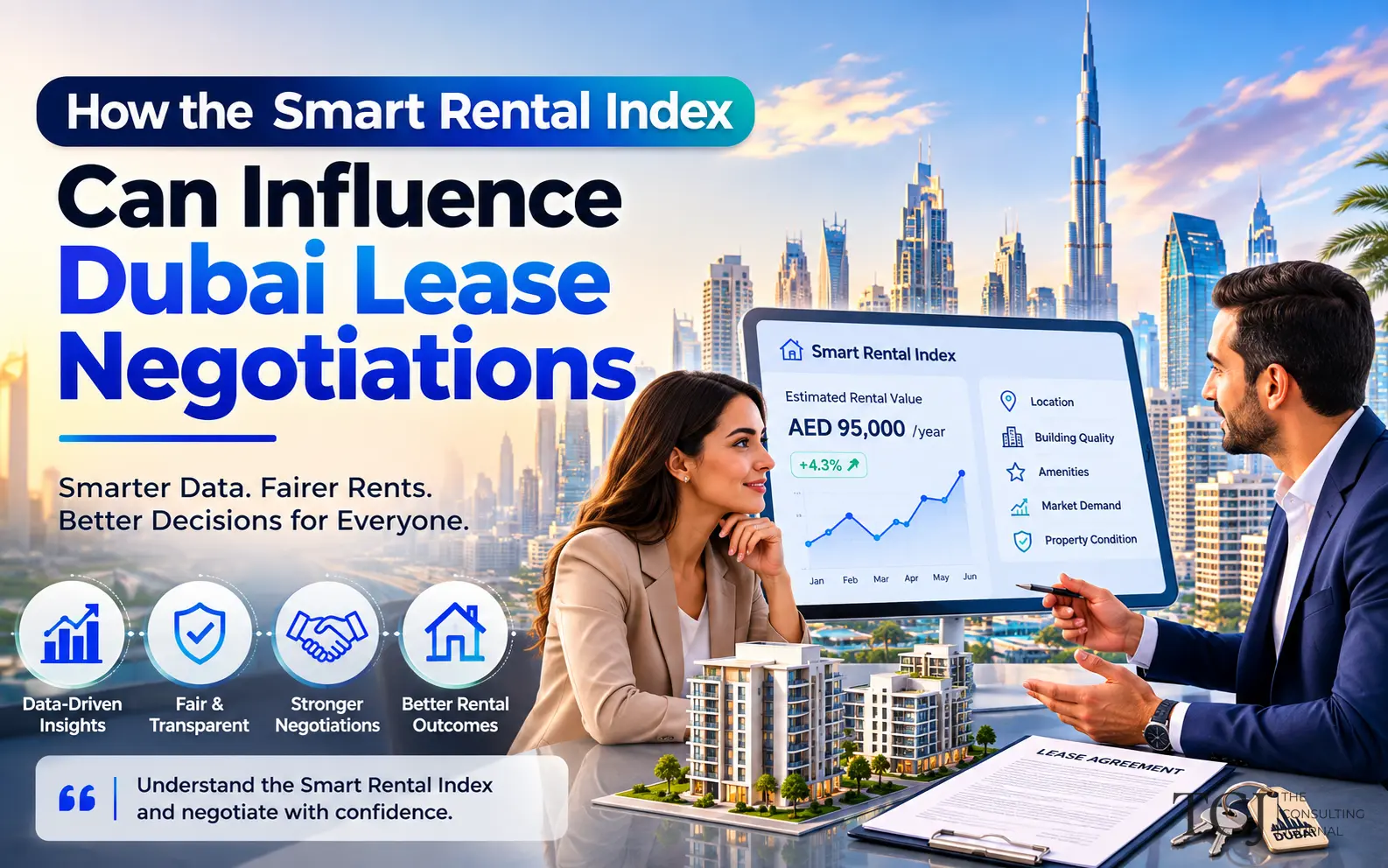
How Dubai’s Smart Rental Index Shapes Lease Negotiations
Dubai’s Smart Rental Index gives tenants and landlords a clearer basis for discussing renewals, permitted rent increases, property quality, and documented lease negotiations.