Emiratisation Rules in UAE: What Private Companies Should Know in 2026
A practical 2026 guide to Emiratisation rules in the UAE, including targets, deadlines, company obligations, penalties, Nafis support, and compliance preparation.
Emiratisation rules in UAE are now a board-level compliance matter
For many private companies in the UAE, Emiratisation used to be discussed mainly by HR teams. In 2026, that approach is no longer enough. The rules affect hiring plans, payroll budgets, role classification, MoHRE records, Nafis registration, and even the company’s ability to avoid financial contributions or establishment-category issues.
At its simplest, Emiratisation is the UAE’s policy framework for increasing the participation of UAE nationals in private-sector employment. The Ministry of Human Resources and Emiratisation monitors private-sector compliance with Emiratisation targets every year, with particular focus on eligible companies and skilled positions.
For business owners, the practical question is not only “Do we need to hire Emiratis?” The better question is: “Have we built Emiratisation into our workforce plan early enough to avoid rushed hiring, payroll errors, weak retention, or compliance gaps?”
Which private companies must comply in 2026?
The rules do not apply to every business in exactly the same way. In practice, the first check is company size, followed by activity, sector, and whether the business is covered by MoHRE’s private-sector Emiratisation framework.
Companies in the private sector with 50 or more employees are required to achieve 2% annual growth in the number of Emirati employees in skilled positions. For these employers, Emiratisation is usually reviewed as part of a continuing annual cycle rather than a one-time recruitment requirement.
A separate category applies to many companies with 20 to 49 employees. MoHRE guidance states that private-sector companies with 20 to 49 employees in specified economic activity sectors are required to recruit at least one UAE national employee and retain those already employed. MoHRE previously confirmed that this expansion covers companies in 14 specific sectors, including information and communications, finance and insurance, real estate, professional and technical activities, education, healthcare, construction, wholesale and retail, transportation and warehousing, and accommodation and hospitality.
This is where many SMEs get caught. A company may think Emiratisation is only an issue for large corporations, but a 30-person mainland business in a targeted sector may still have obligations.
Key 2026 Emiratisation deadlines companies should watch
The first major 2026 deadline for larger private-sector establishments is 30 June 2026. MoHRE confirmed that private-sector establishments with 50 or more employees must meet their first-half 2026 Emiratisation target by that date.
For the first half of 2026, this means achieving 1% growth in the Emiratisation rate of skilled jobs. A further 1% growth is expected in the second half of the year, bringing the annual growth rate to 2% by year-end.
For company leaders, the timing matters. If recruitment starts only in June, the business may not have enough time to identify suitable roles, interview candidates, issue compliant employment documentation, complete onboarding, and ensure the employee is properly reflected in the relevant systems.
Emiratisation compliance is strongest when it is built into real workforce planning, not treated as a spreadsheet target in the final month. — The Consulting Journal
Penalties and financial exposure in 2026
The financial exposure can be material, especially for businesses operating on tight margins. MoHRE’s earlier guidance for companies with 20 to 49 employees confirmed financial contributions of AED 96,000 for each UAE citizen not appointed in 2024, collected from January 2025, and AED 108,000 for failure to meet 2025 targets, collected in January 2026.
For larger establishments with 50 or more employees, MoHRE’s 2026 first-half update states that financial contributions will apply from 1 July 2026 to establishments that fail to achieve the required Emiratisation rates for the first half of the year.
The practical point is simple: non-compliance is not just an HR issue. It can become a cash-flow issue, a licensing and operational issue, and a management-risk issue. A company that misses its target by more than one role may face a liability that is difficult to absorb if it has not been budgeted.
Fake Emiratisation is a serious risk
Some businesses make the mistake of looking for shortcuts. This is risky and increasingly easy for authorities to detect.
Fake Emiratisation usually refers to arrangements where a UAE national appears on records but is not genuinely working in a meaningful role, or where the employment arrangement is structured mainly to meet a target rather than create real employment. MoHRE has warned that its inspection and monitoring systems, including AI-supported tools, are used to flag negative practices such as fake Emiratisation schemes and attempts to circumvent targets.
In practice, companies should avoid any arrangement that cannot be explained clearly through contracts, attendance, reporting lines, payroll, job responsibilities, and business need. A real role is easier to defend than a paper arrangement.
How Nafis can support employers
Nafis is not only a portal to check near the deadline. Used properly, it can be a recruitment and workforce-development channel.
MoHRE has advised companies subject to Emiratisation policies to use the Nafis platform to connect with UAE national jobseekers from different specialisations. The Ministry has also referred to support and benefits available through Nafis, as well as advantages for companies that achieve strong Emiratisation results.
A practical approach is to identify suitable positions first, then use Nafis as part of the hiring process. For example, a professional services firm may identify roles in finance operations, client coordination, HR administration, compliance support, or business development where a UAE national employee can receive proper onboarding and grow within the business.
Example 1:
A mainland trading company in Dubai has 55 employees and a small finance team. The owner assumes Emiratisation can be handled by hiring one UAE national close to the deadline. When the HR manager reviews the company’s skilled-role count, the gap is larger than expected.
A better approach would be to review the workforce in January or February, identify which roles qualify as skilled positions, budget for the hire, and begin sourcing candidates through Nafis. The company could then onboard the employee into a genuine finance support or procurement coordination role, with clear reporting lines and payroll documentation.
Example 2:
A 32-person hospitality services company operates in a targeted sector. The management team believes Emiratisation rules apply only to large employers. During a compliance review, the company realises that its size and activity may bring it within the 20 to 49 employee category.
The practical lesson is to check obligations before year-end. Smaller companies should not rely on assumptions. They should verify their MoHRE classification, activity, employee count, and sector coverage, then create a recruitment plan that matches the business’s actual staffing needs.
Common mistakes business owners make
The most common mistake is waiting until the deadline. Emiratisation hiring needs time because companies must find suitable candidates, define the role properly, issue correct employment documents, and support retention after onboarding.
Another mistake is counting employees incorrectly. Businesses should review whether employees fall into skilled roles, whether records are up to date, and whether the company’s headcount triggers a specific obligation.
Some companies also focus only on hiring and forget retention. If an Emirati employee resigns, the business may need to act quickly to protect its compliance position. A replacement plan should be part of the HR process.
The riskiest mistake is treating Emiratisation as a paper exercise. Companies should be able to show that the role is real, the employee is active, the salary is paid correctly, and the work has a genuine business purpose.
Practical checklist for 2026 compliance
- Review your current employee count and skilled-role classification.
- Confirm whether your company falls into the 50-plus category or the 20 to 49 employee category.
- Check whether your business activity is in one of the specified sectors.
- Review MoHRE records, employee contracts, job titles, and payroll information.
- Use Nafis early rather than waiting until the final month.
- Prepare job descriptions for real roles with proper responsibilities.
- Keep onboarding, attendance, payroll, and performance records organised.
- Track the 30 June 2026 first-half deadline and year-end obligations.
- Review resignation and replacement procedures for Emirati employees.
- Avoid any arrangement that may appear to be fake Emiratisation.
What companies should do next
Business owners should begin with an internal Emiratisation audit. This does not need to be complicated, but it should be honest. The company should know its current headcount, skilled-role count, existing Emirati employees, sector classification, hiring gaps, and deadline exposure.
From there, management should assign responsibility. HR may manage recruitment, but finance should understand the cost exposure, operations should identify suitable roles, and leadership should approve the hiring plan. Emiratisation works best when it is treated as part of business planning rather than a separate government requirement.
Companies should also keep evidence ready. In a compliance review, organised records can make a significant difference. Employment contracts, job descriptions, payroll records, attendance information, and proof of actual work all help demonstrate that the company is taking the requirement seriously.
Final advisory note
Emiratisation rules in UAE are becoming more structured, closely monitored, and financially significant. For private companies, the safest approach is not panic hiring. It is early planning, correct classification, genuine job creation, proper records, and active use of available support channels such as Nafis.
A business that prepares early will usually have more choice: better candidates, better role fit, stronger retention, and fewer compliance surprises. A business that waits until the final weeks may still hire, but it often does so under pressure, with higher risk and weaker documentation.
This article is for informational purposes and does not constitute legal, tax, accounting, or financial advice.
Questions and answers
What are Emiratisation rules in UAE?
Emiratisation rules are UAE private-sector employment requirements designed to increase the number of UAE nationals working in private companies. They apply differently depending on company size, sector, and workforce classification.
Which companies must meet Emiratisation targets in 2026?
Private-sector companies with 50 or more employees must generally meet annual Emiratisation growth targets in skilled positions. Some companies with 20 to 49 employees in specified sectors also have Emirati hiring and retention obligations.
What is the 30 June 2026 Emiratisation deadline?
The 30 June 2026 deadline applies to private-sector establishments with 50 or more employees for their first-half Emiratisation target. The target is linked to 1% growth in Emiratisation of skilled jobs during the first half of the year.
What happens if a company misses its Emiratisation target?
Missing the target can lead to financial contributions and other compliance consequences, depending on the company category and the shortfall. Businesses should check their MoHRE status early and avoid leaving recruitment until the deadline period.
Can Nafis help private companies hire UAE nationals?
Yes. Nafis can help employers connect with UAE national candidates and access relevant support initiatives. Companies should use it as part of a real hiring and retention plan, not only as a last-minute compliance tool.
More in Finance
View all Finance →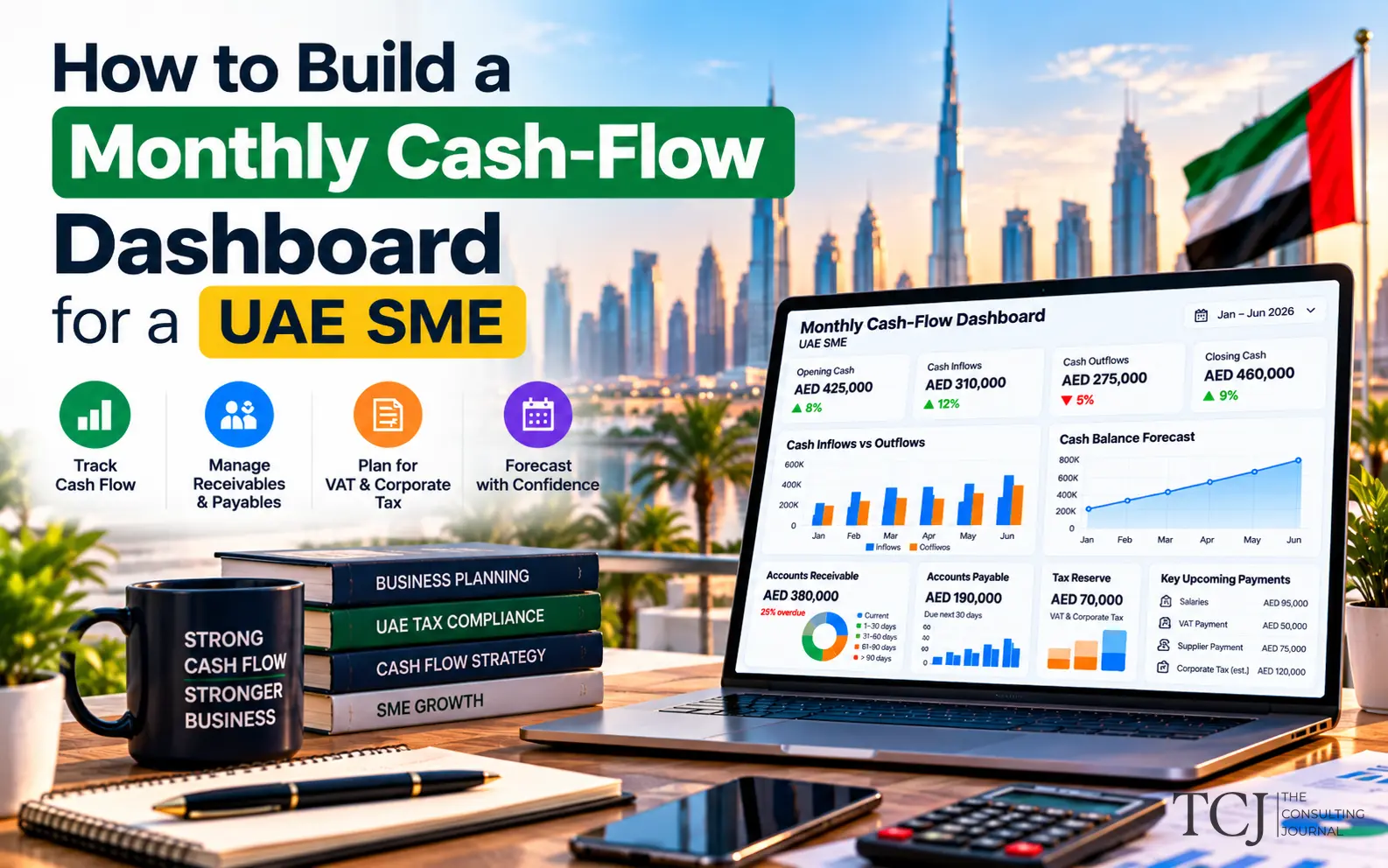
How to Build a Monthly Cash-Flow Dashboard for a UAE SME
A practical guide for UAE SME owners and finance teams on building a monthly cash-flow dashboard that tracks liquidity, collections, payments, tax obligations, forecasts, and working capital.

How UAE Companies Can Build a Faster, More Reliable Month-End Close
A practical UAE finance guide to shortening the month-end close through better reconciliations, cut-off controls, automation, tax readiness, data quality, and clear accountability.
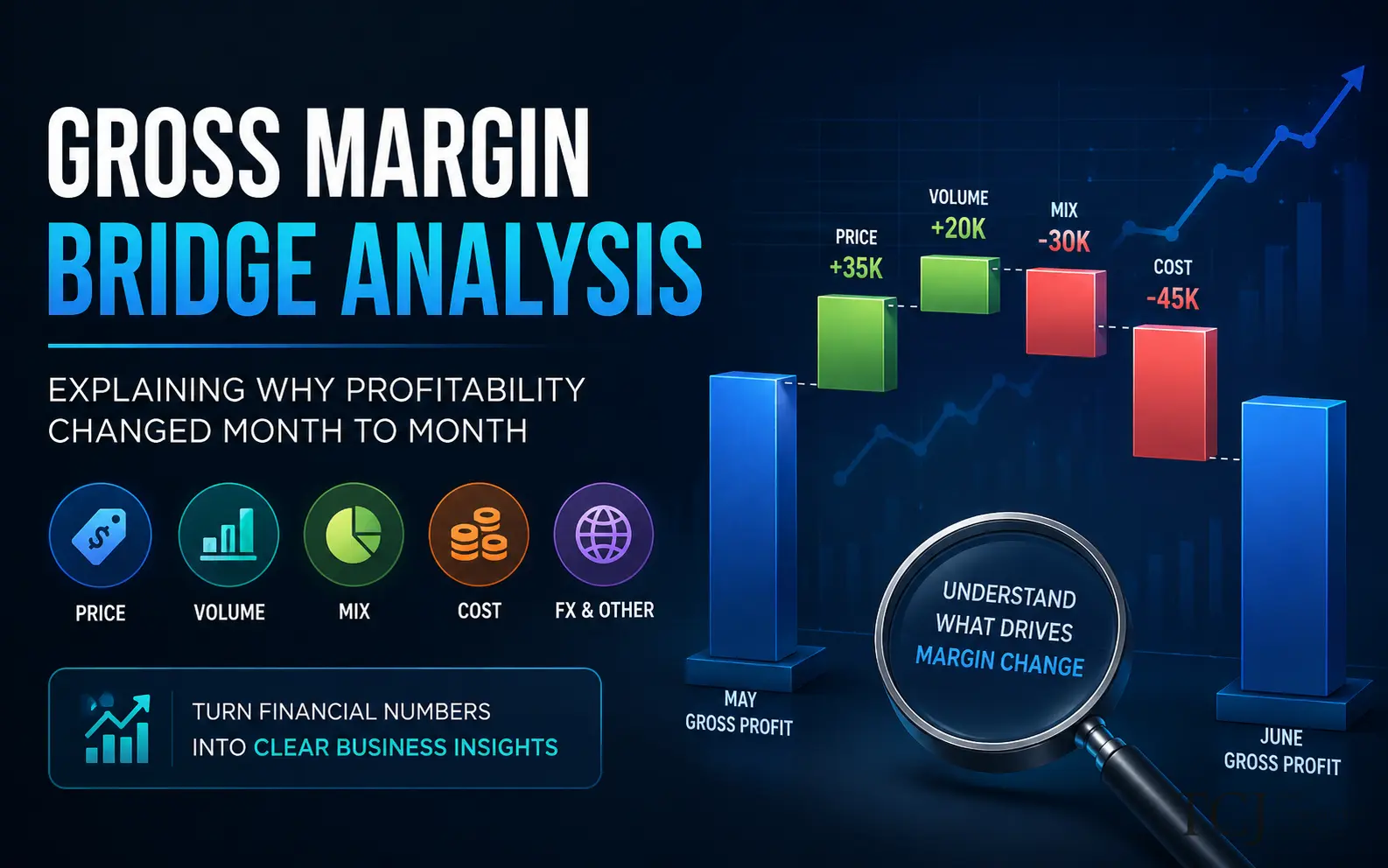
Gross Margin Bridge Analysis: Explaining Why Profitability Changed Month to Month
Gross margin bridge analysis helps finance teams explain monthly profitability changes by separating the impact of price, volume, sales mix, cost, and other operational drivers.