ESG and Sustainability for UAE Businesses: Compliance, Capital and Competitive Advantage
ESG is no longer only a branding exercise for UAE companies. For business owners, CFOs and investors, it is becoming part of compliance readiness, funding access, supply chain credibility and long-term resilience.
ESG and Sustainability for UAE Businesses: Future Requirement or Branding Opportunity?
A few years ago, many UAE business owners treated ESG as something for listed companies, multinational groups or large real estate developers. For a small trading company, a family-owned mainland business, a free zone consultancy or an early-stage startup, sustainability often sounded like a corporate brochure topic rather than a boardroom priority.
That view is changing.
ESG and sustainability for UAE businesses are now linked to investor confidence, banking readiness, supplier approval, customer trust, carbon reporting, governance quality and future regulatory expectations. The UAE Net Zero 2050 Strategy places climate neutrality at the centre of long-term national development, and Federal Decree-Law No. 11 of 2024 on the Reduction of Climate Change Effects became effective on 30 May 2025.
For business owners, the question is no longer whether ESG is only a branding opportunity. The better question is: how prepared is the company if a bank, investor, listed client, authority, insurer or international buyer asks for evidence?
What ESG Really Means for UAE Companies
ESG stands for Environmental, Social and Governance. In practice, it is a way of assessing whether a business is being managed responsibly and transparently.
The environmental side looks at areas such as energy use, waste, emissions, water consumption, transport, packaging and resource efficiency. The social side covers employees, workplace safety, labour practices, diversity, supplier conduct and community impact. Governance covers ownership structure, compliance, internal controls, ethical decision-making, board oversight, anti-bribery controls and accurate reporting.
Sustainability is broader. It reflects whether a company can operate in a way that supports long-term environmental, social and commercial resilience. ESG is more measurable. It turns broad sustainability intentions into data, policies, controls and reporting.
For example, a Dubai SME may say it wants to reduce waste. That is a sustainability intention. When it tracks monthly waste volumes, changes supplier packaging, assigns responsibility, monitors cost savings and reports progress to management, it becomes part of ESG practice.
Why ESG Matters More in the UAE Now
The UAE has positioned sustainability as part of its national economic direction, not only its environmental agenda. The country’s Net Zero 2050 Strategy is designed to support economic and societal advancement through the transition to net zero emissions.
At the market level, disclosure expectations are also becoming more visible. Dubai Financial Market states that its ESG reporting guide supports listed companies on their sustainability reporting journey, while Abu Dhabi Securities Exchange has issued ESG disclosure guidance for listed companies.
For private companies, especially SMEs, this does not mean every business has the same reporting burden as a listed company. But it does mean expectations are spreading through supply chains. A free zone logistics company serving a multinational client, a contractor bidding for a semi-government project, or a manufacturer exporting to Europe may face ESG-related questions before it faces a direct legal filing obligation.
ESG becomes useful when it moves from a slogan to evidence: records, controls, measurable targets and management accountability. — The Consulting Journal
ESG as a Future Business Requirement
In practical consulting work, ESG pressure usually arrives through one of four channels.
The first is regulation. Climate, emissions and sustainability rules are becoming more structured globally, and UAE businesses should monitor sector-specific requirements carefully. Federal Decree-Law No. 11 of 2024 aims to manage emissions in the UAE, strengthen adaptation and support green and circular economy objectives.
The second is finance. Banks and investors increasingly want to understand governance quality, risk exposure and sustainability strategy. A business seeking debt, equity funding or acquisition interest may find that ESG weaknesses raise questions about management maturity.
The third is procurement. Large organisations often ask suppliers about labour practices, environmental policies, waste management, health and safety, business ethics and anti-corruption controls.
The fourth is reputation. UAE customers, employees and partners are becoming more alert to whether sustainability claims are credible. A company that makes broad green claims without evidence may create reputational risk rather than brand value.
ESG as a Branding Opportunity
ESG can still support brand positioning, but only when the underlying practices are real.
A hospitality company that reduces food waste, trains staff, tracks energy use and works with responsible suppliers has a credible story. A professional services firm that improves governance, employee development, data protection and ethical client acceptance also has a credible ESG angle. A construction subcontractor that monitors worker welfare, safety incidents and material waste can use ESG to strengthen tender positioning.
The strongest brand benefit usually comes after internal discipline. Businesses that build ESG from the inside out tend to communicate more confidently because their claims are supported by documents, numbers and operational habits.
Example 1:
A mainland food trading company in Dubai wants to supply a large hotel group. The buyer asks for information about product sourcing, packaging, storage standards, employee welfare and waste management. The company has no ESG report, but it has basic records, supplier documents, hygiene controls and staff policies.
Instead of preparing a glossy sustainability brochure, the owner starts with a short ESG readiness file. It includes supplier approvals, waste reduction actions, staff training records, delivery route improvements and a simple governance statement. This does not make the company a sustainability leader overnight, but it makes the business more credible during procurement review.
Example 2:
A free zone technology startup is preparing for a funding round. The founders focus heavily on revenue growth and product development, but the investor asks about governance, data protection, employment contracts, board reporting and responsible AI use.
The startup realises ESG is not only about carbon. Governance and social controls matter too. It creates a board reporting calendar, formalises HR policies, reviews data security, documents vendor selection and prepares a short ESG summary for the investor pack. The result is a cleaner due diligence process and a stronger impression of management discipline.
Practical ESG Areas UAE SMEs Should Review First
Most SMEs do not need to begin with a complex global reporting framework. They need a sensible baseline.
Start with governance. Are licences, contracts, tax registrations, accounting records, payroll documents and authority filings properly maintained? Are responsibilities clear between owners, managers and finance teams? Are decisions documented?
Then review environmental exposure. Does the business consume high energy, generate waste, operate vehicles, use packaging, manage chemicals, run warehouses or depend on water-intensive processes? Even small improvements can reduce cost and strengthen client confidence.
Next, review people practices. UAE businesses should consider employment contracts, payroll records, workplace policies, health and safety, grievance handling, training and fair treatment of staff.
Finally, review reporting. A business does not need to publish a public sustainability report immediately, but it should know where ESG-related data sits and who owns it internally.
ESG Reporting Standards and Frameworks
International frameworks such as GRI, SASB and TCFD have shaped how larger companies report sustainability and climate-related information. In the UAE, listed companies and larger groups may refer to market guidance, investor requirements and sector expectations when deciding how detailed reporting should be.
For SMEs, the practical approach is to avoid overcomplication at the beginning. A small company can start with an internal ESG dashboard covering energy, waste, staff training, compliance status, supplier checks and governance actions. As the business grows, that internal dashboard can develop into a more formal report.
Common Mistakes Business Owners Make
One common mistake is treating ESG as a marketing project rather than an operating model. A brand campaign cannot compensate for weak records, poor compliance or unsupported claims.
Another mistake is copying ESG policies from larger companies. A ten-person consultancy, a logistics SME and a manufacturing unit have different risks. ESG should reflect the actual activity.
Some businesses also focus only on the environmental pillar and ignore governance. In practice, weak accounting records, unclear ownership documents, missing employment files and poor internal controls can create greater risk than an unfinished recycling initiative.
A further mistake is waiting for a direct legal notice before preparing. ESG readiness often matters before regulation arrives because banks, investors and customers may ask first.
Documents and Preparation Checklist
Businesses can begin with a practical ESG file containing:
- Current trade licence and activity details
- Organisation chart and management responsibilities
- Accounting records and management reports
- VAT and corporate tax registration status, where applicable
- Payroll and employee records
- Health and safety policies, where relevant
- Supplier onboarding documents
- Utility, fuel, logistics or waste records
- Anti-bribery, conflict of interest and approval policies
- Basic ESG action plan with measurable owners and timelines
This file does not need to be perfect on day one. It should be accurate, updated and connected to how the business actually operates.
How KPM Global Services UAE Can Assist
KPM Global Services UAE can support business owners, CFOs and management teams by turning ESG from a broad concept into a practical readiness plan. This may include ESG gap reviews, governance documentation, finance and accounting record alignment, tax and compliance coordination, internal reporting structures and preparation for investor or banking due diligence.
For SMEs, the most useful starting point is often a short diagnostic. What records exist? What risks are visible? What questions might a bank, investor, authority or large customer ask? From there, the business can prioritise actions instead of spending time and money on unnecessary reporting exercises.
KPM Global Services UAE can also help companies connect ESG with wider business readiness, including accounting discipline, corporate tax preparation, VAT records, payroll documentation, licensing review and management reporting.
This article is for informational purposes and does not constitute legal, tax, accounting, or financial advice.
Final Advisory View
ESG and sustainability for UAE businesses should not be viewed as a passing trend. They are becoming part of how companies prove resilience, responsibility and management quality.
For some businesses, ESG will become a compliance matter. For others, it will first appear through banking, investment, procurement or reputation. Either way, waiting until a client or regulator asks for evidence can put the company under pressure.
The practical route is to start small, document honestly, measure what matters and connect ESG to real business decisions. UAE companies that do this early will be better prepared for regulation, more credible with investors and more trusted by customers and partners.
Questions and answers
Is ESG mandatory for all UAE businesses?
Not every UAE business currently has the same ESG reporting obligation. However, climate-related regulation, listed-company guidance, banking expectations and supply chain requirements are increasing. SMEs should treat ESG readiness as a practical business discipline, even where formal reporting is not yet required.
What is the difference between ESG and sustainability?
Sustainability is the broader goal of operating responsibly over the long term. ESG is a more measurable framework covering environmental, social and governance factors. For example, reducing waste is a sustainability aim, while tracking waste reduction through monthly data is an ESG practice.
How can a small UAE business start with ESG?
Start with records the business already has: licences, accounting records, payroll files, supplier documents, utility bills, waste records and internal policies. Then identify two or three measurable actions, such as reducing energy use, improving employee documentation or formalising supplier checks.
Does ESG help with investors and bank financing?
It can. Investors and banks often look for strong governance, reliable records, risk awareness and responsible management. ESG documentation can support due diligence, especially when it is backed by accurate financial, compliance and operational records.
Can KPM Global Services UAE help prepare ESG documentation?
Yes. KPM Global Services UAE can assist with ESG readiness reviews, governance documentation, accounting and tax record alignment, internal reporting and preparation for investor, banking or procurement questions. The support should be tailored to the company’s activity, size and risk profile.
More in Finance
View all Finance →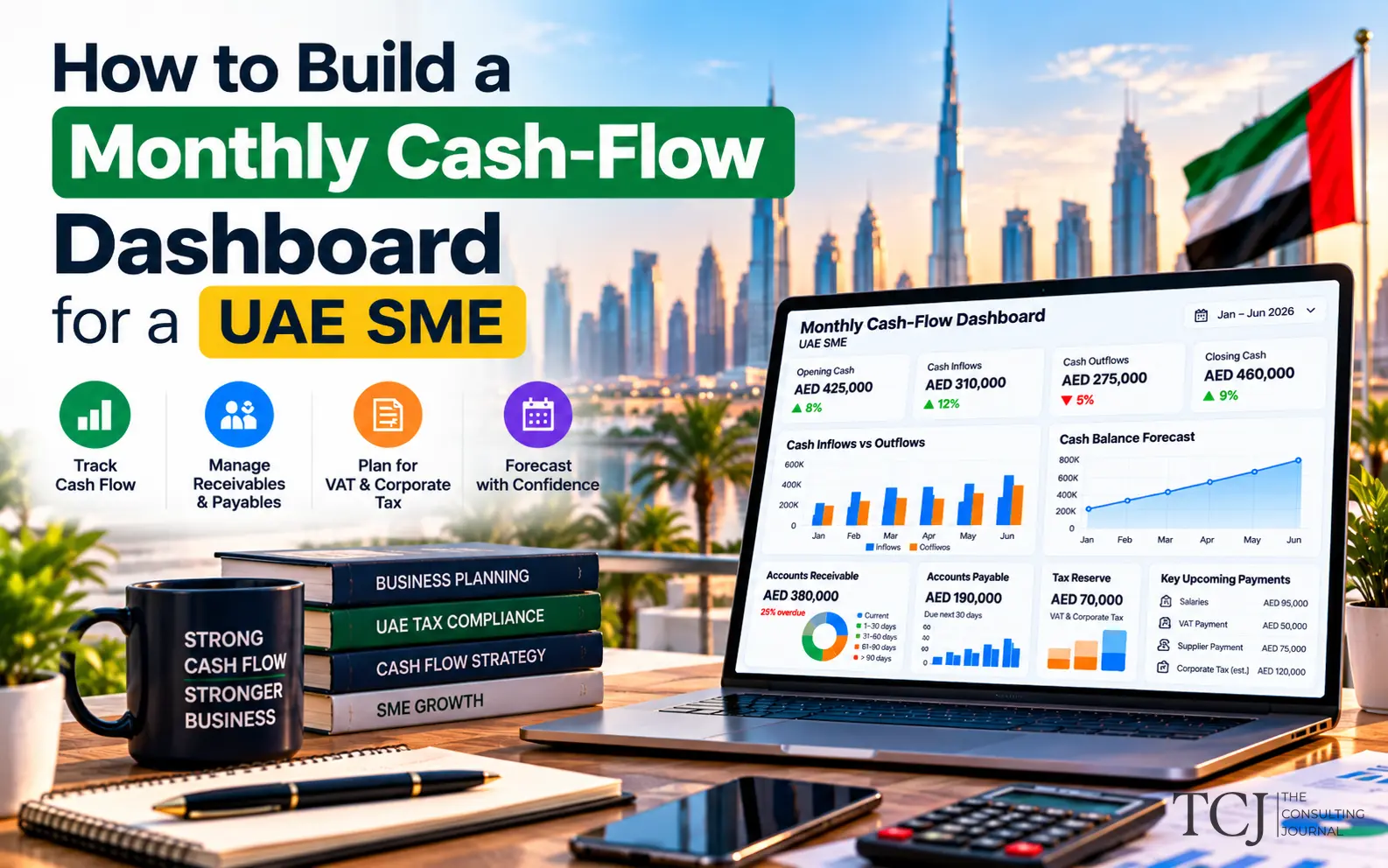
How to Build a Monthly Cash-Flow Dashboard for a UAE SME
A practical guide for UAE SME owners and finance teams on building a monthly cash-flow dashboard that tracks liquidity, collections, payments, tax obligations, forecasts, and working capital.
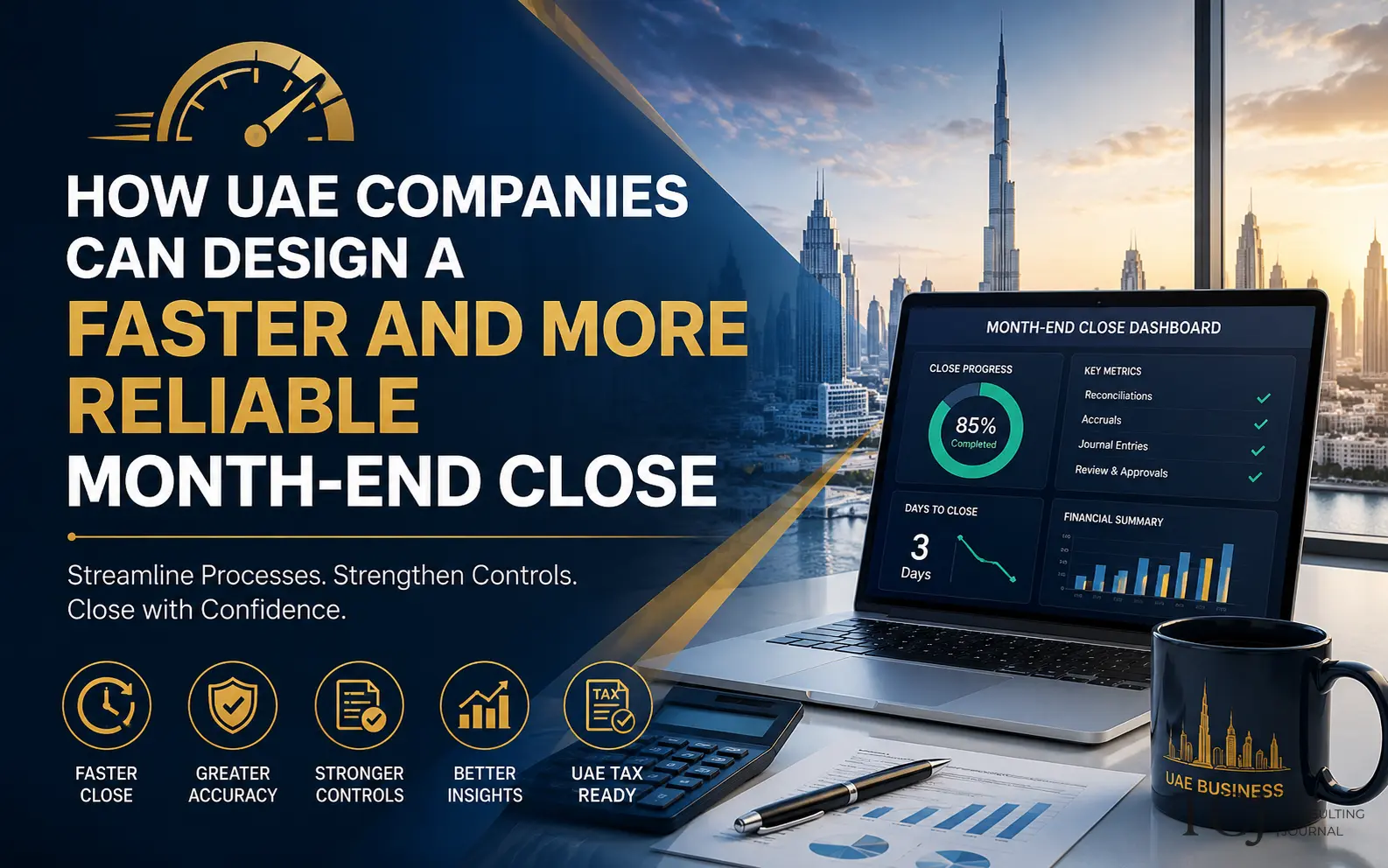
How UAE Companies Can Build a Faster, More Reliable Month-End Close
A practical UAE finance guide to shortening the month-end close through better reconciliations, cut-off controls, automation, tax readiness, data quality, and clear accountability.
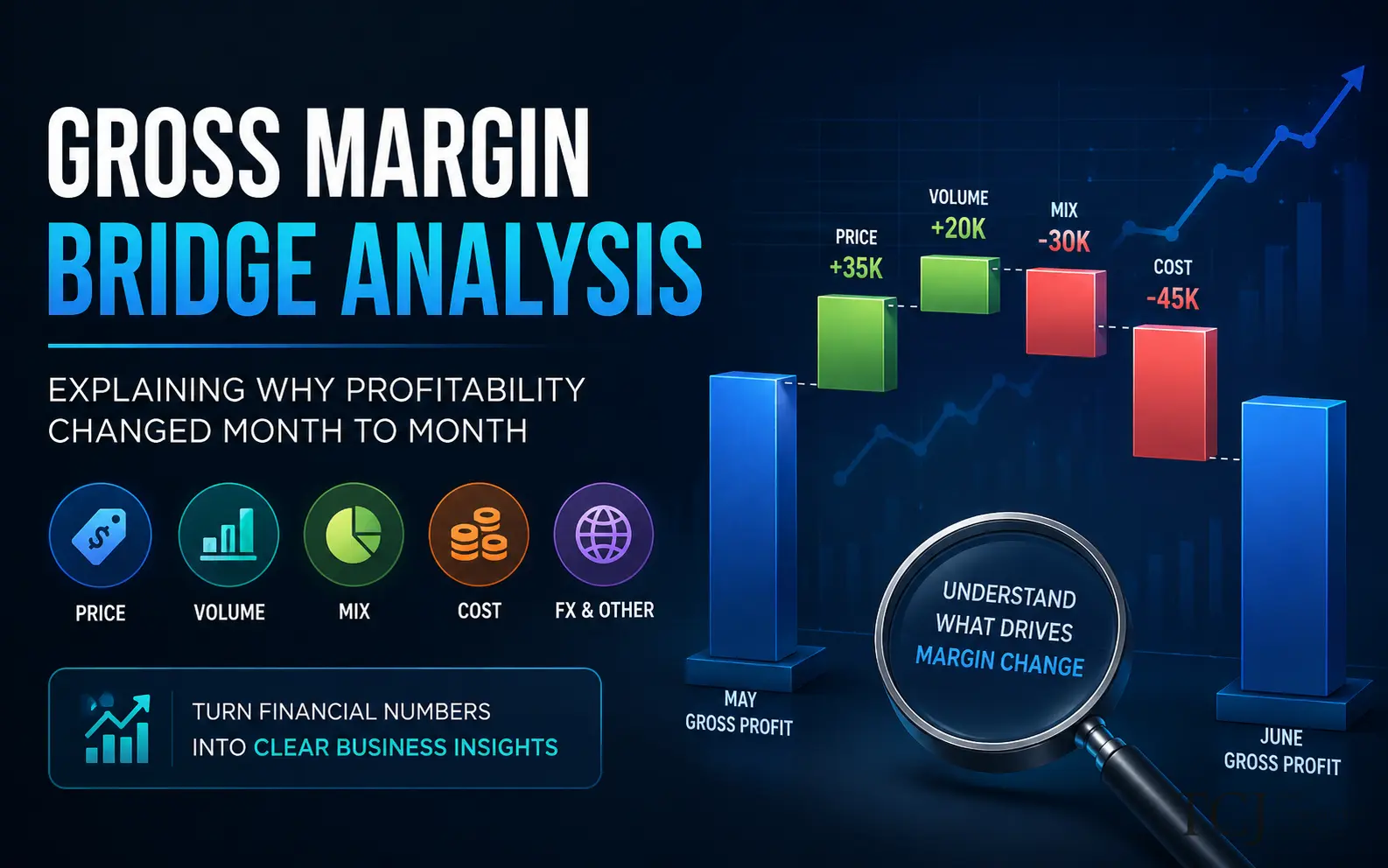
Gross Margin Bridge Analysis: Explaining Why Profitability Changed Month to Month
Gross margin bridge analysis helps finance teams explain monthly profitability changes by separating the impact of price, volume, sales mix, cost, and other operational drivers.