How Blockchain Can Help Supply Chain Businesses Improve Efficiency
A practical consulting guide on how blockchain can improve supply chain transparency, traceability, documentation, logistics coordination, and partner trust.
Why supply chain businesses are looking at blockchain
Supply chains rarely fail because one person made one mistake. They usually become inefficient because information moves slower than goods.
A supplier updates one system. A logistics partner uses another. A warehouse team keeps records in spreadsheets. A finance team waits for signed delivery documents before releasing payment. By the time management sees the full picture, the issue may already have affected delivery timelines, customer trust, and working capital.
This is where blockchain becomes relevant. In simple terms, blockchain is a shared digital record that allows approved participants to view, verify, and rely on the same transaction history. For supply chain businesses, that can mean clearer product movement records, stronger audit trails, faster document checks, and fewer disputes between parties.
The important point is this: blockchain does not replace good operations. It strengthens them when the business already understands its processes, data points, partner responsibilities, and control gaps.
How blockchain works in a supply chain setting
In a supply chain, blockchain can record key events across the product journey. These may include sourcing, manufacturing, quality checks, shipment handovers, customs documentation, warehouse receipts, delivery confirmation, and payment triggers.
Instead of each party keeping separate records that need to be reconciled later, blockchain allows selected participants to work from a shared ledger. Once a verified event is recorded, it becomes difficult to alter without leaving a trace.
For a business owner, this matters because many supply chain disputes come down to one question: which record is correct?
A blockchain-based system can reduce that uncertainty by creating a more consistent record of what happened, when it happened, who verified it, and what supporting data was attached.
12 ways blockchain can improve supply chain efficiency
1. Better product traceability
Traceability is one of the strongest use cases for blockchain. Businesses can track a product from raw material sourcing to final delivery.
For food, pharmaceuticals, electronics, luxury goods, and industrial parts, this can be especially valuable. If a batch has a quality issue, the business can identify the affected products faster instead of investigating the entire supply chain manually.
2. Improved transparency between partners
Supply chains often involve manufacturers, freight forwarders, customs agents, distributors, retailers, and end customers. When visibility is poor, every party spends time requesting updates.
Blockchain can reduce this friction by giving authorised users access to verified information. This does not mean every participant sees everything. A well-designed system controls who can view which data.
3. Faster documentation
Shipping and logistics still depend heavily on documents. Bills of lading, certificates of origin, packing lists, customs papers, warehouse receipts, and inspection reports can delay operations when they are incomplete or inconsistent.
Blockchain can support digital document verification, reducing the need for repeated manual checking.
4. Fewer disputes over delivery and payments
Payment delays are common when buyers, suppliers, and logistics providers disagree on delivery status or documentation.
With blockchain records, delivery events can be verified more clearly. When paired with smart contracts, payment workflows can be triggered once agreed conditions are met, such as confirmed delivery, inspection approval, or warehouse receipt.
5. Stronger protection against fraud
Fraud in supply chains may involve fake documents, counterfeit products, duplicate invoices, incorrect shipment records, or unauthorised changes to product data.
Blockchain cannot remove fraud completely. However, it can make tampering harder and easier to detect because records are time-stamped, shared, and difficult to change without visibility.
6. Improved recall management
When a defective product enters the market, speed matters. Traditional recall investigations can take time because records may be scattered across suppliers and distributors.
Blockchain can help companies identify affected batches, shipment routes, and retail destinations more quickly. This protects customers and may reduce unnecessary recall costs.
7. Better supplier accountability
Many businesses struggle to verify whether suppliers follow agreed standards. This may involve product quality, sustainability practices, sourcing origin, labour standards, or temperature control during transport.
Blockchain can help create a record of supplier actions and certifications. However, businesses must remember that blockchain is only as reliable as the data entered into it. Verification controls still matter.
Blockchain improves trust when it is supported by disciplined data governance, not when it is treated as a substitute for management control. — The Consulting Journal
8. More reliable logistics tracking
Logistics delays often happen because businesses do not receive accurate updates at the right time.
When blockchain is connected with Internet of Things sensors, GPS devices, warehouse systems, or transport platforms, it can improve real-time tracking. This helps supply chain managers plan around delays, update customers earlier, and reduce operational surprises.
9. Reduced administrative workload
Many supply chain teams spend too much time reconciling data between internal systems, suppliers, freight partners, and customers.
A shared ledger can reduce repeated data entry and manual matching. This allows finance, operations, and compliance teams to focus on exceptions rather than chasing routine confirmations.
10. Stronger audit readiness
For businesses that handle regulated products or cross-border trade, audit trails are essential.
Blockchain can support cleaner audit records by showing the sequence of transactions and approvals. This may help management, auditors, insurers, and business partners review historical events with greater confidence.
11. Better customer confidence
Customers increasingly want to know where products come from, whether goods are authentic, and whether brands can prove their claims.
Blockchain can support customer-facing traceability. For example, a coffee brand may show farm origin, processing location, shipment route, and packaging details. A luxury goods company may use blockchain records to support authenticity checks.
12. Improved sustainability tracking
Sustainability claims are becoming more closely examined by customers, investors, and regulators. Businesses need stronger evidence for claims around ethical sourcing, emissions, recycling, or responsible production.
Blockchain can help record and verify sustainability-related data across the supply chain. The value is not just marketing. It can also support procurement decisions, supplier reviews, and investor reporting.
Example 1:
A regional food distributor imports packaged products from multiple countries and sells to supermarkets, hotels, and restaurants. The business faces repeated issues with batch tracking because supplier records, warehouse logs, and delivery notes are stored separately.
By introducing a blockchain-based traceability layer, the company can link batch numbers, supplier details, shipment documents, inspection records, and delivery confirmations. If a product needs to be recalled, the team can identify the affected shipments faster and communicate with customers more confidently.
The business still needs strong internal controls. Staff must scan products correctly, suppliers must upload accurate documents, and warehouse teams must follow standard procedures. The technology improves the system, but discipline keeps it reliable.
Example 2:
A manufacturing SME works with overseas component suppliers and local assembly partners. The company often experiences payment disputes because suppliers claim goods were delivered on time, while the assembly team reports missing or delayed components.
A blockchain-enabled workflow can record supplier dispatch, freight handover, customs clearance, warehouse receipt, and quality inspection. Smart contracts may then support staged payments based on verified milestones.
This gives the finance team a clearer basis for payment approval. It also helps management identify whether delays are caused by suppliers, transport providers, customs documentation, or internal receiving processes.
Common mistakes business owners make
Many businesses become interested in blockchain because the technology sounds impressive. The better approach is to start with the operational problem.
Common mistakes include:
- Implementing blockchain before mapping the supply chain process
- Recording too much data without knowing what decisions it supports
- Ignoring data quality at the source
- Assuming blockchain will automatically remove fraud
- Giving too many parties unnecessary access to sensitive information
- Failing to integrate blockchain with existing ERP, warehouse, or logistics systems
- Underestimating the training required for suppliers and internal teams
- Treating blockchain as a marketing project instead of an operational control tool
In practice, the best blockchain projects usually start small. A company may begin with one product line, one supplier group, or one documentation process before expanding.
Practical checklist before adopting blockchain
Before investing in blockchain for supply chain operations, business owners should prepare carefully.
A useful preparation checklist includes:
- Map the full product journey from sourcing to delivery
- Identify where delays, disputes, fraud risks, or documentation gaps occur
- Decide which data points need to be recorded
- Confirm which parties should have access to each type of information
- Review existing ERP, inventory, accounting, and warehouse systems
- Assess supplier readiness and digital maturity
- Define responsibility for data entry and verification
- Set clear rules for document uploads and approval workflows
- Review cybersecurity and access controls
- Estimate implementation, training, and maintenance costs
- Start with a pilot project before wider rollout
- Define measurable outcomes such as faster recalls, fewer disputes, or reduced document processing time
This checklist may look basic, but it is where many projects succeed or fail. Blockchain works best when the business problem is clear and the data process is disciplined.
Where blockchain is most useful in supply chains
Blockchain is not necessary for every transaction. A simple local delivery business with trusted suppliers and limited documentation may not need it.
It becomes more useful when the supply chain has complexity, risk, or multiple parties. This includes:
- Cross-border trade
- High-value products
- Regulated goods
- Temperature-sensitive items
- Products with counterfeit risk
- Multi-stage manufacturing
- Sustainability-sensitive sourcing
- Frequent delivery or payment disputes
For these businesses, blockchain can act as a trust layer between parties that do not fully control each other’s systems.
Final advisory view
Blockchain can help supply chain businesses improve efficiency, but its real value is not in the technology alone. The value comes from better visibility, cleaner records, stronger traceability, and more reliable coordination between partners.
For business owners, the decision should not start with the question, “Should we use blockchain?” A better question is, “Where are our supply chain records unreliable, slow, disputed, or difficult to verify?”
When that problem is clear, blockchain can be assessed properly. It may support faster documentation, stronger audit trails, better recall management, reduced fraud risk, and improved partner trust. Used without planning, it may simply add cost and complexity.
The practical path is to start with one high-value use case, measure the improvement, and then expand only where the business case is proven.
Questions and answers
How can blockchain help supply chain businesses?
Blockchain can help by creating a shared, verified record of supply chain events. This improves traceability, documentation, partner visibility, and dispute management.
Does blockchain replace existing logistics and inventory systems?
Usually, no. In most businesses, blockchain works alongside ERP, warehouse, logistics, and accounting systems rather than replacing them completely.
Is blockchain only useful for large supply chain companies?
Not necessarily. SMEs can benefit when they manage complex suppliers, high-value products, regulated goods, or frequent documentation issues. The key is to start with a focused use case.
Can blockchain prevent counterfeit products?
Blockchain can make counterfeit activity easier to detect by improving product authentication and traceability. However, businesses still need proper supplier checks, inspections, and physical controls.
What should a company do before investing in blockchain?
The company should map its supply chain, identify weak points, define required data, assess partner readiness, and test a pilot project before committing to full implementation.
More in Crypto
View all Crypto →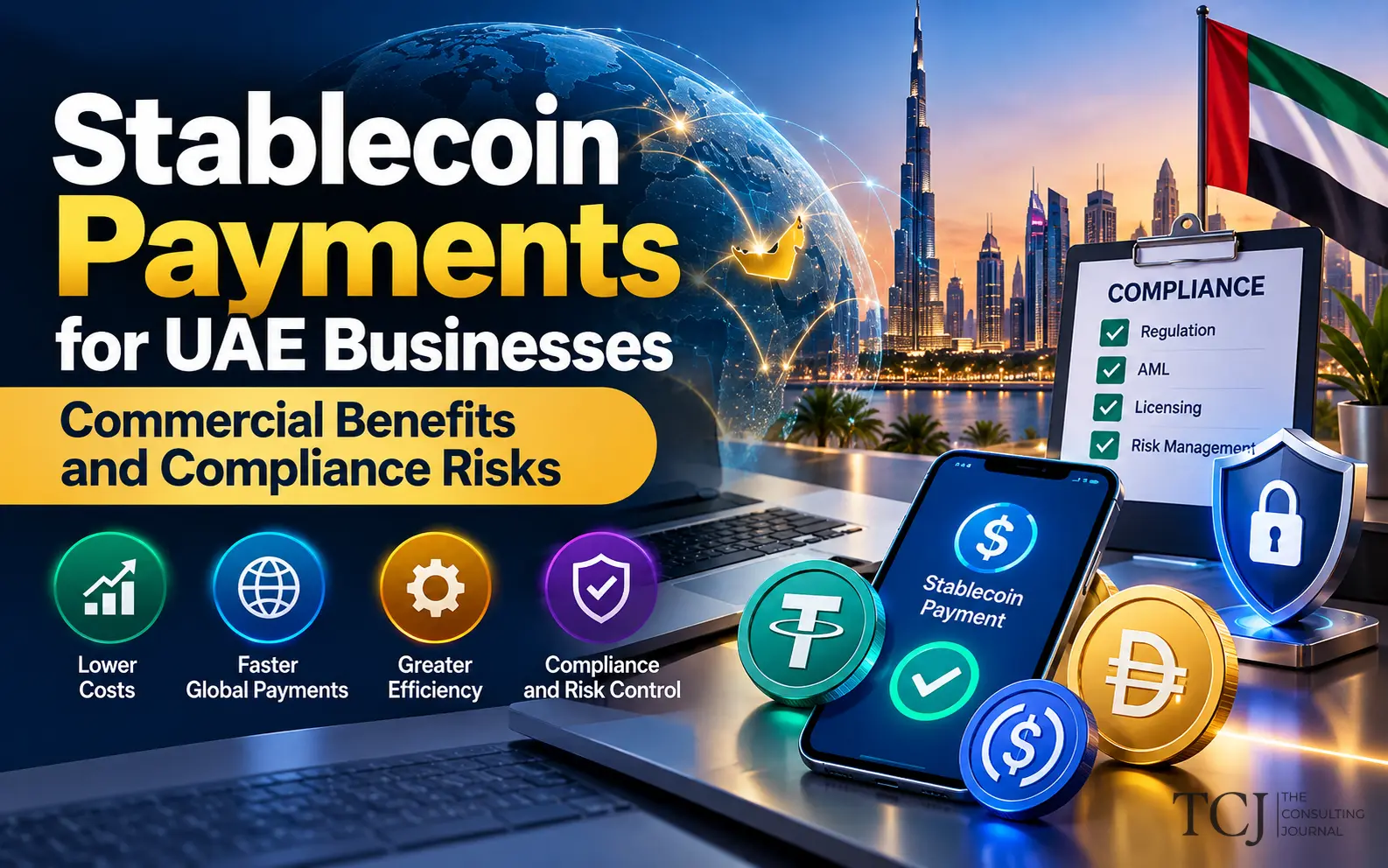
Stablecoin Payments for UAE Businesses: Benefits, Regulations and Risks
Stablecoin payments offer UAE businesses new possibilities for cross-border settlements and financial operations. Explore commercial benefits, CBUAE regulations, compliance risks, and practical steps before adoption.

VARA Licence Categories Explained: Which Dubai Virtual-Asset Activity Fits Your Model?
Dubai’s virtual-asset framework is activity based, meaning there is no single generic crypto licence. This guide explains the eight VARA licence categories, how different business models may fall within them, and what founders should assess before launching a virtual-asset business in Dubai.

When Does a Spanish Digital-Asset Business Need a VARA Licence in Dubai?
Spanish crypto and digital-asset firms expanding to Dubai need to assess activities, entity location, marketing and licensing separately. This guide explains when VARA may apply, how MiCA fits, and what businesses should prepare before launch.