Italy’s Flat-Tax Pull: What UAE Wealth Advisers Should Watch
Italy’s flat-tax regime is becoming a serious planning variable for wealthy UAE-linked families. The issue is not only tax. It is residency, governance, real estate exposure, succession and geopolitical comfort.
Italy’s appeal to wealthy residents is not just a tax story; for UAE-linked families it is a governance, mobility and asset-location decision.
Italy is becoming a serious comparator
For years, the UAE has been a magnet for entrepreneurs, investors and mobile families seeking a low-tax base, strong connectivity and relative ease of doing business.
Italy is now entering the same conversation for a different reason.
Its special regime for new tax residents allows eligible individuals to pay a fixed annual substitute tax on foreign-source income. Italy’s tax authority describes the regime as applying to high-net-worth individuals who transfer tax residence to Italy, subject to conditions and election requirements. The official guidance historically referenced a €100,000 annual substitute tax, while recent reporting and advisory commentary indicate the amount for new entrants has risen materially, with 2026 references commonly citing €300,000.
The attraction is easy to understand. For a founder with substantial non-Italian dividends, investment gains or family holding-company income, a fixed charge can offer predictability. For a family that values European schooling, healthcare access, art, heritage property and lifestyle, Italy can look less like a tax shelter and more like a long-term base.
That distinction matters for UAE advisers. Clients rarely move because of one tax rate. They move when several concerns align: family needs, security perceptions, children’s education, banking access, succession planning, property ownership and lifestyle.
France is the political backdrop
The French angle explains why Italy’s regime has become politically sensitive.
France replaced its broader wealth tax with a real estate wealth tax, the Impôt sur la Fortune Immobilière, commonly known as IFI. French official guidance states that IFI applies where net taxable real estate assets exceed €1.3 million, including relevant direct and indirect property interests.
This creates a visible contrast.
A wealthy French resident with a large property portfolio may face ongoing exposure to French real estate wealth tax. Italy, by comparison, has been positioned as offering a more predictable regime for foreign income and, in some cases, more favourable treatment for wealth and succession planning.
The political optics are difficult. When one large European economy taxes property wealth more heavily and another offers a flat-tax pathway for incoming wealthy residents, mobility becomes a policy issue as much as a private planning issue.
For UAE-linked families, the lesson is not that Italy is “better” than France. It is that European tax competition is active, and wealthy families are being treated as mobile economic actors.
The UAE angle: tax is no longer the whole argument
The UAE still has substantial structural advantages.
There is no personal income tax on employment income. The country has a deep ecosystem of private banks, free zones, holding structures, real estate developers, family offices and international schools. Dubai and Abu Dhabi remain among the most connected cities for families with interests across the GCC, India, Africa, Europe and Asia.
But the calculus has become more layered.
Regional conflict, airspace disruption, insurance considerations and family security concerns can influence where wealthy residents want their second or third base. Recent reporting has linked rising Gulf security concerns with renewed interest in Italy, particularly Milan, among wealthy residents considering alternatives or supplements to Dubai.
This does not mean an exodus is inevitable. It means advisers should expect more dual-track planning.
A UAE-based founder may keep operating companies, senior management, bank relationships and regional assets in the UAE, while relocating part of the family, personal investment management or succession planning footprint to Europe.
That is a more complex advisory problem than a simple move.
The key question is not “which country has the lowest tax?” It is “where can the family live, govern assets and manage risk without creating avoidable exposure?” — The Consulting Journal
How Italy’s regime changes the conversation
Italy’s flat-tax regime is powerful because it reframes uncertainty.
Instead of modelling foreign investment income under multiple marginal rates, eligible residents may be able to fix the Italian tax cost of foreign-source income. Italian-source income remains outside that simple headline and is generally taxed under ordinary rules, so the structure of assets and income sources matters.
The regime is typically relevant where a family has meaningful non-Italian income. It is less compelling for someone whose wealth is illiquid, concentrated in a UAE operating company that does not distribute dividends, or largely tied to Italian-source income after relocation.
Advisers should also distinguish between residence, domicile-style concepts, citizenship and asset situs. A client may become Italian tax resident without moving every asset to Italy. Equally, owning a home in Italy does not automatically solve immigration, banking or succession issues.
The practical question is whether Italy becomes the family’s centre of life, a tax residence election, a property holding decision, or a lifestyle hedge.
Those are different decisions.
Example 1: The Dubai founder with European children
Example 1:
A Dubai-based technology founder has sold 70% of her company and now holds a diversified portfolio through offshore and UAE structures. Her children are approaching university age in Europe. Her spouse wants a permanent European home, while the founder still spends significant time in the UAE managing new ventures.
Italy appears attractive because the family wants a residence base, not only a holiday property. Milan offers schooling, connectivity and access to advisers. The flat-tax regime may make foreign dividend and investment income more predictable.
The risk is residence mismatch.
If the founder spends substantial time in Italy, directs business from Italy, or creates evidence that key management decisions occur there, advisers need to assess whether corporate residence, permanent establishment or personal tax questions arise. A lifestyle move can become a business-tax issue if governance is casual.
The practical solution is documentation. Board meetings, signing authority, investment committee minutes, substance in UAE entities and personal day-count records should be aligned before the move, not reconstructed later.
Example 2: The French-UAE family office
Example 2:
A French family with UAE investments owns residential property in Paris, a villa in the South of France, a DIFC holding platform and a global securities portfolio. The second generation is split between Dubai, London and Milan.
Italy’s regime looks attractive to one branch of the family. The family is already familiar with European property taxes and wants to reduce uncertainty around foreign portfolio income.
The first issue is not the flat-tax election. It is family governance.
Who owns what? Which assets are French real estate? Which assets sit in UAE structures? Are distributions discretionary or mandatory? What happens if one beneficiary becomes Italian tax resident, another remains UAE resident and another becomes UK resident?
A move by one family member can affect reporting, withholding, treaty analysis, succession planning and family-constitution assumptions. The family office should map the structure before the individual relocates.
What UAE advisers should review first
The first review should be factual.
Where does the client actually live? Where does the spouse live? Where are children educated? Where are investment decisions made? Where are the family’s advisers located? Where are board meetings held? Where are medical, club, social and philanthropic ties concentrated?
Tax residency is usually built from facts. Advisers who begin with a rate comparison may miss the evidence trail.
The second review should be asset-based.
A UAE operating company, a DIFC foundation, an offshore holding company, a French villa and an Italian residence do not create the same tax and legal consequences. The source of income, situs of assets, debt arrangements, beneficial ownership and distribution policy all matter.
The third review should be behavioural.
Many clients say they are moving “for lifestyle”. That may be true. But tax authorities often look at behaviour more than intention. Calendar evidence, travel logs, card spending, school enrolment, lease terms and board records can become relevant.
Why property needs separate analysis
Property often drives the emotional decision and the tax complexity.
Italy offers lifestyle appeal through Milan apartments, Roman residences, lakeside homes and countryside estates. France remains attractive for heritage, education and family ties. The UAE offers liquidity, newer stock, rental yield potential and no personal income tax on rental income under many common individual scenarios.
But property taxes, transfer costs, local levies, inheritance rules and financing arrangements differ sharply.
The French IFI regime is especially relevant for substantial real estate holdings because it targets net taxable real estate assets above the stated threshold.
In Italy, the attraction of a first home or favourable succession treatment should not be assessed in isolation. Buyers should consider municipal taxes, notary and registration costs, renovation compliance, ownership vehicle, mortgage deductibility, forced heirship and cross-border estate planning.
A beautiful asset can become administratively heavy.
The governance risk: accidental centre of control
For UAE founders and family offices, the biggest hidden risk is not personal tax alone.
It is the possibility that decision-making migrates with the individual.
If a founder relocates to Italy and continues approving contracts, negotiating financing, directing portfolio strategy or making board-level decisions from Italy, advisers should consider whether this changes the analysis for related entities.
This is especially important where the client controls operating companies, investment SPVs or family holding structures.
Good governance should be visible. That means regular board calendars, local directors with real authority, documented delegation, investment committee procedures, and clear separation between shareholder oversight and executive management.
Practical checklist
Before a UAE-linked family considers Italian tax residence, advisers should review:
- Eligibility for Italy’s new-resident regime and whether the client has been Italian tax resident in recent years.
- Current and expected sources of income, separated by Italian-source and foreign-source income.
- Whether family members will elect the regime together or separately.
- UAE tax residency position and supporting evidence.
- Day-count records and expected travel patterns.
- Location of spouse, children, schooling and primary home.
- Governance of UAE, DIFC, ADGM, offshore and operating-company structures.
- Board minutes, signing authority and investment decision protocols.
- Property ownership, debt, inheritance and forced-heirship exposure.
- Reporting obligations in Italy, France, the UAE and any relevant holding jurisdictions.
- Banking access, remittance processes and documentation standards.
- Exit assumptions if the family later leaves Italy.
The board-level conclusion
Italy is not replacing the UAE.
For many wealthy families, the UAE remains the commercial hub and Italy becomes a personal, educational or succession-planning base. For others, Italy may become the primary residence while the UAE remains an investment and operating platform.
The mistake is to treat the decision as a lifestyle upgrade with a tax benefit attached.
For founders, CFOs and family offices, the better approach is to run a residency impact review before commitments are made. That review should cover tax, immigration, asset location, governance, succession and evidence.
The families that benefit most from mobility are usually the ones that document it most carefully.
This article is for informational purposes and does not constitute legal or tax advice.
Questions and answers
Is Italy’s flat-tax regime automatically better than UAE tax residence?
No. The UAE and Italy serve different purposes for many families. Italy may offer predictability for foreign-source income under its special regime, while the UAE may remain stronger for business operations, regional access and low personal tax exposure.
Can a UAE resident buy a home in Italy without becoming Italian tax resident?
Property ownership alone is not the same as tax residence. However, time spent in Italy, family location, habitual residence and centre-of-life facts can become relevant. Buyers should plan residence evidence before using the home extensively.
Why does French wealth tax matter in this discussion?
France’s IFI applies to substantial net real estate wealth above the relevant threshold, making property-heavy families more sensitive to residence and asset-location choices. Italy’s regime is often compared against France because both compete for wealthy European and international residents.
What is the main risk for UAE founders moving to Italy?
The main risk is that personal relocation causes management and control of business or investment entities to appear to shift as well. Board governance, delegation, signing authority and meeting location should be documented carefully.
Should family members elect Italian tax residence together?
Not always. Different family members may have different income sources, citizenship, residence patterns and succession needs. A coordinated family review is usually better than assuming one election works for everyone.
More in Finance
View all Finance →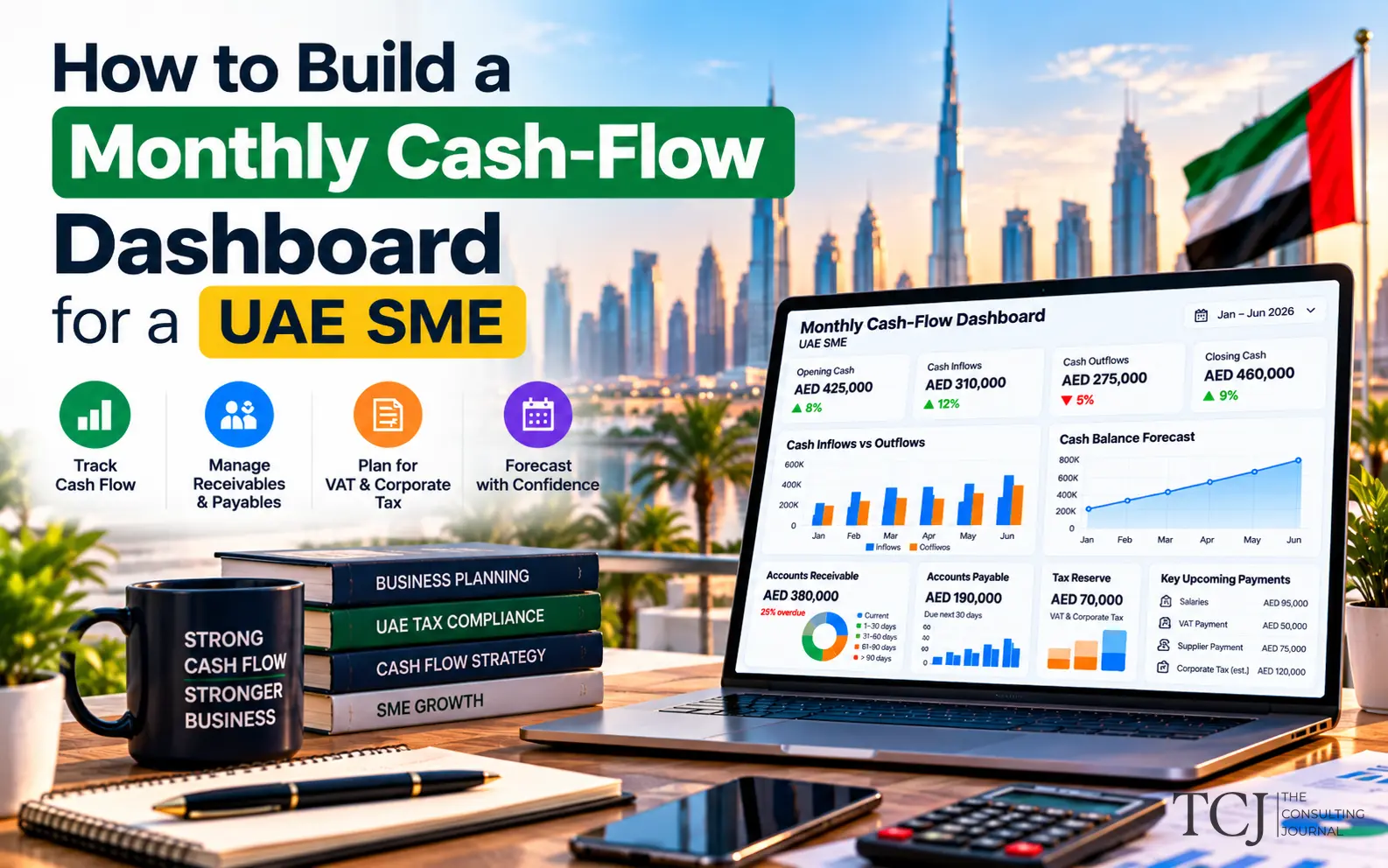
How to Build a Monthly Cash-Flow Dashboard for a UAE SME
A practical guide for UAE SME owners and finance teams on building a monthly cash-flow dashboard that tracks liquidity, collections, payments, tax obligations, forecasts, and working capital.

How UAE Companies Can Build a Faster, More Reliable Month-End Close
A practical UAE finance guide to shortening the month-end close through better reconciliations, cut-off controls, automation, tax readiness, data quality, and clear accountability.
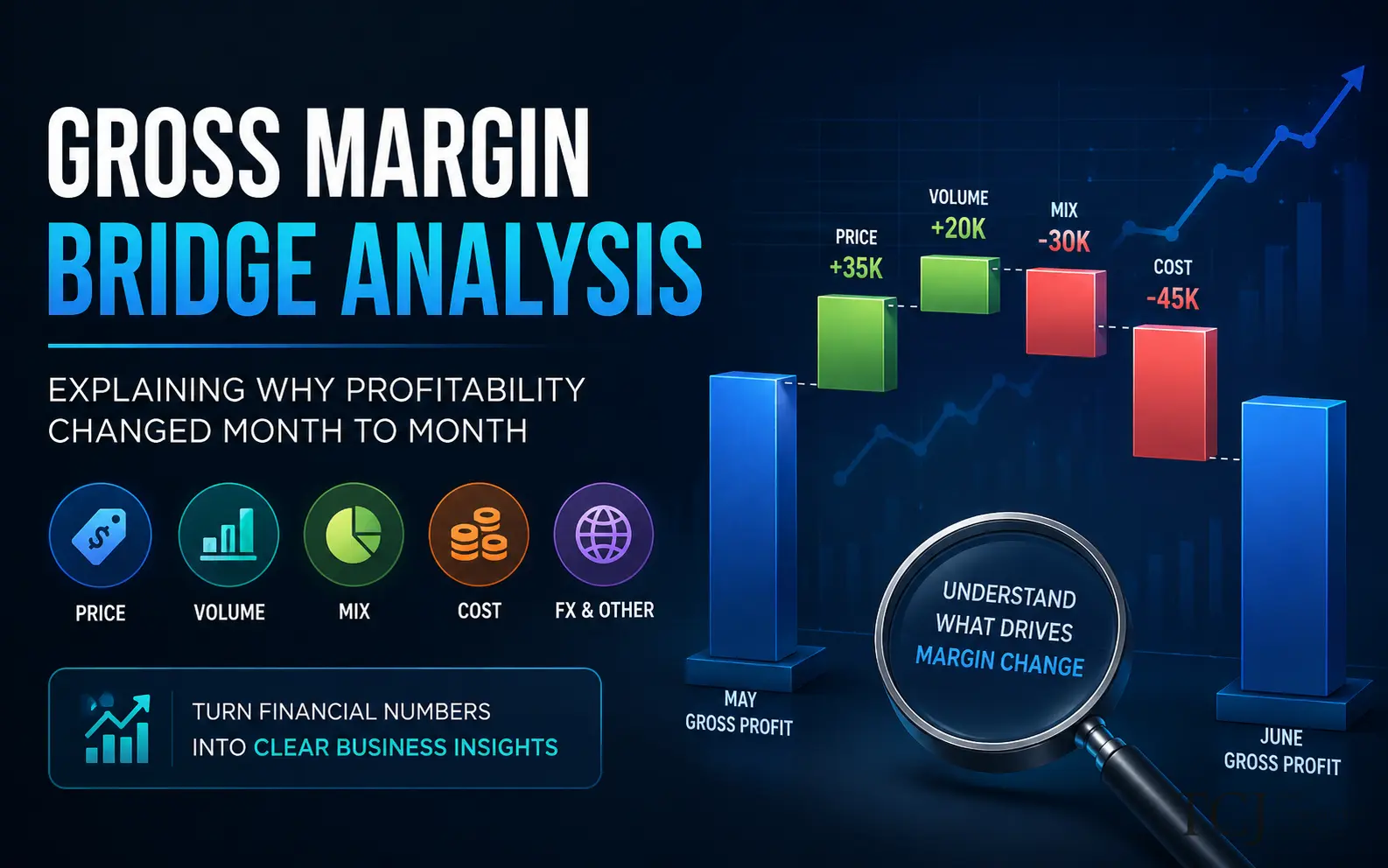
Gross Margin Bridge Analysis: Explaining Why Profitability Changed Month to Month
Gross margin bridge analysis helps finance teams explain monthly profitability changes by separating the impact of price, volume, sales mix, cost, and other operational drivers.