UAE Opportunities for Spanish-Speaking Doctors in 2026
The UAE is becoming an attractive career destination for Spanish-speaking doctors, but success depends on licensing, documentation, relocation planning and realistic salary expectations.
United Arab Emirates: A Unique Opportunity for Spanish-Speaking Doctors
For many Spanish-speaking doctors, the United Arab Emirates is no longer just a relocation idea. It is becoming a serious career option.
Dubai, Abu Dhabi and the wider UAE healthcare market continue to attract international physicians because of modern hospitals, private sector expansion, medical tourism, multilingual patient communities and the country’s long-term focus on healthcare quality. The editorial brief for this article frames the UAE as a 2026 opportunity for doctors from Spain, Mexico, Argentina, Colombia, Chile and other Spanish-speaking countries.
The opportunity is real. But it is not automatic.
A doctor cannot simply arrive in Dubai, submit a CV and start seeing patients. Medical licensing, primary source verification, specialty classification, employment sponsorship and facility activation all matter. In practice, the doctors who succeed are usually those who treat the UAE move as a structured project, not only as a job search.
Why the UAE Healthcare Market Is Attractive
The UAE has spent years positioning healthcare as a national priority. The Ministry of Health and Prevention describes its role as governing an integrated preventive and therapeutic healthcare system through policies, legislation and innovative health services based on digital data.
This matters for foreign doctors because it shows the country is not only buying medical equipment or opening hospitals. It is building regulation, digital systems, professional standards and public-private healthcare capacity.
In Dubai, demand is driven by a mix of residents, expatriate families, business travellers and medical tourists. In Abu Dhabi, large hospital groups and government-backed health institutions create structured opportunities for experienced specialists. In Sharjah and the Northern Emirates, healthcare expansion is often connected to family medicine, outpatient care, private clinics and more affordable community healthcare.
For Spanish-speaking doctors, the UAE can offer three types of value:
- Exposure to international clinical teams
- Access to advanced facilities and healthcare technology
- A multicultural patient base where language skills can become a practical advantage
The strongest opportunity is usually not Spanish alone. It is Spanish plus English, strong clinical experience, clean documentation and a specialty that matches UAE market demand.
Why Spanish-Speaking Doctors Can Stand Out
Spanish is not one of the UAE’s main business languages. Arabic and English dominate healthcare communication. Still, Spanish-speaking doctors can stand out in specific settings.
Dubai and Abu Dhabi serve patients from many nationalities. Private clinics, aesthetic medicine centres, dental clinics, fertility centres, paediatric practices, wellness providers and specialist hospitals often value doctors who can build trust with international patients.
A Spanish-speaking doctor may be especially useful when treating:
- Spanish-speaking expatriate families
- Latin American business owners or investors living in the UAE
- Medical tourists who prefer consultation in Spanish
- Patients who understand English but feel more comfortable discussing symptoms in their native language
The point is not that every UAE hospital is searching specifically for Spanish speakers. The point is that multilingual communication can be a differentiator when combined with the right specialty and licensing eligibility.
In the UAE, language helps open the door, but licensing, experience and patient trust decide how far a doctor can go. — The Consulting Journal
Licensing Comes Before Career Planning
Any foreign doctor considering the UAE must understand the licensing structure early.
Dubai uses the Dubai Health Authority licensing system. DHA’s Sheryan platform is the route for healthcare professionals seeking registration and licensing to practise in Dubai.
Abu Dhabi is regulated by the Department of Health Abu Dhabi. Its Professional Qualification Requirements provide the basis for assessing education, experience and licensure standards for healthcare professionals.
For the Northern Emirates, MOHAP services are relevant. MOHAP’s health professional evaluation service allows healthcare professionals to obtain an evaluation certificate required for licensing and confirms knowledge through required examinations.
In practical terms, a doctor should expect the process to include:
- Checking eligibility against the relevant professional qualification requirements
- Preparing degree, internship, residency and experience documents
- Completing primary source verification, often through DataFlow or an accepted third-party agency
- Sitting an exam or assessment where required
- Receiving eligibility or evaluation approval
- Activating the licence through a UAE healthcare facility or employer
MOHAP’s licensing requirements also refer to a valid professional evaluation and document verification by an accepted third-party agency such as DataFlow.
This is where many candidates lose time. They begin speaking with recruiters before checking whether their qualification, specialty title and years of post-qualification experience match the UAE classification they want.
Tax-Free Salary: Attractive, But Plan Carefully
One of the strongest attractions for international doctors is the UAE’s personal income tax position. The official UAE government portal states that the UAE does not levy income tax on individuals, while VAT applies to purchases of goods and services.
For an employed doctor, this can make a UAE salary package look very attractive compared with many European or Latin American jurisdictions.
However, doctors should be careful with the phrase “tax-free salary.” The UAE may not tax individual employment income, but the doctor’s home country tax residence position may still matter. Relocation timing, family residence, property ownership, foreign bank accounts and days spent in the home country can affect personal tax exposure outside the UAE.
Salary packages also vary widely. A general practitioner, consultant dermatologist, paediatrician, cardiologist and orthopaedic surgeon will not be evaluated the same way. Employers usually look at specialty, board certification, years of experience, language ability, procedure volume, patient network and whether the doctor can help grow a department or clinic.
A realistic package review should include:
- Basic monthly salary
- Housing allowance or accommodation support
- Health insurance
- Malpractice insurance
- Annual flight allowance
- Schooling support, if offered
- End-of-service benefits
- Non-compete or notice period terms
- Licensing and exam fee support
A higher headline salary is not always the best offer. Housing, schooling, relocation support and visa sponsorship can materially change the real value of a package.
Example 1:
A paediatrician from Colombia receives interest from a Dubai clinic because she speaks Spanish and English and has strong outpatient experience. She assumes Spanish will be her main advantage.
During the licensing review, however, the clinic focuses more on her internship certificate, specialist training documents, good standing certificate and post-specialisation experience. Her Spanish helps commercially, especially with expatriate families, but her licensing eligibility decides whether the job can move forward.
The lesson is simple: language strengthens the profile, but documents decide the timeline.
Example 2:
A dermatologist from Spain is comparing Dubai and Abu Dhabi. Dubai appears attractive because of private aesthetic medicine demand and international patient flow. Abu Dhabi offers a more structured hospital environment and a family-friendly lifestyle.
Instead of choosing only by salary, she reviews licensing route, patient profile, employer reputation, housing cost, school options, contract terms and whether the facility has experience activating licences for foreign specialists.
That type of preparation usually leads to a better relocation decision than chasing the highest initial offer.
Best UAE Locations for Spanish-Speaking Doctors
Dubai
Dubai is often the first choice for foreign doctors because of its private healthcare sector, international lifestyle and patient diversity. It can be particularly attractive for dermatology, dentistry, aesthetics, paediatrics, fertility, wellness, family medicine and specialist outpatient care.
The competition is also higher. Doctors need clear positioning, strong credentials and realistic expectations about cost of living.
Abu Dhabi
Abu Dhabi may appeal to doctors who want a more stable family environment, strong hospital systems and government-backed healthcare infrastructure. The market can be attractive for specialists who prefer institutional medicine, structured departments and longer-term employment.
Sharjah and the Northern Emirates
Sharjah and nearby emirates may offer lower living costs and family-friendly communities. Opportunities may be more connected to clinics, outpatient medicine and community healthcare. For some doctors, this can be a practical route into the UAE market before moving into larger centres.
Common Mistakes Business Owners and Doctors Make
Although this article is written for doctors, many doctors relocating to the UAE eventually think about opening a clinic, joining a medical centre or investing in healthcare. That is where business planning becomes important.
Common mistakes include assuming that a medical licence and a business licence are the same thing. They are not. A doctor may be licensed as a professional, but a clinic also needs facility licensing, activity approval, premises compliance and authority permissions.
Another mistake is relying only on recruiter promises. Recruitment agencies can help, but doctors should verify licensing requirements with the relevant authority and review employment contracts carefully.
Many doctors also underestimate document preparation. Missing stamps, inconsistent job titles, unclear experience letters or old good standing certificates can delay verification.
A fourth mistake is ignoring family costs. Dubai and Abu Dhabi can offer a high quality of life, but housing, schooling and transport should be calculated before accepting an offer.
Finally, some candidates overstate the value of Spanish language skills. Spanish can be valuable, but employers will still prioritise clinical competence, licensing eligibility and commercial fit.
Practical Checklist Before Moving to the UAE
Spanish-speaking doctors considering the UAE should prepare early. A practical checklist includes:
- Valid passport
- Medical degree certificate
- Internship completion certificate
- Specialist qualification or residency certificate
- Board certification, if applicable
- Detailed experience letters
- Current medical licence from home country
- Good standing certificate
- Updated CV with accurate dates
- Logbook or procedure record, where relevant
- Primary source verification documents
- English-language translations, where needed
- Police clearance, if requested
- Family relocation budget
- Contract review before resignation
- Home country tax residence review
Doctors should also check whether their professional title in their home country matches the UAE title they intend to apply for. A consultant-level role, specialist role and general practitioner role may carry different eligibility requirements.
Future Outlook for Spanish-Speaking Doctors in the UAE
The UAE healthcare sector is likely to remain attractive for international doctors in 2026 because the country continues to invest in healthcare regulation, digital services, innovation and private sector participation.
The opportunity for Spanish-speaking doctors is strongest when they approach the UAE with a clear plan:
First, confirm licensing eligibility. Second, identify the right emirate and healthcare authority. Third, assess realistic salary and lifestyle costs. Fourth, compare employers carefully. Fifth, protect long-term career flexibility.
Telemedicine, AI-assisted diagnostics, medical tourism, preventive care and specialist outpatient services may create additional openings. Still, the UAE is a regulated market. Good preparation matters more than speed.
This article is for informational purposes and does not constitute legal, tax, accounting, financial, immigration, licensing, or professional advice.
Final Advisory View
The United Arab Emirates can be a strong career destination for Spanish-speaking doctors in 2026, especially for those with recognised qualifications, strong English, clean documentation and a specialty aligned with patient demand.
The doctors most likely to succeed will not rely only on salary expectations or lifestyle appeal. They will treat the move as a professional transition requiring licensing strategy, contract review, relocation planning and cultural awareness.
For the right candidate, the UAE can offer international exposure, financial advantages, modern healthcare infrastructure and a genuinely multicultural working environment. The opportunity is promising, but it rewards preparation.
Questions and answers
Can Spanish-speaking doctors work in the UAE without Arabic?
Yes, many healthcare workplaces in the UAE use English as the main working language. Arabic is helpful for patient trust and daily life, but it is not always mandatory for foreign doctors. Spanish can be an added advantage in private clinics and international patient settings.
Which licence does a doctor need to work in Dubai?
Doctors planning to work in Dubai generally go through the Dubai Health Authority system using the Sheryan platform. The exact route depends on the doctor’s specialty, qualifications, experience and whether an exam or assessment is required.
Is a UAE doctor’s salary really tax-free?
The UAE does not levy personal income tax on individuals, which makes salary packages attractive. However, doctors should review tax residence rules in their home country before relocating, especially if they keep property, income or family ties there.
How long does UAE medical licensing take?
Timelines vary depending on the authority, document readiness, primary source verification, exams and employer activation. In practice, delays often happen when certificates, experience letters or good standing documents are incomplete or inconsistent.
Are Spanish-speaking doctors in high demand in the UAE?
Spanish alone is not usually enough to secure a role. It becomes valuable when combined with English, strong clinical experience, licensing eligibility and a specialty needed by the employer. Private clinics serving international patients may value Spanish-speaking doctors more than some general hospital roles.
More in Medical Career
View all Medical Career →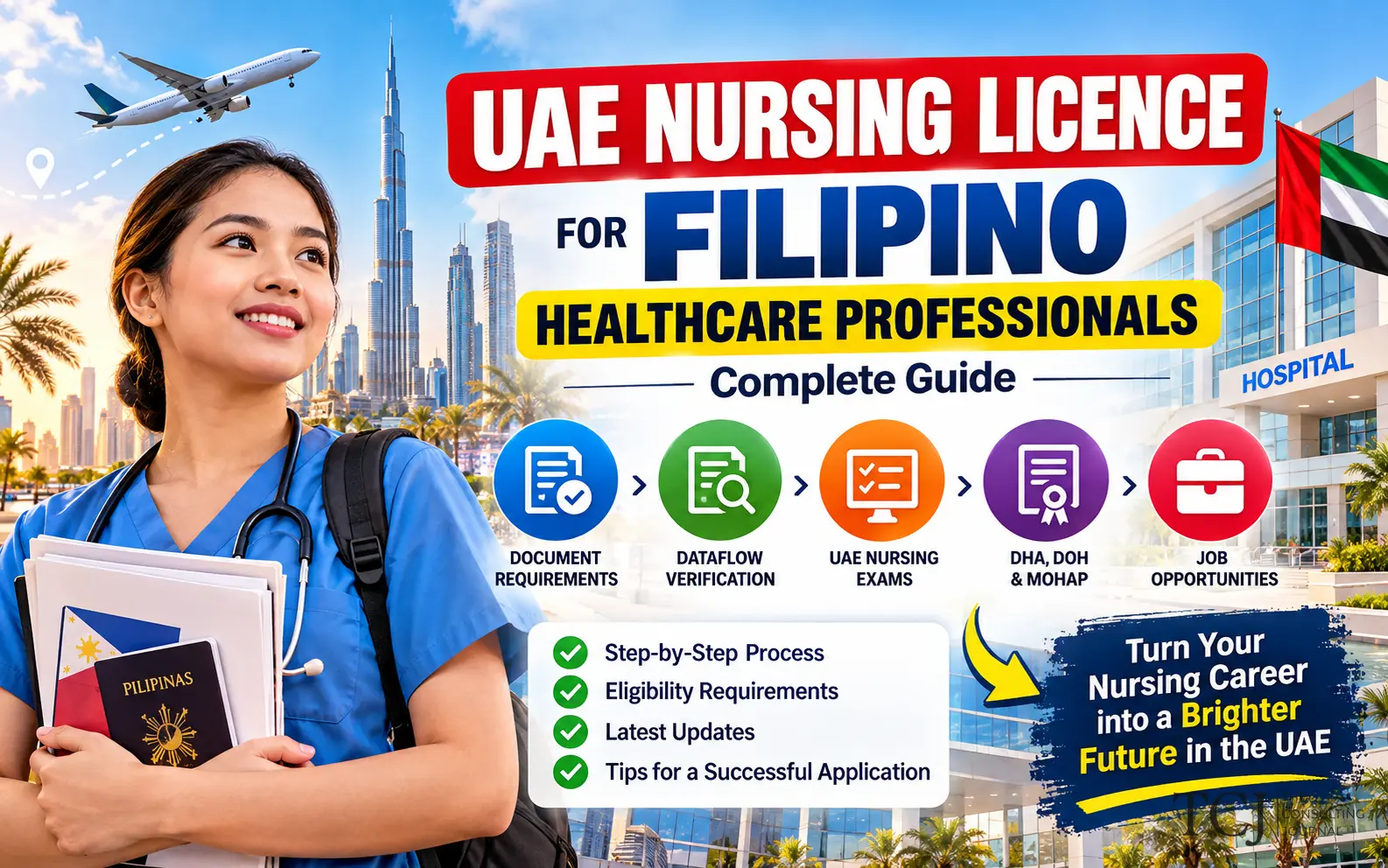
UAE Nursing Licence for Filipino Healthcare Professionals: Requirements and Application Process
Planning to work as a nurse in the UAE? Learn how Filipino healthcare professionals can navigate DHA, DOH and MOHAP licensing, DataFlow verification, nursing assessments, documents and employer licence activation.
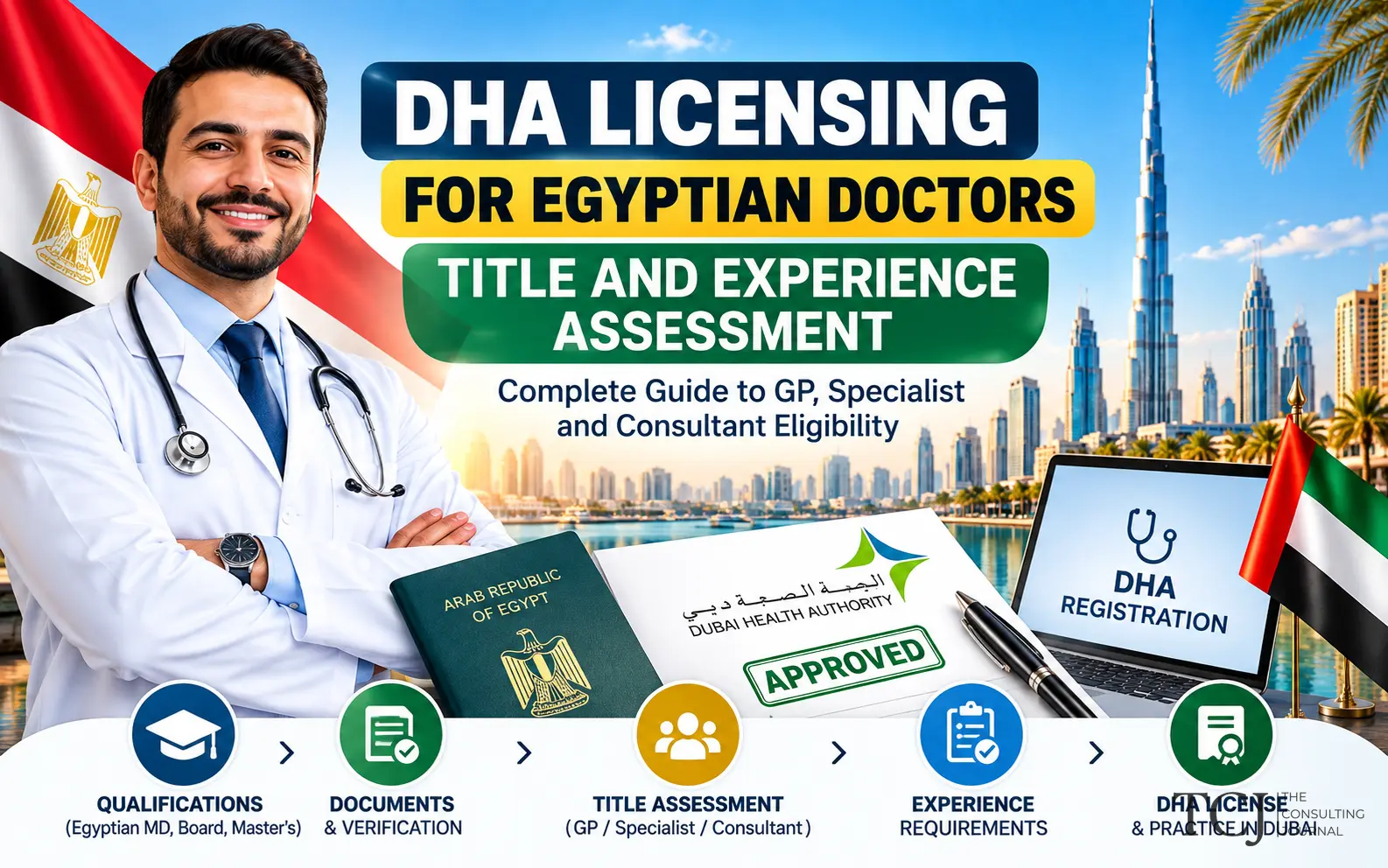
DHA Licensing for Egyptian Doctors: Titles, Tiers and Experience
Egyptian doctors applying for DHA licensing in Dubai need to understand how their MD, Egyptian Board Fellowship, Clinical Master’s and post-qualification experience affect eligibility for GP, Specialist and Consultant titles.
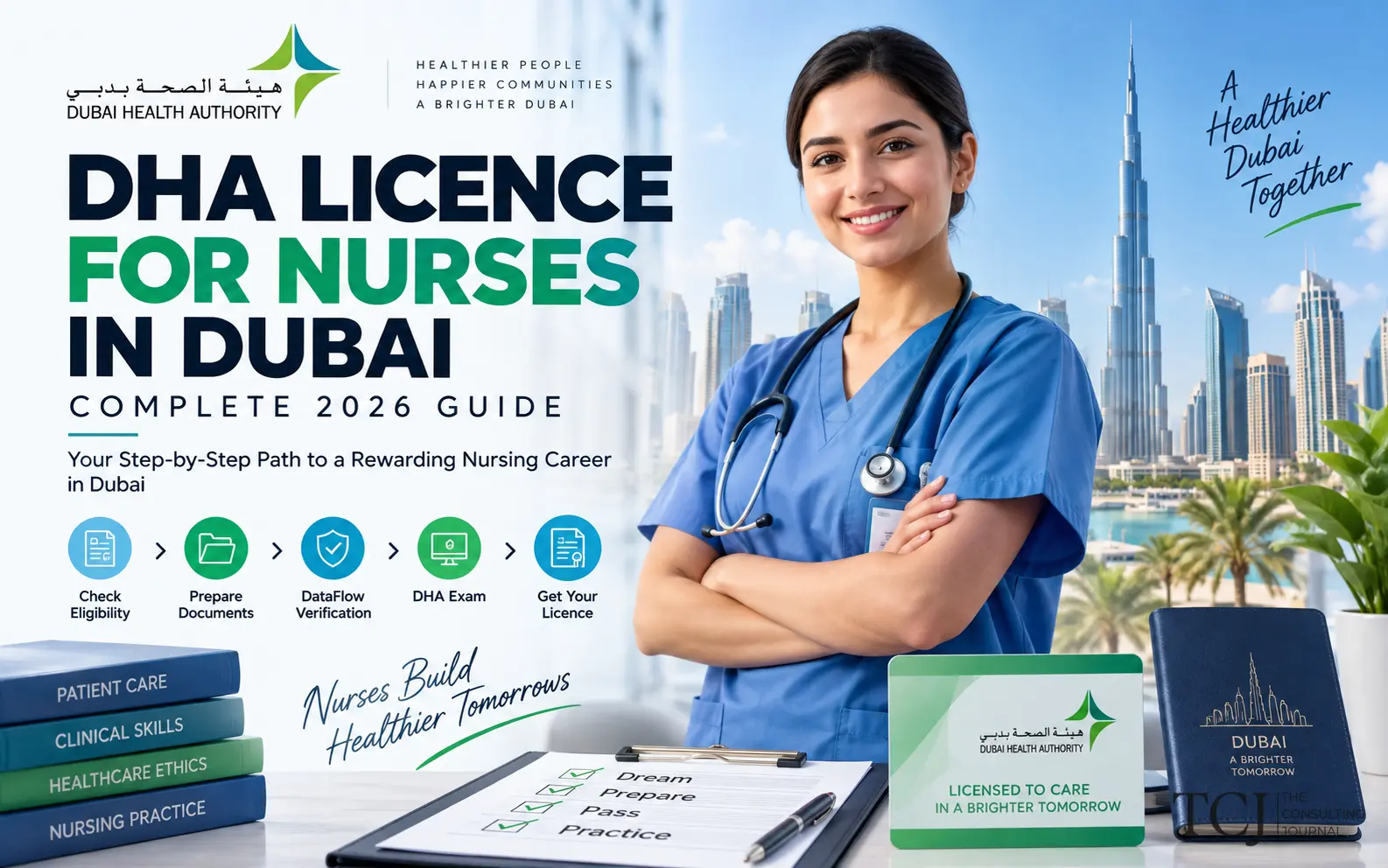
DHA Licence for Nurses in Dubai: Eligibility, DataFlow, Exam and Application Process
A practical 2026 guide to DHA licensing for nurses in Dubai, covering Registered Nurse and Assistant Nurse eligibility, DataFlow verification, assessments, registration, documents and employer-led licence activation.