Why Every Business Needs CFO Thinking for Smarter Growth
CFO thinking helps business owners move beyond basic bookkeeping and use financial insight to make better decisions, protect cash flow, manage risk, and grow with discipline.
Why CFO thinking matters before a business becomes large
Many owners wait too long before bringing finance into strategic decisions. In the early years, the focus is usually sales, operations, hiring, and customer delivery. That is understandable. Without revenue, nothing else moves.
But as the business grows, the questions become more serious. Can the company afford new staff? Is the current pricing model strong enough? Are customers paying on time? Is the business profitable by product, location, or client type? Can expansion be funded without damaging working capital?
This is where CFO thinking becomes valuable.
CFO thinking does not mean every SME needs a full-time Chief Financial Officer from day one. It means the business starts making decisions through a financial leadership lens. The owner is not only asking, “Can we sell more?” The better question becomes, “Can we grow in a way that protects margin, cash, and long-term stability?”
Accounting records tell the story; CFO thinking explains what to do next
Accounting and CFO thinking are connected, but they are not the same.
Accounting records what has happened. It keeps the business compliant, tracks invoices, records expenses, prepares reports, and supports tax or audit requirements. Good accounting is essential. Without reliable numbers, strategic finance becomes guesswork.
CFO thinking takes those numbers and asks what they mean for the future.
For example, a mainland trading business may see strong monthly revenue but weak cash availability. The accounting reports show sales are increasing. CFO thinking looks deeper and may identify slow customer collections, supplier payment pressure, excess stock, or poor credit terms.
A service company may show profit on paper but struggle to pay salaries on time. The problem may not be sales. It may be billing delays, underpriced contracts, or too much work being delivered before cash is received.
The value is not just in having financial reports. The value is in reading those reports in a way that improves decisions.
Good finance leadership does not slow business growth; it helps growth happen with fewer surprises. — The Consulting Journal
Better decisions come from financial visibility
Business owners make decisions every day. Some are small, such as approving a software subscription. Others are significant, such as opening a new branch, hiring a senior manager, changing pricing, or entering a new market.
Without financial visibility, these decisions often depend on instinct. Instinct has a place in entrepreneurship, but it should not carry the full weight of financial risk.
CFO thinking brings structure to decision-making. It asks:
- What is the expected return?
- What is the cash impact?
- What happens if revenue is delayed?
- Which costs are fixed and which are flexible?
- How long will it take to recover the investment?
- What is the downside if the plan underperforms?
This approach is especially useful for SMEs. A large company can sometimes absorb a bad investment. A smaller business may feel the impact for months.
Example 1:
A Dubai-based consultancy wants to hire three new employees after winning several client enquiries. The owner feels confident because demand appears strong. A CFO-style review may show that two of the enquiries are not yet contracted, one client has long payment terms, and the business already has rising monthly overheads.
The better decision may be to hire one permanent employee, use specialist contractors for overflow work, and review cash flow again after confirmed collections. The business still grows, but it does not lock itself into unnecessary fixed costs too early.
Cash flow is where CFO thinking becomes most practical
Many business problems first appear as cash flow pressure.
A company can be profitable and still face cash shortages. This happens when money is tied up in unpaid invoices, stock, deposits, equipment, or slow-moving projects. It also happens when owners focus on revenue but do not track timing.
CFO thinking pays close attention to timing. When will cash come in? When must suppliers, employees, landlords, banks, and tax authorities be paid? What happens if a major customer delays payment by 30 or 60 days?
For growing businesses, this is often more important than the profit figure alone.
A healthy CFO-style cash review usually includes:
- Weekly or monthly cash flow forecasting
- Ageing reports for receivables and payables
- Review of credit terms offered to customers
- Supplier payment planning
- Monitoring of salary, rent, loan, and tax obligations
- Minimum cash reserve targets
This does not require complex systems at the beginning. Even a simple rolling 13-week cash forecast can give an owner far better control.
CFO thinking helps businesses scale with discipline
Growth can create pressure when the business model is not financially ready.
A company may increase revenue but also increase costs faster than income. It may hire too quickly, rent a larger office too early, buy equipment before utilisation is clear, or spend heavily on marketing without knowing the customer acquisition cost.
CFO thinking helps owners allocate resources with more discipline.
The question is not only whether the business can afford something today. The better question is whether the investment supports profitable and sustainable growth.
For example, a free zone company preparing to expand into new markets may need additional staff, better accounting systems, stronger invoicing controls, and banking documentation. A CFO-style plan would sequence these steps rather than treating expansion as a single decision.
Example 2:
A UAE e-commerce SME sees rising sales during a seasonal campaign. The owner wants to increase advertising spend sharply. A CFO-style review compares gross margin, fulfilment costs, return rates, payment gateway fees, and customer repeat purchase behaviour. The review shows that one product line produces revenue but very little contribution after delivery and discount costs.
Instead of scaling all campaigns, the business redirects spending toward higher-margin products and improves cash collection cycles. Revenue growth becomes more profitable, not just bigger.
Risk management is part of financial leadership
CFO thinking also protects the business from avoidable shocks.
Common risks include overdependence on one customer, weak documentation, poor debt control, excessive fixed costs, inaccurate pricing, and lack of financial reserves. In regulated or tax-sensitive areas, weak accounting records can also create compliance exposure.
A business owner may not notice these risks during a busy growth phase. Sales activity can hide structural weaknesses for a while. CFO thinking brings those weaknesses into view earlier.
Useful questions include:
- What percentage of revenue comes from the top three customers?
- Which expenses continue even if revenue drops?
- Are contracts, invoices, and payment terms properly documented?
- Does the business have enough cash to handle a slow month?
- Are accounting records updated frequently enough for decision-making?
- Are tax, payroll, and compliance obligations planned rather than rushed?
This type of review is not negative thinking. It is commercial protection.
Building CFO thinking into the organisation
CFO thinking should not remain only with the owner or finance team. As the business grows, department heads and managers also need basic financial awareness.
Sales teams should understand margin, not only revenue. Operations teams should understand cost control and delivery efficiency. Project managers should understand billing milestones, scope creep, and collection timing. Leadership teams should review performance through a shared set of numbers.
This creates better alignment. People make stronger decisions when they understand the financial effect of their actions.
A practical monthly finance rhythm may include:
- Review revenue, gross margin, and net profit
- Compare actual results against budget or forecast
- Check cash position and upcoming obligations
- Review receivables and overdue invoices
- Discuss major cost changes
- Assess hiring, investment, and expansion decisions
- Agree corrective actions for the next month
The goal is not to turn every manager into an accountant. The goal is to create a culture where financial consequences are visible before decisions are final.
Common mistakes business owners make without CFO thinking
Several mistakes appear repeatedly in growing companies.
The first is confusing revenue with financial health. High sales can still hide weak margins, slow collections, and rising debt.
The second is hiring before the business model can support the payroll. People are often the largest cost in service businesses, so hiring decisions should be linked to forecasted workload, contract certainty, and cash timing.
The third is pricing based on competitors rather than actual cost structure. If pricing does not reflect labour, overhead, financing cost, delivery time, and risk, growth may reduce profitability.
The fourth is reviewing accounts too late. Annual accounts are useful, but business decisions need more frequent visibility.
The fifth is ignoring working capital. Stock, receivables, deposits, and supplier terms can quietly consume cash even when profit appears acceptable.
The sixth is investing in technology without process discipline. Dashboards are useful only when the data behind them is accurate and reviewed consistently.
Practical checklist for developing CFO thinking
A business does not need to become complicated to become financially smarter. Start with the fundamentals.
- Maintain updated bookkeeping records
- Review management accounts monthly
- Track cash flow weekly or monthly
- Prepare a simple forecast for the next three to six months
- Monitor customer payment delays
- Review pricing and gross margins regularly
- Separate personal and business expenses
- Keep supporting documents for invoices, contracts, payroll, and supplier payments
- Build a realistic budget before major hiring or expansion
- Review financial risks before signing large commitments
For SMEs, these habits can make a noticeable difference. They give owners earlier warning signs and better confidence when making growth decisions.
When external finance support becomes useful
Some businesses can manage early CFO thinking internally. Others benefit from external support, especially when they are growing quickly, preparing for funding, dealing with complex cash flow, improving accounting records, or planning tax and compliance readiness.
External finance advisory can help convert raw accounting information into practical management insight. This may include cash flow forecasting, budgeting, margin analysis, management reporting, internal controls, and board-level financial interpretation.
The right support should not overwhelm the owner with jargon. It should make the financial picture clearer and decisions easier.
Important disclaimer
This article is for informational purposes and does not constitute legal, tax, accounting, or financial advice. Businesses should seek professional advice based on their structure, jurisdiction, activity, financial position, and regulatory obligations.
Final advisory view
CFO thinking is not about adding corporate formality to a small business. It is about building financial discipline early enough to avoid expensive mistakes.
For founders, SMEs, and growing companies, the benefit is practical. Better visibility leads to better decisions. Better cash planning reduces pressure. Better forecasting supports controlled growth. Better risk awareness protects the business when conditions change.
A company does not need to wait until it is large to think financially. In many cases, the businesses that adopt CFO thinking earlier are the ones that scale with greater control, stronger resilience, and fewer surprises.
Questions and answers
What does CFO thinking mean for a small business?
CFO thinking means using financial insight to guide business decisions, not just recording transactions after they happen. For a small business, this may include cash flow forecasting, margin review, budgeting, pricing analysis, and risk planning.
Does every business need a full-time CFO?
Not always. Many startups and SMEs do not need a full-time CFO immediately, but they can still benefit from CFO-style processes and periodic financial advisory support.
Why is cash flow so central to CFO thinking?
Cash flow shows whether the business can meet real obligations on time. A company may report profit but still struggle if customers pay late, costs rise, or cash is tied up in stock or projects.
How often should business owners review financial performance?
In practice, most growing businesses should review cash flow regularly and management accounts monthly. More frequent review may be needed during expansion, funding, restructuring, or periods of pressure.
What is the first step toward developing CFO thinking?
Start with accurate and updated accounting records. Once the numbers are reliable, the business can build forecasts, track margins, review cash flow, and make better decisions from real financial data.
More in Finance
View all Finance →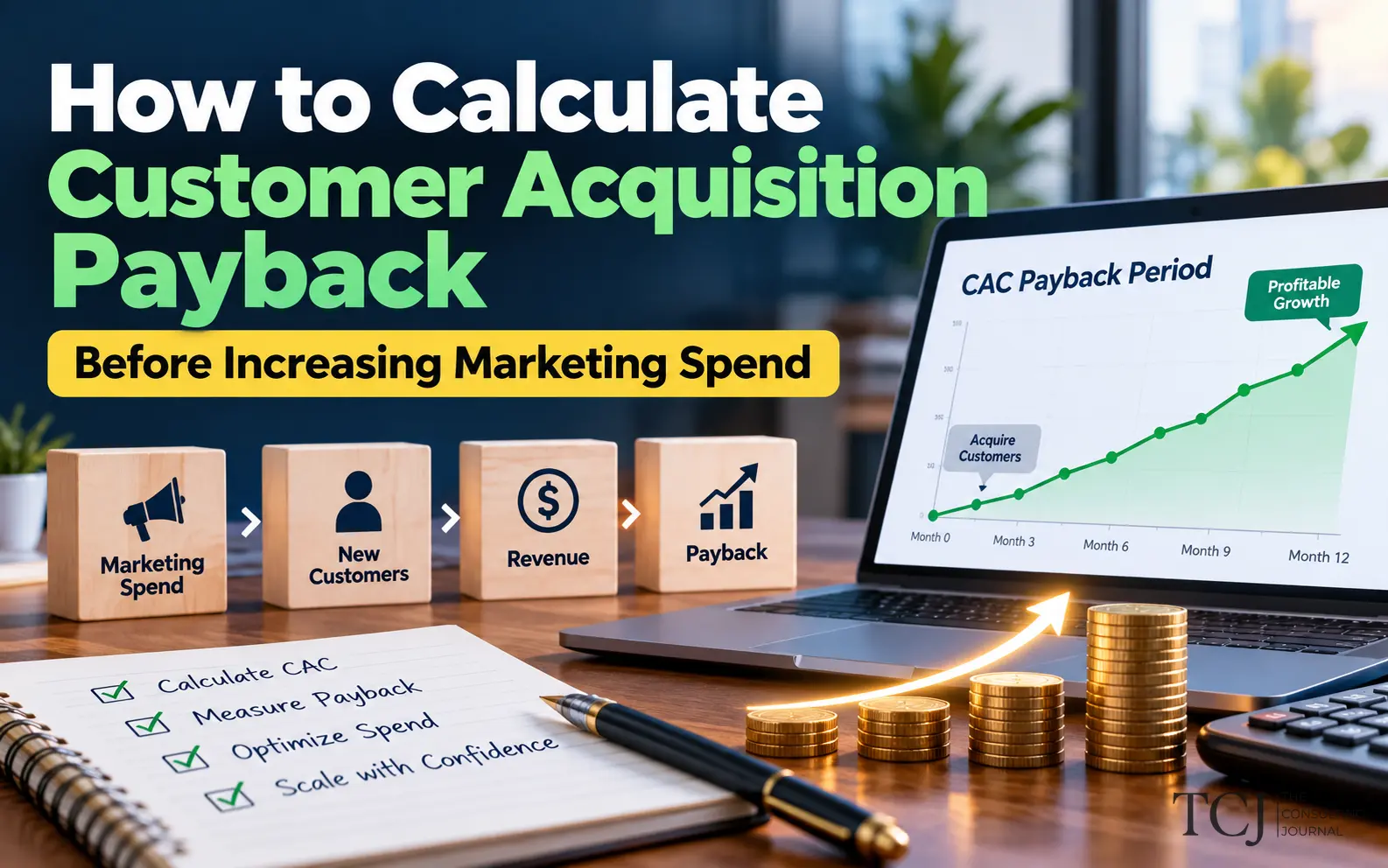
Customer Acquisition Payback: How to Calculate It Before Increasing Marketing Spend
Learn how to calculate customer acquisition payback, evaluate CAC efficiency, and assess whether increasing marketing spending makes financial sense. Includes practical formulas, worked examples, cash flow considerations, and a scaling checklist.

How to Build a Monthly Cash-Flow Dashboard for a UAE SME
A practical guide for UAE SME owners and finance teams on building a monthly cash-flow dashboard that tracks liquidity, collections, payments, tax obligations, forecasts, and working capital.

How UAE Companies Can Build a Faster, More Reliable Month-End Close
A practical UAE finance guide to shortening the month-end close through better reconciliations, cut-off controls, automation, tax readiness, data quality, and clear accountability.