Why UAE Banks Ask for Customer and Supplier Contracts
UAE banks may request customer and supplier contracts to verify business activities, review transactions, and meet KYC and AML obligations. Learn what documents businesses should prepare and how to respond to compliance requests.
Key takeaways
- UAE banks request customer and supplier contracts to understand commercial activities and support KYC and AML compliance.
- Customer agreements help explain incoming revenue, while supplier contracts support verification of outgoing payments.
- Formal contracts are not universally mandatory for every transaction, and some banks may accept alternative documents.
- Incomplete or inconsistent commercial records can lead to additional reviews or transaction delays.
- UAE businesses should maintain genuine, organised financial and commercial documentation.
- KPM Global Services UAE can assist businesses with documentation readiness and related financial record reviews.
Why UAE Banks Ask for Customer and Supplier Contracts
A Dubai business owner receives an email from the bank requesting copies of customer agreements, supplier contracts, and invoices. The corporate bank account has been operating normally, payments have been received, and suppliers have been paid. So why does the bank suddenly need these documents?
This situation is familiar to many businesses operating in the UAE, including mainland companies, free zone businesses, trading firms, and professional service providers.
UAE banks request customer and supplier contracts primarily to understand commercial activities, verify transaction purposes, assess financial relationships, and fulfil Know Your Customer (KYC) and Anti-Money Laundering (AML) obligations.
A valid trade licence and an active corporate bank account do not remove the need for ongoing verification.
However, every business does not necessarily need formal contracts for every transaction. The documents requested depend on the bank, the company's business activities, and the nature of the financial transactions being reviewed.
Understanding this distinction can help business owners respond with the right information rather than submitting unnecessary or incomplete documents.
Why Do UAE Banks Request Customer and Supplier Contracts?
Banks request commercial agreements to understand why money enters and leaves a business account. Contracts can identify customers, suppliers, products, services, payment terms, and business relationships. These details help banks assess whether transactions are consistent with a company's declared activities and expected financial behaviour.
Four practical considerations explain these requests.
1. Verifying actual business activities
During corporate bank account opening, a company typically provides information about its licensed activities, expected turnover, customer locations, and nature of operations.
Over time, the bank may compare this information with actual transactions.
For instance, a UAE consultancy that receives international payments may need to explain the services provided to overseas customers.
A customer agreement can establish the nature of the engagement, agreed fees, and payment arrangements.
2. Understanding the source of funds
Source of funds refers to the origin of money involved in a particular transaction.
When a company receives a significant payment, the bank may request supporting evidence showing why the money was transferred.
A contract, invoice, and relevant delivery or service records can help establish the commercial background.
Banks may require further supporting evidence depending on their risk assessment.
3. Checking commercial relationships
Recurring payments to the same supplier or regular receipts from an overseas customer may form part of ordinary business operations.
Contracts can help explain these relationships.
They may identify the parties involved, the goods or services being exchanged, and the payment conditions.
4. Reviewing unusual transactions
A payment that differs significantly from a company's usual financial activity may prompt additional questions.
This does not mean the bank believes the company has done something wrong.
It generally means further information is required to understand the transaction.
How Do KYC and AML Requirements Affect UAE Corporate Bank Accounts?
KYC and AML requirements oblige banks to identify customers, understand business relationships, assess relevant risks, and monitor financial activity. For UAE companies, this means compliance checks can continue after account opening. A bank may request updated company information or transaction documents when circumstances change.
What is KYC in UAE banking?
Know Your Customer refers to the procedures banks use to establish and maintain accurate information about their customers.
For corporate accounts, this generally involves reviewing:
- Trade licences and registration documents.
- Ownership and ultimate beneficial ownership details.
- Identification of directors and authorised signatories.
- Business activities and operating locations.
- Expected turnover and transaction patterns.
- Sources of funds.
- Relevant commercial relationships.
According to the Central Bank of the UAE's Customer Due Diligence guidance, financial institutions must understand their customers' activities and maintain appropriate ongoing monitoring.
Official reference: Central Bank of the UAE Rulebook (https://rulebook.centralbank.ae)
What is AML compliance?
Anti-Money Laundering requirements are intended to reduce the risk of financial institutions being used for illicit financial activities.
Banks also address relevant terrorist financing, proliferation financing, and sanctions risks.
For companies, these controls can result in requests for supporting transaction documents.
There is no universal requirement that every UAE business must submit every signed customer and supplier contract for every payment. Banks assess documentation needs according to applicable regulations, institutional policies, and relevant risks.
A business may understand every payment in its bank account, but the bank still needs sufficient evidence to understand those transactions independently. — Consulting observation
Why Do UAE Banks Ask for Customer Contracts?
Customer contracts help banks establish the commercial reason for incoming payments. They can explain what a business sells, who purchases its services or products, and how much customers are expected to pay. This information becomes particularly useful when reviewing recurring revenue, international transfers, or payments outside normal transaction patterns.
Example 1: Dubai marketing consultancy
Consider a fictional mainland marketing consultancy in Dubai that receives AED 120,000 from a European customer.
The company has a valid trade licence and has provided marketing services for several months.
Its bank requests supporting documentation for the incoming payment.
The consultancy provides:
- A signed service agreement.
- The corresponding sales invoice.
- A description of the completed marketing project.
- Relevant client correspondence.
Together, these documents explain the commercial purpose of the payment.
The bank may still seek additional verification, but the business has provided a coherent explanation supported by genuine records.
What information should a customer contract contain?
Depending on the commercial arrangement, useful information includes the customer's legal name, services or products, contractual value, payment terms, agreement dates, and evidence of acceptance.
For recurring services, the agreement should also explain the billing arrangement.
Contract terms should correspond with the actual commercial relationship.
Why Do UAE Banks Request Supplier Contracts?
Supplier contracts help banks understand the purpose of outgoing payments and identify the commercial parties receiving funds. They are particularly relevant for businesses involved in importing goods, international purchasing, distribution, or transactions with third-party payment arrangements.
Example 2: UAE electronics trading company
Consider a fictional UAE free zone electronics trader purchasing AED 250,000 worth of equipment from an overseas supplier.
Before processing the international payment, the bank asks for information about the supplier and the purchase.
The company provides a supplier agreement, purchase order, and commercial invoice.
If the goods have already been shipped, relevant transport and customs documentation may provide additional evidence.
A complication arises when the supplier requests payment to a different company.
In this situation, the bank may require documentation explaining why the payment beneficiary differs from the supplier.
The business should obtain a clear explanation and appropriate supporting evidence before proceeding.
What supporting documents help verify international trade payments?
Depending on the transaction, banks may request purchase orders, commercial invoices, shipping documents, customs declarations, delivery notes, or supplier correspondence.
Not every payment will require all these records.
The important consideration is whether the documents collectively explain the transaction accurately.
When Can UAE Banks Ask Businesses to Submit Contracts?
Banks may request customer and supplier contracts during account opening, periodic KYC reviews, transaction verification, or enhanced due diligence. Requests can also arise when a company changes its business activities, enters new markets, or begins receiving or making payments that differ from its previously declared profile.
Common circumstances include:
- Corporate account opening: Establishing the intended business model and commercial relationships.
- Periodic KYC updates: Reviewing existing customer information.
- Large or unexpected payments: Understanding the transaction's commercial purpose.
- International transfers: Reviewing counterparties and underlying business arrangements.
- Business expansion: Assessing changes in expected account activity.
- Trade finance applications: Reviewing transaction-specific commercial documentation.
An established company can receive these requests even after several years of banking activity.
Previous acceptance of transactions does not prevent a bank from conducting further compliance reviews.
Can UAE Banks Accept Invoices Instead of Customer or Supplier Contracts?
Some banks may accept invoices, purchase orders, order confirmations, or other genuine commercial records where formal agreements are unavailable. However, these documents are not automatically interchangeable. The bank may require additional information to establish the underlying commercial relationship and verify the transaction.
This matters for UAE SMEs that operate without lengthy written contracts.
For example, a wholesale business may receive orders through purchase orders and email confirmations rather than long-term supply agreements.
Similarly, a freelancer or small consultancy may rely on accepted quotations, invoices, and project correspondence.
In such circumstances, businesses should explain how their commercial arrangements work and ask which alternative documents the bank will accept.
An invoice establishes the amount billed. It does not necessarily prove that goods were delivered or services completed.
Providing related records can help clarify the transaction.
What Happens If a UAE Business Cannot Provide the Requested Contracts?
A missing contract does not automatically establish a compliance violation or result in an account freeze. However, insufficient documentation may prevent a bank from completing its verification. The bank may request alternative evidence, delay particular transactions, conduct additional reviews, or take further action depending on the circumstances.
Possible outcomes include additional documentation requests, extended processing times, or restrictions affecting certain banking services.
In more serious circumstances, where required due diligence cannot be completed satisfactorily, the banking relationship may be affected.
Business owners should distinguish between not having a formal contract and being unable to explain a transaction.
When a contract does not exist, the better approach is to provide an accurate explanation supported by available records.
Creating false or misleading documents to satisfy a compliance request can create substantially greater problems than disclosing that the original arrangement was informal.
How Should UAE Businesses Prepare for Bank Contract Verification?
Businesses should maintain organised customer, supplier, and transaction records before receiving a bank request. Commercial documentation should accurately reflect real business arrangements, remain consistent with invoices and payments, and be accessible when verification is required.
Documents and preparation checklist
Business owners can use the following checklist:
- Valid trade licence and company registration documents.
- Updated ownership and authorised signatory information.
- Available customer agreements and service contracts.
- Supplier agreements and purchase orders.
- Customer and supplier invoices.
- Payment confirmations and relevant bank records.
- Shipping or delivery evidence, where applicable.
- Relevant commercial correspondence.
- Explanation of unusual or third-party payments.
- Updated business activity and transaction information.
Not every company will need every document. The appropriate records depend on the business model and the specific bank request.
How should a company respond?
First, identify the exact transactions or relationships being reviewed.
Next, collect the relevant documents and check that names, amounts, dates, and payment details are consistent.
Where discrepancies have legitimate explanations, provide those explanations clearly.
Submit sensitive documents only through verified banking communication channels. If a contract contains confidential commercial terms, ask the bank whether specific redactions or alternative evidence are acceptable.
Do not independently remove information the bank requires for compliance purposes.
What Common Mistakes Should Business Owners Avoid?
Several avoidable documentation mistakes can complicate UAE banking compliance reviews.
- Submitting incomplete contracts: Missing schedules, payment terms, or relevant pages may result in further enquiries.
- Providing inconsistent information: Differences between contracts, invoices, and beneficiaries should be explained.
- Creating artificial or backdated agreements: Documents must genuinely reflect the commercial arrangement.
- Ignoring bank communications: Unanswered requests can delay verification or lead to further action.
- Assuming all banks follow identical procedures: Documentation expectations vary between institutions.
- Failing to explain intermediary arrangements: Payments involving agents or unrelated beneficiaries may require supporting evidence.
The aim should be accurate, consistent documentation, not simply producing the largest possible collection of paperwork.
Are Banking Documentation and UAE Tax Records Connected?
Banking compliance and tax compliance serve different purposes, although businesses may use some of the same underlying records.
Customer invoices, supplier invoices, contracts, and accounting records can be relevant to UAE VAT and Corporate Tax documentation requirements.
For instance, accurate invoices and supporting accounting records help businesses maintain reliable financial reporting and demonstrate their transactions.
However, a bank's KYC request should not automatically be interpreted as a Federal Tax Authority investigation.
Each authority or institution has its own requirements.
UAE businesses should maintain records appropriate to both their banking relationships and their applicable Tax and Accounting obligations.
How Can KPM Global Services UAE Assist Businesses?
Responding to corporate banking documentation requests often requires coordination between business owners, finance teams, and external advisers.
KPM Global Services UAE can assist businesses in reviewing their available commercial and financial records, identifying documentation gaps, and preparing organised information for bank enquiries.
Depending on the engagement, assistance may cover corporate documentation reviews, accounting records, transaction reconciliation, and preparation for KYC updates.
For businesses with international customers, multiple suppliers, or complex payment arrangements, having a consistent record-keeping process can make future requests easier to manage.
The bank remains responsible for its compliance decisions, and no adviser can guarantee transaction clearance or account approval.
What Should UAE Business Owners Remember?
Customer and supplier contracts are not merely documents prepared for the bank. They are part of the broader commercial records that explain how a business earns revenue, purchases goods, and manages financial relationships.
Companies that maintain accurate contracts, invoices, payment records, and transaction explanations are generally better placed to respond when banks request supporting information.
When formal contracts are unavailable, businesses should communicate transparently and seek clarification about acceptable alternatives.
For UAE business owners, the most practical approach is to establish a documentation process that reflects actual operations and remains useful beyond a single banking review.
This article is for informational purposes and does not constitute legal, tax, accounting, or financial advice.
Questions and answers
Q: Why do UAE banks ask for customer and supplier contracts?
A: UAE banks request these contracts to understand commercial relationships, verify the purpose of payments, and support KYC and AML requirements. Contracts provide information about customers, suppliers, products, services, and payment terms. Banks may request additional evidence depending on the transaction.
Q: Are customer and supplier contracts mandatory for every UAE corporate bank account?
A: No universal requirement obliges every UAE business to submit all its customer and supplier contracts for every transaction. Banks apply risk-based procedures and may request documents based on the company's business activities and transaction profile. Individual bank policies also affect what evidence is required.
Q: Can a UAE bank accept invoices instead of signed contracts?
A: Some UAE banks may accept invoices, purchase orders, and other commercial records when formal contracts are unavailable. Acceptance depends on the bank's requirements and the nature of the transaction. Businesses should confirm what alternative evidence is acceptable before submitting documents.
Q: Can a UAE bank restrict a corporate account if contracts are not provided?
A: A bank may delay transactions, request additional information, or restrict certain services when required verification cannot be completed. Missing contracts do not automatically result in an account freeze. The outcome depends on the circumstances, applicable requirements, and the bank's assessment.
Q: Do UAE free zone companies need customer and supplier contracts for banking compliance?
A: Free zone companies are subject to relevant banking due diligence procedures, just like mainland businesses. Banks may request customer agreements, supplier contracts, invoices, or other evidence of commercial activity. Newly established free zone companies without signed contracts should explain their operating stage and provide genuine available documentation.
More in Banking
View all Banking →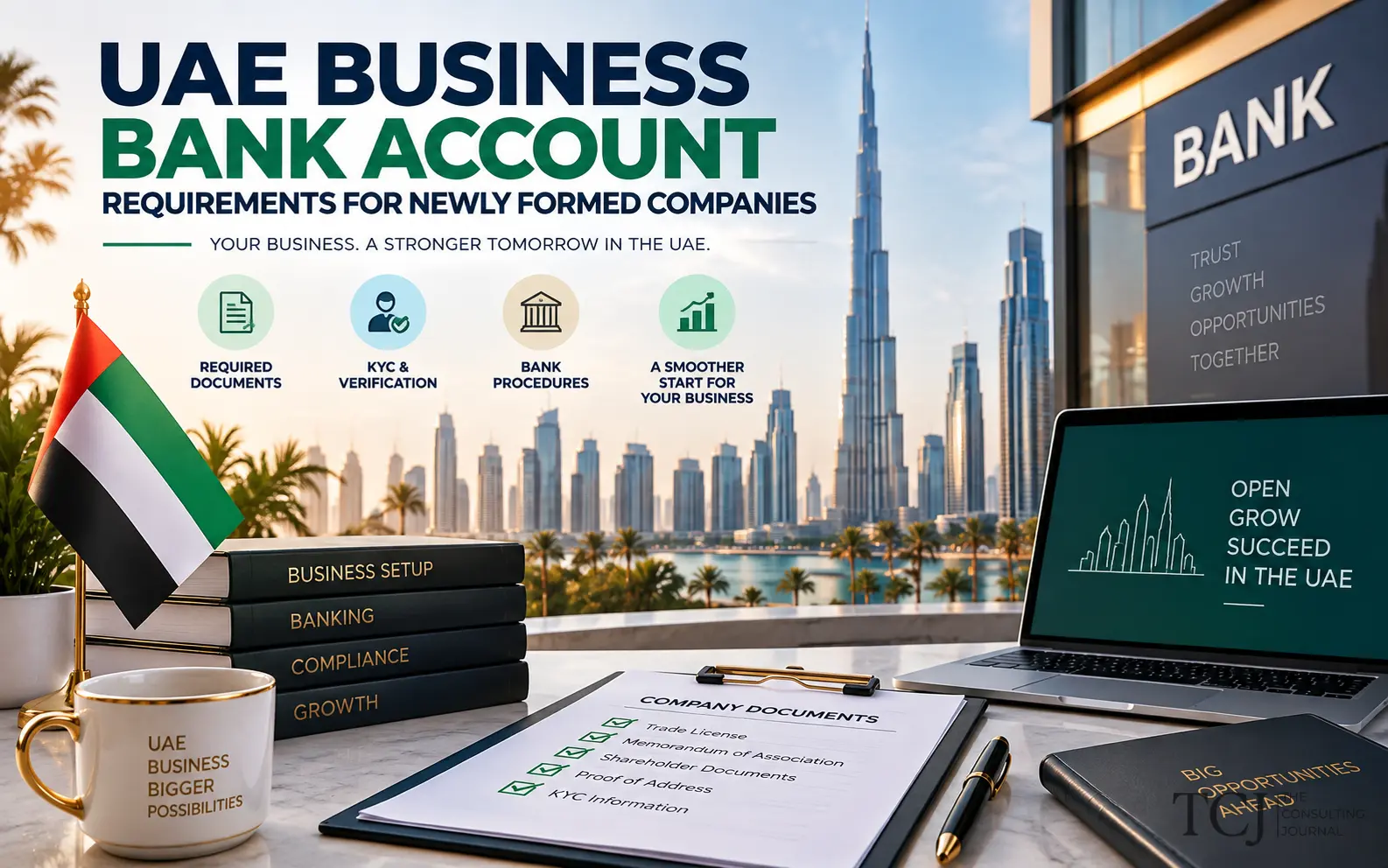
UAE Business Bank Account Requirements for Newly Formed Companies
A practical guide to UAE business bank account requirements for new companies, covering documents, KYC, shareholder checks, proof of activity, banking preparation, VAT and Corporate Tax considerations.

UAE Market Entry for Swiss Wealth Management and Fintech Companies
Swiss wealth managers and fintech companies entering the UAE need to align regulated activities, jurisdiction, licensing, governance and commercial strategy before establishing a local operation.
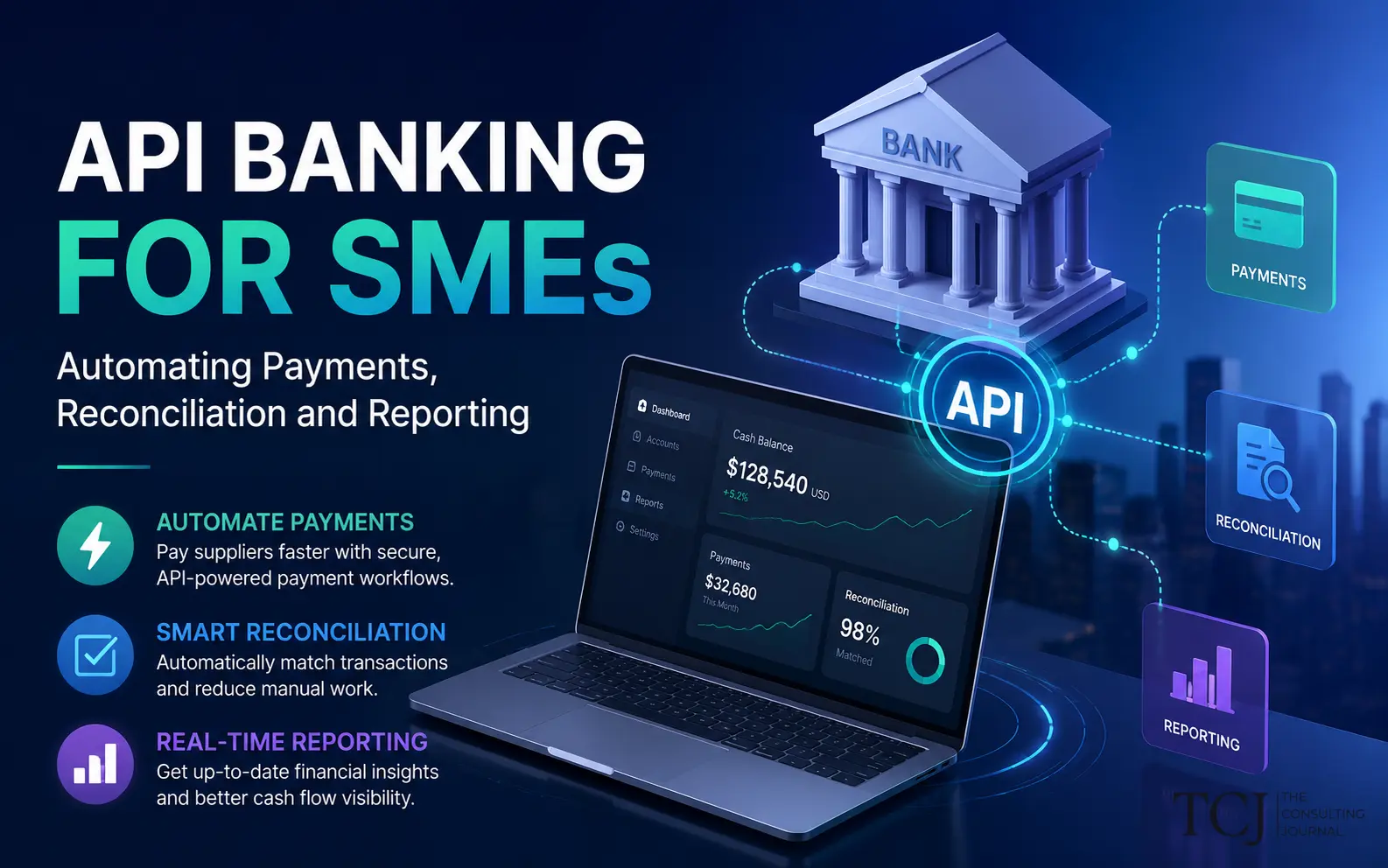
API Banking for SMEs in UAE: Automating Payments, Reconciliation and Reporting
API banking can help UAE SMEs connect banking with Accounting and Financial systems, reducing manual payment work, improving reconciliation and providing more timely cash visibility.