Why UAE Startups Need a Financial Forecast Before Marketing Spend
Many UAE startups spend on marketing before understanding cash flow, runway, CAC, and break-even points. A financial forecast helps founders spend with discipline.
What a financial forecast really tells a startup founder
A financial forecast is a forward-looking estimate of how the business may perform over a defined period, usually 12 to 24 months for an early-stage company.
In practice, a useful startup forecast should show expected revenue, direct costs, operating expenses, marketing spend, cash inflows, cash outflows, runway, and break-even timing.
For a founder preparing to spend on marketing, the forecast should connect marketing activity to commercial reality.
For example, a Dubai e-commerce startup may plan to spend AED 25,000 per month on paid ads. On paper, that sounds reasonable if the founder expects rapid sales. But the forecast may show a different picture. If gross margins are thin, delivery costs are high, returns are common, and payment collections take time, the same campaign could create pressure on cash flow.
That is why a forecast should not sit separately from marketing. It should guide the marketing decision.
A startup does not need perfect numbers before it markets, but it does need honest assumptions before it spends. — The Consulting Journal
Why marketing without forecasting becomes risky
Marketing is often one of the first areas where startup capital disappears quickly.
A founder may spend on branding, performance ads, influencers, PR, launch photography, video production, website development, lead generation, and agency retainers within the first few months. Each item may look justifiable on its own. Together, they can create a burn rate the business cannot sustain.
The risk is sharper in the UAE because many sectors are highly competitive. A real estate lead campaign in Dubai, a luxury retail campaign targeting high-income residents, or a restaurant launch campaign during peak season can become expensive quickly. Without a forecast, the founder may only realise the problem after the cash balance has already dropped.
Forecasting also exposes timing gaps. Marketing spend usually happens upfront. Revenue may arrive later. For B2B startups, the sales cycle can stretch for weeks or months. For consumer businesses, the first campaign may generate traffic but not enough repeat purchases. For service firms, leads may come in, but conversions may depend on consultation quality, pricing, credibility, and follow-up.
A forecast helps founders see whether the company can survive the gap between spending and return.
Customer acquisition cost should not be guessed
Customer acquisition cost, often called CAC, is one of the most important numbers in startup marketing. It shows how much the business spends to acquire one paying customer.
For example, if a startup spends AED 20,000 and gains 100 customers, the CAC is AED 200.
That number only becomes useful when compared with margin and customer lifetime value. If each customer produces AED 600 in gross profit over time, the campaign may be healthy. If each customer produces AED 120 in profit, the business is losing money every time it acquires a customer.
Many UAE startups focus too heavily on revenue and not enough on contribution margin. This is especially common in e-commerce, food delivery, beauty services, and subscription models. A campaign can increase sales while still weakening the business if discounts, fulfilment costs, commissions, refunds, and ad spend are not properly measured.
A forecast forces the founder to define the acceptable CAC before the campaign begins.
Example 1:
A Dubai-based skincare startup plans to spend AED 40,000 on influencer marketing and paid ads during its launch month. The founder expects strong sales because the brand has good packaging and early social media interest.
When the forecast is built, the numbers become clearer. Product margins are reasonable, but shipping costs, promotional discounts, returned orders, and payment gateway charges reduce profit per order. The business needs repeat purchases within 60 to 90 days to make the campaign worthwhile.
Instead of spending the full amount immediately, the founder tests AED 10,000 across two channels, tracks CAC, average order value, and repeat purchase behaviour, then scales the campaign only after the numbers improve.
That is forecasting in practice. It does not stop marketing. It makes marketing more controlled.
Forecasting protects startup runway
Runway is the amount of time a startup can continue operating before it needs more funding or positive cash flow.
Many founders know their bank balance but not their runway. That is a problem. A bank balance of AED 300,000 may look comfortable until licence renewals, salaries, rent, software subscriptions, marketing contracts, supplier payments, and founder drawings are included.
A financial forecast shows the monthly burn rate. It also shows how marketing spend affects survival time.
For example, a startup with 10 months of runway may reduce that to five months if it commits too early to aggressive campaigns. If the campaign works, the decision may be justified. If revenue grows slower than expected, the startup may be forced to cut staff, delay supplier payments, reduce product quality, or seek emergency funding from a weak negotiating position.
Forecasting gives founders time to make better decisions before pressure builds.
Marketing decisions become better when finance and growth teams work together
In many startups, finance and marketing operate separately. The marketing team wants budget. The finance team wants caution. The founder wants growth.
A forecast creates a shared language.
Instead of saying, “We need more leads,” the business can define how many qualified leads are needed, what conversion rate is expected, what CAC is acceptable, and what revenue timeline supports the spend.
For a UAE B2B services startup, this may mean modelling a three-month sales cycle. For a free zone SaaS company, it may mean comparing monthly recurring revenue against paid acquisition costs. For a hospitality brand, it may mean linking seasonal demand, Ramadan patterns, tourism cycles, and campaign timing.
The forecast does not replace marketing judgement. It improves it.
Common mistakes business owners make
Many startup founders are strong at product, networking, and sales, but weak at financial discipline in the early stages. Common mistakes include:
- Spending heavily on marketing before calculating monthly runway.
- Treating revenue as profit and ignoring direct costs.
- Not measuring CAC by channel.
- Assuming all leads have equal value.
- Signing long agency contracts before testing campaign performance.
- Using discounts to drive sales without understanding margin impact.
- Ignoring VAT, corporate tax readiness, bookkeeping, and documentation.
- Building optimistic forecasts with no conservative scenario.
- Failing to update the forecast after real campaign data becomes available.
- Increasing ad spend because competitors appear active online.
The most dangerous mistake is emotional spending. A competitor’s online visibility does not prove profitability. A startup should not copy another company’s campaign without knowing its own numbers.
Example 2:
A mainland professional services startup in Abu Dhabi wants to generate corporate leads through Google Ads and LinkedIn campaigns. The founder is prepared to spend AED 30,000 per month for six months.
Before approving the spend, the finance consultant builds a forecast using expected lead volume, consultation booking rates, proposal conversion rates, average client value, payment terms, and staff capacity.
The forecast shows that the business does not need maximum lead volume. It needs better-qualified leads and faster proposal follow-up. The marketing budget is reduced, part of the money is moved into CRM setup and sales process improvement, and the startup improves conversion without increasing burn unnecessarily.
In many cases, better forecasting reveals that the problem is not only marketing. It may be pricing, sales follow-up, collections, capacity, or weak financial tracking.
Practical checklist before spending on marketing
Before a UAE startup commits to significant marketing spend, founders should prepare:
- A 12-month revenue forecast.
- Monthly operating expense estimates.
- Expected gross margin by product or service.
- Cash flow forecast showing inflows and outflows.
- Current runway calculation.
- Marketing budget by channel.
- Expected CAC by channel.
- Customer lifetime value assumptions.
- Break-even analysis.
- VAT and corporate tax readiness review, where applicable.
- Updated bookkeeping records.
- Bank balance and funding schedule.
- Conservative, expected, and optimistic scenarios.
- Clear campaign KPIs.
- A process for reviewing actual results against the forecast.
This checklist does not need to be complex at the beginning. Even a well-structured spreadsheet is better than making decisions from instinct alone.
How founders should use the forecast after campaigns begin
A forecast should not be created once and forgotten.
After the first campaign data arrives, the founder should compare actual results against the forecast. If CAC is higher than expected, the startup may need to adjust targeting, creative, pricing, landing pages, or conversion processes. If revenue is slower than expected, cash flow assumptions should be updated immediately.
This review cycle is especially important for startups preparing for investors. Investors generally expect founders to understand burn rate, CAC, lifetime value, gross margin, revenue growth, and funding needs. A founder who can explain marketing spend through numbers appears more prepared than one who relies only on enthusiasm.
Strong forecasting also supports banking readiness. UAE banks often look for clear documentation, business activity clarity, invoices, contracts, financial records, and a credible operating model. A startup with organised financials is usually better prepared for account opening, funding discussions, and compliance reviews.
When a startup should seek advisory support
Some founders can build a basic forecast internally. Others need support, especially when the business has multiple revenue streams, inventory, subscriptions, investor funding, cross-border transactions, or complex cost structures.
A finance or consulting advisor can help the founder test assumptions, identify weak areas, and create a forecast that connects with actual accounting records.
For example, an SME preparing for corporate tax filing may discover that its bookkeeping categories are too broad to support meaningful analysis. A free zone company preparing for banking may need cleaner documentation and clearer revenue assumptions. A startup preparing for external investment may need a forecast that can withstand investor questions.
The aim is not to create an impressive spreadsheet. The aim is to support better business decisions.
Financial discipline makes marketing stronger
Some founders worry that forecasting will slow them down. In practice, it often does the opposite.
A clear forecast gives the founder confidence to spend when the numbers support it. It also gives the discipline to pause when assumptions are weak.
Marketing should be treated as an investment, but not every campaign deserves funding. The best startup marketing decisions are built on a realistic view of cash flow, customer behaviour, margins, timing, and risk.
For UAE startups, this matters even more because the market rewards speed but punishes poor financial control. A business can generate attention and still fail if it runs out of cash. It can attract leads and still struggle if acquisition costs are too high. It can grow revenue and still lose money if margins are ignored.
A financial forecast gives founders a practical way to grow without gambling the company’s future.
This article is for informational purposes and does not constitute legal, tax, accounting, or financial advice.
Questions and answers
Why should a UAE startup prepare a financial forecast before marketing?
A forecast helps founders understand how much they can safely spend, how long their runway will last, and what return is needed from each campaign. It turns marketing from a hopeful expense into a controlled business decision.
What numbers should a startup track before approving marketing spend?
Startups should track cash flow, monthly burn rate, runway, gross margin, CAC, customer lifetime value, and break-even timing. These numbers show whether the business can afford the campaign and whether the campaign is likely to be profitable.
Can a startup begin marketing without a perfect forecast?
Yes. A forecast does not need to be perfect, especially in the early stage. It should be practical, realistic, and updated as real sales and campaign data become available.
How often should founders update their financial forecast?
Early-stage startups should review forecasts monthly, or more often during major campaigns. Any change in pricing, hiring, funding, sales performance, or marketing cost should be reflected in the forecast.
Does financial forecasting help with investors or banking in the UAE?
Yes. A clear forecast can help founders explain growth plans, funding needs, cash flow, and marketing assumptions. It also supports stronger financial organisation when preparing for investor discussions, banking requirements, or compliance reviews.
More in Finance
View all Finance →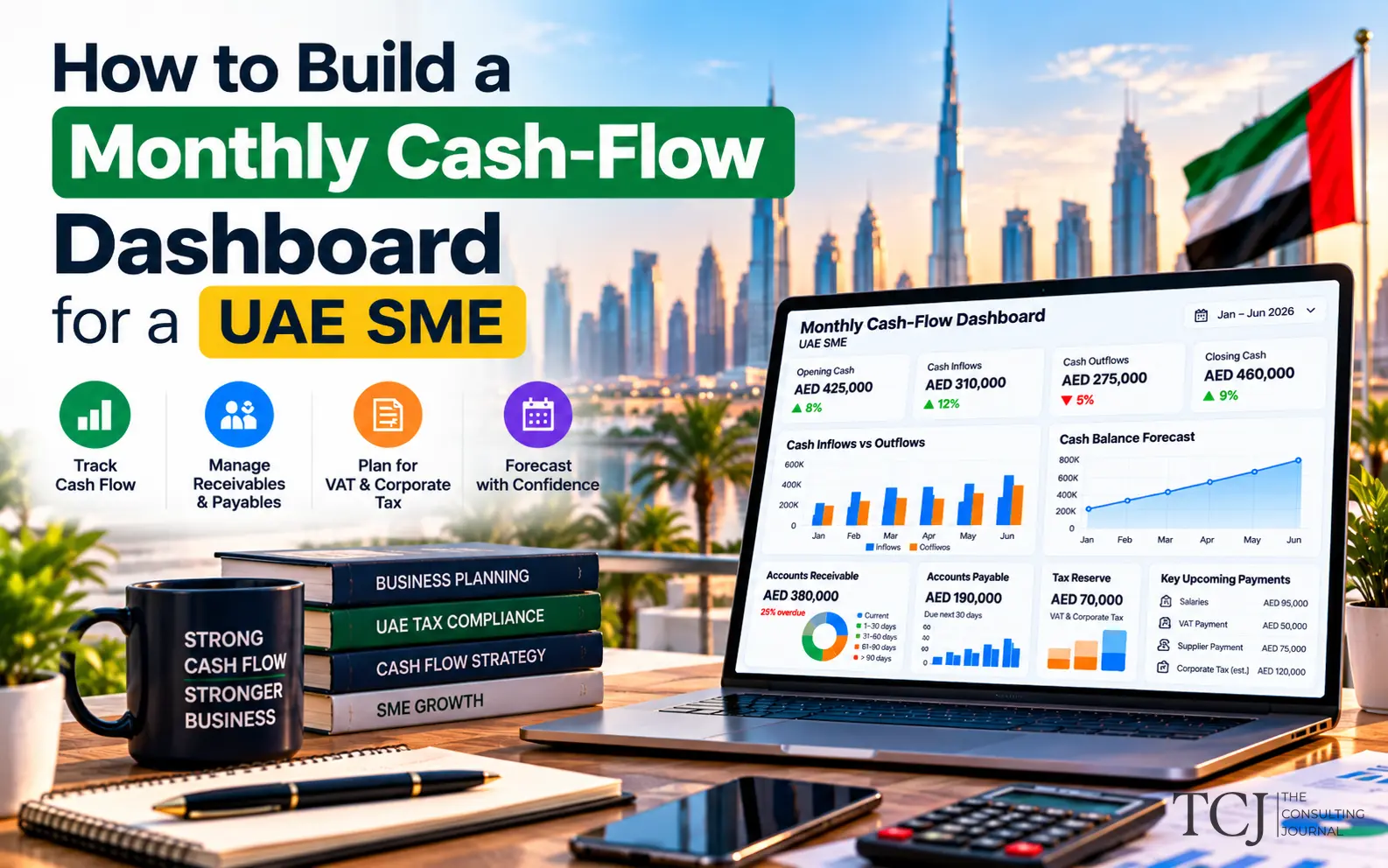
How to Build a Monthly Cash-Flow Dashboard for a UAE SME
A practical guide for UAE SME owners and finance teams on building a monthly cash-flow dashboard that tracks liquidity, collections, payments, tax obligations, forecasts, and working capital.

How UAE Companies Can Build a Faster, More Reliable Month-End Close
A practical UAE finance guide to shortening the month-end close through better reconciliations, cut-off controls, automation, tax readiness, data quality, and clear accountability.
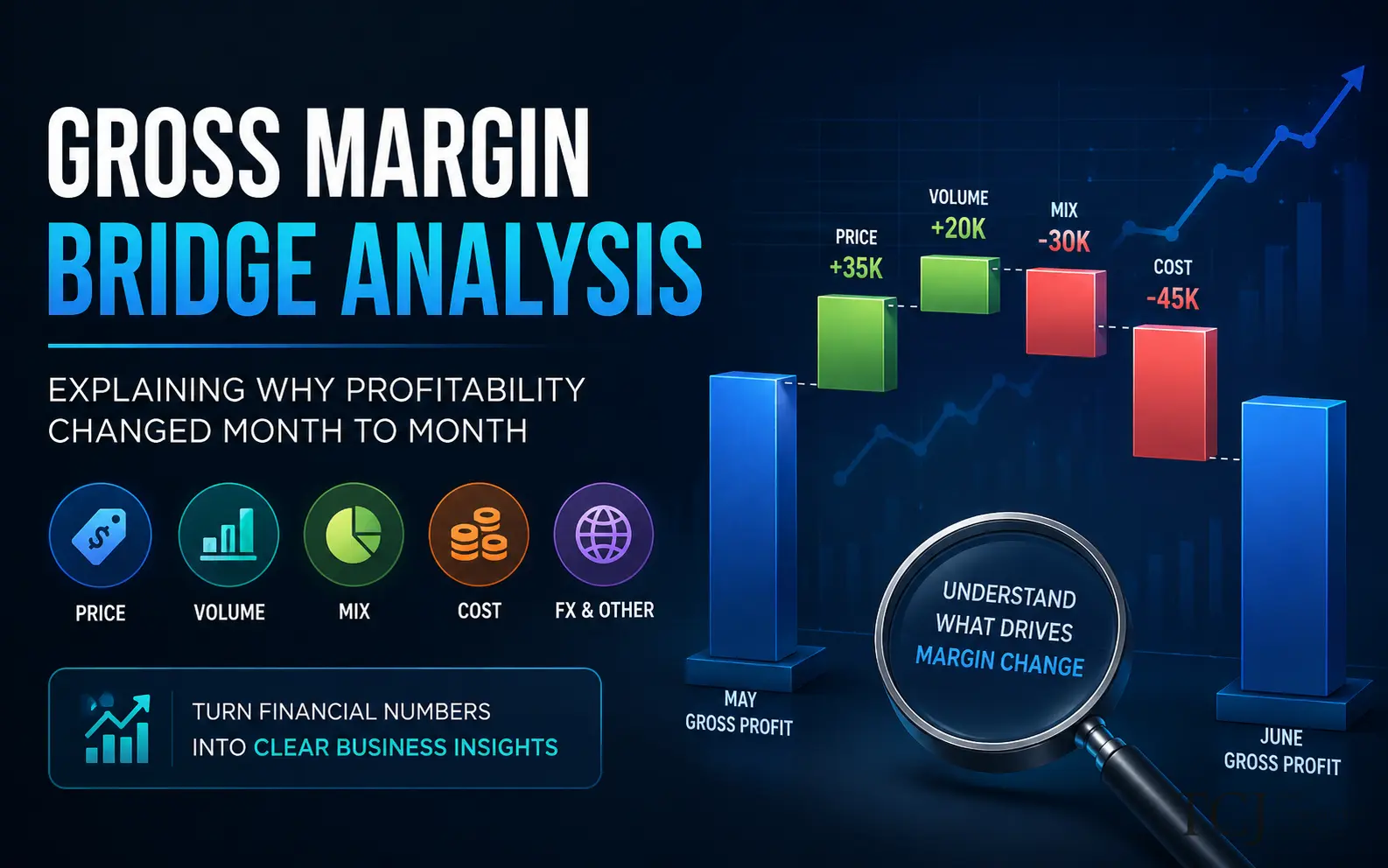
Gross Margin Bridge Analysis: Explaining Why Profitability Changed Month to Month
Gross margin bridge analysis helps finance teams explain monthly profitability changes by separating the impact of price, volume, sales mix, cost, and other operational drivers.