What Lifestyle Can You Afford on Different Salary Ranges in Dubai?
A practical Dubai salary guide comparing housing, transport, family costs, leisure and savings across monthly income ranges from below AED 5,000 to above AED 40,000.
Key takeaways
- Dubai salary affordability depends primarily on housing, household size, transport and employer benefits.
- Below AED 10,000 generally requires controlled spending and modest or shared accommodation.
- AED 15,000 to AED 25,000 can support comfortable living for many single professionals.
- Families should calculate housing, insurance and school costs separately for each dependant.
- A salary offer is sustainable only when it preserves emergency and long-term savings.
What lifestyle can each Dubai salary range realistically support?
Each salary band supports a different combination of privacy, location, transport, leisure and savings. The practical question is not whether someone can live in Dubai on a particular income. It is whether that income supports the person’s preferred standard of living while preserving an emergency fund and manageable financial commitments.
Below AED 5,000 per month
A salary below AED 5,000 usually supports a restricted lifestyle unless the employer provides accommodation, meals or transport.
A single employee may need to rent a bed space or room in shared accommodation. Cooking at home, using buses or the Metro and limiting paid entertainment will typically be necessary.
There may be little room for deposits, annual travel, unexpected healthcare costs or a period between jobs. The full employment package is therefore more important than the cash salary alone.
Employees in this range should confirm:
- Whether accommodation is provided
- Whether transport to the workplace is included
- What medical insurance covers
- Whether meals, uniforms or annual flights are provided
- Which visa and employment costs are paid by the employer
AED 5,000 to AED 10,000 per month
This range can support a basic but manageable Dubai lifestyle for a single person who controls housing and transport costs.
Shared accommodation is generally the safer financial choice at the lower end. Closer to AED 10,000, a modest studio may become realistic in selected communities, although deposits, agency fees, utility activation and furniture can create significant initial costs.
Public transport can help protect the monthly budget. Dubai’s public transport network uses a zone-based fare system across Metro, tram and bus services, with the fare depending on the number of zones crossed.
A financed car can place pressure on this salary because the real cost includes repayments, registration, insurance, fuel, maintenance, parking and road tolls.
Practical verdict: Manageable for a disciplined single person. Usually challenging for a family without employer-funded housing or other major allowances.
AED 10,000 to AED 15,000 per month
For many single professionals, this range offers reasonable independence rather than luxury.
A studio or affordable one-bedroom apartment may be possible, particularly outside premium central and waterfront areas. Occasional dining, a gym membership and selective taxi use can fit within the budget when housing remains controlled.
Utility costs should not be treated as fixed. DEWA applies progressive slab tariffs, meaning electricity and water rates increase as consumption rises. Fuel surcharges also form part of the bill calculation.
At AED 12,000, combining a premium apartment, a financed car and frequent dining may leave limited savings. Selecting one or two of those comforts is generally more sustainable.
Example 1:
Maya is a fictional marketing executive earning AED 12,500 per month. She rents a studio near a Metro station, cooks during the working week and uses taxis mainly at weekends. By avoiding car ownership and keeping rent controlled, she can maintain an emergency contribution and still budget for occasional travel.
Practical verdict: Comfortable for a careful single person, but sensitive to rent increases and vehicle costs.
AED 15,000 to AED 25,000 per month
A salary between AED 15,000 and AED 25,000 can support comfortable professional living for many single residents.
Depending on the housing choice, it may cover:
- A good one-bedroom apartment
- A modest vehicle or regular taxi use
- Dining and social activities
- Fitness memberships and hobbies
- Annual leisure travel
- Consistent monthly savings
A couple without children may also live comfortably within this range when housing and transport costs are shared. A family relying on one salary will face more pressure once it requires additional bedrooms, dependent insurance and private schooling.
Practical verdict: Comfortable for most singles and many couples without children. Potentially tight for a family paying school fees.
AED 25,000 to AED 40,000 per month
This range offers substantial choice, but it does not make every premium expense affordable at the same time.
A single professional may be able to rent in a desirable community, operate a car, travel regularly and build meaningful savings. Couples can generally maintain a comfortable upper-middle-income lifestyle when commitments remain proportionate.
A family may afford a larger apartment or townhouse, one or two vehicles, children’s activities and private education. However, several children, premium schools and central housing can absorb a large share of income.
A household earning AED 30,000 should still prioritise savings before upgrading its home, cars, holidays and discretionary spending simultaneously.
Practical verdict: Affluent for a single person and comfortable for many families, depending mainly on housing and education choices.
Above AED 40,000 per month
Income above AED 40,000 provides access to premium lifestyle choices and greater financial flexibility.
It may support higher-quality housing, premium vehicles, regular travel, private education and domestic assistance. Yet Dubai’s upper-end property and hospitality markets can exceed almost any ordinary salary.
High income is most valuable when it creates options: maintaining adequate insurance, building investments, funding education and managing a period between jobs without relying on debt.
Lifestyle inflation remains a risk. Increasing the home, vehicles, holidays and social spending together can convert a strong salary into a high-cost financial routine.
Practical verdict: Premium and flexible, but not automatically financially secure.
Why can the same salary produce very different lifestyles?
Two people earning the same amount can have completely different financial experiences. One may live near public transport, share accommodation and save consistently. Another may rent centrally, finance a vehicle and spend heavily on dining. Housing, household size, employer benefits and personal expectations usually explain most of the difference.
The main variables include:
- Housing location: Central and waterfront communities typically require a higher housing budget than older or less central districts.
- Household size: Supporting a spouse, children or other dependants changes housing, food, insurance and travel requirements.
- Transport: A cheaper home may not be economical when it creates a long commute or makes car ownership essential.
- Employment benefits: Housing, dependent insurance, annual flights and school allowances can materially improve the value of a package.
- Lifestyle expectations: Frequent dining, delivery services, taxis, premium gyms and international travel can gradually become fixed monthly habits.
- Savings target: A salary is less attractive when every dirham is committed before an emergency or long-term contribution is made.
A Dubai salary should be assessed by the essential costs it covers and the savings it preserves, not only by the number printed on the offer letter. — Consulting Journal editorial observation
Is the same salary sufficient for a single person and a family?
No. A salary that provides a comfortable lifestyle for one professional may be highly constrained for a household with children. Families generally require more bedrooms, broader medical insurance, additional transport and an education budget. Each child should be costed separately rather than relying on a general family estimate.
KHDA’s School Fees Fact Sheet provides parents with a reference covering the mandatory and optional fees a participating school may charge during the academic year. Families should review the full fee sheet rather than comparing tuition alone.
Parents should also confirm whether the employer’s medical insurance covers dependants and whether the network includes maternity, dental, optical and specialist treatment.
Example 2:
Omar and Leila are a fictional couple with one school-age child and a household income of AED 30,000. They initially considered a central apartment and two financed cars. After reviewing school charges and insurance, they selected a family community closer to the school and retained one vehicle, creating more room for savings.
How should you evaluate a Dubai salary offer?
Convert the offer into a complete household budget before accepting it. Include guaranteed salary, allowances and benefits, then deduct realistic housing, transport, insurance and annual costs. A strong offer should cover essential expenses, support a reasonable lifestyle and leave a dependable margin for emergencies and long-term financial goals.
- Separate guaranteed and variable pay Identify the basic salary, fixed allowances, commission, bonus and reimbursements. Do not build essential spending around a discretionary bonus.
- Review the complete benefits package Confirm housing support, medical insurance, dependent coverage, flights, education assistance, transport and end-of-service arrangements.
- Price housing in practical locations Compare several communities based on the workplace, schools and regular travel. Include deposits, agency fees, utility activation, moving costs and furniture.
- Calculate the full transport cost Compare public transport, taxis and car ownership. Include the value of commuting time as well as the financial cost.
- Convert annual expenses into monthly amounts Divide school charges, flights, insurance renewals, vehicle registration and other annual commitments by 12. This prevents predictable costs from being treated as emergencies.
- Test the budget against a weaker month Reduce variable income, add a possible rent increase and include an unexpected expense. The offer should remain manageable without immediate borrowing.
- Set the savings amount before lifestyle spending Allocate money for emergencies and long-term goals before increasing discretionary expenses.
What common mistakes do professionals and employers make?
Professionals often assess a Dubai salary using rent alone. Business owners may also present an attractive package without explaining how its basic salary, allowances and benefits affect the employee’s real financial position.
Common mistakes include:
- Comparing salaries without comparing benefits
- Assuming all medical policies cover dependants
- Ignoring deposits and relocation expenses
- Treating bonuses as guaranteed monthly income
- Choosing housing without testing the commute
- Underestimating the total cost of car ownership
- Comparing school tuition without additional charges
- Increasing fixed commitments immediately after relocation
- Failing to maintain emergency savings
- Quoting a single “good Dubai salary” without considering household size
What documents and information should you prepare?
A structured review is more reliable than estimating costs from memory. Before accepting an offer or relocating, prepare:
- The complete offer letter and salary breakdown
- The employment contract or draft contract
- Medical insurance benefits and provider network
- Details of dependent insurance coverage
- Housing allowance and accommodation terms
- School allowance policy, where applicable
- Current rental options in at least three communities
- Estimated deposits, moving and furnishing costs
- Workplace and school commuting routes
- Vehicle finance and insurance quotations, where relevant
- School Fees Fact Sheets for shortlisted schools
- A 12-month household cash-flow estimate
- An emergency fund target
- Existing loan, remittance and family commitments
How can KPM Global Services UAE assist employers?
KPM Global Services UAE can support business owners and finance teams with workforce budgeting, payroll review, Accounting controls and Financial forecasting. The objective is to help employers understand the full cost of employment and communicate salary packages clearly, rather than presenting cash compensation without its wider operational context.
Depending on the engagement, support may include:
- Payroll and employee-cost budgeting
- Salary and allowance classification reviews
- Cash-flow forecasting for recruitment plans
- Accounting treatment of employee benefits
- Documentation and internal approval controls
- UAE Tax and compliance considerations affecting the business
- Financial modelling for workforce expansion
Any employment package should be reviewed against the company’s circumstances, contractual obligations and applicable UAE requirements. No salary structure can guarantee employee retention, authority acceptance or a particular financial outcome.
What is the right Dubai salary for you?
The right salary is the package that supports your actual household rather than an assumed Dubai lifestyle. Below AED 10,000, shared or modest housing is often necessary. AED 15,000 to AED 25,000 generally provides more independence, while family comfort usually requires a higher package or meaningful employer benefits.
Before making a decision, examine the balance remaining after rent, transport, insurance, education, existing commitments and savings. A lower salary with housing and school support can be financially stronger than a higher cash offer with limited benefits.
This article is for informational purposes and does not constitute legal, tax, accounting, or financial advice.
Questions and answers
Q: Is AED 5,000 enough to live in Dubai?
A: AED 5,000 may support a basic lifestyle when accommodation is shared and public transport is used. It becomes more workable when the employer provides housing, meals or transport, but there may be limited room for savings and unexpected costs.
Q: Is AED 10,000 a good salary in Dubai?
A: AED 10,000 can be reasonable for a single person with modest housing and lifestyle expectations. It may support shared accommodation or a basic studio, public transport, occasional dining and limited savings.
Q: Is AED 15,000 enough to live comfortably in Dubai?
A: AED 15,000 can provide a comfortable but controlled lifestyle for many single professionals. The result depends heavily on rent, location and whether the individual owns a car or supports dependants.
Q: Is AED 30,000 enough for a family in Dubai?
A: AED 30,000 can support a comfortable family lifestyle when housing and school choices match the budget. Several children, premium education, central housing and multiple vehicles can still place pressure on the household income.
Q: Can you live in Dubai without a car?
A: Yes, particularly when the home and workplace are close to Metro, tram or bus routes. Families should also consider school locations, weekend travel and last-mile transport before deciding that car ownership is unnecessary.
More in Finance
View all Finance →
Customer Acquisition Payback: How to Calculate It Before Increasing Marketing Spend
Learn how to calculate customer acquisition payback, evaluate CAC efficiency, and assess whether increasing marketing spending makes financial sense. Includes practical formulas, worked examples, cash flow considerations, and a scaling checklist.
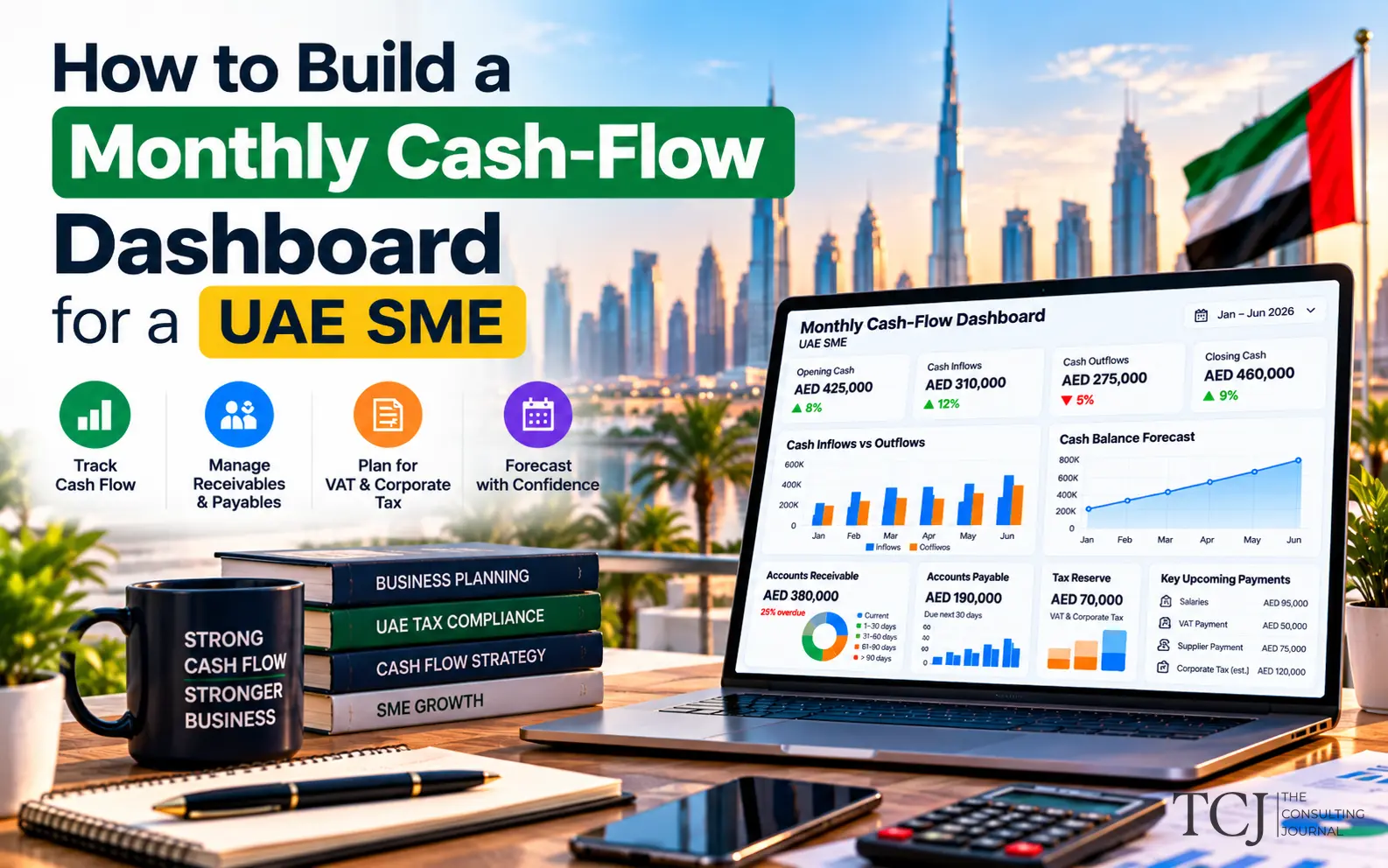
How to Build a Monthly Cash-Flow Dashboard for a UAE SME
A practical guide for UAE SME owners and finance teams on building a monthly cash-flow dashboard that tracks liquidity, collections, payments, tax obligations, forecasts, and working capital.

How UAE Companies Can Build a Faster, More Reliable Month-End Close
A practical UAE finance guide to shortening the month-end close through better reconciliations, cut-off controls, automation, tax readiness, data quality, and clear accountability.