How Long Does It Take to Adjust Financially After Moving to Dubai?
Most newcomers need three to six months to adjust financially after moving to Dubai. Housing, relocation costs, family size and lifestyle choices can make the process shorter or longer.
Key takeaways
- Most newcomers need three to six months to establish a stable Dubai budget.
- The first month is usually expensive because relocation and household setup costs arrive together.
- Housing and transport decisions have the greatest influence on financial adjustment.
- Families and people with irregular income may need six to twelve months.
- A stable budget should include emergency savings and provisions for annual expenses.
What is the typical financial adjustment timeline in Dubai?
The first month usually involves high setup costs. Months two and three reveal your actual cost of living, while months four to six are when a workable routine normally emerges. Households with children, debt, uncertain income or expensive accommodation may take six to twelve months to become financially comfortable.
The first month: managing relocation and setup costs
The first month is rarely representative of normal life in Dubai. Several expenses may arrive at the same time, including:
- Temporary accommodation
- Tenancy deposits
- Utility deposits and activation charges
- Internet and mobile setup
- Furniture and household items
- Taxis or car-hire costs
- Moving and documentation expenses
- Initial groceries and personal supplies
For residential DEWA accounts, the refundable security deposit is currently AED 2,000 for an apartment and AED 4,000 for a villa. Activation charges also apply and should be checked before budgeting because service fees may be updated. sts can make the first month feel unaffordable even when the long-term salary package is reasonable. New residents also tend to spend more while exploring neighbourhoods, eating outside and buying items they did not bring with them.
The priority during this stage is not to create a perfect monthly budget. Record each major expense and separate one-time relocation costs from costs that will continue every month.
Months two and three: identifying your real cost of living
By the second or third month, regular spending should become easier to assess. You will have a clearer estimate of:
- Rent and housing-related payments
- Electricity, water, cooling and internet
- Groceries and household supplies
- Public transport, taxis or vehicle expenses
- Medical and insurance costs
- Dining, entertainment and subscriptions
- Schooling or childcare
- Financial support sent to dependants
Utility spending may require several months of observation. DEWA applies progressive electricity and water tariff slabs, while fuel surcharges and VAT can also affect the final bill. Higher summer consumption may therefore produce a different result from bills received during milder months. also when lifestyle inflation often becomes visible. Food delivery, taxis, frequent restaurant visits and entertainment subscriptions can appear manageable individually but materially increase monthly spending when combined.
Months four to six: establishing a sustainable routine
For many salaried professionals, financial life becomes more predictable between months four and six.
Most household purchases have been completed by this point. Several utility and telecommunications bills have been received, transport habits are established and social spending is easier to estimate.
A sustainable budget should allow you to:
- Pay normal expenses from dependable income
- Rebuild savings used during the move
- Set money aside for annual payments
- Maintain an emergency reserve
- Enjoy reasonable discretionary spending
- Avoid using credit for ordinary monthly bills
Financial adjustment begins when a household can predict its obligations and make spending decisions without repeatedly drawing from relocation savings. — Consulting Journal observation
Six to twelve months: why some households need longer
A longer adjustment period is common where the household has several financial variables to organise.
This may apply when:
- Only one adult is initially earning
- Income depends on commission or business performance
- The household is repaying relocation debt
- Children require school or nursery places
- A car must be purchased or financed
- Housing costs are high relative to income
- The resident supports family members abroad
- Medical or insurance costs are not fully covered
- A new business is still developing predictable cash flow
Taking longer to settle does not automatically mean the move was financially unsuitable. However, if recurring expenses still exceed dependable income after six months, the household should review major commitments rather than treating the shortfall as a temporary relocation issue.
What makes financial adjustment faster or slower?
Financial adjustment is faster when housing, transport and lifestyle choices are based on dependable income. It becomes slower when residents rely on bonuses, credit, savings or uncertain future earnings to meet recurring expenses. Employer benefits, household size, debt and annual obligations also have a direct effect.
Salary and employment benefits
A Dubai salary should be assessed as part of the complete employment package.
Relevant benefits may include:
- Housing allowance or accommodation
- Medical insurance
- Transport allowance
- Annual flight allowance
- Relocation reimbursement
- Education support
- Guaranteed or performance-based bonuses
Two employees receiving the same base salary may have very different disposable incomes when one receives housing and education support.
Confirm which benefits are guaranteed, which require reimbursement claims and which depend on performance. Variable bonuses should not normally be used to justify permanent monthly commitments.
Household size and responsibilities
A single professional sharing accommodation may establish a workable budget relatively quickly. A family may need longer because housing, education, groceries, health care and transport must be coordinated together.
Families also typically require a larger emergency reserve because essential monthly spending is higher and major expenses cannot always be reduced immediately.
Housing and location
Housing is usually the largest influence on a Dubai household budget. The financial impact extends beyond rent to deposits, agency fees, Ejari registration, furniture, cooling arrangements, internet installation and moving expenses.
The Dubai Land Department provides an official Rental Index service that allows users to review average market rent and calculate permitted rental increases using the relevant property and contract information. nts should also confirm which services are included in the tenancy. A property with a higher advertised rent may offer better overall value when appliances, maintenance, cooling or convenient transport access are included.
Transport decisions
Lower rent does not always produce a lower total cost of living. Accommodation located far from work may increase spending on taxis, fuel, parking and tolls.
When comparing neighbourhoods, calculate housing and transport together. For car ownership, consider:
- Financing or purchase cost
- Insurance
- Registration
- Fuel
- Parking
- Tolls
- Maintenance
- Depreciation
A home close to the Metro or workplace may justify a higher rent when it delays or removes the need for a car.
Why is housing usually the biggest financial pressure?
Housing creates both recurring rent obligations and substantial upfront costs. Tenants may need to pay a security deposit, agency commission, utility deposit, tenancy-registration charge and moving costs before receiving a normal monthly salary cycle. Property size and location also affect cooling, transport and furnishing expenses.
Ejari registration is an important part of the tenancy process, and official UAE guidance notes that lease registration is required for connecting services such as electricity, water and telecommunications. igning a tenancy agreement, ask:
- Is cooling included or separately billed?
- Are appliances provided?
- Who is responsible for maintenance?
- How many rent cheques are required?
- What deposits and agency charges apply?
- Is parking included?
- How far is the property from work or public transport?
- Will furniture need to be purchased immediately?
Example 1:
A marketing manager relocates alone with employer-provided medical insurance and chooses a furnished apartment near a Metro station. Although the rent is not the lowest available, she avoids furniture purchases and delays buying a car. Her normal monthly expenses become predictable by the third month.
Example 2:
A family relocates with two children and initially selects a large villa far from both school and work. They later discover that transport, cooling, furniture and school-related payments are substantially higher than expected. Their financial adjustment takes closer to ten months and requires a housing review at renewal.
Which one-time expenses do newcomers underestimate?
Newcomers commonly budget for rent and airfare but overlook the smaller payments required to establish daily life. Utility deposits, tenancy administration, household purchases, temporary transport and internet installation can create considerable pressure when they are paid within the same few weeks.
Frequently underestimated costs include:
- Utility deposits and activation
- Ejari and tenancy-related charges
- Furniture, bedding and cookware
- Internet and mobile setup
- Temporary accommodation
- Taxis while learning transport routes
- Work clothing and professional equipment
- Medical checks and document processing
- Driving, insurance or vehicle deposits
- Initial school and nursery payments
Maintain separate categories for relocation costs and recurring living expenses. This prevents one-time purchases from distorting your long-term budget.
How much emergency savings should you keep?
A practical planning target is three to six months of essential Dubai expenses after initial relocation costs have been paid. The appropriate amount depends on job security, household size, employer benefits and income predictability. Entrepreneurs, commission-based workers and single-income families may require a larger reserve.
Essential expenses may include:
- Housing
- Basic groceries
- Utilities
- Transport
- Medical requirements
- Insurance
- Minimum debt payments
- Schooling or childcare
- Essential support for dependants
Emergency savings should remain separate from money reserved for holidays, investments, furniture or annual rent payments.
How can you adjust financially faster in Dubai?
Start conservatively, track actual spending and delay major lifestyle commitments until you understand your normal costs. Compare housing and transport together, create monthly provisions for annual bills and rebuild your emergency fund before upgrading accommodation, purchasing an expensive vehicle or adding multiple subscriptions.
1. Track spending for at least three months
Record housing, transport, food, bills, debt, family support, savings and discretionary spending. The purpose is not to remove every enjoyable purchase. It is to identify whether spending reflects your priorities.
2. Delay expensive commitments
Avoid purchasing a premium car, joining several memberships or choosing the largest available property immediately after arrival. Experience your commute and monthly routine before making long-term decisions.
3. Prepare for annual expenses monthly
Divide expected annual obligations by 12 and transfer the monthly amount into a separate account.
These expenses may include:
- Flights home
- Insurance renewals
- Vehicle registration
- Rent-renewal costs
- School-related payments
- Professional fees
- Visa and documentation costs
4. Review summer utility spending
Do not assume that an early bill received during mild weather represents the full-year average. Review actual consumption during hotter months and adjust the household budget where necessary.
5. Save when income arrives
Transfer a realistic savings amount shortly after salary or business income is received. Saving only what remains at the end of the month often leads to inconsistent results.
What mistakes do newcomers commonly make?
The most common mistake is building permanent spending around temporary income or assumptions. New residents may overestimate bonuses, underestimate housing setup costs or copy the lifestyle of colleagues whose salaries and employer benefits are different.
Other mistakes include:
- Choosing accommodation before testing the commute
- Treating annual expenses as unexpected emergencies
- Purchasing a car before comparing public transport
- Mixing relocation costs with normal monthly spending
- Using credit to maintain an unaffordable lifestyle
- Ignoring small recurring subscriptions
- Failing to confirm employment benefits in writing
- Keeping no reserve for job or business disruption
- Assuming the first utility bill represents the full year
What documents and information should you prepare?
A practical financial review should include:
- Employment contract and confirmed benefits
- Recent salary or income records
- Tenancy agreement and payment schedule
- Ejari documentation
- Utility and cooling terms
- Insurance policy details
- School or childcare fee schedules
- Loan and credit-card statements
- Transport or vehicle estimates
- Monthly subscription list
- Annual travel and visa costs
- Emergency-savings balance
- Financial obligations outside the UAE
How can KPM Global Services UAE assist?
KPM Global Services UAE can support professionals, founders and business owners who need a clearer view of their financial position after relocating to Dubai.
Depending on the requirement, assistance may include personal and business cash-flow reviews, budgeting support, Accounting record organisation, UAE Tax considerations for business owners and coordination between personal commitments and company Financial planning.
Entrepreneurs should keep personal relocation expenses separate from business expenditure. Clear documentation can improve management reporting, accounting accuracy and banking readiness while reducing confusion over which costs belong to the individual and which belong to the company.
Services should be selected according to the person’s residency position, business activity, legal structure and financial circumstances. No adviser can guarantee a particular banking, tax or authority outcome.
When are you financially settled in Dubai?
You are likely financially adjusted when recurring expenses fit within dependable income, normal bills no longer require relocation savings and annual obligations can be paid without new debt. Your emergency reserve should be stable or increasing, and unexpected expenses should be manageable rather than financially disruptive.
For most newcomers, this point arrives within three to six months. Families, entrepreneurs and people with irregular income may need six to twelve months.
The objective is not to eliminate discretionary spending. It is to build a Dubai lifestyle that remains affordable after the initial excitement and relocation costs have passed.
This article is for informational purposes and does not constitute legal, tax, accounting, or financial advice.
Questions and answers
Q: Is three months enough to adjust financially in Dubai?
A: Three months may be enough for a salaried professional with controlled housing costs and strong employer benefits. Most recurring expenses should be visible by then, although rebuilding savings and preparing for annual payments may take longer.
Q: Why is the first month in Dubai so expensive?
A: The first month often includes deposits, utility activation, furniture, temporary accommodation, internet installation and transport. Many of these are one-time relocation expenses rather than normal monthly costs.
Q: How much money should I save before moving to Dubai?
A: Savings should ideally cover initial setup costs and several months of essential living expenses. The required amount depends on rent, household size, employer benefits, income timing and whether school or vehicle costs apply.
Q: Can I live in Dubai without owning a car?
A: Yes, particularly when your home and workplace are close to the Metro or reliable bus routes. Compare public transport and occasional taxi costs with the full cost of financing, insurance, fuel, parking, tolls and maintenance.
Q: What should I do if my expenses still exceed my income after six months?
A: Review housing and transport first because these usually offer the greatest potential savings. You may also need to reduce recurring commitments, restructure debt or reconsider spending that depends on bonuses, credit or irregular income.
More in Finance
View all Finance →
Customer Acquisition Payback: How to Calculate It Before Increasing Marketing Spend
Learn how to calculate customer acquisition payback, evaluate CAC efficiency, and assess whether increasing marketing spending makes financial sense. Includes practical formulas, worked examples, cash flow considerations, and a scaling checklist.
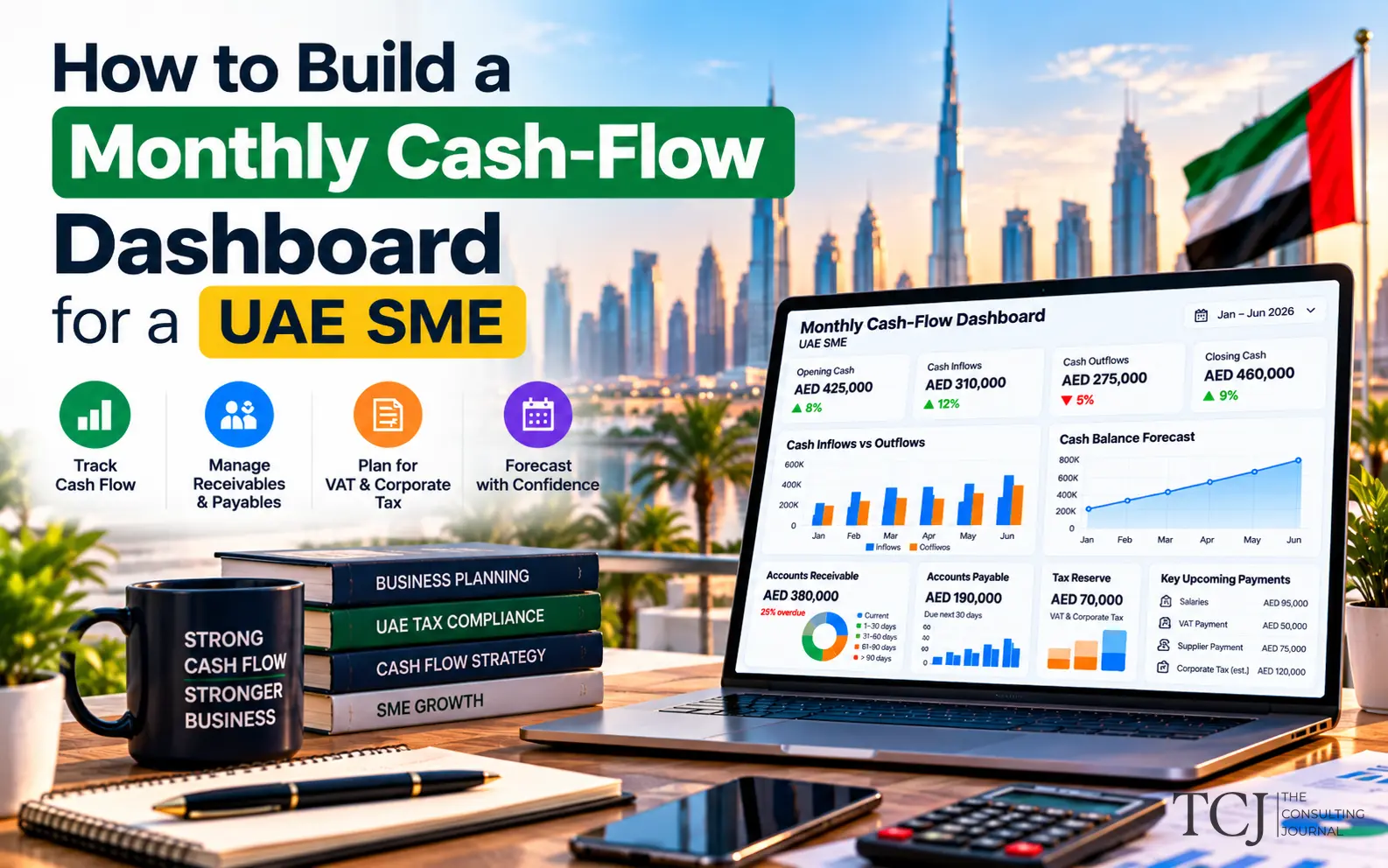
How to Build a Monthly Cash-Flow Dashboard for a UAE SME
A practical guide for UAE SME owners and finance teams on building a monthly cash-flow dashboard that tracks liquidity, collections, payments, tax obligations, forecasts, and working capital.

How UAE Companies Can Build a Faster, More Reliable Month-End Close
A practical UAE finance guide to shortening the month-end close through better reconciliations, cut-off controls, automation, tax readiness, data quality, and clear accountability.