How to Create a Financial Forecast: Practical Steps for Smarter Business Growth
A practical guide for business owners on building a financial forecast that supports cash flow planning, budgeting, investment decisions, and sustainable growth.
Key takeaways
- A financial forecast helps business owners plan revenue, expenses, profit, and cash flow before problems arise.
- The strongest forecasts are built on realistic assumptions, not optimistic guesses.
- Cash flow timing matters because profit on paper does not always mean cash in the bank.
- Scenario planning helps businesses prepare for growth, delays, cost increases, or weaker sales.
- Forecasts should be reviewed regularly and updated when actual results change.
What is a financial forecast?
A financial forecast is an estimate of how a business may perform in the future. It usually covers expected revenue, expenses, profit, cash flow, and sometimes balance sheet movements.
Unlike a budget, which sets a spending plan, a forecast looks forward and asks: what is likely to happen based on current information?
For example, a trading company may forecast revenue based on monthly orders, supplier costs, payment terms, and seasonal demand. A consulting firm may forecast based on signed contracts, expected retainers, staff capacity, and collection timelines. A startup may build its forecast using pricing assumptions, customer acquisition targets, and expected operating costs.
The value is not only in the numbers. The real value is in the thinking behind the numbers.
Why financial forecasting matters for business owners
Business owners often make decisions under pressure. A customer delays payment. A supplier increases prices. A bank asks for projections. A new employee is needed, but the owner is unsure whether payroll can be supported.
A financial forecast helps reduce that uncertainty.
It gives the owner a clearer view of:
- how much revenue may come in;
- which expenses are fixed or variable;
- when cash may be collected;
- when supplier, payroll, tax, or loan payments are due;
- whether growth will require extra funding;
- whether margins are improving or shrinking.
A business can be profitable on paper and still struggle because customers pay late. This is why cash flow forecasting is often more useful than a simple profit estimate.
A forecast is not a promise about the future; it is a practical tool for making better decisions before the future arrives. — The Consulting Journal
Key parts of a financial forecast
A complete forecast usually includes several connected parts. Each part answers a different business question.
Sales forecast
The sales forecast estimates how much revenue the business expects to generate. This should be based on realistic drivers such as customer numbers, contract values, order volume, pricing, renewal rates, or seasonal demand.
A retail business may forecast sales by branch, product category, or online channel. A service business may forecast sales by monthly retainers, project fees, or billable hours.
Expense forecast
The expense forecast estimates the cost of running the business. This includes fixed costs such as rent, salaries, software subscriptions, insurance, and professional fees. It also includes variable costs such as materials, delivery, payment charges, commissions, and outsourced work.
Many forecasts fail because expenses are understated. Small recurring costs can become material over time.
Profit and loss projection
This projection shows expected revenue minus expected costs. It helps the owner understand whether the business is likely to generate profit or loss during the forecast period.
A profit forecast is useful, but it should not be viewed alone. Timing matters.
Cash flow projection
The cash flow projection shows when money is expected to enter and leave the bank account. This is where many business owners discover the gap between profit and cash.
For example, if a business invoices customers on 60-day payment terms but pays suppliers within 15 days, growth may actually create a cash shortage.
Balance sheet forecast
A balance sheet forecast estimates future assets, liabilities, and owner’s equity. This is especially useful for businesses with loans, inventory, receivables, payables, or planned capital expenditure.
How to create a financial forecast step by step
Step 1: Define the forecast period
Start by deciding how far ahead the forecast should look. Many SMEs use a 12-month monthly forecast. Businesses preparing for investment, financing, or expansion may prepare a three-year forecast, with the first year shown in more detail.
A short-term forecast is useful for cash flow control. A longer-term forecast is useful for strategy, funding, and growth planning.
Step 2: Gather historical financial data
Established businesses should collect past financial statements, bank records, invoices, payroll details, tax records, supplier bills, and management reports.
Startups may not have historical data. In that case, the forecast should be based on carefully documented assumptions such as pricing, estimated customer demand, market research, expected marketing spend, and operating costs.
The quality of the forecast depends heavily on the quality of the input data.
Step 3: Estimate revenue
Revenue should be built from business drivers, not from guesswork.
For example, instead of saying “sales will be 100,000 per month,” a better forecast explains the logic:
- expected number of customers;
- average order value;
- expected repeat purchases;
- conversion rate;
- signed contracts;
- monthly subscription or retainer value.
This makes the forecast easier to review and defend.
Step 4: Project fixed and variable costs
Separate fixed costs from variable costs. Fixed costs usually remain stable in the short term. Variable costs move with sales.
This distinction matters. If sales increase, variable costs may also increase. If sales decline, fixed costs may still continue. A business with high fixed costs needs stronger cash reserves and more careful planning.
Step 5: Build cash flow assumptions
Cash flow assumptions should reflect real payment behaviour.
Ask practical questions:
- Do customers pay immediately or after 30, 60, or 90 days?
- Are deposits collected before work starts?
- Do suppliers require advance payment?
- When is payroll paid?
- Are tax, licence, insurance, or loan payments due in specific months?
- Are there seasonal slowdowns?
A business owner who understands cash timing can avoid many avoidable funding problems.
Step 6: Create best, expected, and worst-case scenarios
A single forecast can create false comfort. Scenario planning gives a wider view.
The expected case should show the most realistic outcome. The best case may show stronger sales or faster collections. The worst case should show what happens if sales drop, costs rise, or payments are delayed.
This is not negative thinking. It is sensible business preparation.
Step 7: Review and update the forecast regularly
A forecast should be reviewed monthly or quarterly. Compare actual revenue, expenses, margins, and cash flow against the forecast.
When there is a difference, ask why. Was the original assumption wrong? Did the market change? Did costs rise? Did customers pay later than expected?
A forecast becomes more useful when it is treated as a living management tool.
Common financial forecasting methods
Historical forecasting
Historical forecasting uses past performance as the starting point. It works well for businesses with stable operations and reliable records.
For example, an established services company may look at the last 24 months of revenue, average monthly expenses, and seasonal patterns to estimate future results.
Market-based forecasting
Market-based forecasting uses industry trends, customer demand, competitor behaviour, pricing, and market size. This approach is useful for startups, new product launches, and businesses entering new markets.
The challenge is that market assumptions must be realistic. A large market does not automatically mean the business will capture a large share.
Driver-based forecasting
Driver-based forecasting links financial results to operational drivers. This is often the most practical method for active business management.
Examples of drivers include website traffic, conversion rate, average order value, sales team capacity, production volume, customer churn, billable hours, and gross margin.
This method helps owners understand what actually moves the numbers.
Example 1:
A startup preparing to launch an online service builds a 12-month forecast. Instead of assuming rapid revenue growth, the founder starts with three drivers: monthly website traffic, conversion rate, and subscription price.
The first version shows a cash shortfall in month five because marketing expenses start before subscription revenue becomes stable. This allows the founder to adjust the launch budget, delay one hire, and prepare a small funding buffer before the problem appears.
Example 2:
A growing SME reviews its forecast before signing a larger office lease. The profit forecast looks positive, but the cash flow projection shows pressure during months when annual software renewals, insurance, and payroll increases fall together.
The owner renegotiates some payment terms and phases the hiring plan. The business still grows, but with fewer cash flow surprises.
Common mistakes business owners make
Financial forecasting is useful only when it is prepared honestly. The most common mistakes are practical rather than technical.
Business owners often overestimate sales, especially when preparing forecasts for investors or lenders. Optimism is understandable, but unsupported growth assumptions weaken the forecast.
Another common mistake is ignoring cash timing. Recording a sale is not the same as receiving cash. If customers pay late, the business may still struggle even when the profit and loss statement looks healthy.
Some businesses also forget irregular costs. Licence renewals, insurance, tax payments, annual software subscriptions, equipment replacement, visa costs, and professional fees can all affect cash flow.
A further mistake is failing to update the forecast. A forecast prepared six months ago may no longer reflect today’s business position.
Practical checklist for preparing a financial forecast
Before preparing a forecast, business owners should gather the right information and agree on the main assumptions.
Useful preparation items include:
- latest profit and loss statement;
- balance sheet;
- bank statements;
- unpaid customer invoices;
- supplier payables;
- payroll details;
- loan repayment schedules;
- tax and compliance payment dates;
- rent and lease commitments;
- sales pipeline;
- signed contracts or purchase orders;
- expected capital expenditure;
- pricing and margin assumptions;
- customer payment terms;
- supplier payment terms.
For a startup, the checklist may also include market research, competitor pricing, launch costs, marketing assumptions, and founder funding plans.
When a professional advisor can help
Many business owners can build a basic forecast using spreadsheet software or accounting system data. However, an advisor can add value when the forecast will be used for funding, investor discussions, restructuring, expansion, or tax and compliance planning.
A professional advisor can help test assumptions, identify missing costs, link the forecast to accounting records, and prepare different scenarios.
The aim is not to make the numbers look attractive. The aim is to make the numbers useful, realistic, and decision-ready.
Final advisory view
A financial forecast helps business owners move from guesswork to structured planning. It shows where revenue may come from, where costs may rise, and when cash may become tight.
The best forecasts are not necessarily the most complex. They are the ones that reflect the business model clearly, explain assumptions, and get updated when reality changes.
For SMEs, startups, and growing businesses, forecasting should become part of regular management discipline. It supports better pricing, hiring, funding, budgeting, and risk control.
This article is for informational purposes and does not constitute legal, tax, accounting, or financial advice.
Questions and answers
What is the main purpose of a financial forecast?
The main purpose is to estimate future revenue, expenses, profit, and cash flow. This helps business owners make better decisions before committing to spending, hiring, borrowing, or expansion.
Is a financial forecast the same as a budget?
No. A budget sets a planned spending limit, while a forecast estimates what is likely to happen based on actual data and assumptions. Both are useful, but they serve different purposes.
How often should a business update its financial forecast?
Many businesses should update their forecast monthly or quarterly. Fast-growing businesses, startups, or companies with tight cash flow may need to review it more often.
Can a startup create a forecast without historical financial data?
Yes. A startup can use market research, pricing assumptions, expected demand, launch costs, and competitor information. The key is to explain every assumption clearly and avoid unrealistic growth expectations.
What should be included in a good financial forecast?
A good forecast should include sales, expenses, profit and loss, cash flow, and key assumptions. For more detailed planning, it may also include balance sheet items, funding needs, and best-case or worst-case scenarios.
More in Finance
View all Finance →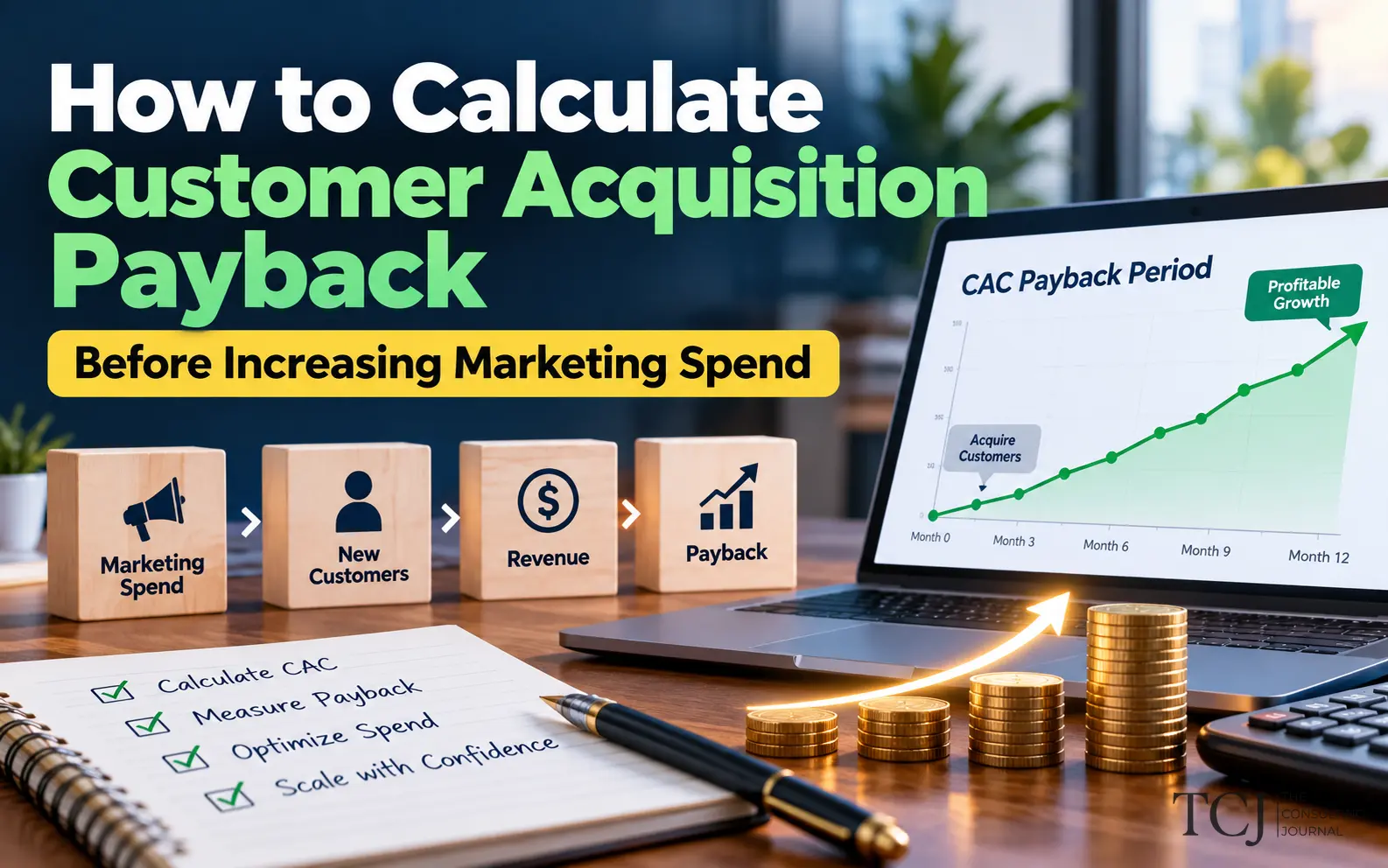
Customer Acquisition Payback: How to Calculate It Before Increasing Marketing Spend
Learn how to calculate customer acquisition payback, evaluate CAC efficiency, and assess whether increasing marketing spending makes financial sense. Includes practical formulas, worked examples, cash flow considerations, and a scaling checklist.
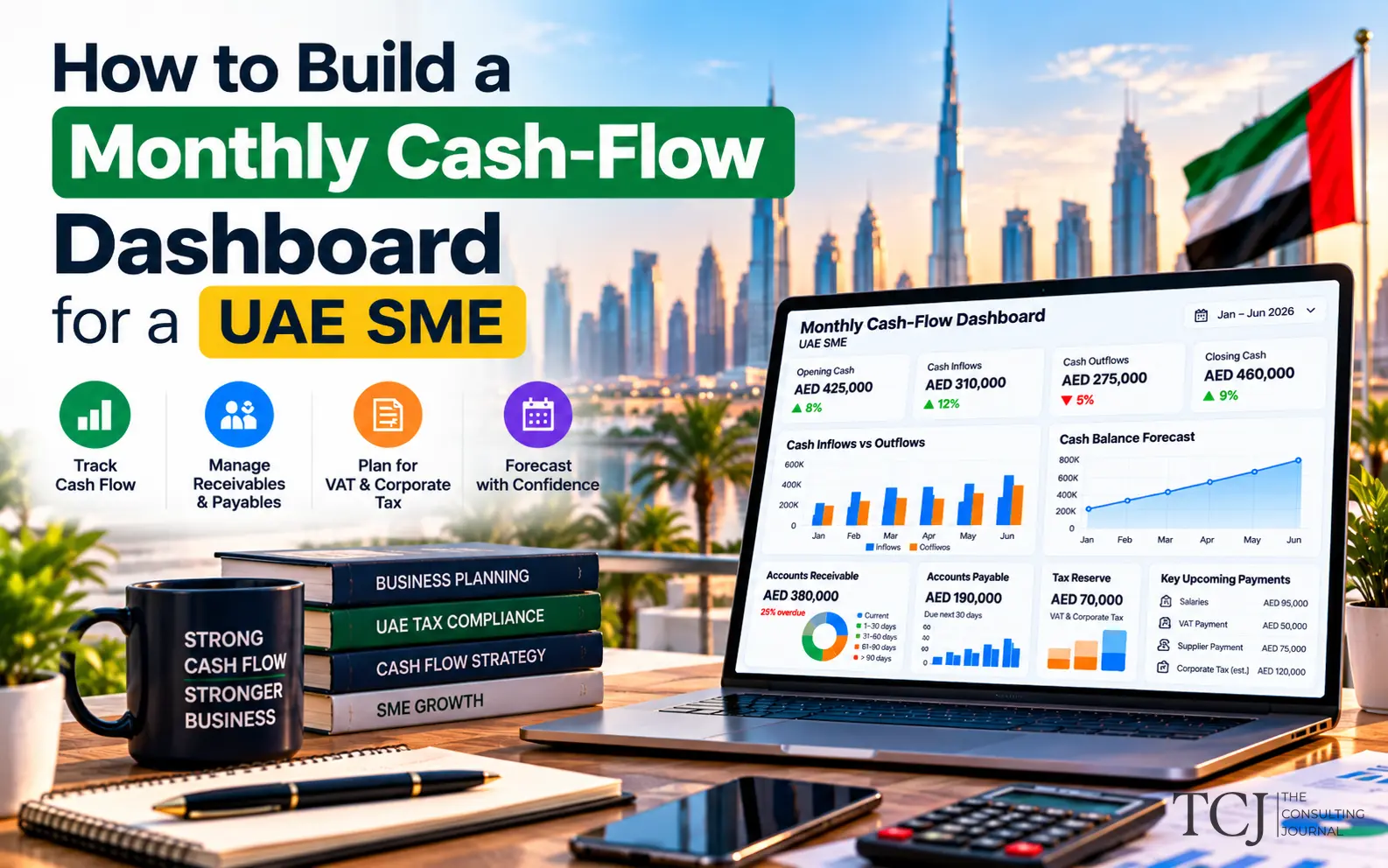
How to Build a Monthly Cash-Flow Dashboard for a UAE SME
A practical guide for UAE SME owners and finance teams on building a monthly cash-flow dashboard that tracks liquidity, collections, payments, tax obligations, forecasts, and working capital.

How UAE Companies Can Build a Faster, More Reliable Month-End Close
A practical UAE finance guide to shortening the month-end close through better reconciliations, cut-off controls, automation, tax readiness, data quality, and clear accountability.