How to Prepare for a UAE Tax Review: 7 Practical Steps for Business Owners
A practical UAE-focused guide to preparing for a tax review, organising records, checking VAT and corporate tax files, and responding calmly.
Key takeaways
- A UAE tax review is easier to manage when business records are organised before the authority asks for them.
- VAT invoices, supplier bills, bank statements, and accounting ledgers should reconcile with filed returns.
- Corporate tax readiness requires supporting documents, not only a submitted return.
- Free zone companies should document their income classification and business activity carefully.
- Professional support can help businesses respond clearly and avoid unnecessary errors.
- KPM Global Services UAE can assist with tax review preparation, accounting records, VAT checks, and corporate tax readiness.
Why UAE businesses should prepare before a tax review happens
A tax review can feel stressful, especially for owners who already have many operational pressures. But in practice, the businesses that handle a review well are usually not the largest ones. They are the ones with clean records, clear explanations, and a finance process that can support what has been filed.
In the UAE, tax compliance now touches more businesses than before. VAT, corporate tax, payroll records, accounting files, invoices, contracts, banking documents, and free zone records all play a role. The UAE Ministry of Finance explains that corporate tax applies to financial years starting on or after 1 June 2023, and free zone persons are also within the corporate tax framework, subject to specific rules and conditions.
For a business owner, the key point is simple: a tax review is not only about the tax return. It is about whether the business can prove the numbers behind the return.
What is a tax review in the UAE context?
A tax review is a formal or informal check of tax records, filings, transactions, or supporting documents. It may relate to VAT, corporate tax, excise tax, tax registration details, refunds, late filings, or inconsistencies in submitted information.
In practical terms, the Federal Tax Authority may look at whether the business has filed correctly, paid on time, maintained required records, and reported transactions in a way that matches the law and available evidence. The FTA has reminded corporate tax taxpayers to complete tax records, submit returns, and pay corporate tax within the specified timelines.
A review does not automatically mean the business has done something wrong. Sometimes it starts because of a mismatch, a refund claim, unusual figures, late filing history, missing information, or routine compliance activity.
A tax review is rarely won by explanations alone; it is won by documents that make the explanation easy to verify. — Consulting Journal Editorial Team
Step 1: Read the notice carefully before responding
The first mistake many business owners make is reacting too quickly. They forward random documents, call multiple people, or send explanations before understanding what is being requested.
Start by reading the notice or communication carefully. Identify:
- The tax type being reviewed
- The tax period or financial year involved
- The exact documents requested
- The response deadline
- The channel for submission
- Whether the matter relates to VAT, corporate tax, registration records, refund claims, or penalties
A Dubai trading company, for example, may receive a query linked to VAT input tax recovery. A free zone consultancy may face questions about corporate tax registration, revenue classification, or qualifying income. A mainland services company may need to explain differences between bank deposits and invoices.
Do not assume the review covers everything. Respond to the scope of the request.
Step 2: Confirm your tax periods, filings, and payment position
Before gathering documents, check the basics. Many tax review problems begin with simple mismatches.
For VAT, confirm the relevant VAT return periods, submitted returns, tax invoices, credit notes, import records, and payment confirmations. For corporate tax, confirm the financial year, registration status, accounting period, taxable income calculation, and filing deadline.
The FTA has stated that corporate tax returns and payment of corporate tax due must generally be completed within no more than nine months from the end of the relevant tax period. It also gave the example of a taxpayer with a financial year ending on 31 December 2025 needing to file and pay by 30 September 2026.
This matters because a business may think it has time, while its finance team may be working with the wrong year-end. That is a common issue for SMEs that recently registered for corporate tax.
Step 3: Organise accounting records before preparing explanations
Strong records are the best protection during a tax review. The FTA has highlighted that taxable persons should maintain essential documentation such as transaction records, asset records, liability records, and records of shares held at the end of the tax period.
For most UAE SMEs, useful records include:
- Tax invoices issued to customers
- Supplier invoices and receipts
- Bank statements
- Credit card statements
- Contracts and purchase orders
- Accounting ledgers
- Payroll summaries
- Import and customs documents
- Fixed asset registers
- Loan agreements
- Free zone licence documents
- VAT return workings
- Corporate tax computation files
Good organisation is not about creating an impressive file. It is about making the review easier for the authority, the tax agent, and the business owner.
A practical approach is to create one folder for each tax period. Inside that folder, keep income, expenses, bank statements, VAT returns, corporate tax workings, payroll, and management accounts separately.
Step 4: Reconcile bank activity with invoices and tax filings
In the UAE, bank activity is often one of the clearest ways to understand business transactions. That is why bank reconciliation is essential before responding to a review.
A business should compare:
- Sales invoices against customer receipts
- Supplier invoices against payments
- VAT return figures against accounting records
- Corporate tax revenue against financial statements
- Owner transfers against business expenses
- Cash deposits against invoices or contracts
Example 1:
A mainland marketing agency in Dubai receives several customer payments in advance. The accounting team records revenue only when the campaign starts, but VAT invoices are issued earlier. During a review, the business must explain the timing difference between bank receipts, invoices, VAT treatment, and revenue recognition. Without reconciliation notes, the file looks inconsistent even where the business has a reasonable explanation.
This is where many owners struggle. They know the transaction is genuine, but they cannot show the trail clearly.
Step 5: Review VAT invoices, credit notes, and input tax claims
VAT reviews often focus on whether output tax was declared correctly and whether input tax was properly supported. For a VAT-registered business, the quality of invoices matters.
Check whether tax invoices include the required details, whether credit notes are linked to original invoices, and whether claimed expenses are genuinely business-related. Also check whether input tax has been claimed in the correct period and whether blocked or partly personal expenses have been treated carefully.
A common SME issue is claiming VAT on expenses where the invoice is addressed to the owner personally, not the company. Another issue is claiming VAT on supplier bills that do not contain complete tax invoice details.
For service businesses, also review cross-border supplies, imports of services, reverse charge entries, and export documentation. These areas are easy to misclassify when bookkeeping is done late.
Step 6: Prepare your corporate tax file, not only your return
Corporate tax readiness requires more than submitting a form. A business should be able to support its taxable income calculation with financial statements, accounting schedules, adjustments, related-party records where relevant, and evidence for any positions taken.
The FTA has reminded businesses that documents needed before corporate tax filing include commercial licences, financial records, and business activity details.
For many SMEs, the corporate tax file should include:
- Trial balance
- Profit and loss statement
- Balance sheet
- General ledger
- Revenue reconciliation
- Expense schedules
- Fixed asset and depreciation schedules
- Owner or shareholder account movements
- Related-party transaction details, where applicable
- Free zone income classification, where applicable
- Tax return copy and submission confirmation
Example 2:
A free zone IT consultancy earns income from UAE mainland customers and overseas clients. The owner assumes all income is automatically eligible for 0% tax because the company is in a free zone. Before filing, the adviser reviews the activity, customer locations, contracts, substance, and qualifying income position. That review helps the company avoid filing based on a broad assumption rather than documented analysis.
For corporate tax, assumptions are not a record. Businesses should keep the reasoning behind the numbers.
Step 7: Work with a qualified tax professional early
A tax professional can help the business understand the notice, identify missing records, prepare a response, and avoid giving unclear or excessive information. This is especially useful when the review involves multiple tax periods, refund claims, corporate tax positions, related-party transactions, or incomplete bookkeeping.
The FTA notes that taxpayers can seek assistance from authorised tax agents listed on the FTA website when filing corporate tax returns and paying tax due.
A good adviser will usually start by asking:
- What exactly has the authority requested?
- What has already been filed?
- Which records support the filed position?
- Are there gaps or errors that should be corrected?
- Does the response explain the issue clearly?
- Is there any penalty exposure?
The purpose is not to overcomplicate the matter. It is to reduce risk and keep communication disciplined.
Common mistakes business owners make
The most common mistake is ignoring the notice until the deadline is close. A rushed response often leads to incomplete documents, unclear explanations, and avoidable stress.
Another mistake is sending too much information. Business owners sometimes provide full accounting files when only specific records were requested. That can create more questions than answers.
Some businesses also rely entirely on accounting software reports without checking whether the data is accurate. Software is useful, but it only reflects what was entered. If invoices, bank feeds, VAT codes, or opening balances are wrong, the report may not support the tax position.
Other common mistakes include:
- Mixing personal and business expenses
- Not reconciling bank statements
- Losing supplier invoices
- Claiming VAT without valid supporting documents
- Treating free zone income too casually
- Missing corporate tax filing deadlines
- Keeping no written explanation for unusual transactions
- Updating tax records late when licence, address, or ownership details change
The FTA has warned that failure to keep required records may lead to administrative penalties under relevant tax legislation.
Documents and preparation checklist
Before responding to a UAE tax review, prepare a practical working file.
- Copy of the notice or FTA communication
- Trade licence and registration details
- VAT certificate, if applicable
- Corporate tax registration details, if applicable
- Filed VAT returns for the period under review
- Filed corporate tax return, if applicable
- Sales invoices and credit notes
- Supplier invoices and receipts
- Bank statements and reconciliations
- Accounting ledgers and trial balance
- Payroll records and employment cost support
- Fixed asset register
- Contracts, agreements, and purchase orders
- Customs and import documents, where applicable
- Free zone documents, lease, and activity details
- Management accounts and financial statements
- Notes explaining unusual or one-off transactions
- Copies of prior correspondence with the authority
Keep records in a format that another person can follow. A well-labelled folder is far more useful than hundreds of unnamed PDF files.
How KPM Global Services UAE can assist
KPM Global Services UAE can support business owners, SMEs, free zone companies, and finance teams with practical tax review preparation. The support can include reviewing notices, checking VAT and corporate tax files, organising accounting records, identifying documentation gaps, and preparing a structured response.
For businesses in Dubai and across the UAE, the most useful advisory work often happens before a formal review. Clean bookkeeping, periodic VAT checks, corporate tax readiness reviews, and proper documentation can reduce pressure when questions arise.
KPM Global Services UAE can also assist with accounting cleanup, financial record review, tax registration checks, return preparation support, and coordination with authorised tax professionals where needed. The aim is not to promise a particular outcome. It is to help the business respond accurately, calmly, and with better evidence.
Final advisory note
A tax review becomes difficult when records are scattered, explanations are unclear, and the business owner waits too long to act. It becomes manageable when the company understands the request, checks the filed numbers, prepares supporting documents, and responds in an organised way.
For UAE businesses, tax readiness should now be part of normal financial discipline. VAT, corporate tax, accounting records, banking documents, payroll, invoices, and free zone compliance all connect. The businesses that treat documentation as a monthly habit are usually better prepared when a review arrives.
This article is for informational purposes and does not constitute legal, tax, accounting, or financial advice.
Questions and answers
What should I do first after receiving a UAE tax review notice?
Read the notice carefully and confirm the tax type, tax period, requested documents, response deadline, and submission channel. Do not send documents before understanding the exact scope of the request.
Does a tax review mean my business has made a mistake?
Not always. A review may happen because of a mismatch, refund claim, missing information, unusual figures, or routine compliance activity. The key is to provide clear records that support what was filed.
What records should a UAE business keep for a tax review?
Businesses should keep tax invoices, supplier bills, bank statements, accounting ledgers, contracts, payroll records, VAT return workings, corporate tax files, and financial statements. Depending on the business, customs documents, free zone records, and related-party records may also be relevant.
Should I handle a tax review myself or use a professional adviser?
Simple requests may be handled internally if the records are complete and the finance team understands the issue. Professional support is advisable where the review involves corporate tax, VAT errors, refund claims, missing documents, penalties, or multiple tax periods.
How can KPM Global Services UAE help with tax review preparation?
KPM Global Services UAE can review the notice, organise accounting records, check VAT and corporate tax files, identify gaps, and help prepare a structured response. The support is practical and evidence-led, with a focus on helping the business respond accurately.
More in Finance
View all Finance →
How UAE Companies Can Build a Faster, More Reliable Month-End Close
A practical UAE finance guide to shortening the month-end close through better reconciliations, cut-off controls, automation, tax readiness, data quality, and clear accountability.
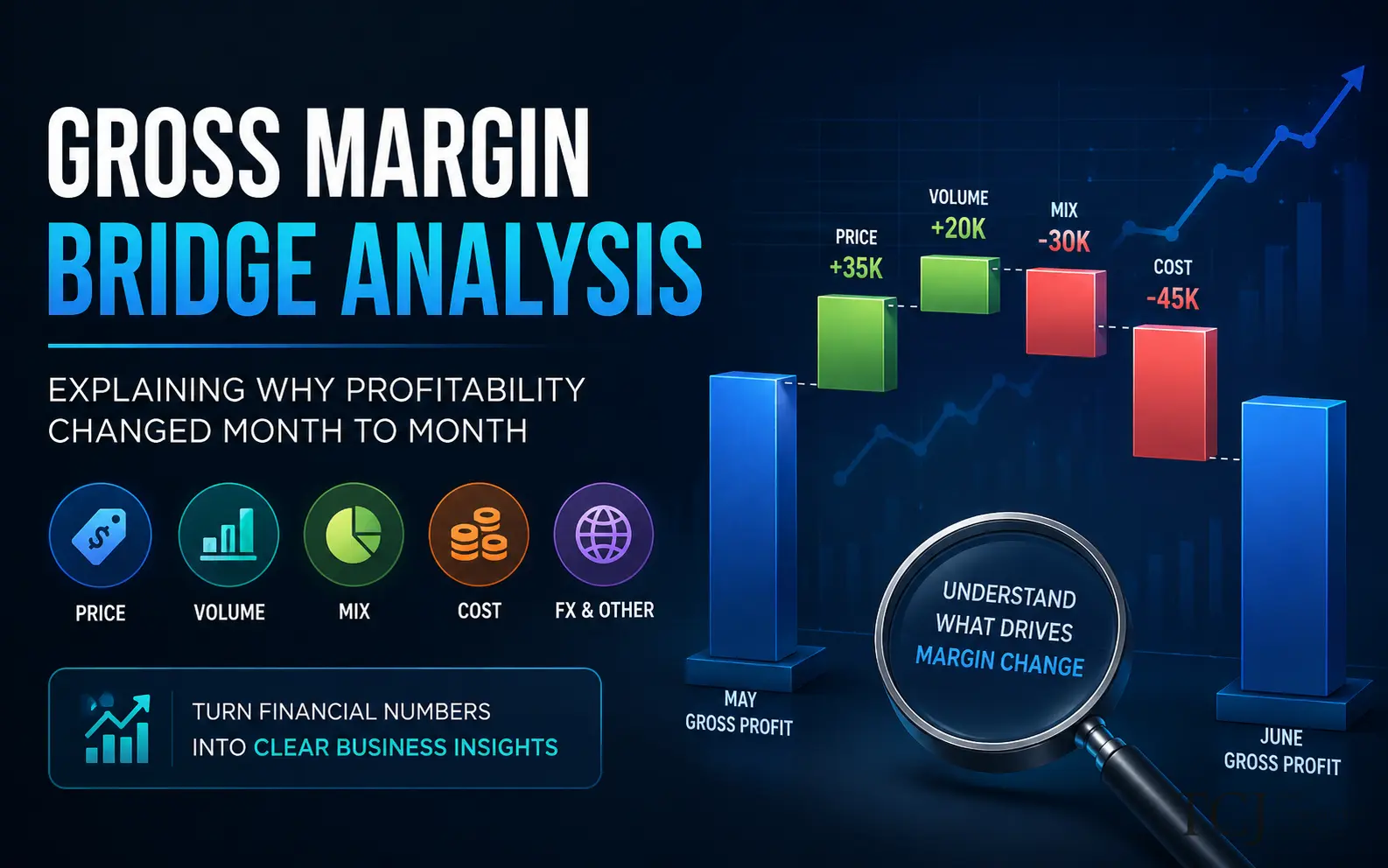
Gross Margin Bridge Analysis: Explaining Why Profitability Changed Month to Month
Gross margin bridge analysis helps finance teams explain monthly profitability changes by separating the impact of price, volume, sales mix, cost, and other operational drivers.

Revenue Quality Analysis: Durable vs One-Off Revenue in UAE Businesses
Revenue growth can look impressive while masking customer concentration, weak cash collection or temporary sales. Here is how UAE businesses, CFOs and investors can assess the durability of reported revenue.