How to Choose Accounting Software for Your Business
The wrong ledger wastes money, breaks reporting, and creates tax risk. Here is a practical framework for UAE founders and finance leads to choose accounting software that fits today’s complexity — and still works when you scale.
Key takeaways
- Accounting software is infrastructure, not a shopping exercise — choose based on transaction types, entity structure, reporting needs, and compliance workflows, not marketing feature lists.
- UAE businesses need VAT-ready invoicing, coherent chart of accounts, audit trails, and export paths for corporate tax working papers; a pretty dashboard without those is a liability.
- Integrations matter as much as the ledger: bank feeds, payment gateways, payroll, inventory, and document storage should reduce manual entry, not create duplicate systems.
- Most SMEs do not need an ERP on day one; a modern cloud ledger plus disciplined processes beats an expensive implementation that nobody uses correctly.
- Plan for who will operate the tool — founder, bookkeeper, or outsourced team — and test month-end close, not just invoice creation, before you commit.
Choosing accounting software sounds straightforward until you open a comparison site and see forty products claiming to be “built for growth.” Founders in the UAE face an extra layer: VAT-compliant invoicing, corporate tax documentation, bank scrutiny, and — if fundraising is on the horizon — investor due diligence that will test whether your numbers reconcile. The tool you pick is not admin. It is the spine of why accounting is business intelligence for UAE businesses: every invoice, payment, and journal flows through it, and weak software becomes weak decisions.
This guide walks through how to choose accounting software without overbuying an ERP or underbuying a tool that breaks the moment you hire a bookkeeper, add inventory, or file your first corporate tax return. Pair it with how to build financial systems before scaling — software is one layer; processes are the rest.
Start with your transaction reality, not feature marketing
Before you compare vendors, write down what actually moves through your business each month:
- Revenue model — one-off sales, subscriptions, project milestones, commissions, marketplace fees.
- Cost structure — contractors, inventory, imports, multi-currency suppliers, related-party charges.
- Entity shape — single LLC, branch, free zone, or multiple entities in a group.
- Team — who records transactions, who approves spend, who runs month-end, who files VAT and tax.
- Reporting audience — founder only, board, bank, investors, auditors.
Software that works for a services agency will frustrate a trading company with stock and landed cost. Software that works for a single entity will crack when you add a second company and intercompany balances. Be honest about the next eighteen months, not the five-year fantasy deck.
The best accounting software is the one your team will run correctly every week — not the one with the longest feature checklist on the pricing page.
If you are still formalising how numbers flow, read why small businesses need systems early before you lock in a platform. Tools amplify habits — good or bad.
Non-negotiable requirements for UAE businesses
Regardless of size, most UAE operators need the following from day one.
VAT and invoicing discipline
Your ledger should issue tax invoices with the fields UAE VAT law expects, support correct treatment of standard-rated, zero-rated, exempt, and reverse-charge supplies, and let you reconcile ledger VAT to filed returns. If you are unsure whether you must register, VAT registration in the UAE: when your business should act covers timing; voluntary registration has its own trade-offs once volume rises.
Audit trail and document storage
Authorities and auditors ask for evidence, not narratives. Attach contracts, supplier invoices, payment proofs, and payroll records to transactions or a linked document store. Keeping UAE accounting records ready for tax filing and audit is easier when the software is the filing cabinet — not a spreadsheet beside it.
Corporate tax readiness
Corporate tax does not live only in March. You need categories that map to taxable income calculations, support for adjustments, and clean exports for working papers. If you recently registered, corporate tax registration is done: what UAE businesses should do next maps the operating work after the certificate arrives. Software should not “calculate tax automatically” as a substitute for review — but it should not fight you when your accountant builds the computation.
Bank connectivity and reconciliation
Manual CSV imports work briefly; they fail under volume. Bank feeds with rules for recurring items save hours and catch fraud faster. Reconciliation should be weekly rhythm, not panic before filing — the same discipline that makes monthly financial reports every founder should review trustworthy.
Role-based access
Founders often share one login. That is a control failure waiting for an audit question. You need permissions: who can view bank details, who can post journals, who can change locked periods. Separation of duties matters even in small teams.
Integrations: where software earns its subscription
A ledger alone is rarely enough. Evaluate how the platform connects to:
- Payment gateways and POS — revenue should land coded correctly, not as a lump sum you split manually.
- Payroll — especially when visa costs, gratuity accruals, and commissions affect your P&L.
- Inventory or e-commerce — stock movements must hit COGS at the right time; see how to read a profit and loss statement for why miscoded revenue and cost destroy margin analysis.
- Expense tools — corporate cards and reimbursement apps should feed approvals into the ledger.
- Document management — SharePoint, Google Drive, or native storage — pick one source of truth.
Broken integrations create shadow systems. Shadow systems create due-diligence nightmares — exactly what what investors check before funding a business is designed to help you anticipate.
Three tiers — and where most UAE SMEs should sit
Tier 1: Cloud ledger (most SMEs start here)
Suited to services businesses, light trading, single entity, straightforward VAT. Strengths: speed, affordability, accountant familiarity. Limits: inventory depth, complex revenue recognition, multi-entity consolidation, advanced approvals.
Choose Tier 1 when transaction types are stable, headcount is modest, and your accountant can close the books with standard reports plus a few custom exports.
Tier 2: Mid-market platform
Adds inventory, project accounting, stronger approvals, multi-currency, and sometimes light consolidation. Suited to trading, manufacturing-light, agencies with WIP, or businesses outgrowing Tier 1 without needing full ERP.
Choose Tier 2 when you can name the Tier 1 failure — stock valuation breaks, project margin is invisible, or month-end journals take days of manual fixing.
Tier 3: ERP
Justified when transaction volume, entity count, compliance workflows, or supply-chain complexity overwhelm Tier 2. Cost and implementation time are significant; misuse is common.
Choose Tier 3 when the pain is measurable — not because a vendor promised “scale readiness.” Build financial systems before scaling applies here: ERP without process is an expensive empty shell.
Evaluation scorecard — test the close, not the demo
Run vendors through the same practical test:
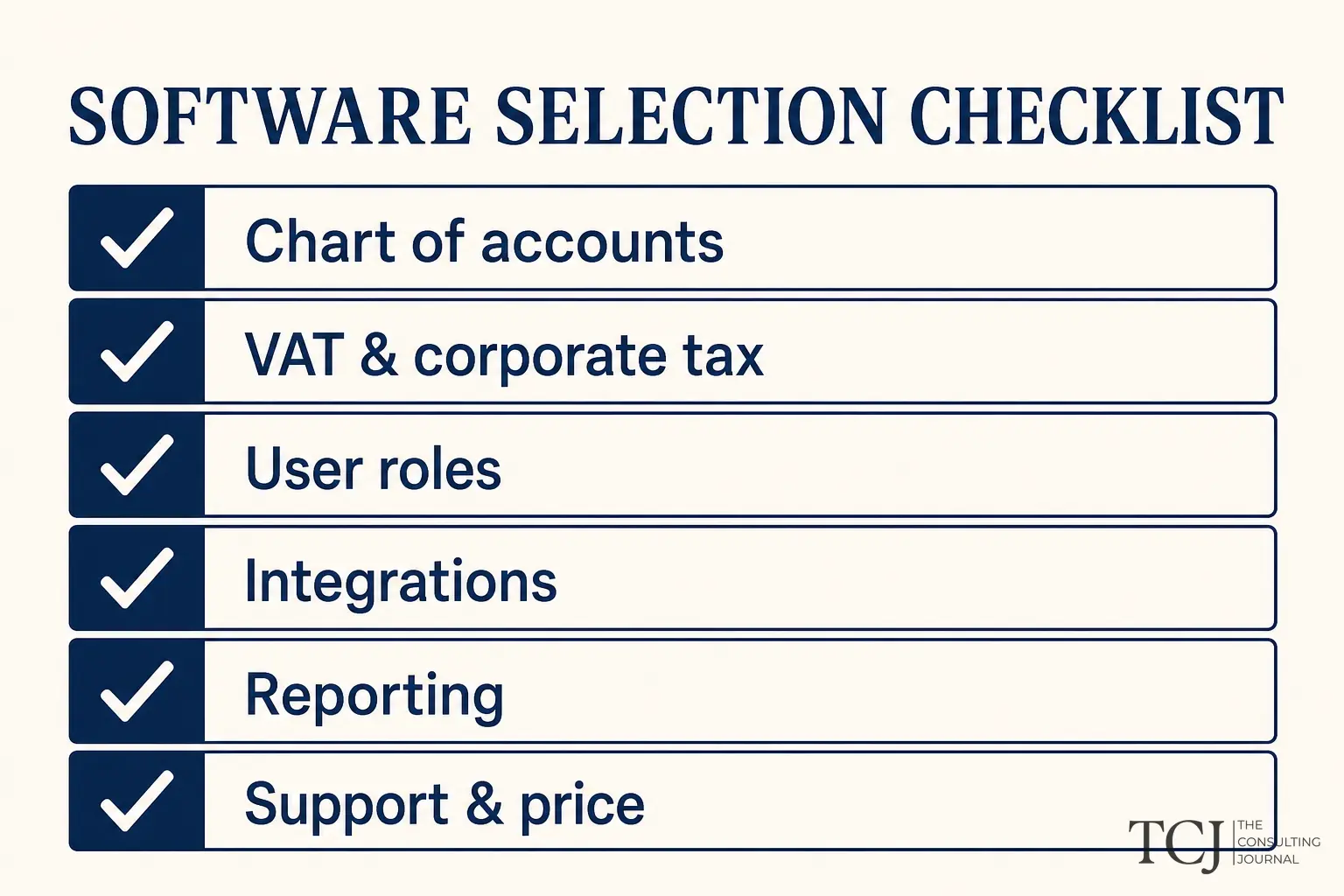
| Criterion | What to verify | |-----------|----------------| | Chart of accounts | Can you map UAE-relevant categories without hacky codes? | | Sales cycle | Quote → invoice → receipt → credit note, with VAT correct | | Purchases | Bill → approval → payment → attachment | | Bank rec | Feed quality, rules, exception handling | | Month-end | Lock periods, accruals, depreciation if needed | | Reporting | P&L, balance sheet, cash summary, aged AR/AP | | Exports | Excel/CSV for accountant and tax working papers | | Support & local ecosystem | Accountant familiarity, UAE user community |
Ask your bookkeeper or outsourced CFO services in the UAE partner to participate. They will spot friction you will not see in a sales demo.
Red flags in demos
- Revenue recognition hand-waved for your actual contract types.
- VAT treated as “a report we can add later.”
- No clear answer on who owns implementation — you, vendor, or accountant.
- “Custom fields” as the answer to every structural question.
- Cannot show audit trail on a edited transaction.
People and process: software does not replace ownership
Why every business needs CFO thinking for smarter growth applies even when the CFO is a founder two days a month. Someone must own:
- Coding rules and chart of accounts changes.
- Close calendar and review of how to create financial KPIs for your company inputs.
- Integration health checks when a connector breaks silently.
- Training when you hire finance or operations staff.
If nobody owns the ledger, you will blame the software when the real issue is missing routines — the pattern why businesses fail during growth phases describes when volume exposes gaps.
Automation — helpful on clean data only
AI in accounting for UAE businesses: automation and expert review is clear: automation accelerates categorisation, matching, and anomaly detection when the underlying data is structured. It does not fix a chaotic chart of accounts or duplicate spreadsheets.
Use automation for:
- Bank transaction matching and recurring entries.
- Receipt capture with human review on exceptions.
- Duplicate vendor detection and approval routing.
Keep expert review for:
- Revenue recognition judgments.
- Related-party transactions and transfer pricing.
- Tax classifications and year-end adjustments.
- Anything an investor or auditor will ask you to defend verbally.
The direction of travel — advisory plus automation plus control — is developed further in the future of finance is advisory, automation, and control.
Migration: do not lose history on the switch
Changing software mid-year is doable but planned:
- Freeze — agree cut-over date; stop parallel shadow books.
- Clean — reconcile bank, AR, AP, and VAT to the last day on the old system.
- Map — chart of accounts translation table; no orphan balances.
- Open balances — trial balance import verified by your accountant.
- Parallel run — one month if possible; compare key reports.
- Document — migration memo for auditors and future hires.
Poor migrations cause double-counted revenue, lost VAT evidence, and investor distrust. Treat it as a project, not a weekend task.
Cost, contracts, and vendor lock-in
Compare total cost: subscription, users, payroll add-on, inventory module, implementation, training, and accountant time to fix setup errors. Annual contracts with auto-renew are standard — note cancellation terms and data export formats before you sign.
Ask explicitly:
- Can you export full transaction history if you leave?
- Who owns the data — you or the vendor?
- Are API limits priced separately?
- What happens to document attachments on exit?
Lock-in is not always bad if the tool fits — but you should choose deliberately, not discover traps at exit.
How software connects to strategy and fundraising
Investors and banks pattern-match on reproducibility. The ledger definition of revenue in January must match October and match the deck. Why revenue alone does not impress investors and how to build an investor-ready financial story in the UAE both assume software and process produce the same numbers twice.
Software also feeds strategic choices — pricing, hiring, market entry — when tied to how to build a practical business budget and why finance should guide strategy, not just reporting. Reporting-only finance asks what happened; strategic finance asks what to do next.
Common mistakes when choosing accounting software
- Buying for the business you pitch, not the business you operate — ERP for twelve transactions a month.
- Ignoring accountant workflow — then paying twice to rebuild chart of accounts.
- Skipping VAT and tax tests — discovering misconfiguration after a filing deadline.
- No owner after setup — demo complete, discipline absent.
- Spreadsheet shadow ledger — “just for management” until it diverges from statutory books.
- Choosing on price alone — cheapest tool that breaks inventory or multi-currency costs more in fixes.
- Deferring integrations — manual re-keying until someone makes an expensive error.
Avoid corporate tax in UAE mistakes businesses must avoid in 2026 by treating software as part of compliance infrastructure, not a back-office afterthought. On tax posture more broadly, tax planning vs tax avoidance for UAE business owners reminds you that structure and records must align — software exposes gaps quickly when they do not.
Software and cash narrative — do not buy blind
Accounting software affects how quickly you see liquidity problems — not only statutory accounts. When evaluating tools, test whether you can produce a cash summary and aged receivables without exporting to Excel every time. Founders who scale without that visibility often learn the hard way that why cash flow matters more than growth claims in UAE business — growth amplifies collection delays and VAT timing gaps.
If fundraising is within eighteen months, choose software that preserves the same revenue and cost definitions your deck will use. Investor pitch deck mistakes founders make frequently trace to ledger-deck divergence discovered late in diligence — preventable with consistent tooling from the start.
Relief, tax modules, and configuration reality
Software vendors may market “corporate tax ready” features. Treat that as workflow support, not compliance completion. Small business relief in UAE corporate tax depends on eligibility evidence your system can help organise — revenue tracking by entity, related-party visibility, excluded activity flags — but relief elections and computations still require accountant review. Configure categories at implementation with tax mapping in mind; retrofitting after two years of messy coding is more expensive than choosing the right chart of accounts on day one.
Decision checklist — before you sign
- Transaction types and entity structure documented.
- VAT, invoicing, and export requirements verified in a live trial.
- Mock month-end close completed with your accountant or bookkeeper.
- Integrations mapped for bank, payroll, sales, and expenses.
- Owner named for coding rules, close calendar, and user access.
- Migration plan written if switching from an existing tool.
- Total cost of ownership compared across three-year horizon.
The bottom line
Accounting software is the operational memory of your company. Choose it from transaction reality, UAE compliance needs, integration quality, and who will run month-end — not from demo theatre. Most UAE SMEs thrive on a modern cloud ledger or mid-market platform with disciplined processes long before they need ERP complexity. Test the close, involve your accountant, plan migration carefully, and treat the ledger as strategic infrastructure tied to cash, tax, and investor trust.
When you need help scoping tools against your entity and growth plan, book a free consultation. Strong systems support long-term value — increase business valuation strategies assume buyers can trust exported history. Browse the Finance desk for more on systems and reporting.
This article is general information for UAE-based businesses and is not legal, tax, or financial advice. Confirm your specific obligations and software suitability with a qualified adviser before relying on any framework described here.
Questions and answers
What is the minimum accounting software a UAE SME needs?
At minimum: cloud access with role-based permissions, a configurable chart of accounts, bank feed or import, VAT-compliant sales invoicing, supplier bill capture, basic reporting (P&L, balance sheet, trial balance), document attachment, and export to Excel or CSV for your accountant. If you have inventory, payroll, or multiple entities, those requirements expand quickly — do not buy the minimum and hope to stretch it.
Should I choose software my accountant recommends?
Strongly consider it, but do not delegate the decision entirely. Your accountant needs clean exports and familiar workflows; you need daily usability, integrations, and reporting your team will actually run. The best outcome is a shortlist your finance lead and accountant both test — including a mock month-end close — before you subscribe annually.
When does a business outgrow basic accounting software?
Signals include: inventory or WIP breaking your reports, multi-entity consolidation taking days, approval workflows you cannot enforce, revenue recognition across contracts that the tool cannot model, or compliance evidence that lives outside the system. Upgrade when you can name the specific failure mode — not because a vendor says you are 'ready for enterprise.'
Does accounting software handle UAE corporate tax automatically?
No software replaces judgment. Good tools help you categorise transactions, attach evidence, and export data for tax calculations — but corporate tax positions, small business relief eligibility, and transfer-pricing documentation still require qualified review. Software should make your records defensible; it does not make them correct by default.
How much should UAE businesses budget for accounting software?
Simple cloud ledgers often run from a few hundred to a few thousand dirhams annually for SMEs, scaling with users, entities, and add-ons like payroll or inventory. ERP implementations can reach tens of thousands in licence and setup costs. Budget for implementation time as well — the subscription is rarely the expensive part; misconfiguration is.
More in Finance
View all Finance →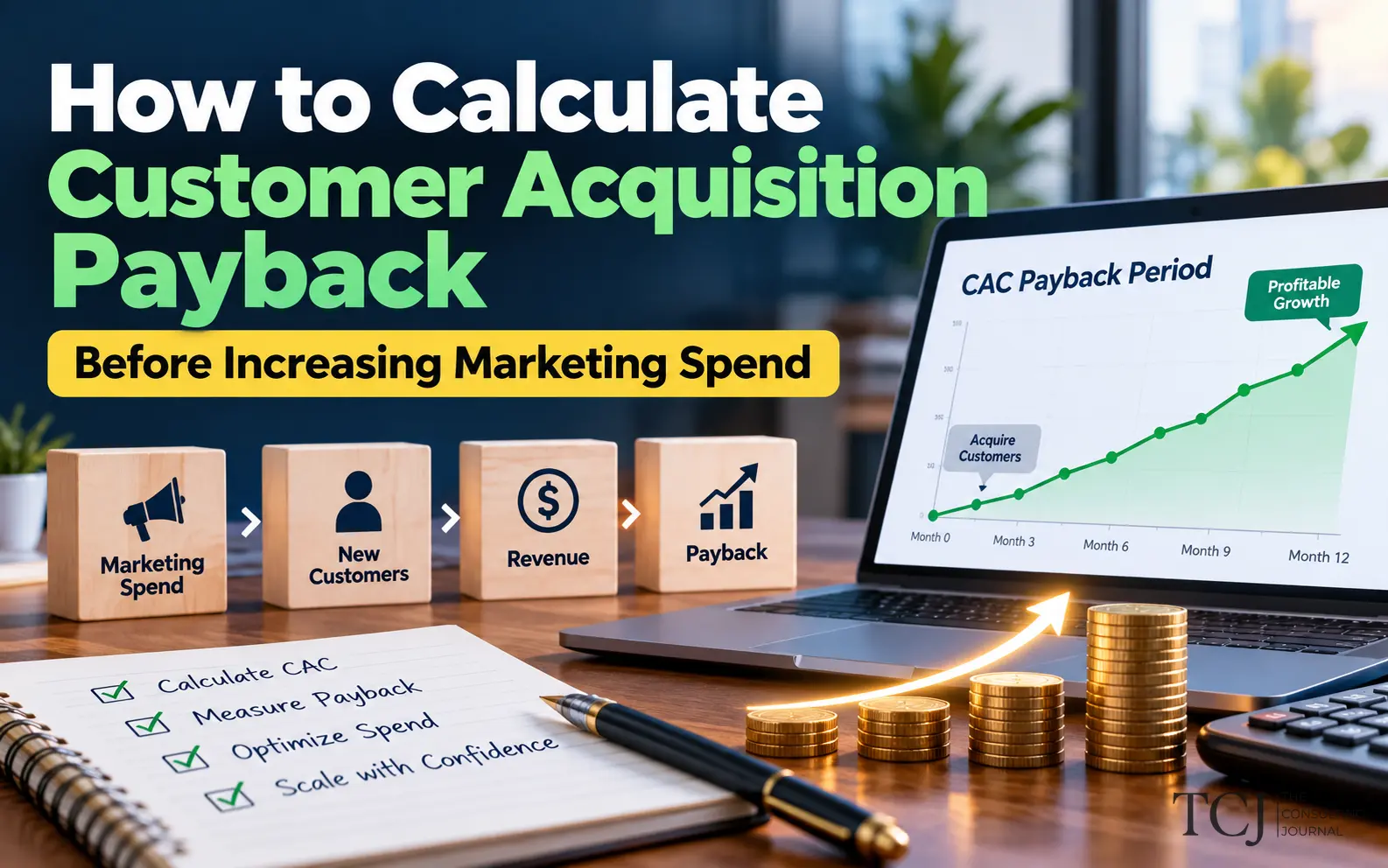
Customer Acquisition Payback: How to Calculate It Before Increasing Marketing Spend
Learn how to calculate customer acquisition payback, evaluate CAC efficiency, and assess whether increasing marketing spending makes financial sense. Includes practical formulas, worked examples, cash flow considerations, and a scaling checklist.
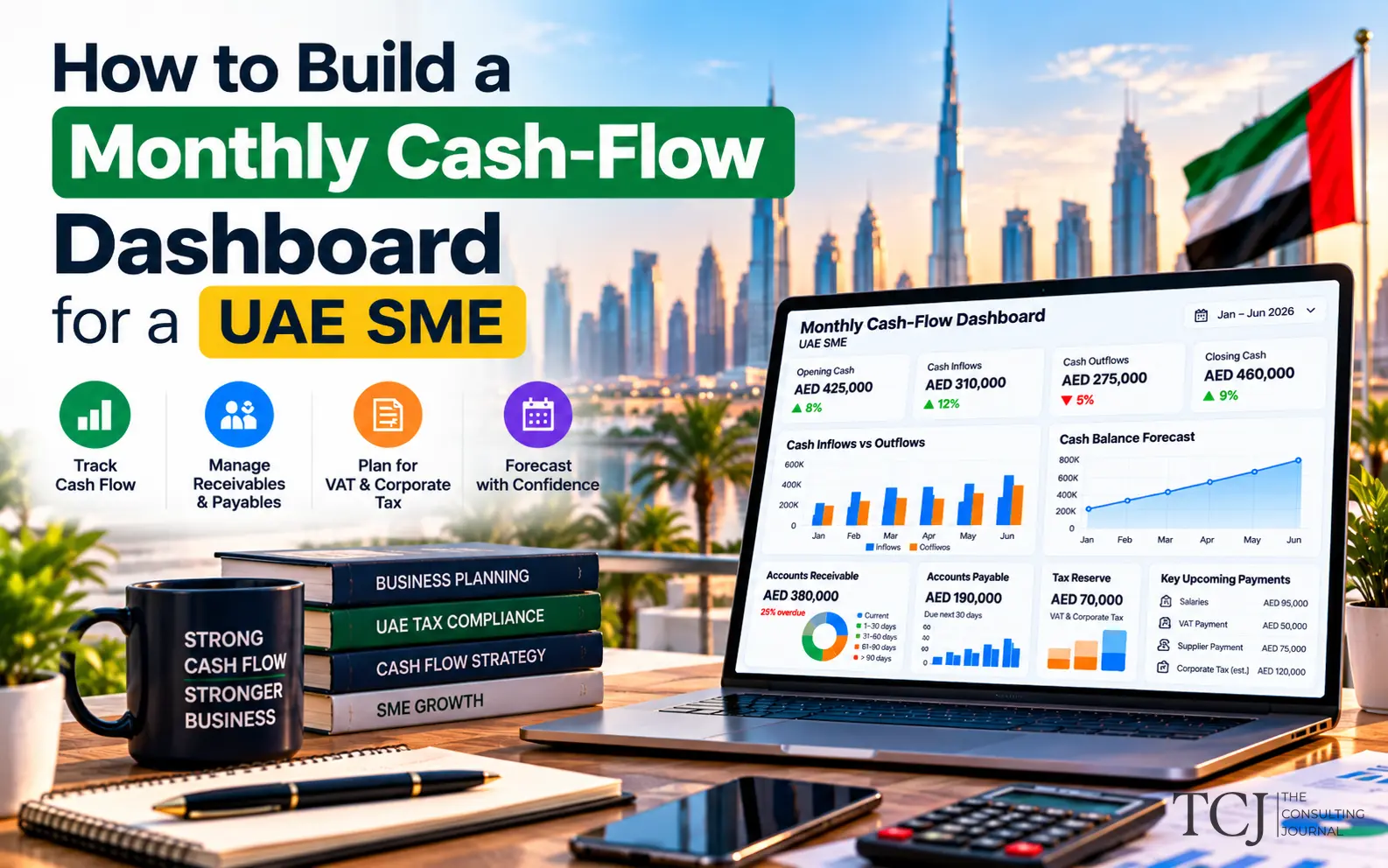
How to Build a Monthly Cash-Flow Dashboard for a UAE SME
A practical guide for UAE SME owners and finance teams on building a monthly cash-flow dashboard that tracks liquidity, collections, payments, tax obligations, forecasts, and working capital.

How UAE Companies Can Build a Faster, More Reliable Month-End Close
A practical UAE finance guide to shortening the month-end close through better reconciliations, cut-off controls, automation, tax readiness, data quality, and clear accountability.